Ten o’clock at night, ninety-plus degrees still hanging in the air, and I’m parked at the edge of a bean field waiting on a sounder that hasn’t shown up before midnight in two weeks. That’s September hog hunting. The heat doesn’t just make the sit uncomfortable — it moves the whole schedule, and if you’re still setting up for the daylight patterns you used in April, you’re going to be watching an empty field.
September hog hunting means adjusting to a nocturnal pattern — hogs shift feeding and watering to full dark as daytime heat climbs, and a thermal scope like the ATN ThOR 6 640 2-16x is built for finding them once the sun goes down.

What September heat does to hog behavior
Hogs handle heat poorly — they don’t sweat the way most game does, and once daytime temperatures climb into the 90s, they push their active hours later and later into the night. By September, a sounder that was moving at last light in early spring is often not showing up until well after dark, and staying active into the early morning hours before pulling back into thick cover to bed for the day. If you build your hunt around the golden-hour pattern you used earlier in the year, you’re setting up for the wrong window.
How does this change your hunt?
The shift plays out in three ways that matter for where and when you hunt:
- Feeding pushes later. Hogs wait out the heat of the day bedded in shade and thick cover, then move to feed once the ground and air start cooling — often well after full dark in late summer.
- Water and wallows become the anchor point. A hog’s cooling options are limited, so water sources, mud wallows, and low, damp ground get heavier traffic in September than they do in cooler months. A sounder working a field is often working it because there’s water or a wallow nearby, not just because of the feed.
- Movement windows compress. Instead of a long, loose feeding window at dusk, hot-weather activity often bunches into a shorter, later stretch of the night, which means your setup time and your patience both need to shift later too.
When are hogs most active in September?
Most of your action will fall in the hours from full dark through the coolest part of the night, typically well after 10 p.m. and running toward first light, with activity easing off again as the morning starts to warm. Early evening and dawn can still produce sightings, especially on cooler, front-driven days, but don’t plan your whole hunt around them in the peak of late-summer heat — the reliable window has moved later than it was even a month or two earlier in the season.

How long does it take wild hogs to find bait?
In our experience it’s rarely instant — a fresh feeder or bait site typically takes a sounder anywhere from a few nights to a couple of weeks to find and start hitting consistently, depending on how much hog activity is already nearby and how much human scent and disturbance is left at the site. Sounders that are already working a property tend to find new feed fast, sometimes within a night or two. A site in an area with lighter hog pressure, or one you’ve disturbed setting up, can take considerably longer to get regular traffic. Minimizing scent and noise during setup, and giving a new site time before you judge it as a bust, both speed up that timeline more than anything else you can do.
What can you use this pattern for?
Once you know hogs are running late in September heat, that pattern becomes the basis for the whole hunt: where you set up, when you actually arrive, and how long you commit to sitting still before deciding a spot is dead for the night. It also tells you where to prioritize scouting effort — water and wallows over pure feed sites — and when to run a thermal scan of a field before committing to a stand or a truck-based sit.
Key features to understand for a hot-weather night hunt
- Sensor resolution for identifying hogs at range. The ThOR 6 640 2-16x runs a 640×512 sensor — enough resolution to tell a mature hog from a smaller one in the group before you commit to a shot, not just spot a heat blob in the dark.
- NETD for a hot, humid night. ≤15mK NETD means the sensor resolves fine temperature differences even when ambient ground and air temps are still warm from the day, which is exactly the condition that washes out lower-sensitivity thermal.
- Detection range for open fields and feeder lanes. A 3100 m detection range covers more ground than most hog setups need, giving you room to pick up a sounder working a tree line well before it commits to the open.
- Battery life for a long, late window. Around 9 hours on two swappable 18650 batteries covers a sit that doesn’t really start until 10 p.m., without you watching a battery icon at 1 a.m.
- Hot Point Tracking and SharpIR for a moving group. Hogs move in loose, shifting sounders. Hot Point Tracking flags the hottest point in the frame, and SharpIR’s AI-image enhancement keeps edges and contrast clean so you can pick out individual animals in a cluster instead of one warm mass.
What to look for before buying for late-summer hogs
Prioritize detection range and low-light sensor performance over raw magnification if most of your hunting happens well after dark — you need to find the sounder first, and a wider field of view at moderate zoom often does that better than being locked in tight. Battery runtime matters more in September than it does in cooler months, since your effective hunting window starts later and runs deeper into the night. If you’re hunting from a stand or a feeder lane at a fixed range, a mid-range magnification like 2-16x covers both scanning and the shot without swapping optics.
Common mistakes on late-summer hog hunts
- Showing up at your normal dusk time. If the sounder isn’t moving until well after dark, an early arrival just means more time sitting still in the heat for nothing. Shift your setup window later and adjust based on what you’re actually seeing on the ground.
- Ignoring water in favor of the feeder. In peak heat, a wallow or pond edge can outperform a feeder that was reliable in cooler months. Check both before picking your spot.
- Giving up on a new bait site too early. A site that hasn’t produced in the first few nights isn’t necessarily a bad location — it may just not be found yet. Give it real time before you move on.
- Skipping the pre-sit thermal scan. A quick scan of the field and tree line before you settle in tells you whether hogs are already working the area or still bedded, which changes how long you should plan to wait.
Featured Product: ATN ThOR 6 640 2-16x
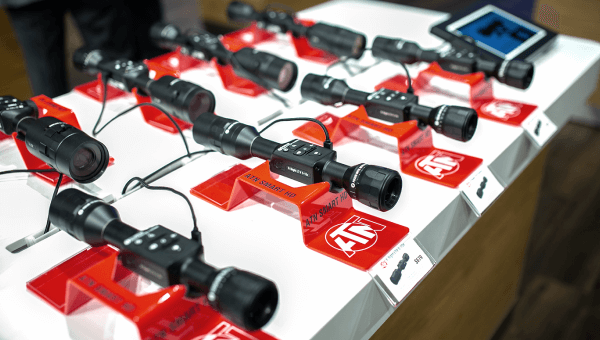
The ThOR 6 640 2-16x (TIWST6635A) is built around a 640×512 12μm VOx sensor with ≤15mK NETD and a 35mm germanium lens, giving 2-16x optical magnification, step and smooth digital zoom, and a 3100 m detection range. It runs a 0.49” Full HD OLED display at 1920×1080 and a 50 Hz refresh rate, with SharpIR AI-image enhancement, Picture-in-Picture, Hot Point Tracking, and Recoil Activated Video that saves footage automatically around every shot. Battery life runs roughly 9 hours on two swappable 18650 batteries, it weighs 830 g / 1.83 lbs, and it carries an IP67 rating with 64 GB of internal storage and built-in Wi-Fi for streaming to the ATN Connect 6 app. Price is $3,625.00 ($3,295.00 promo).

Is it worth building your hunt around this pattern?
Yes, if hogs are hitting your property hard enough to justify going after them specifically. Shifting your setup time later, watching water sources as closely as feed, and giving new bait sites real time to get found will put you in the field when hogs are actually moving instead of sitting on an empty field during a window that closed a month ago.
FAQ
When are hogs most active in September?
Mostly from full dark through the coolest hours of the night, often not starting in earnest until well after 10 p.m. and easing off again as morning temperatures climb. Cooler, front-driven days can shift activity earlier, but peak-heat stretches push the reliable window later than in spring or early summer.
When are wild hogs most active overall?
Hogs are naturally more nocturnal in warm weather and more flexible with daylight movement in cooler months, since they handle heat poorly and shift activity to avoid it. In September’s late-summer heat, that means night and the coolest pre-dawn hours are your most reliable windows.
How long does it take wild hogs to find bait?
Typically anywhere from a few nights to a couple of weeks, depending on existing hog activity nearby and how much scent or disturbance was left at the site during setup. Sounders already working a property often find new bait within a night or two; a quieter area can take longer.
Why do hogs move to water more in September?
Hogs don’t sweat effectively, so wallows, ponds, and damp low ground become key cooling spots as daytime temperatures climb. A field getting hog traffic in late summer is often being used because of nearby water as much as feed.
Does a thermal scope work well in warm, humid September nights?
Yes, though warm ambient temperatures reduce the contrast between an animal and its surroundings compared to a cold night. A low-NETD sensor like the ThOR 6’s ≤15mK rating is built to resolve that smaller temperature difference cleanly.
What magnification is best for September hog hunting?
A mid-range setting like 2-16x covers both scanning a field for movement and taking a confirmed shot once a hog is identified, without needing to swap optics between the two tasks.
Hunt the Window That’s Actually Open
Adjust your setup time to match the pattern the heat is creating, not the one you used earlier in the year, and give new bait sites the time they need to get found. Browse the full ThOR HD thermal scope lineup to compare models for your setup, or read our guide to the best thermal scope for hog hunting for more on picking the right one.