I have had an ATN Gen 6 thermal scope on one rifle or another since spring, and I am going to tell you up front that we build these, so of course I like them. What follows is not the spec sheet dressed up as a review. The numbers below come straight from our product data, and everywhere I give you an impression from my own nights — what the picture looked like in August haze, how the battery behaved, what I stopped fiddling with after week three — I will say plainly that it is my impression and not a published figure. Six months is long enough to stop being impressed by a demo and start noticing what you actually reach for.
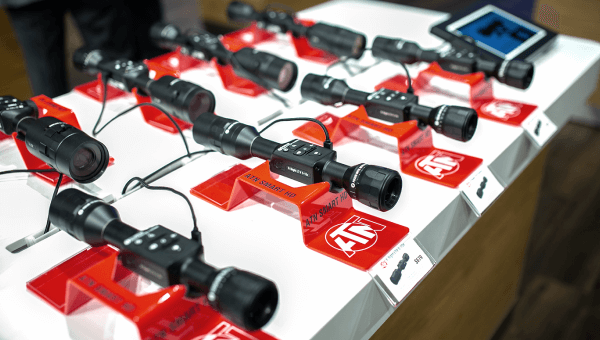
Six months in: the ThOR 6 640x512 | 2-16x is the one I keep mounting. A 640×512 12µm sensor at ≤15mK behind a 35 mm F/1.0 germanium objective, 3100 m of rated detection, about nine hours on a pair of 18650 cells, 830 g on the rifle, and a 5-year warranty behind it.
The short answer after six months
If you want the one-line version of this ATN Gen 6 thermal scope review, here it is, by job rather than by price.
- Best all-round: ATN ThOR 6 640x512 | 2-16x (TIWST6635A) — a 12.52° × 9.41° frame, as wide as the full-size line gets, and the one that stayed on my rifle longest.
- Best reach: ThOR 6 640x512 | 3-24x (TIWST6650A) — 50 mm of germanium and 3650 m of rated detection, at the cost of a narrower frame.
- Best for a shooter who ranges: ThOR 6 LRF 640x512 | 2-16x (TIWST6635LRF) — same optical core plus a built-in laser rangefinder and a ballistic calculator.
- Lightest: ThOR 6 Mini 640x512 | 2-16x (TIWST6M635) — 540 g and 190 mm long, the version I hand to anyone carrying a gun all night.
- Lowest entry into the series: ThOR 6 384x288 | 2.5-20x (TIWST6325A) — $1,595 promotional, $2,195 list, with the same ≤15mK sensitivity on a smaller array.

What actually changed with the sixth generation
ATN Generation 6 is a sensor and processing story, not a styling exercise. Every ThOR 6 scope in the table below runs a 12µm VOx uncooled focal plane array at a 50 Hz refresh rate behind an F/1.0 germanium objective, and every one of them carries SharpIR, our real-time image processing, plus Hot Point Tracking, ten reticle styles with transparency control, six colour palettes, Zeroing Freeze, Picture-in-Picture, Recoil Activated Video, 64 GB of internal storage and a 0.49-inch 1920×1080 OLED display. All five are built from magnesium alloy, rated IP67, rated to 6000 Joules of recoil, rated from -30°C to 55°C, and carry a 5-year warranty.
Two of those numbers earn their keep every single night. The 50 Hz refresh is what makes a running animal look like an animal instead of a smear, and F/1.0 is what lets a small objective still gather enough long-wave energy to be useful. The thing nobody puts on a box is that a fast refresh and a fast lens mostly save you from your own mistakes — you swing late, you re-acquire, and the picture is already caught up. That part is my read, not a published claim. The engineering behind the processing side is laid out properly in our piece on how SharpIR AI actually works.
The Gen 6 scope line, side by side
| Model | Sensor / NETD | Lens & FOV | Magnification | Detection | Battery | Weight | List / promo |
|---|---|---|---|---|---|---|---|
| ThOR 6 640 2-16x (TIWST6635A) | 640×512 / ≤15mK | 35 mm (Ge) F/1.0; 12.52°×9.41° | 2-16× | 3100 m | 1×18650 internal + 1×18650 replaceable, ~9 hrs | 830 g / 1.83 lbs | $3,625 / $2,295 |
| ThOR 6 640 3-24x (TIWST6650A) | 640×512 / ≤15mK | 50 mm (Ge) F/1.0; 8.78°×6.59° | 3-24× | 3650 m | 1×18650 internal + 1×18650 replaceable, ~9 hrs | 830 g / 1.83 lbs | $4,175 / $2,595 |
| ThOR 6 LRF 640 2-16x (TIWST6635LRF) | 640×512 / ≤15mK | 35 mm (Ge) F/1.0; 12.52°×9.41° | 2-16× | 3100 m | 1×18650 internal + 1×18650 replaceable, ~9 hrs | 855 g / 1.89 lbs | $4,175 / $2,595 |
| ThOR 6 384 2.5-20x (TIWST6325A) | 384×288 / ≤15mK | 25 mm (Ge) F/1.0; 10.53°×7.91° | 2.5-20× | 2300 m | 1×18650 internal + 1×18650 replaceable, ~9 hrs | 790 g / 1.74 lbs | $2,195 / $1,595 |
| ThOR 6 Mini 640 2-16x (TIWST6M635) | 640×512 / ≤18mK | 35 mm (Ge) F/1.0; 12.5°×10.0° | 2-16× | 3000 m | 1×18650 replaceable, ~7 hrs | 540 g / 1.19 lbs | $3,185 / $2,095 |
Prices above are the published list price and the current promotional price, in that order.
The one I kept mounting: ThOR 6 640x512 | 2-16x
This is the scope that spent the most nights on a rifle, and the reason is the 12.52° × 9.41° field of view. A 35 mm germanium objective at F/1.0 still reaches a rated 3100 m of detection, but it shows you a frame almost half again as wide as the 50 mm version does. On open ground, where you scan more than you shoot, that width is the difference between finding an animal and sweeping past it. I run it at base magnification almost all the time and use the 1×/2×/4×/8× digital zoom only to confirm something I have already found.

Image. 640×512 on a 12µm pitch at ≤15mK is the combination that matters, not any one of the three. My own note after six months: the picture held up better in humid pre-dawn air than I expected, and the nights it looked worst were the warm, still ones when the ground had not given its heat back yet. That is physics, not a fault, and it is the same on any thermal channel.
Power. Two 18650 cells, rated together at about nine hours: one lives inside the scope and one is the replaceable cell you carry a spare of. Plan around the one that comes out, not around the total — that is the number that decides whether a long sit ends when you want it to. In practice I carried a charged spare and swapped it once on the longest nights.
Build. Magnesium alloy, IP67, 6000 Joules, -30°C to 55°C, 430×85×72 mm. Nothing came loose, nothing fogged. Buy this if you hunt open ground and value a wide frame. Skip it if most of your shots are past 300 yards and you would rather have magnification than width.
When you need reach: ThOR 6 640x512 | 3-24x
Same sensor, same body weight, different glass — and the trade is honest in both directions. The 50 mm germanium objective pushes rated detection to 3650 m and the magnification range to 3-24×, but the frame narrows to 8.78° × 6.59°. On a wide pasture that narrow frame cost me time; on a long creek bottom where everything happens down one axis, it bought me identification distance I did not have with the 35 mm. At $4,175 list and $2,595 promotional, it is also the same money as the LRF version of the 2-16x, which makes the choice a real one rather than a budget one.
When you want the distance solved for you: ThOR 6 LRF 640x512 | 2-16x
The LRF model is the 2-16x with two things the standard scope does not have: a built-in laser rangefinder and a ballistic calculator. The rangefinder is specified at 1000 m range, ±1 m accuracy, 905 nm, Class 1 eye-safe. The calculator adjusts the reticle for range and angle and stores up to six profiles, so one scope can move between a rifle, an air gun and a crossbow without re-zeroing each time. It costs 25 g and $550 of list price over the standard 2-16x. If you shoot at varied, unmarked distances, that is a short argument. If you hunt the same three stands at known ranges, it is a long one. We go through the whole chain from laser to firing solution in a separate ATN ballistic calculator deep-dive.
When weight wins: ThOR 6 Mini 640x512 | 2-16x
540 g and 190 mm long, against 830 g and 430 mm for the full-size 640. That is not a rounding difference; it changes how a carbine handles. The Mini keeps the 640×512 sensor, the 35 mm F/1.0 germanium objective, 6000 Joules, IP67 and the 5-year warranty, and reads 12.5° × 10.0° of field of view with 3000 m of rated detection. What it gives up is measurable and worth knowing: NETD is ≤18mK rather than ≤15mK, and it runs on a single replaceable 18650 for about seven hours instead of a hybrid pair for about nine. It also mounts differently — the Mini goes on a Picatinny rail, while the four full-size scopes take 30 mm rings, so check what is already on your rifle before you order. For a walking hunt I take the Mini and carry a spare cell. For a static sit I take the full-size.
Where the 384 still makes sense
The ThOR 6 384x288 | 2.5-20x is the cheapest way into the generation at $1,595 promotional against $2,195 list, and it is not a stripped-down scope: ≤15mK sensitivity, 25 mm F/1.0 germanium, 50 Hz, SharpIR, the same 6000 Joule and IP67 ratings, the same 5-year warranty. What the smaller array costs you is detail at distance, which shows up as 2300 m of rated detection against 3100 m, and as a picture that pixelates sooner when you zoom. Under about 150 yards over a feeder, I could not tell you which array I was looking through. Past that, I could. Our ranking of the best 640 thermal scopes goes deeper into where that line sits.

How to choose one of these
Answer four questions in this order and the model picks itself.
- How far do you actually shoot? Rated detection is the honest comparison between models, not a promise about your field. 3100 m on the 2-16x against 3650 m on the 3-24x against 2300 m on the 384 tells you how the lenses rank. If your real work is inside 200 yards, buy field of view instead of reach.
- How much ground do you have to sweep? 12.52° of width finds animals faster than 8.78° does. Narrow frames are for terrain that is already narrow.
- How long is the gun in your hands? 540 g against 830 g is the whole argument for the Mini, and the only argument against it is ≤18mK instead of ≤15mK and seven hours instead of nine.
- Do you need the distance measured? A 1000 m, ±1 m laser plus a calculator that holds six profiles replaces a handheld rangefinder and a lot of guessing. If you already range with something else, keep your money.
My own six-month habit, for whatever it is worth: I stopped carrying a separate rangefinder, I stopped changing palettes mid-stand, and I started charging the spare 18650 the same way I charge a phone — every night, whether it needed it or not.

Six months of ATN Gen 6: common questions
How long does an ATN Gen 6 thermal scope last on a charge?
ATN rates the full-size ThOR 6 scopes at about nine hours on one internal and one replaceable 18650 cell, and the ThOR 6 Mini 640 at about seven hours on a single replaceable 18650. Those are rated figures, not cold-weather figures, so carry the spare cell somewhere warm.
Is the 640 sensor worth it over the 384?
Past about 150 yards, yes. Both carry ≤15mK sensitivity, but the 640×512 array is rated to 3100 m of detection on the 2-16x against 2300 m on the 384 2.5-20x, and it holds detail further into the digital zoom. Inside 150 yards the gap is hard to see.
What does NETD actually change in the field?
NETD is the smallest temperature difference the sensor can separate, so lower is better. The ThOR 6 640 and 384 scopes are specified at ≤15mK and the ThOR 6 Mini at ≤18mK. You notice it most where contrast is already poor: humid air, warm ground, light rain.
Which ATN Gen 6 scope has a built-in rangefinder?
The LRF models. On the ThOR 6 LRF 640x512 | 2-16x the laser is specified at 1000 m with ±1 m accuracy, 905 nm and Class 1 eye-safe, paired with a ballistic calculator that stores up to six profiles. The standard 2-16x and 3-24x do not have either feature.
Will a Gen 6 scope survive a hard-recoiling rifle?
All five ThOR 6 scopes here are rated to 6000 Joules, or 1000g of acceleration over 0.4 ms, in a magnesium alloy housing with an IP67 rating. ATN backs them with a 5-year warranty. Mount the four full-size scopes in 30 mm rings, which are not included; the ThOR 6 Mini mounts to a Picatinny rail.
How cold can you run one?
The published operating band on these scopes is -30°C to 55°C, which is -22°F to 131°F. ATN does not publish a cold-weather runtime figure, so treat the nine-hour rating as a mild-weather number and plan your spare cell accordingly.
What does the ATN Gen 6 line cost right now?
Across the five scopes above, list prices run from $2,195 for the 384 2.5-20x to $4,175 for the 640 3-24x and the LRF 640 2-16x. The published promotional prices sit lower: $1,595 and $2,595 at those two ends, with the 640 2-16x at $3,625 list and $2,295 promotional.
What six months taught me
That the specification that sells a scope and the specification that keeps it on your rifle are rarely the same one. People buy on sensor resolution; I kept reaching for the 2-16x because of field of view and a battery I could swap in the dark. If you want the full map of the line rather than my six months of it, start with our ATN thermal scope review, and when you are ready to compare configurations side by side, the current ATN thermal scopes are all in one place. Mount one, shoot it, and give it a season before you decide — that is the only review that counts.