Why Do Thermal Scopes Cost So Much — and Are They Worth...

If you've ever searched for a thermal scope and felt your jaw drop at the price tag, you're not alone. Sticker shock is real in the thermal optics world. But before you dismiss them as overpriced gadgets for the ultra-wealthy, it's worth understanding exactly what you're paying for — and why the engineering behind these devices commands the cost it does. In 2026, the thermal scope price conversation has evolved significantly, with manufacturers delivering more performance per dollar than ever before. This analysis breaks it all down and shows you why the ATN ThOR 6 325 stands out as the smartest investment in its class.
What Makes Thermal Scopes So Expensive?
A thermal scope is not a camera with a filter slapped on it. It is a precision instrument built around an infrared detector that reads temperature differentials invisible to the naked eye. The engineering, materials, and manufacturing tolerances involved are on par with military-grade equipment — because in many cases, that's exactly where the technology came from.
The Detector Is the Core Cost Driver
The uncooled focal plane array at the heart of any quality thermal scope is extraordinarily difficult to manufacture. These sensors must detect temperature differences as small as fractions of a degree, respond accurately across a wide range of ambient conditions, and do so consistently over thousands of hours of field use. The germanium lenses used in thermal optics — which allow infrared radiation to pass through — are far more expensive to produce than standard glass. Germanium is a rare material, and machining it to optical tolerances is a specialized process. Every ATN ThOR 6 model uses germanium lenses with an F/1.0 aperture, a specification that demands precise manufacturing at every step.
Software and Processing Infrastructure
Modern thermal scopes aren't just passive viewing devices. They run sophisticated real-time processing algorithms, manage onboard storage, handle wireless connectivity, and in ATN's case, execute AI-driven image enhancement constantly in the background. Developing and maintaining that software stack is a major ongoing investment. ATN's proprietary SharpIR© technology is a prime example — it doesn't just display a thermal image, it actively sharpens edges, boosts contrast, and separates targets from background clutter without any manual input from the user.
Ruggedization and Environmental Rating
A thermal scope has to function reliably at -30°C in a frozen blind and at 55°C on a Texas summer night, survive recoil measured in thousands of joules, and keep moisture out in torrential rain. The ATN ThOR 6 series carries an IP67 waterproof rating and is rated for 6000 joules of recoil energy — specifications that require premium materials, precision sealing, and extensive validation testing. None of that is cheap to engineer or manufacture.
Thermal Scope Cost 2026: Where Does the Market Stand?
The thermal scope cost 2026 landscape looks significantly better for buyers than it did five years ago. What used to cost $5,000 to $8,000 for professional-grade thermal performance is now accessible at a fraction of that price thanks to advancements in sensor manufacturing, tighter supply chains, and smarter software development. ATN has been a major driver of this democratization, building feature-rich thermal platforms that compete directly with units costing two to three times as much.
That said, the core physics and manufacturing costs haven't disappeared. You're still paying for germanium optics, precision sensors, and purpose-built processing hardware. The difference is that companies like ATN have engineered these systems at scale and passed those efficiencies on to the buyer. The result is that the thermal scope price you pay in 2026 buys substantially more performance than it ever has before.
ATN ThOR 6 325 Review 2026: Is This the One to Buy?
The short answer is yes — for most hunters and professionals operating in the mid-range thermal market, the ATN ThOR 6 325 is a compelling choice that punches well above its price point. This ATN ThOR 6 325 review 2026 digs into exactly what you're getting and why it matters in the field.
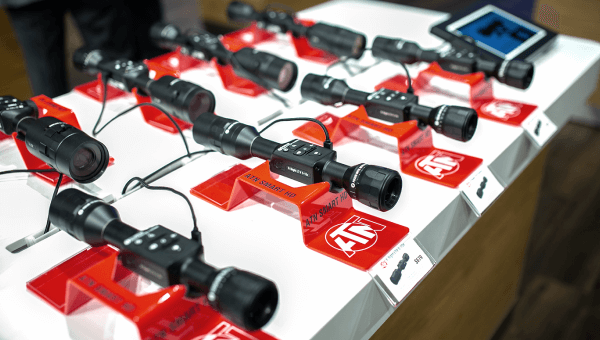
The ThOR 6 325 is the entry-level model in the full-size ThOR 6 lineup, featuring a 25mm germanium lens and 384×288 sensor resolution. That combination gives you a 10.53° × 7.91° horizontal-by-vertical field of view and a magnification range of 2.5x to 20x — both excellent numbers for hunting at medium to extended ranges. It's the scope designed for hunters who want real-world thermal performance without stepping into the premium pricing of the 640×512 sensor models.
ATN ThOR 6 325 Specs: Full Technical Breakdown
Understanding the ATN ThOR 6 325 specs means going beyond the headline numbers. Let's walk through each critical specification and explain what it means for actual use.
Detector and Sensor
The ThOR 6 325 uses a 12μm VoX Uncooled Focal Plane Array detector. The ATN ThOR 6 325 sensor resolution is 384×288, which delivers 110,592 individual thermal sensing pixels capturing a detailed image of your target environment. Paired with a thermal sensitivity rating of ≤15mK NETD, this sensor can detect heat differences smaller than one-tenth of a degree Fahrenheit. In practical terms, that means a coyote bedded in brush on a cold morning is going to light up clearly against its surroundings — not blend in as a fuzzy smear.
The thermal scope specifications around NETD (Noise Equivalent Temperature Difference) are one of the most important figures on any thermal scope data sheet, yet they're frequently overlooked by buyers. A ≤15mK rating in the ThOR 6 series places it among the most sensitive uncooled thermal sensors available at this price tier in 2026.
Display
The ThOR 6 325 uses a 0.49-inch OLED display at 1920×1080 resolution. OLED technology produces true blacks by turning off individual pixels rather than dimming a backlight, which translates to higher contrast, more accurate thermal imagery, and significantly less eye fatigue during extended use. The 1080p resolution means the thermal image is upscaled and displayed with genuine sharpness rather than appearing pixelated or blocky — a common problem with lower-end thermal displays.
Magnification and Detection Range
The ThOR 6 325 covers a 2.5x to 20x magnification range using step and smooth zoom. Its listed detection range is 2300 meters — that's over 1.4 miles of target detection capability in ideal conditions. For predator hunters, this means spotting a coyote across a wide open field well before it closes within ethical shooting distance, giving you time to assess and position.
Physical Specifications
The ThOR 6 325 dimensions measure 410 × 85 × 66mm and it weighs in at 790g (1.74 lbs). That's a well-balanced scope for a full-size thermal unit. It mounts via 30mm rings (not included), which are a standard fitting compatible with a wide range of mounting systems. The operating temperature window runs from -30°C to 55°C, and the IP67 waterproof rating means it can handle submersion in up to 1 meter of water for 30 minutes — more than enough protection for field conditions.
Power System
The ThOR 6 325 runs on two 18650 rechargeable batteries — one internal and one replaceable. Runtime is approximately 9 hours of continuous operation, which covers most full-day or full-night hunting sessions without needing a swap. The replaceable battery design means you can carry a spare and extend your time in the field indefinitely. External power is supported via USB Type-C at 5VDC/2A, so a power bank can keep the scope running if needed.

SharpIR© AI Enhancement: Real-World Impact on Image Quality
One of the features that most dramatically affects what you actually see through the ThOR 6 325 is ATN's SharpIR© AI image enhancement system. Most thermal scopes display raw sensor output with basic processing — what you see is a direct translation of what the sensor captures, artifacts and all. SharpIR© operates differently. It applies proprietary AI algorithms in real time to every frame, actively improving edge definition and increasing the contrast between targets and their backgrounds.
In field conditions, this makes a measurable difference. A hog moving through tall grass generates a thermal signature that can be difficult to distinguish from background vegetation at a distance. SharpIR© sharpens the edges of that signature, making the animal's outline crisp and identifiable rather than an indistinct hot blob. This directly reduces false positives and speeds up target identification — both critical in low-light situations where split-second decisions matter.
Hot Point Tracking and Precision Targeting
The ThOR 6 325 includes Hot Point Tracking, a feature that automatically identifies and highlights the hottest object in your field of view. In hunting scenarios, this is most commonly your target animal, and the system locks onto it without requiring you to manually scan. Combined with Picture-in-Picture mode — which lets you zoom in on a specific target area while maintaining a wide-field secondary view — you get a targeting system that keeps you situationally aware while still providing magnified detail for shot placement.
Zeroing Freeze is another precision feature worth highlighting. When you fire a shot during the zeroing process, the scope freezes the image at the moment of impact, giving you a clear look at your point of impact and time to make reticle adjustments without rushing. It eliminates the frustration of trying to chase a still-cooling hole on a target before the image updates. This alone saves ammunition and time at the range.
Recording and Connectivity: Built for the Modern Hunter
The ThOR 6 325 includes 64GB of internal storage with built-in video and audio recording — no SD cards, no external devices required. Recoil Activated Video (RAV) automatically captures up to 10 seconds before and after a shot, ensuring the moment of impact is always saved without any manual action from the shooter. For hunters who want footage of their hunts, this is a genuine set-it-and-forget-it solution.
Built-in Wi-Fi hotspot connectivity links the scope directly to a smartphone or tablet running the ATN Connect 6 app, available for both iOS and Android. This enables live remote viewing, shot review, and sharing without any cables or external network. The startup time from standby is under 7 seconds, and the scope supports standby/sleep mode to conserve battery between active use periods. USB Type-C handles both external power input and media transfer — a single cable standard that keeps the system simple and modern.
Color Palettes and Adaptability
The ThOR 6 325 offers six color palette modes: White Hot, Black Hot, Iron Red, Alarm, Green Hot, and Sepia. Each palette renders thermal information differently, and the best choice depends on the environment and target type. White Hot renders hot objects as bright white — intuitive and effective in most hunting scenarios. Black Hot inverts this, which some hunters prefer in high-heat environments where the target appears darker than the background. Iron Red and Sepia palettes provide a more cinematic rendering that can improve contrast in specific terrain types. Alarm mode can highlight heat signatures that exceed a threshold — useful for detection work. Having all six available means you can adapt to whatever conditions you encounter without being locked into one visual interpretation.
Who Should Buy the ATN ThOR 6 325?
The ThOR 6 325 is the right choice for hunters who do most of their work at ranges under 600 yards in variable conditions — predator hunters calling coyotes, hog hunters working fields and feeders at night, and varmint hunters managing nuisance populations. The 384×288 sensor resolution is more than sufficient for these use cases, and the 2300-meter detection range means you'll spot animals long before you need to engage them. The 2.5x to 20x magnification range is highly versatile, covering both close-quarters brush hunting and extended-range open-field scanning from a single scope.
For law enforcement, security professionals, or perimeter monitoring applications, the ThOR 6 325 delivers reliable target detection with the AI image processing and connectivity features that make it operationally useful rather than just a viewing device. The IP67 rating and 6000-joule recoil rating mean it holds up to demanding professional use without question.
If your primary shooting occurs at ranges beyond 800 yards regularly, or if you're hunting in extremely dense vegetation where maximum resolution target separation is critical, stepping up to the 640×512 sensor models in the ThOR 6 lineup would be worth the additional investment. But for the majority of hunters and professionals, the ThOR 6 325 delivers everything they need.
Are Thermal Scopes Worth the Price in 2026?
The honest answer is: it depends entirely on how you hunt and what you're trying to accomplish. If you hunt exclusively during legal daylight hours for whitetail in open terrain, a quality traditional riflescope may serve you better at a fraction of the cost. But if any of the following apply to your situation, a thermal scope isn't a luxury — it's a force multiplier.
You hunt predators or nuisance animals at night or in low-light conditions
You need to locate wounded game after a shot in darkness or dense cover
You're managing hog populations where shooting opportunities don't conform to daylight hours
You conduct perimeter security, property surveillance, or patrol in variable light conditions
You want to maximize your legal hunting window across all shooting light conditions
In any of these cases, the thermal scope price you pay is returned in results within the first season. The ATN ThOR 6 325 in particular delivers a combination of sensor sensitivity, AI-enhanced imaging, onboard recording, wireless connectivity, and rugged construction that would have cost significantly more just a few years ago.
The Bottom Line on Thermal Scope Price and Value
Thermal scopes cost what they cost because the technology genuinely demands it — precision germanium optics, advanced uncooled focal plane array detectors, AI processing hardware, waterproof construction, and software ecosystems don't come cheap to build. But in 2026, the gap between what you pay and what you get has never been smaller. The thermal scope cost 2026 market delivers genuine performance at price points that were unimaginable half a decade ago.
The ATN ThOR 6 325 review 2026 conclusion is straightforward: this is a capable, feature-complete thermal rifle scope that delivers professional-grade imaging, intelligent target acquisition tools, and field-ready durability at a price that makes thermal technology accessible to serious hunters who previously couldn't justify the investment. With a ≤15mK NETD sensor, SharpIR© AI enhancement, full HD OLED display, 9-hour battery life, 64GB internal recording, and IP67 protection, the ATN ThOR 6 325 specs tell a story of a product engineered to win in the field — not just look impressive on paper.
If you're ready to stop guessing in the dark and start hunting with a genuine edge, the ATN ThOR 6 325 is where to start. Shop direct at ATN for the best configuration options and the full ThOR 6 lineup.