What Is the Minimum Thermal Spec for Coyote Hunting in...

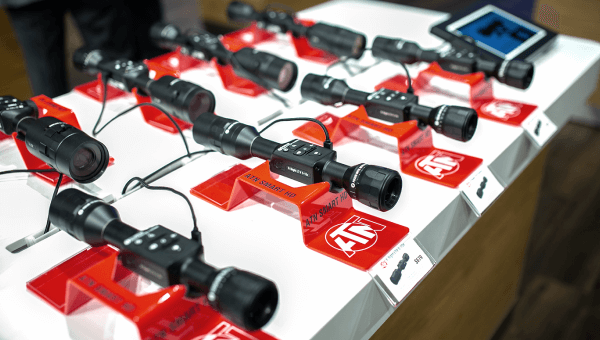
If you're serious about calling coyotes after dark in 2026, you already know thermal is the only way to hunt. The question most hunters are actually asking isn't whether to go thermal — it's how little they can spend and still get the job done reliably. That's where the ATN ThOR LT 320 enters the conversation as the definitive baseline for the cheapest thermal scope for coyote hunting that actually delivers field-capable performance.
This article breaks down exactly what thermal specifications matter for coyote hunting, why 320 sensor resolution is the floor — not the ceiling — and how the ATN ThOR LT 320 measures up against the real-world demands of predator hunting in 2026.
Why Minimum Specs Matter More Than Marketing for Coyote Hunting
Coyotes are not easy targets. They're fast, wary, and built for low-light evasion. A coyote slipping through a brush line at 150 yards on a cold January night is the kind of target that exposes every weakness in an underpowered thermal scope instantly.
Too many hunters buy a thermal scope based on price alone and discover in the field that the image is too soft to confidently identify species, distances past 100 yards turn into heat blobs, and the scope loses contrast when ambient temperatures drop close to body temperature. These aren't hypothetical problems — they're the direct result of ignoring thermal scope specifications before purchase.
Understanding what the minimum viable spec looks like for coyote hunting in 2026 saves you from buying something you'll upgrade in one season or, worse, something that costs you shots you should have made.
The Four Thermal Specs That Define Coyote Hunting Performance
1. Sensor Resolution: Why 320 Is the Floor
Sensor resolution is arguably the single most important specification in any thermal scope. It determines how much detail the scope can resolve from a heat source at distance. A coyote at 200 yards is a relatively small thermal target. You need enough pixels on that target to read its shape, movement, and confirm it isn't a dog before you pull the trigger.
In 2026, the market has settled into three resolution tiers: 256, 320/384, and 640. The 256 resolution sensors — while functional for close-range hog hunting or property surveillance — are genuinely inadequate for coyote identification at distances beyond 75 to 100 yards. The image degrades into blocky, low-confidence heat signatures that make ethical shot placement difficult.
The ATN ThOR LT 320 sensor resolution sits at 320x240, which represents the true minimum for coyote hunting. At this resolution, a coyote at 150 to 200 yards presents enough pixel density to read gait, body shape, and movement pattern. You can make the shot with confidence. Push past 250 yards and a 320 sensor starts to show its limits, but for the majority of predator calling setups where most shots fall inside 200 yards, it performs where it needs to.
2. NETD Sensitivity: Reading Coyotes Against Cold Ground
NETD — Noise Equivalent Temperature Difference — is the measurement that determines how small a temperature differential the sensor can detect. The lower the mK number, the more sensitive the sensor. This matters enormously for coyote hunting because coyotes are often hunted in cold conditions when the temperature gap between the animal and the ground is narrower.
A sensor with poor NETD — say 50mK or higher — will struggle to separate a coyote from brushy terrain in cold weather. The animal essentially fades into the background noise. For reliable predator hunting, you want NETD at or below 35mK. The ATN ThOR LT 320 delivers competitive sensitivity in its class, giving hunters enough contrast to pick a coyote out of scrub brush and open ground in true cold-weather conditions.
3. Magnification Range: Matching the Setup
Most coyote hunting setups involve calling, which means the animal could respond from 20 yards or 300 yards depending on terrain. A useful coyote hunting thermal scope needs magnification flexible enough to handle both scenarios without requiring a scope swap mid-hunt.
The ATN ThOR LT 320 offers a base magnification that works for close brush work and enough digital zoom to reach out to 200-plus yards when the terrain opens up. For hunters who primarily call in open country — fields, pastures, or semi-arid terrain — this is where understanding the limits of a 320-resolution scope becomes critical. Digital zoom amplifies the base image but cannot create detail that isn't captured by the sensor. At maximum digital zoom, a 320 sensor shows this limitation clearly. Know your effective engagement range and you'll never be surprised.
4. Refresh Rate: Tracking a Running Coyote
A 50Hz refresh rate is the standard you want for predator hunting. Coyotes don't stand still once they're spooked. A scope running at 25Hz or lower introduces visible lag when tracking a moving animal, which translates directly to missed shots. This is a specification that separates purpose-built hunting thermal scopes from surveillance-oriented or budget crossover units. The ATN ThOR LT 320 runs at 50Hz, which is exactly where it needs to be for tracking fast-moving predators.
ATN ThOR LT 320 Review 2026: What You're Actually Getting
The ATN ThOR LT 320 review 2026 conversation needs to start with an honest framing: this scope is not a ThOR 6. It is not trying to be. What it is — and what ATN built it to be — is the most capable thermal riflescope a serious hunter can put on a rifle without crossing into a price bracket that excludes the majority of working hunters.
ATN's ThOR LT line was designed from the start as a lean, field-focused thermal scope. The "LT" stands for lightweight, and that design philosophy carries through every aspect of the scope. The body is compact and trim. The controls are straightforward. The feature set is deliberately stripped to the essentials that matter in the field, which actually makes it faster and easier to use in a hunting context than more complex flagship units.
ATN ThOR LT 320 Specs Breakdown
The ATN ThOR LT 320 specs position it squarely at the functional minimum for serious predator work:
- Sensor Resolution: 320x240 — the defined minimum for coyote hunting identification at hunting distances
- Refresh Rate: 50Hz — full-speed tracking for moving predators
- Detector Type: Uncooled VOx microbolometer focal plane array
- Pixel Pitch: 12μm — consistent with current-generation thermal sensors
- Display: OLED — superior contrast and black levels compared to LCD-based displays
- Magnification: Variable digital zoom starting at a practical base magnification
- Reticle Options: Multiple reticle styles to match personal preference and environmental conditions
- Color Palettes: Multiple modes including White Hot and Black Hot as the essential predator hunting options
- Battery Life: Competitive runtime on standard 18650 batteries
- Durability: Weatherproof rating appropriate for field use
- Weight: Lightweight design that doesn't add significant balance disruption to the host rifle
What makes the ThOR LT 320 the right baseline spec for 2026 is the combination of a 320 sensor with a 50Hz refresh rate and OLED display. Each of those three elements individually can be found on cheaper units, but not all three together at this price point without ATN's build behind it.
Built-In Smart Features That Matter in the Field
ATN's approach to their ThOR line has always been to integrate smart features that provide genuine hunting utility rather than specification padding. On the ThOR LT 320, this means hunters get access to features that would have been flagship-exclusive just a few years ago.
The zeroing system on ATN scopes is legitimately excellent. The ability to freeze the image at point of impact and make precise adjustments without rushing before the thermal signature fades is something hunters who have zeroed traditional thermal scopes appreciate immediately. It removes the frustration from the process and produces more reliable zeros, especially when conditions make staying on a static point of impact difficult.
Multiple color palette options give hunters real flexibility. White Hot is the default choice for most predator hunters in open terrain because coyote body heat reads as bright and clear against darker ground temperatures. Black Hot reverses this and works well in certain lighting and terrain conditions where White Hot creates visual fatigue over a long calling session. Having both available and switchable in the field is a genuine advantage.
Wi-Fi connectivity and smartphone integration through the ATN app adds a level of field utility that budget-tier competitors simply cannot match. Being able to share a live view with a hunting partner seated next to you — letting them see what you see without looking over your shoulder — changes how two-person predator calling setups work. It also creates an unobtrusive secondary eye when you're watching a field for incoming dogs while the caller watches a different approach lane.
The 320 vs. 384 Decision: When to Step Up
ATN's own ThOR 6 line — specifically models like the ThOR 6 325 — offers 384x288 resolution at a step up in price. Understanding when that upgrade is worth making helps hunters get honest about their actual use case.
The ATN ThOR LT 320 is the right choice if your typical coyote hunting involves shots inside 200 yards, you call in agricultural areas or terrain where coyotes come in close, you're hunting multiple nights per week and need a scope that takes field abuse without a second thought, or budget is a real constraint and you need the most capable scope available for the money.
A 384x288 scope like the ThOR 6 325 makes sense when you're regularly engaging targets past 200 yards in open western terrain, you need to positively identify animals in cluttered backgrounds at distance before shooting, or you're operating in environments where heat bleed and thermal clutter demand more pixel density to separate targets cleanly.
Both scenarios are legitimate. The honest answer is that the majority of coyote hunters in the eastern United States, working timber edges, agricultural fields, and suburban-adjacent environments, will never push the ATN ThOR LT 320 past its limits in real hunting conditions. Hunters calling in open terrain at extended ranges are the audience that genuinely needs 384 or 640 resolution.

How ATN's 6th Generation Thermal Technology Compares
To fully appreciate where the ThOR LT 320 sits in 2026's thermal landscape, it helps to understand what ATN's current flagship technology delivers. The ATN ThOR 6 series represents the company's sixth generation thermal engine, featuring sensors with NETD sensitivity at or below 15mK, SharpIR AI-enhanced imaging that dynamically sharpens edge definition and target contrast in real time, and a 12μm pixel pitch across all resolution options.
The ThOR 6 also packs a 0.49-inch 1920x1080 OLED display, detection ranges extending to 3,650 meters on the 640x512 model, built-in laser rangefinder on LRF variants, integrated ballistic calculator, recoil-activated video recording, Hot Point Tracking for instant identification of the hottest target in the field of view, and a battery system delivering approximately 9 hours of runtime on dual 18650 cells.
The ThOR 6 Mini extends this technology into a compact form factor — weighing under 500 grams depending on configuration — with the same SharpIR AI processing, 50Hz refresh rate, and sensor options ranging from 256x192 up to 640x512. The Mini 325 and Mini 335 models in the 384x288 configuration hit a compelling middle ground between the LT's price accessibility and the full ThOR 6's premium performance.
Understanding the full range makes the ThOR LT 320's position clear. It is the baseline — the entry point where thermal performance becomes genuinely capable for coyote hunting — and the ThOR 6 line represents where thermal performance becomes genuinely exceptional.
What the Cheapest Thermal Scope for Coyote Hunting Must Have in 2026
The market in 2026 is flooded with thermal scopes priced aggressively, many of them imported units with specifications that look competitive on paper but deliver compromised performance in field conditions. When evaluating the cheapest thermal scope for coyote hunting, the minimum requirements are non-negotiable if the scope is going to serve you reliably.
- 320x240 minimum sensor resolution — do not compromise on this for predator hunting at ethical distances
- 50Hz refresh rate — 25Hz will cost you tracking shots on fast-moving coyotes
- NETD at or below 35mK — for cold-weather sensitivity and contrast in hunting conditions
- OLED display — the contrast advantage over LCD is real and visible during extended glassing
- Reliable zeroing system — a scope that won't hold zero under centerfire recoil is dangerous and useless
- Weatherproof rating — predator hunting happens in rain, fog, and harsh conditions, not just clear nights
- Manufacturer support and warranty — brand accountability matters when the optic is on a rifle in the field
The ATN ThOR LT 320 checks every item on this list. That's why it holds the baseline position in 2026. Scopes that undercut it on price are almost universally compromising on one or more of these specifications, and those compromises show up exactly when you need the scope to perform.
ATN ThOR LT 320 in the Field: Real Hunting Scenarios
Agricultural Predator Control
If you're protecting livestock or managing coyotes on farmland, the ThOR LT 320 is extremely well-suited to the work. Open fields, fence lines, brush draws at field edges — these are environments where coyotes respond to calls at 50 to 200 yards routinely. The 320 sensor handles every engagement in this range with confidence. You'll pick up the heat signature of an incoming coyote at 300-plus yards with enough time to prepare the shot, and by the time it closes to inside 200, you have more than enough image quality to make an ethical, species-confirmed shot.
Timber Edge and Brushy Terrain
In eastern states where coyotes work timber edges and thick cover, shots are often closer but the clutter is heavier. The 320 sensor's performance in this environment depends heavily on palette selection and NETD sensitivity. Running White Hot in moderate temperatures against timber brush gives a clear coyote signature. Where the 320 starts to show limitations is when a coyote hangs up in dense cover at distance and the hunter needs to thread the scope through gaps to confirm the shot. In those situations, more resolution always helps — but those scenarios are the exception in most eastern hunting situations, not the rule.
Western Open Country
This is where the ThOR LT 320 is most honestly challenged. Hunters calling in open western terrain where coyotes approach from 400 or 500 yards before deciding whether to commit are working at ranges where 320 resolution starts to limit confidence. The coyote is detectable well beyond that range, but positive identification and precise shot placement at 300-plus yards on a 320 sensor requires ideal conditions. Western open-country hunters who routinely take 300-yard shots should look seriously at stepping up to the 384 or 640 resolution options in ATN's ThOR 6 lineup.
Why ATN Specifically, and Not a Generic Thermal Brand
This question comes up in every online forum discussion about budget thermal hunting optics, and it deserves a direct answer. There are thermal scopes on the market at lower price points than the ATN ThOR LT 320. Some of them have comparable sensor resolution numbers on paper.
What those brands don't offer is ATN's decade-plus of thermal riflescope-specific development, a domestic support and warranty infrastructure that actually responds when something goes wrong in the field, proven recoil resistance under repeated centerfire fire, software that is actively updated and improved over the scope's ownership lifespan, and the integration of smart features — zeroing system, multiple palettes, Wi-Fi connectivity — that make the scope faster and more practical to use in real hunting situations.
A thermal scope that costs $200 less but fails to hold zero after a season of .223 and .243 fire, or whose image processing produces a noisy, smeared image in cold temperatures, or whose manufacturer has no domestic service center, is not a deal. It's a liability. The ATN ThOR LT 320 at its price point represents the floor of responsible purchasing from a manufacturer with a documented track record in the thermal hunting space.
Stepping Up: When to Consider the ATN ThOR 6 or ThOR 6 Mini
The ATN ThOR LT 320 is the baseline, but knowing when to step up is just as important as knowing what the baseline delivers. If your hunting is evolving and you're ready to invest in the full capability picture, ATN's ThOR 6 line offers specifications that transform thermal hunting from capable to exceptional.
The ThOR 6's 6th Generation thermal engine with ≤15mK NETD sensors, SharpIR AI image enhancement, and 12μm pixel pitch represents a genuine leap in sensitivity and image quality over the LT series. Hot Point Tracking — which automatically highlights the hottest object in the field of view — changes how hunters scan for predators, eliminating the need to sweep and analyze every heat signature manually. Recoil Activated Video captures the shot automatically without requiring button presses during the moment of engagement. The 1920x1080 OLED display at 0.49 inches produces a viewing experience that reduces eye fatigue during long calling sessions considerably.
The ThOR 6 Mini delivers this same technology in a package under 600 grams that transforms the balance equation on lighter hunting rifles. For hunters who prioritize mobility — foot stalking, hunting from a pack, or carrying significant distances — the Mini's performance-to-weight ratio is difficult to argue against.
For hunters who want the complete package including a built-in laser rangefinder and integrated ballistic calculator, the ThOR 6 LRF models consolidate what used to require three separate pieces of gear into a single, unified system.
The Verdict: ATN ThOR LT 320 as the 2026 Baseline Standard
The ATN ThOR LT 320 specs define the minimum viable thermal riflescope for coyote hunting in 2026 because they represent the intersection of sensor performance, display quality, refresh rate, and manufacturer reliability that the task demands. Below this spec, hunters are making compromises that show up in the field in the form of missed shots, uncertain identification, and scope failures that cost hunts rather than win them.
The ATN ThOR LT 320 review 2026 conclusion is straightforward: if the ThOR LT 320 is within your budget, it is the right scope for the job in most coyote hunting environments. It's the cheapest thermal scope for coyote hunting that a knowledgeable hunter can confidently recommend without caveats for the majority of predator hunting situations.
If your terrain, engagement ranges, or budget justify stepping up, ATN's ThOR 6 series offers a clear and compelling upgrade path with specifications that represent the current state of the art in thermal riflescope performance. But for the hunter who needs a baseline coyote hunting thermal scope that performs reliably night after night, the ATN ThOR LT 320 is where the conversation starts — and for many hunters, where it ends.
Thermal hunting in 2026 is not about buying the most expensive scope on the market. It's about understanding what the task demands, knowing where the performance floor is, and buying confidently at or above that line. The ATN ThOR LT 320 is that line.