Ask ten hunters what is the best thermal scope and you will get ten answers, because "best" depends on what you are trying to do. A scope that shines on a wide-open ag field is overkill in thick timber, and the one you take walking is not the one you bolt to a heavy rig. This guide skips the hype and explains what actually separates a good thermal scope from an average one, then shows why the ATN ThOR 6 640x512 3-24x is the model most hunters end up pointing to. Read it and you will be able to answer the question for yourself, for your ground.
The best thermal scope is the one whose sensor, magnification and range match how you hunt. For most hunters that means a high-resolution 640x512 sensor, a low NETD for a clean image, and enough magnification and detection range for their longest realistic shot. The ATN ThOR 6 640x512 3-24x hits all three, which is why it is the top all-round pick in ATN's current 6th-generation line.
What is a thermal scope, in plain terms?
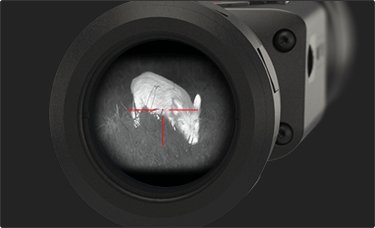
A thermal scope is a rifle sight that sees heat instead of light, so it works in total darkness, through light brush, and in fog or smoke where a normal scope shows you nothing. Every warm animal glows against the cooler background, which is why hunters use thermal to find and shoot hogs, coyotes and other night game that a regular optic would never reveal. Unlike a night-vision scope, it needs no starlight or moon at all — the heat is the picture.
How does a thermal scope work?
- A germanium lens gathers infrared (heat) energy from the scene, the same way a glass lens gathers light — only it is focusing heat you cannot see with your eyes.
- A microbolometer sensor turns that heat into an electrical signal, pixel by pixel. More pixels (a 640x512 sensor versus a 384x288) means finer detail and cleaner targets farther out.
- The scope's processor converts the signal into a live image, assigns hot and cold a color palette (White Hot, Black Hot or a color scheme), and refreshes it many times per second.
- You aim using a digital reticle laid over that image, and on the ATN ThOR 6 the shot is zeroed once and remembered — a warm animal simply appears as a bright shape you place the crosshair on.
What can you use it for?
- Night hog control — the most common job; hogs move after dark and thermal finds them in cover no light will reach.
- Coyote and predator hunting — spot and range a coyote crossing a pasture long before it sees you.
- Scanning and recovery — sweep a field to count animals, or track a downed animal by its fading heat.
- Foul-weather hunting — thermal reads heat straight through fog, light rain and dust that blind other optics.
Key features to understand
- Sensor resolution — the pixel count of the thermal detector; more pixels mean finer detail and the ability to identify targets at greater distances. A 640x512 sensor is roughly like moving from standard definition to high definition versus a 384x288.
- NETD (thermal sensitivity) — the smallest temperature difference the sensor can detect, in millikelvin; a lower mK number, like the ThOR 6's ≤15 mK, means a more sensitive sensor and a cleaner, higher-contrast image.
- Detection range — the maximum distance at which the scope can pick up a heat signature as a target; detection means spotting something is there, not fully identifying it.
- Refresh rate — how many times per second the image updates; a higher rate gives smoother motion and less lag when you track a moving animal.
- Magnification — how much closer the optic makes the target appear; a 3-24x range spans the base optical zoom up through the maximum digital zoom.
What to look for before buying
- Match the sensor to your distance. If your shots are past a couple hundred yards, a 640x512 sensor earns its keep; for closer timber work a 384x288 is plenty.
- Check the detection range against your longest realistic shot, then leave headroom — detecting an animal far out gives you time to set up.
- Confirm it survives recoil and holds zero on your caliber; the ThOR 6 is built for hard-recoiling rifles and remembers its zero.
- Look at battery and workflow — a replaceable-battery design lets you hot-swap spares instead of ending the night early.
- Stay in the current generation. A 6th-gen scope gets you the newest sensor and processing; an older model is a step back in image quality.
Common mistakes
- Chasing magnification instead of resolution. Cranking digital zoom on a low-res sensor just enlarges a blurry image; the sensor, not the zoom number, sets how far you can truly identify a target.
- Ignoring NETD. Two scopes can share a resolution and still look worlds apart; a low NETD is what gives you a crisp, high-contrast picture on a mild night.
- Buying more scope than your ground needs. A flagship long-range unit on a 75-yard timber stand is money spent on range you will never use.
- Forgetting the zero routine. Even the best scope has to be sighted in for your rifle and load before it earns your trust.
Example: the ATN ThOR 6 640x512 3-24x
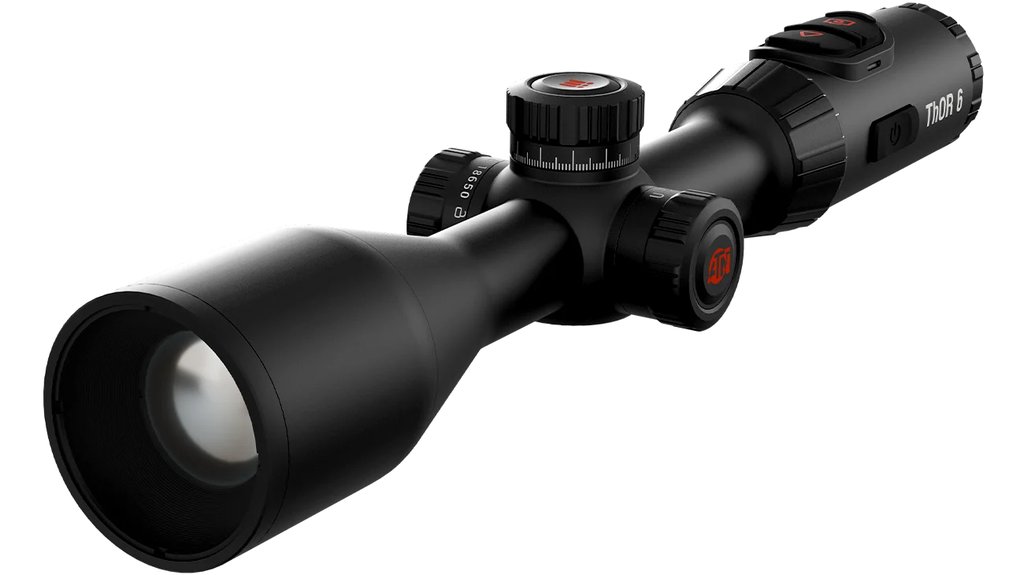
The scope most hunters land on as "the best" all-rounder is the ATN ThOR 6 640x512 3-24x. It pairs a high-resolution 640x512 sensor with a ≤15 mK NETD, so the image is both detailed and clean, and its 50 mm lens pushes detection out to roughly 3,650 m — far more range than most shots will ever ask for, which is exactly the headroom you want. The 3-24x range covers a close pasture edge and a far ag field on the same night, and SharpIR AI sharpening, Recoil Activated Video, Hot Point Tracking and Zeroing Freeze round it out. If your ground is more timber than open field, the 384x288 2.5-20x in the same ThOR thermal scope line gives you the same features with a value-priced sensor.
Is it worth it?
For a hunter who is out after dark with any regularity, yes. A good thermal scope turns nights you would have stayed home into productive ones, and it does the finding and the shooting on a single optic. The honest caveat: it is a flagship-tier tool, so if you only hunt daylight or take a handful of close shots a year, a value-tier ThOR 6 or even a day scope may serve you better. Buy the sensor and range your hunting actually calls for, not the biggest number on the page.
How this guide was put together
This is an in-house comparison of ATN's own current lineup, not an independent lab review, so read it that way and check the specs against your needs. We judged "best" the way a hunter would: sensor resolution and NETD for image quality, detection range and magnification against a realistic longest shot, refresh rate for tracking moving game, and weight and battery for a full night in the field. We only considered the current 6th-generation ThOR 6 scopes, because older models trail on sensor and processing. The honest trade-off is that the top pick is a flagship-tier optic; it is not the right call for a daylight-only shooter or someone who only takes a few close shots a season, and it will not turn a poorly zeroed rifle into a marksman. Weigh your real distances before you buy.
Frequently Asked Questions
What is the best thermal scope overall?
For most hunters the best all-round thermal scope is the ATN ThOR 6 640x512 3-24x. It combines a high-resolution 640x512 sensor, a low ≤15 mK NETD for a clean image, and enough magnification and detection range to cover both timber and open fields. "Best" always depends on your ground, but this model fits the widest range of real hunting.
Does a higher resolution really make a thermal scope better?
Yes, within reason. A 640x512 sensor resolves finer detail and lets you identify targets farther out than a 384x288, much like the jump from standard definition to high definition. But resolution only helps if your shots are long enough to need it; on close timber ground a 384x288 sensor is plenty and saves you money.
Is a thermal scope better than a night-vision scope?
They do different jobs. A thermal scope sees heat and works in total darkness, fog and light brush, which makes it the stronger choice for finding and shooting warm game at night. Night vision amplifies existing light and can show more natural, ID-friendly detail when there is some ambient light. For nighttime hog and predator hunting, thermal is usually the better pick.
How far can the ATN ThOR 6 detect an animal?
The ThOR 6 640x512 3-24x detects a heat signature out to roughly 3,650 m under good conditions. Detection means spotting that something warm is there, not fully identifying it, so your ID and shooting distances are shorter. That large detection range still matters because it gives you time to spot, range and set up on an animal long before it is in shooting range.
What does NETD mean and why does it matter?
NETD is the smallest temperature difference the sensor can detect, measured in millikelvin. A lower number, like the ThOR 6's ≤15 mK, means a more sensitive sensor and a cleaner, higher-contrast image, especially on mild nights when animals and background are close in temperature. Two scopes can share a resolution and still look very different because of NETD.
Do I need the flagship model, or is a value ThOR 6 enough?
It depends on distance. If your shots are past a couple hundred yards on open ground, the 640x512 flagship earns its keep. If you hunt closer timber, the value-tier ATN ThOR 6 384x288 2.5-20x carries the same features on a capable mid-range sensor and is the smarter buy. Match the scope to your longest realistic shot rather than to the biggest number.
Quick reference specsATN ThOR 6 640x512 3-24x — Sensor: 640x512. NETD: ≤15 mK (a clean, high-contrast image). Magnification: 3-24x. Detection range: ~3,650 m. Lens: 50 mm (Ge), F/1.0. Battery: ~9 hrs on 2x 18650. Weight: 830 g / 1.83 lbs. Key features: SharpIR AI sharpening, Recoil Activated Video, Zeroing Freeze, Hot Point Tracking, Picture-in-Picture and Wi-Fi with ATN Connect 6.
Ready to stop debating and start scanning? The ATN ThOR 6 640x512 3-24x is the model most hunters point to as the best all-round thermal scope, and it is built to find, range and drop game on one optic. If your ground runs closer or you want to compare sensor tiers, browse the full ATN ThOR thermal scope lineup and match the sensor and range to how you actually hunt. Check the specs against your longest realistic shot, pick the tier that fits, and get set up before the next new moon.
Created: August 10, 2026 · 10:05:21 UTC