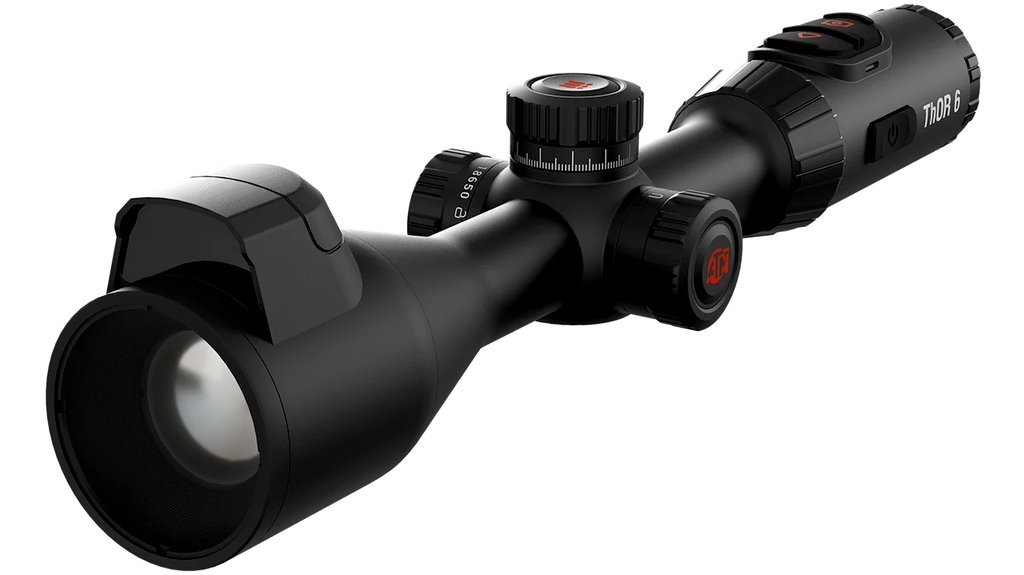
Start with the one thing thermal does that nothing else can: a warm hog bedded in thick brush, motionless, invisible to your eyes and to any amount of ambient light, still burns bright as a signal flare through a heat sensor. That is the whole thermal vs night vision scope argument in a sentence. Thermal reads body heat, so it sees the animal, not the shape you are hoping to make out. This is a hunter-to-hunter comparison of the two technologies, with the ATN ThOR 6 640x512 3-24x standing in for the thermal side, judged the way it plays out on a real night in the field.
For after-dark hunting where the animal is hiding, moving, or tucked in cover, thermal wins, and the ATN ThOR 6 640x512 3-24x is the pick. It detects body heat through brush, darkness and light fog with no ambient light at all. A night vision scope gives a more natural, detailed picture for positive ID, but it needs light and cannot see a warm animal hidden behind foliage.
Thermal vs night vision scope at a glance
The short version: thermal detects heat and night vision amplifies light, and that single difference drives everything else. The table below sets the two technologies side by side on the points that actually change how your hunt goes, with the ATN ThOR 6 representing the thermal side and ATN's digital day-night optics standing in for the night-vision-style approach.
How thermal works
Thermal works by reading heat instead of light, which is why it needs no moon, no stars and no illuminator to put a live animal on the screen. Every warm body radiates infrared, and the ThOR 6's 640x512 sensor turns those temperature differences into a picture. Because it is reading heat and not reflected shape, a hog's warm body cuts right through brush, tall grass and camouflage that would swallow any light-based optic. It sees through light fog and drifting smoke for the same reason. The trade-off is honest: thermal shows you a heat signature, not the fine coat, face or antler detail your eye is used to. Two numbers govern how cleanly it draws that heat. Resolution — 640x512 here — is the pixel count painting the animal, so more dots mean a sharper, more defined shape at distance, the jump from a grainy photo to a clean one. NETD (≤15 mK on the ThOR 6) is the smallest temperature gap the sensor can tell apart, and the lower it is, the better a barely-warm animal separates from ground that is nearly the same temperature. On a summer night when a hog is only a hair warmer than sun-baked dirt, that low NETD is what turns a vague smudge into a shape you can aim at.
How night vision works
Night vision works by amplifying the small amount of light already in the scene — starlight, moonlight, or infrared from an illuminator — into a brighter, usable picture. Because it builds the image from real light bouncing off real surfaces, what you see looks natural and recognizable: you can read a coat pattern, tell a coyote from a dog, make out fence lines and read the terrain the way you would in daylight. That makes it strong for positive identification and for judging exactly what and where something is before you commit. The catch is that it can only show you what light reaches. A completely dark night with no illuminator leaves it starved, and an animal hidden behind foliage stays hidden because no light is getting to your eye off its body. ATN's own digital day-night line covers this style of use if a natural, detailed image is your priority, but it lives and dies by available light in a way thermal simply does not.
When to choose thermal
Choose thermal when the animal is trying not to be seen — which, after dark, is most of the time. If you hunt hogs in thick timber, coyotes that hold in cover, or anything that beds down in tall grass, thermal is the tool that finds heat the moment it exists, no light required. It is the fastest way to catch movement across a field, scan a treeline for a bedded animal, or pick a warm body out of a background of brush. It works in total darkness, in light fog and smoke, and it works in broad daylight too, so one optic covers the whole day. The ThOR 6 adds SharpIR AI to clean up the image, Hot Point Tracking to keep a lock on a moving heat source, and Zeroing Freeze plus RAV so you can zero fast and record the shot. If your problem is detecting and engaging warm animals when they do not want to be found, thermal is the answer.
When to choose night vision
Choose night vision when you have some light to work with and identification matters more than raw detection. If you are hunting under a decent moon, working around a feeder you already know holds animals, or you simply want the most natural, recognizable picture for confirming exactly what you are looking at, a night vision scope shines. It reads fine detail — coat, markings, the difference between two similar animals — better than thermal, which shows heat rather than texture. It also renders terrain the way your eye expects, which helps you judge distance and backdrop. The limits are real: it needs light, and it cannot see a warm animal tucked behind cover. But for hunters whose ground is open, whose nights carry ambient light, and whose priority is a clean positive ID, a night vision or digital day-night setup earns its place.
Our recommendation
For most after-dark hunting, thermal wins, and the ATN ThOR 6 640x512 3-24x is the pick. The reason is simple: the hardest problem at night is not seeing detail, it is finding a live animal that is actively hiding, and thermal solves that better than anything else. That 640x512 sensor with ≤15 mK NETD draws a warm body cleanly out of cover, the 3650 m detection range flags heat far past any shot you would take, and the 3-24x range covers close brush to open field. If you want a touch less reach for a lighter, faster-handling setup, the ThOR 6 640x512 2-16x carries the same sensor at 3100 m, and the ThOR 6 384x288 2.5-20x is the value entry that still detects heat through cover. Compare the full current line on the ATN thermal scopes page. Night vision keeps its place for daylight-adjacent, ID-first work — but if you are choosing one optic to own the dark, make it thermal.
Two hunts that decide it: hogs in brush and coyotes on open ground
Picture two common nights and the choice makes itself. First, hogs in brush. A sounder is rooting inside a wall of thicket where no light reaches. Through a night vision scope you see the thicket and nothing behind it, because there is no light bouncing off the pigs. Through the ThOR 6 the whole group lights up as hot bodies pushing through the cover — you see them before they ever step into the open, and the low NETD keeps each one distinct against warm summer ground. This is thermal's home turf, and it is exactly the situation night vision cannot solve.
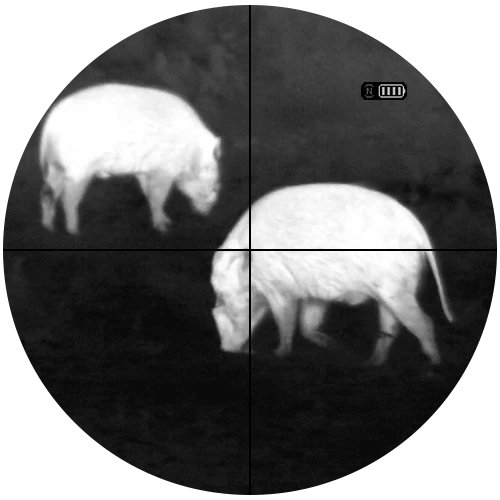
Now the second night: coyotes on open ground under a bright moon. Here the gap narrows. Night vision gives you a natural, detailed look that makes a confident ID easier, and there is plenty of light for it to amplify. But thermal still finds the animal first — a coyote crossing a distant field is a moving heat source you catch instantly, long before you could pick it out of the grass by shape alone. The practical workflow most thermal hunters settle into is scan-then-shoot: sweep the ground for heat, lock onto what is warm, then close the distance and read the animal as the picture tightens at magnification. That is why, across both nights, a single thermal optic ends up on more rifles than a light-dependent one.
How we compared them
We compared these two the way the choice actually gets made in the field, not off a spec sheet in a vacuum: which technology finds and lets you engage a live animal after dark, judged on sensor resolution, NETD sensitivity, detection range, refresh rate, weight and battery runtime against real hunting situations — hogs in cover, coyotes on open ground, scanning versus identifying. Only ATN's current 6th-gen ThOR 6 line stands in for the thermal side. The honest trade-offs: thermal shows heat, not fine coat or face detail, so a night vision scope still reads texture and terrain more naturally where light exists; and a top-tier thermal costs more than a modest light-based optic. Thermal is not the pick if your whole use is well-lit ID work or you need to read fine markings under existing light. This is an in-house look at ATN's own thermal range set against night-vision-style use, not an independent lab test, so weigh the specs against your own ground, distances and how much your nights actually rely on cover before you decide.
Frequently Asked Questions
Thermal vs night vision scope — which is better for hunting?
For most after-dark hunting, thermal is better because it detects a live animal's body heat with no light at all and sees warm animals through brush and camouflage. Night vision gives a more natural, detailed picture for positive identification but needs ambient light or an IR illuminator. If you had to own one optic for the dark, thermal like the ATN ThOR 6 covers more situations.
Can a thermal scope see through brush and cover?
Thermal detects body heat rather than reflected light, so a warm animal's signature shows through brush, tall grass and camouflage that would hide it from your eyes or a night vision scope. It does not see through solid objects, but foliage and cover that block light do not block heat the same way. This is thermal's single biggest advantage after dark.
Does night vision work in complete darkness?
A standard night vision scope needs some existing light — starlight, moonlight, or an infrared illuminator — because it works by amplifying light rather than making it. In true zero-light conditions it needs an IR source to see. Thermal, by contrast, needs no light at all because it reads heat, so it works in total darkness.
Can you use a thermal scope in daylight?
Yes. Thermal reads temperature, not light, so the ATN ThOR 6 works in broad daylight as well as at night. That makes it a true day-and-night optic. A light-amplifying night vision scope, on the other hand, can be washed out or damaged by bright daylight, so it is mainly a low-light tool.
Is night vision better than thermal for identifying an animal?
For fine identification where light exists, a night vision scope often reads more naturally because it shows a detailed, recognizable image — coat pattern, markings and the shape you expect. Thermal shows a heat signature rather than texture, so at range it tells you something warm is there faster than it tells you exactly what. Many hunters scan with thermal to detect, then close the distance to confirm the animal.
Why is the ATN ThOR 6 640x512 the thermal pick here?
It pairs a high-resolution 640x512 sensor with ≤15 mK NETD, so it draws a warm body cleanly out of cover and separates a barely-warm animal from similar-temperature ground. Its 3650 m detection range and 3-24x magnification cover close brush to open field, and features like SharpIR AI and Hot Point Tracking sharpen and hold onto moving heat. It is the most capable pick for detecting and engaging animals after dark.
Do I need both a thermal and a night vision scope?
Most hunters do not. If your priority is finding and engaging animals after dark, especially in cover, one good thermal like the ATN ThOR 6 handles the vast majority of nights and works in daylight too. A night vision scope earns a place only if your ground is open, your nights carry ambient light, and positive ID from fine detail is your main concern.
If you are choosing one optic to own the dark, go thermal. The ATN ThOR 6 640x512 3-24x finds heat where a night vision scope finds nothing — hogs bedded in brush, coyotes moving across a far field, anything warm trying not to be seen — with no light required and full daylight use on top. Want a lighter build or a value entry point that still sees through cover? Line up the whole current family on the ATN thermal scopes page and match the sensor and reach to the ground you actually hunt. Detect first, then close the distance and take the shot with confidence.
Created: August 10, 2026 · 10:05:21 UTC