The job you point it at decides which thermal vision scope you actually need. A caller sitting on a coyote stand wants something different from a hog crew clearing a field, and a rancher watching a fence line at 2 a.m. has different priorities again. This roundup skips the one-size-fits-all pitch and sorts the current ATN ThOR 6 thermal scope lineup by the work you plan to do with it, so you can match the optic to the hunt instead of guessing.
Best for long-range varmint & open country: ATN ThOR 6 640x512 3-24x — 8x zoom and the longest detection reach for wide fields and distant coyotes.
Best value for close-to-mid hog & predator work: ATN ThOR 6 384x288 2.5-20x — the lightest, most affordable current build with the same clean thermal image at typical shot distances.
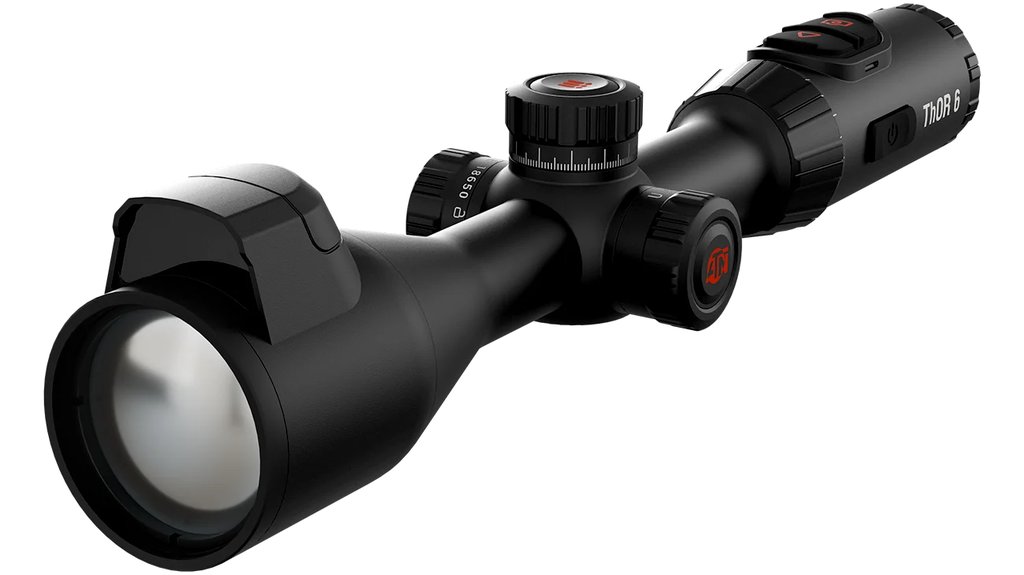
Why ATN's 6th-gen ThOR 6 line covers so many use cases
The ThOR 6 family works across so many jobs because every model shares the same 6th-generation core and then splits on sensor and lens. All three picks here run a sub-15 mK NETD sensor, roughly nine hours of runtime on swappable 18650 batteries, and the same processing and reticle system. What changes between them is resolution and magnification, and those two numbers are exactly what separate a predator setup from a long-range varmint rig. Because the platform is shared, you can pick purely on use case and trust the underlying image quality stays consistent.
ATN ThOR 6 640x512 2-16x — best all-around for predator calling, hogs and ranch duty
The ATN ThOR 6 640x512 2-16x is the pick if one scope has to do everything. Its 640x512 sensor is the high-resolution tier: think of resolution as the number of dots painting the picture, and more dots mean a finer, farther-reaching image where a coyote at the edge of a called-in stand still looks like an animal, not a smudge. The 2-16x zoom is wide enough to swing onto a hog that appears at 40 yards and still stretch out to a predator holding at the treeline.
Predator calling: fast target pickup, clean edges
On a coyote stand the animal often comes in fast and off to the side. Starting at 2x gives you a wide field of view (lower magnification means you see a wider slice of the world), so you catch the movement, then zoom in to confirm and settle the shot. The sub-15 mK NETD helps here too: NETD is the smallest temperature difference the sensor can tell apart, and a lower number means a cleaner picture, so a coyote's warm body separates crisply from cool brush even on a mild night.
Hog control and ranch protection: one rig, two jobs
For hog crews, the 640 sensor and 3100 m detection range let you scan a field, spot the heat signature of a sounder well out (detection range is the distance the scope picks up heat as a hot blob, not the distance you can identify or shoot), then move in and take the shot at working distance. The same scope pulls double duty on the property: sit on a barn or fence line, watch for the warm shape crossing where it shouldn't, and you have your answer without a spotlight.
Who it's for: the hunter who wants a single high-res thermal vision scope for mixed predator, hog and property work. Who it's not for: someone who only ever shoots long open fields and wants maximum zoom — the 3-24x below suits that better.
ATN ThOR 6 640x512 3-24x — best for long-range varmint and open country
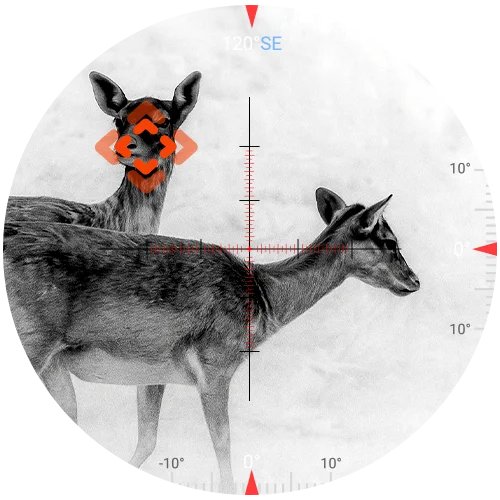
The ATN ThOR 6 640x512 3-24x is the flagship reach model, built for the days when the shot is long and the country is wide. It keeps the same high-res 640 sensor and sub-15 mK sensitivity as the lead, but pairs them with a 50 mm lens, an 8x zoom range up to 24x, and the longest detection reach in this roundup at 3650 m.
Reaching distant coyotes across a cut field
When a coyote hangs up at the far edge of a picked field, the extra magnification earns its keep. Going from 2-16x to 3-24x is like stepping from a good HD screen to one with more room to crop in — you can push the zoom to positively identify and place a precise shot at distances where the lead scope would leave the animal small in the frame. Pair that with the class-leading detection range and you spot the heat signature long before it gets nervous.
Varmint and open-terrain work
For daytime-into-dark varmint control across pasture or desert, this is the model that reaches. The trade-off is field of view: higher magnification shows a narrower slice, so it is less forgiving if you need to swing onto close, fast movers. That is the price of reach, and for open-country hunters it is a fair one.
Who it's for: long-range predator and varmint hunters working open ground. Who it's not for: the caller who mostly works tight cover and wants a faster, wider startup view.
ATN ThOR 6 384x288 2.5-20x — best value for close-to-mid hog and predator hunting
The ATN ThOR 6 384x288 2.5-20x is the value pick, and for a lot of hunters it is all the thermal vision scope they need. It carries the same 6th-gen guts and sub-15 mK NETD, drops to a 384x288 sensor and a 25 mm lens, and comes in the lightest at 790 g. It is the most affordable current build, sitting a clear step below the 640 models in tier while keeping the clean, honest thermal image.
Where the value tier shines
At the ranges most hog and predator shots actually happen — inside a few hundred yards — a 384 sensor gives you a clear, usable picture. Detection range here is 2300 m, plenty to catch a sounder crossing a field and get set. The lighter weight also matters if you carry the rifle a lot or run it on a lighter setup, and the six-palette display lets you switch between white-hot, black-hot and colour views to whatever contrasts best against the ground you hunt.
The honest trade-off
You give up resolution against the 640 models, so at the far end of the range animals look coarser and harder to identify. If your shots stay close-to-mid, you will rarely feel it; if you regularly reach out past a few hundred yards, step up to a 640 sensor instead.
Who it's for: the budget-conscious hog or predator hunter working typical shot distances who wants a light, capable scope. Who it's not for: anyone who needs to identify targets far out — the resolution ceiling shows there.
How to choose a thermal vision scope by use case
Start with the honest question of how you actually hunt, then let the specs follow. The mistake is buying the biggest number when a lighter, cheaper build would have done the same job. Here is the quick decision path.
- Predator calling — Favour a wide startup magnification and a high-res sensor so you catch fast in-comers and still ID them; the 640x512 2-16x is the sweet spot.
- Long-range varmint / open country — Prioritise magnification and detection range; the 640x512 3-24x reaches farthest and crops in tightest.
- Hog control — You want quick target pickup and enough resolution to sort a sounder; the 2-16x covers mixed distances, the 384x288 handles close-to-mid on a budget.
- Ranch / property protection — Detection range and an easy, wide view matter more than extreme zoom; a mid-tier 640 like the 2-16x watches a fence line comfortably.
- Recovery and tracking — Any of the three finds a downed animal's heat signature after dark; pick on the rest of your use case, not on recovery alone.
- Battery in the field — All three run swappable 18650 cells, so carry spares and hot-swap rather than pack up when one runs down.
How we picked these ATN thermal vision scopes
We chose these three by lining each model up against a real use case rather than a spec-sheet contest. The measures that mattered were sensor resolution (does it hold detail at your typical distance), NETD or thermal sensitivity (how cleanly it separates warm from cool), detection range (how far it flags heat before you commit), magnification against the width of view you need, plus weight and battery life for time in the field. We only considered the current 6th-generation ThOR 6 line, so nothing here is an older or discontinued model dressed up as new.
Being straight with you: this is an in-house comparison of ATN's own range, not an independent lab review, and every scope here involves a trade-off. The 3-24x reaches far but shows a narrower view up close; the 384x288 saves weight and money but gives up resolution at distance; the 2-16x splits the difference and so is nobody's absolute best at either extreme. None of these suits a hunter who only wants a cheap toy for the backyard, and a 384 sensor is not for someone who must identify animals at the far edge of a big field. Check these specs against the distances and cover you actually hunt before you buy.
Frequently Asked Questions
What is the best all-around thermal vision scope for mixed hunting?
The ATN ThOR 6 640x512 2-16x is the best all-around pick. Its high-resolution 640 sensor and flexible 2-16x zoom handle predator calling, hog control and property work from a single scope, so most hunters who do a bit of everything land here.
Which ATN ThOR 6 is best for long-range coyote and varmint hunting?
The ATN ThOR 6 640x512 3-24x is the long-range choice. It has the highest magnification at 24x and the longest detection range in the lineup at 3650 m, which lets you spot and identify animals holding at the far edge of open country.
Is a 384x288 thermal vision scope good enough for hog hunting?
Yes, for most hog hunting. Shots usually happen inside a few hundred yards, and the ATN ThOR 6 384x288 2.5-20x gives a clear, usable image at those distances. It is the value tier, lighter and more affordable, with the trade-off that far targets look coarser than on a 640 sensor.
What does NETD mean and why does a lower number matter?
NETD is the smallest temperature difference a thermal sensor can detect, measured in millikelvin. A lower number means the scope tells warm and cool apart more finely, giving a cleaner, sharper image. All three ThOR 6 picks here run a sub-15 mK NETD, so animals separate crisply from the background.
How far can these ATN thermal vision scopes detect an animal?
Detection ranges run from 2300 m on the 384x288 up to 3650 m on the 640x512 3-24x. Keep in mind detection range is the distance the scope picks up heat as a hot blob, not the distance at which you can clearly identify or ethically shoot an animal, which is always shorter.
Do these thermal scopes use replaceable batteries?
Yes. All three ThOR 6 models run on replaceable 18650 batteries and deliver about nine hours of runtime. Because the cells swap out, you can carry spares and hot-swap in the field instead of ending your night when one runs down.
Which thermal vision scope should I pick for ranch and property protection?
For watching a fence line or barn, detection range and an easy wide view matter more than extreme zoom. The ATN ThOR 6 640x512 2-16x is a strong fit: it reaches out to 3100 m, starts wide at 2x so you catch movement, and doubles as your hunting scope.
Match the scope to the way you hunt and you will not overpay for reach you never use or come up short when it counts. If you want one high-res thermal vision scope that covers predator calling, hog control and property duty, start with the ATN ThOR 6 640x512 2-16x. Want to see the full 6th-gen range and compare the long-range and value builds side by side? Browse the complete ATN ThOR thermal scope collection and pick the model that fits your ground, your distances and your budget.
Created: August 5, 2026 · 19:53:47 UTC