A good thermal vision scope does one thing no other optic can: it turns heat into a picture. That means it works in total darkness, through light fog and drifting smoke, and across the whole calendar — the sharp, high-contrast cold of a January field and the muggy, low-contrast warmth of an August night. Seasons change how heat behaves, and the scope that shines in winter is not always the one you want in summer. This roundup organizes ATN's current 6th-generation thermal vision scope lineup around exactly that: which ATN ThOR 6 fits which season and which conditions, so you buy the one that matches the nights you actually hunt.
Best all-around / best for scanning: ATN ThOR 6 640x512 2-16x — same 640 sensor, lower base magnification for a wider field when you sweep large fields at dusk.
Best value: ATN ThOR 6 384x288 2.5-20x — lighter, six color palettes, plenty of range for close-to-mid work in any season.
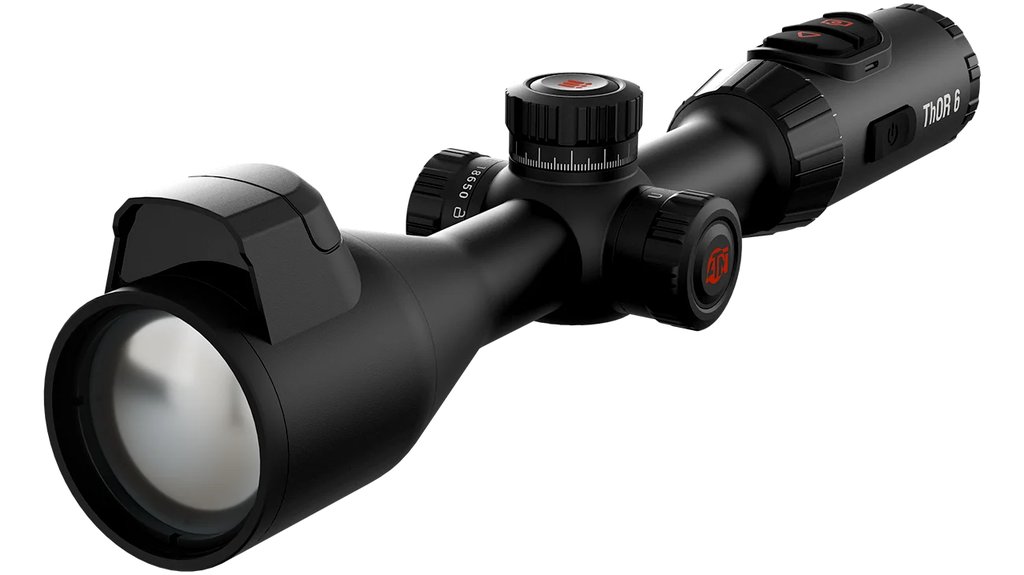
Why ATN's 6th-gen thermal vision scopes handle every season
ATN's 6th-generation ThOR 6 line is built for the way heat actually behaves through the year, which is why the whole roundup stays inside this one family. Thermal does not rely on any light — it reads temperature, so it sees in pitch black and cuts through light fog, mist, and smoke that would blind a day scope or a night-vision unit. In winter, cold ground makes a warm animal pop like a lightbulb; in summer, sun-baked earth stays warm long after dark and the temperature gap between animal and background shrinks. The ThOR 6 answers both cases with a low-noise sensor and high thermal sensitivity, so even a faint heat difference on a warm July night still resolves into a usable target. Every scope here shares that sensor quality, an on-board recorder, ballistic aids, and long runtime — the differences below are about sensor size, magnification, and reach, not whether it can see.
1. ATN ThOR 6 640x512 3-24x — best overall for every season
The ATN ThOR 6 640x512 3-24x is the flagship and the pick that carries through the whole year. It pairs the largest sensor in the line with the longest reach and the highest magnification, so it earns its keep on the nights when everything is working against you — a warm summer background, a distant edge of a field, an animal barely warmer than the dirt it stands on.
More thermal pixels mean detail that survives distance
The 640x512 sensor is the thermal equivalent of jumping from an SD screen to HD — it draws the scene with far more dots, so a heat signature keeps its shape as it moves farther away. Resolution is simply the count of thermal pixels; more of them means finer detail at greater range, which is what lets you tell a coyote from a stump at the far end of a winter pasture instead of squinting at a warm blob.
Low NETD keeps summer's faint heat readable
NETD, measured in millikelvin, is the smallest temperature difference the scope can pick out — lower is better, and this one sits at or below 15 mK. That number matters most in summer, when sun-warmed ground narrows the gap between an animal and its background. A sensitive sensor still separates the two, so the image stays clean and low-noise instead of washing into gray. In winter, the same sensitivity gives you a crisp, high-contrast picture with almost no grain.
3650 m of reach and 3-24x for the far edge
Detection range is the farthest distance the scope can spot a heat signature — enough to know something warm is out there, not yet to name it. At 3650 m this is the longest reach in the roundup, and the 3-24x magnification (plus 8x digital zoom) brings that far edge close enough to identify and take an ethical shot. Magnification is just how much nearer the target appears; a 50 mm lens feeds the sensor plenty of light-energy to work with at the top of that range.
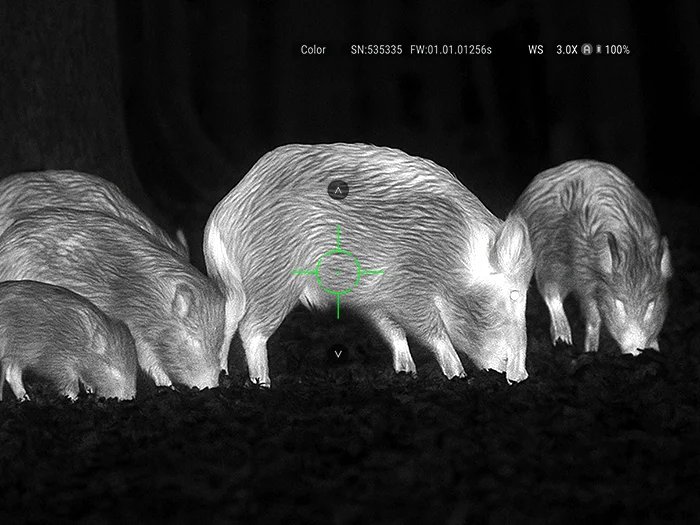
Who it's for: hunters who cover large or long ground year-round and want one scope that never runs short on reach or clarity. Who it's not for: anyone working only tight woods and short lanes, where the extra magnification and price of the flagship go mostly unused — the 2-16x or 384 will serve better.
2. ATN ThOR 6 640x512 2-16x — best all-around for scanning
The ThOR 6 640x512 2-16x keeps the same high-resolution 640 sensor and sub-15 mK sensitivity as the flagship, but starts at a lower base magnification. That is a deliberate trade for anyone who spends more time sweeping open ground than reaching for the far fence line.
Lower base magnification means a wider field for the sweep
Field of view is how wide a slice of the world you see at once, and it grows as magnification drops. Starting at 2x, this scope shows you more ground per glance than the 3-24x, which is exactly what you want when you scan a warm summer field at dusk or track movement along a spring tree line. When you find something, you zoom in to 16x to confirm and settle the shot. The 35 mm lens and 3100 m detection range keep that scanning bright and reach out plenty far for most stands.
Same 640 clarity, hot-swap battery for long sits
Because it shares the 640x512 sensor, the image detail is identical to the flagship — the same HD-grade heat picture, just framed wider at the low end. Battery runtime is around nine hours, and the 18650 cells are replaceable, so you can hot-swap a fresh pair and keep hunting through the long dark hours of a winter night instead of packing up early.
Who it's for: hunters who scan wide ground — fields, food plots, open cuts — and want top-tier resolution with an easier wide view. Who it's not for: long-range specialists who routinely stretch past 3100 m or want the absolute highest magnification; the 3-24x flagship is the tool for that.
3. ATN ThOR 6 384x288 2.5-20x — best value across seasons
The ThOR 6 384x288 2.5-20x is the value pick, and it does not skimp where it counts. It shares the same sub-15 mK sensitivity and the same 6th-gen platform as its bigger siblings, so the image stays clean; it simply uses a smaller 384x288 sensor and a shorter lens, which is where the savings come from.
A right-sized sensor for close-to-mid nights
The 384x288 sensor still draws a detailed picture — think of it as fewer dots than the 640 but far more than an entry unit, plenty to hold a clear heat signature out to its 2300 m detection range. For close-to-mid work in any season — a fall food plot, a winter draw, a summer river bottom — that reach and detail cover the great majority of real shots.
Six palettes and lighter weight for all-night carry
This model offers six color palettes, which is more than a cosmetic choice: switching between White Hot, Black Hot, and iron/color modes changes how a scene reads as conditions shift, and a warm-background summer scene often looks cleaner in one palette than another. At 790 g it is also the lightest of the three, easy on the arms during a long walk-and-stalk. The 2.5-20x magnification still zooms in tight when you need to confirm a target.
Who it's for: hunters who want honest 6th-gen thermal performance at the value tier for close-to-mid ranges. Who it's not for: those chasing the finest detail at long distance — the 640 models pull ahead the farther out you push.
How to choose a thermal vision scope for your seasons
Start with the conditions you actually hunt, then match the specs to them. Thermal sees in complete darkness and through light fog or smoke in every season, so the real question is how far you shoot and how warm your backgrounds get. Explore the full lineup on the ATN thermal scopes category page, then weigh these points:
- Sensor resolution — the count of thermal pixels; a 640x512 holds shape and detail at long range, while 384x288 is ample for close-to-mid work. Buy up in resolution if you shoot far.
- NETD (thermal sensitivity) — the smallest temperature difference detectable, in millikelvin; the lower the number, the cleaner the image, and it matters most on warm summer nights when heat contrast is low.
- Detection range — how far the scope can spot a heat source (spot, not identify); match it honestly to your longest realistic shot rather than the biggest number.
- Magnification and field of view — lower base magnification gives a wider view for scanning open ground; higher magnification pulls distant targets in. Pick the base that fits how you hunt more of the time.
- Battery runtime — how long the scope runs; replaceable cells let you hot-swap spares and stay out through the long nights of winter.
- Weight — a lighter scope is easier on a walk-and-stalk; a heavier flagship earns its grams with more reach.
How we picked these ATN thermal vision scopes
This is an in-house comparison of ATN's own current range, not an independent lab review, so read it as an honest walk through our lineup rather than a third-party test. We limited the field to the 6th-generation ThOR 6 line only — no older or discontinued models — and ranked by the specs that decide how a thermal vision scope performs across the seasons: sensor resolution for detail at distance, NETD for how cleanly it reads low-contrast summer heat, detection range against realistic shot distances, refresh rate for smooth tracking of moving game, plus weight and battery for the reality of a long night afield. We also weighed honest trade-offs: the flagship's reach is wasted in tight woods, the 2-16x gives up top-end magnification for a wider scan, and the 384 trades some long-range detail for value and lighter weight. None of these is the right pick for someone who only needs a daytime day scope or who never hunts after dark — thermal earns its place when light is gone or the air is full of fog and smoke. Check these specs against your own nights before you decide.
Frequently Asked Questions
Does a thermal vision scope work in daylight and in every season?
Yes. A thermal vision scope reads heat rather than visible light, so it works around the clock and through every season. It sees just as well at high noon as at midnight, and the ThOR 6 line handles both the sharp heat contrast of winter and the flatter, warmer backgrounds of summer nights.
Can a thermal scope see through fog, smoke, or brush?
A thermal vision scope sees through light fog, mist, and drifting smoke far better than a day optic, because heat energy passes through them where visible light scatters. It cannot see through solid objects like heavy brush, walls, or glass, though, since those block the heat signature behind them.
What does NETD mean and why does it matter in summer?
NETD is the smallest temperature difference a thermal scope can detect, measured in millikelvin, and lower is better. It matters most on warm summer nights, when sun-warmed ground shrinks the heat gap between an animal and its background. The ThOR 6 line's sub-15 mK sensitivity keeps that faint difference readable when a less sensitive sensor would wash it into gray.
How far can the ATN ThOR 6 thermal vision scope detect a target?
It depends on the model. The flagship ThOR 6 640x512 3-24x detects a heat signature out to about 3650 m, the 2-16x reaches roughly 3100 m, and the 384x288 model to about 2300 m. Detection means spotting that something warm is there; you use magnification to move closer and identify it before any shot.
Which ATN ThOR 6 is best for scanning wide open fields?
The ThOR 6 640x512 2-16x is the strongest scanner. Its lower 2x base magnification gives a wider field of view, so you see more ground per glance while sweeping a field or tree line, then zoom to 16x to confirm what you find. It keeps the same high-resolution 640 sensor as the flagship.
Do the batteries last a full night of hunting?
Runtime is around nine hours on the ThOR 6 models, which covers most nights. The 18650 cells are replaceable on the supported models, so you can carry charged spares and hot-swap them to keep going through the longest winter nights without cutting a hunt short.
Is the 384x288 model good enough, or should I buy a 640 sensor?
The 384x288 model is genuinely capable for close-to-mid ranges and shares the same sub-15 mK sensitivity as its bigger siblings, making it the value pick. Step up to a 640x512 sensor if you regularly shoot at longer distances, where the extra thermal pixels hold detail and shape farther out.
Ready to pick the thermal vision scope that matches your nights? For hunters who cover long or open ground in any season, start with the flagship ATN ThOR 6 640x512 3-24x — the most detail and the longest reach in the line. If you scan wide fields more than you stretch for distance, the 2-16x is the smarter frame, and the 384x288 model brings honest 6th-gen thermal at the value tier. Compare the full range side by side on the ATN thermal scopes page and choose the ThOR 6 built for the seasons and distances you actually hunt.
Created: August 5, 2026 · 19:53:47 UTC