The ground you glass in January looks nothing like the ground you glass in July. Frozen dirt reads almost black to a thermal, so a warm animal jumps out at you. Come summer, the whole field is soaking up heat and a bedded deer barely separates from the grass. A thermal spotting scope that earns its keep is one you trust across all four seasons, not just the easy cold nights. This roundup organizes three current ATN ThOR 6 models by the conditions you will point them at, and it leads with the all-rounder, the 2-16x, because a scope that spots and shoots year-round beats one that only shines in one season.
Best for deep winter reach: ATN ThOR 6 640x512 3-24x. When cold contrast lets you spot way out, the extra top-end zoom confirms distant heat.
Best value across seasons: ATN ThOR 6 384x288 2.5-20x. The 384 sensor still reads seasonal contrast well and sits in the value tier, so it is the affordable year-round starter.
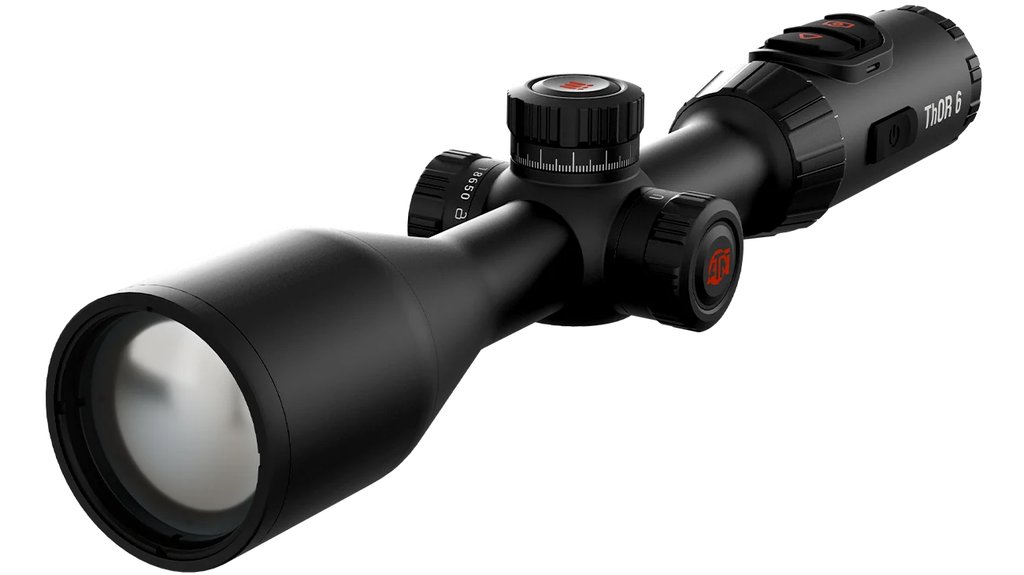
Why ATN's 6th-gen ThOR 6 line handles every season
Seasons change how much heat contrast you get, and that is exactly what a thermal reads. The ThOR 6 line copes because it starts from a low-NETD sensor. NETD (millikelvin) is the smallest temperature difference the sensor can see; lower mK means a cleaner, higher-contrast image, and that matters most in summer when a warm animal barely differs from warm ground. Every ThOR 6 here sits at 15 mK or better. Add SharpIR AI processing, a 50Hz-class refresh that keeps panning smooth in any month, six palettes to dial contrast, and Hot Point Tracking to flag the warmest object, and you get a scope that adapts instead of quitting when conditions get tough. These models all live in ATN's ThOR 6 thermal scope lineup.
ATN ThOR 6 640x512 2-16x - the all-season pick
The ATN ThOR 6 640x512 2-16x is the one to own if you hunt more than one season. The 640 sensor gives you the contrast to read summer's flat heat, and the 2x low end opens a wide scan window for fall's brushy edges where game hides close. It is the practical middle: enough reach for open winter fields, enough field of view for tight cover.
Winter: cold ground makes spotting easy
On a frozen night the background is cold and a warm animal lights up like it owes you money. Scan at 2x to sweep a field fast, then wind up to 16x to confirm. Detection out to 3100 m means winter's long, clear lines of sight are well within reach, and the low NETD keeps the edges of that heat crisp instead of soft.
Summer: low contrast is where the 640 earns its keep
Summer is the hard season. Everything is warm, so the temperature gap between animal and ground shrinks. That is where more pixels pay off, like the jump from a grainy photo to a sharp one, more detail lets you tell a deer's shape from the grass it is bedded in. The 640 sensor and 15 mK sensitivity give you that separation when a lesser optic would show mush.
Fall brush: a wide scan view finds close game
In fall cover, animals are near and the shots are short. Starting at 2x gives you the widest field of view here, so you catch movement in thick stuff instead of tunnel-visioning past it. Hot Point Tracking flags the warmest object as you pan, and PiP floats a zoomed aiming window so you keep the whole scene while you settle.
Who it is for: anyone who hunts across seasons and wants one scope that adapts. Who it is not for: a pure long-range spotter who lives on the top end of the zoom dial; the 3-24x suits that better.
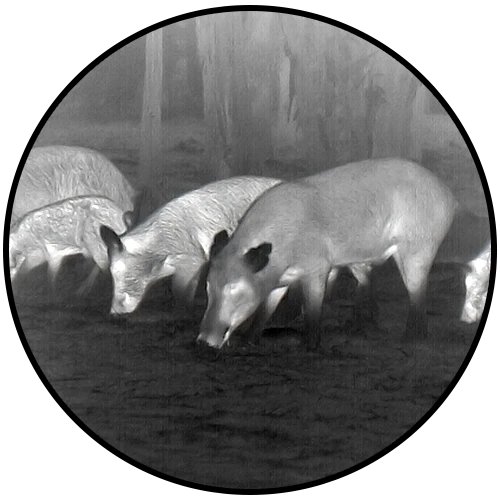
ATN ThOR 6 640x512 3-24x - for deep-winter reach
When the cold gives you contrast for miles, the 3-24x lets you use it. Same 640 sensor as the all-rounder, but the longer zoom range reaches farther, so a heat signature spotted way out on a frozen field can be confirmed before you ever move. This is the winter long-range specialist of the three.
Top-end zoom confirms distant cold-night targets
Detection stretches to 3650 m, the longest here, and the 3-24x range plus 8x digital zoom gives you the magnification to read a distant blob. On a still, cold night when heat shows up far off, that reach is the difference between guessing and knowing. The image holds together at high zoom thanks to SharpIR AI.
Same all-season smarts, more magnification
You keep Hot Point Tracking, PiP, Zeroing Freeze, RAV, Wi-Fi and ATN Connect 6, and the Full-HD OLED display. It weighs the same 830 g and runs the same nine hours on two swappable 18650 cells, so the only real trade for the extra reach is a narrower low end in tight fall cover.
Who it is for: hunters whose best season is open, cold-weather long-range work. Who it is not for: anyone mostly in brush, where the 2-16x's wider scan view serves better and the top-end zoom goes unused.
ATN ThOR 6 384x288 2.5-20x - value across seasons
If you want a year-round thermal without stretching the budget, the 384x288 is the entry point. It reads seasonal contrast well enough for most hunting and covers a 2.5-20x range, so it is no one-trick pony. It sits in the value tier and still carries the full ThOR 6 feature set.
Reads winter contrast, copes with summer
The 384 sensor has fewer dots making up the image than the 640s, so summer's flat contrast is harder on it, but winter's cold ground makes its job easy, and it spots warm game there without complaint. Six color palettes let you swap White Hot, Black Hot and Iron to match whatever contrast the season hands you.
Full features at the value tier
SharpIR AI, Hot Point Tracking, PiP, Zeroing Freeze, RAV, Wi-Fi and ATN Connect 6, and the Full-HD OLED are all here. At 790 g it is the lightest of the three, which is a real plus on long walk-and-glass nights. You are trading sensor resolution and a little reach for a lower price, and that is a fair swap for a starter.
Who it is for: the seasonal hunter easing into thermal who wants a capable all-year tool at a friendly price. Who it is not for: summer long-range spotters who need the 640's contrast to pull an animal out of warm ground far off.
How to choose a thermal spotting scope for your seasons
Think about which season you hunt hardest and what the ground does to heat contrast then. That points you at the right sensor and zoom. Weigh these before you buy:
- Sensor resolution - more pixels means finer detail, so you can ID targets farther out and separate a warm animal from warm summer ground. A 640 helps most in low-contrast heat.
- NETD (thermal sensitivity) - the smallest temperature difference the sensor sees, in millikelvin. Lower mK gives a cleaner image, which matters most when summer shrinks the gap between animal and background.
- Detection range - the farthest distance the optic picks up a heat signature. Cold winter nights let you use every meter of it; detection is spotting, not full ID.
- Magnification range - a wide low end for brushy fall scanning and a high end for open winter confirmation. The range spans the optical base to the max digital zoom.
- Refresh rate - a smooth 50Hz-class image means less lag when you track a moving animal, in any season.
- Weight and battery - long, cold nights drain patience and cells; a lighter body and swappable batteries keep you glassing.
How we picked these ATN thermal scopes
Straight up: this is an in-house comparison of ATN's own current range, not an independent lab review. We looked only at the 6th-generation ThOR 6 line, and we judged each model against how it holds up across real seasons rather than against a bare spec sheet.
- Sensor resolution - how much detail each model keeps when summer heat flattens contrast.
- NETD / thermal sensitivity - how cleanly it separates a warm animal from a warm background.
- Detection range - how far it spots heat on the clear, cold nights that reward reach.
- Refresh rate - how smoothly it tracks moving game season to season.
- Weight and battery life - how well it carries through long nights in any weather.
Honest trade-offs: the 3-24x reaches farthest but steps up in price and its narrow low end is a liability in fall brush. The 384 value model struggles most in summer's flat contrast. And every model here is a weapon-mounted scope, so if you want a standalone glass to pass around, that is not what these are. Who these are NOT for: anyone wanting a non-mounted observation device should look at ATN's monoculars or binoculars instead. Match the pick to your season and check the specs against your own ground.
Frequently Asked Questions
Do thermal spotting scopes work better in winter than summer?
Yes, generally. Cold ground gives you strong contrast, so a warm animal stands out easily in winter. In summer the whole scene holds heat, shrinking the gap between animal and background, which is why a higher-resolution 640 sensor with low NETD helps most in warm months.
Which ThOR 6 is best if I hunt every season?
The 640x512 2-16x is the all-rounder. Its 640 sensor gives the contrast summer demands, and the 2x low end opens a wide scan view for brushy fall cover while still zooming to 16x for open winter fields. It adapts better than a scope tuned for one season.
Does color palette choice matter across seasons?
It can. All three scopes offer palettes like White Hot, Black Hot and Iron. On low-contrast summer nights one palette may separate an animal from the ground better than another, so being able to switch on the fly is a real seasonal advantage.
How much magnification do I need for fall brush hunting?
Less than you might think. In thick fall cover animals are close and a wide field of view matters more than reach, so a low 2x starting magnification helps you catch movement. Save the high end of the zoom for open winter ground.
Will the battery last a full cold winter night?
Each of these runs about nine hours on two 18650 cells, and the cells are swappable, so a fresh pair in your pocket resets the clock. Cold does sap batteries faster, so carrying a spare set on long winter sits is smart practice.
Is the value 384 model good enough for year-round use?
For most seasonal hunters, yes. It reads winter contrast easily and handles spring and fall fine. Its one real weakness is summer's flat contrast at longer range, where the 640 sensors pull ahead. If summer long-range spotting is your main game, step up to a 640.
If you hunt more than one season, the ATN ThOR 6 640x512 2-16x is the scope that reads cold winter fields, warm summer brush, and everything between, then lets you take the shot with the same optic. Want to see how the reach-focused and value picks stack up against it? Compare the whole ATN ThOR 6 thermal scope lineup and match the sensor and zoom to the seasons you hunt hardest. Pick the one that fits your year, then go put it to work.
Created: August 5, 2026 · 19:53:47 UTC