A thermal scope with rangefinder is a thermal rifle scope that also carries a built-in laser to measure how far away your target is, right through the same optic you aim with. Instead of guessing distance in the dark, or juggling a separate handheld rangefinder, you press a button and the scope tells you the range on-screen. The ATN ThOR 6 LRF 640x512 is ATN's current example, and this guide walks through exactly what that laser does, when it matters, and how to use it well.
What is a thermal scope with a rangefinder?
It is a single device that does two jobs: it shows a heat picture so you can see game in total darkness, and it fires a brief, invisible laser pulse to measure the distance to whatever is in the reticle. The scope times how long the pulse takes to bounce back and converts that into a range in yards or meters, then displays it on the screen. Everything happens inside the optic, so your eye never leaves the picture and your rifle never moves off target.
How does the rangefinder work, step by step?
- Put the reticle on the target. Center a coyote, hog, or aiming point in the thermal picture as you normally would.
- Press the ranging button. The scope sends out an eye-safe laser pulse toward whatever the reticle covers.
- The scope reads the return. It measures the time for the pulse to reflect back and calculates the distance, showing the number on-screen in a fraction of a second.
- Apply the hold. With a confirmed distance, you hold for that range - or use the scope's ballistic tools - instead of estimating. On the ATN ThOR 6 LRF this happens without breaking your cheek weld.
- Send the shot. Because you never left the picture or lowered the rifle, the animal has no reason to move before you fire.
What can you use a ranging thermal scope for?
- Predator hunting at varied distances - coyotes that stop anywhere from 80 to 400 yards, where a guessed hold misses.
- Hog control on big ground - confirming range across a field so a first shot connects before the sounder scatters.
- Long-range confirmation - verifying that a target is actually within your effective range before you commit to a shot.
- Low-light terrain you can't read - open pasture or water edges at night where there are no fences or trees to judge distance by.
How a ranging scope compares to a plain thermal scope
A standard scope like the ATN ThOR 6 640x512 3-24x gives you the same thermal picture and the same 640 sensor; what it lacks is the built-in laser. If your shots are all at a known, fixed distance - a bait site you've paced off, a feeder at a measured range - a plain scope is all you need. The moment your distances vary and you cannot pace them in the dark, the ranging model earns its place. Same image, one extra tool that removes the biggest source of long-range error.
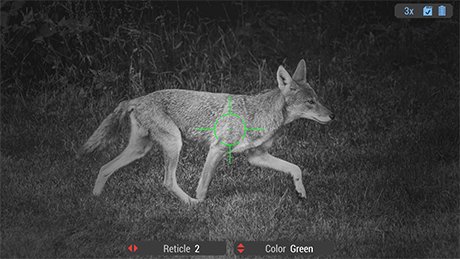
Key features to understand
- Sensor resolution (640x512) - more dots in the picture, so a distant animal stays sharp when you zoom; the same detail that makes a ranged shot worth taking.
- NETD (under 15mK) - how small a temperature difference the scope can see; a lower number means cleaner contrast and a target you can actually put the laser on.
- Laser rangefinder - the distance meter itself; look for ranging that works out to the distances you hunt and reads quickly.
- Refresh rate (50 Hz) - the picture redraws fifty times a second, so a moving animal stays smooth while you range and settle.
- Ballistic tools - the scope can turn a measured range into a corrected aiming point, which is the whole payoff of ranging through the optic.
What to look for before buying
- Does the ranging distance cover your longest realistic shot? Match the laser's working range to your ground.
- Is the sensor good enough to justify the range? A rangefinder is wasted on a target you can't identify; pair it with a 640 sensor.
- Is the control easy to reach with the rifle up? You want to range without shifting your grip or cheek weld.
- Battery life for a full night - ranging draws power, so confirm the scope runs the length of your hunt.
Common mistakes with a ranging thermal scope
- Ranging the brush, not the animal. If the reticle drifts to a warm branch in front of the target, the number is wrong - confirm the reticle is on the body.
- Trusting a single reading in bad conditions. Fog and heavy humidity can shorten or scatter the return; take a second reading to confirm.
- Skipping the zero. A rangefinder helps only if the rifle is properly zeroed first; range means nothing on an unzeroed gun.
- Over-magnifying before ranging. Find and range the target at a lower power for a stable picture, then zoom to make the shot.
Example: the ATN ThOR 6 LRF 640x512
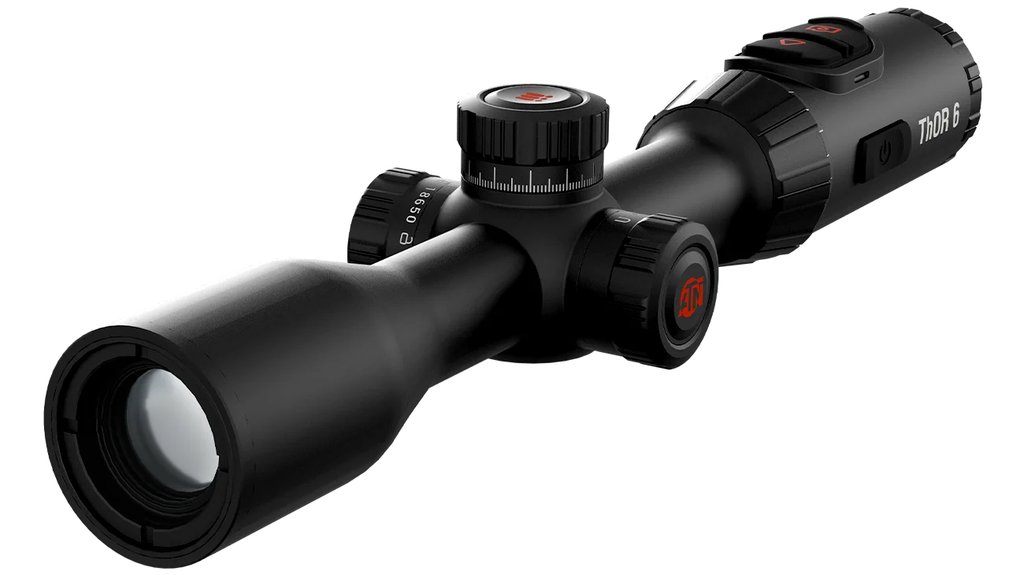
The ATN ThOR 6 LRF 640x512 shows how the pieces come together. Its 640x512 sensor and 15mK sensitivity give a clean picture worth ranging in the first place, the 3-24x zoom lets you both find and confirm a target, and detection out past 3,600 meters means you spot heat long before the shot. The built-in laser turns all of that into a real number you can hold on, and the 50 Hz refresh keeps a moving animal smooth while you do it. At around 855 grams it stays under the two-and-a-quarter pound mark, so the added capability doesn't turn the rifle into a club. It belongs in ATN's ThOR thermal scope line as the precision option for hunters whose shots stretch and vary.
Is a thermal scope with a rangefinder worth it?
It is worth it when your shot distances change from one animal to the next and you hunt where you cannot judge range by eye in the dark. That describes most open-country predator and hog hunting. If every shot you take is at one paced-off distance, you can save the money and run a plain 640 scope. But if you have ever guessed a hold at night and pulled the shot low or high, the built-in rangefinder is the single feature most likely to fix that.
Frequently Asked Questions
What does a rangefinder add to a thermal scope?
It measures the exact distance to your target through the optic and lets you apply a correct hold instead of guessing. On the ATN ThOR 6 LRF, this removes the distance error that causes most long-range misses in the dark.
Is the ATN ThOR 6 LRF's laser safe to use?
Yes, it uses an eye-safe laser pulse to measure distance. You range a target the same way you would with a quality handheld rangefinder, just built into the scope.
How far can the ATN ThOR 6 LRF range a target?
It is built for the long distances predator and hog hunters actually shoot, with thermal detection reaching past 3,600 meters. You range and confirm targets at practical hunting distances well within that.
Do I need a rangefinder scope if I hunt at one known distance?
No. If every shot is at a fixed, paced-off range, a standard thermal scope like the ThOR 6 640x512 3-24x does the job. The rangefinder earns its place when distances vary.
Does ranging drain the battery faster?
Ranging uses some power, but the ATN ThOR 6 LRF is rated for roughly nine hours, enough for a full night's hunt. Carry a spare set of 18650 cells for back-to-back sessions.
Can I use the range to get an automatic aiming correction?
Yes. The scope's ballistic tools can turn a measured distance into a corrected aiming point, which is the main reason to range through the optic rather than with a separate device.
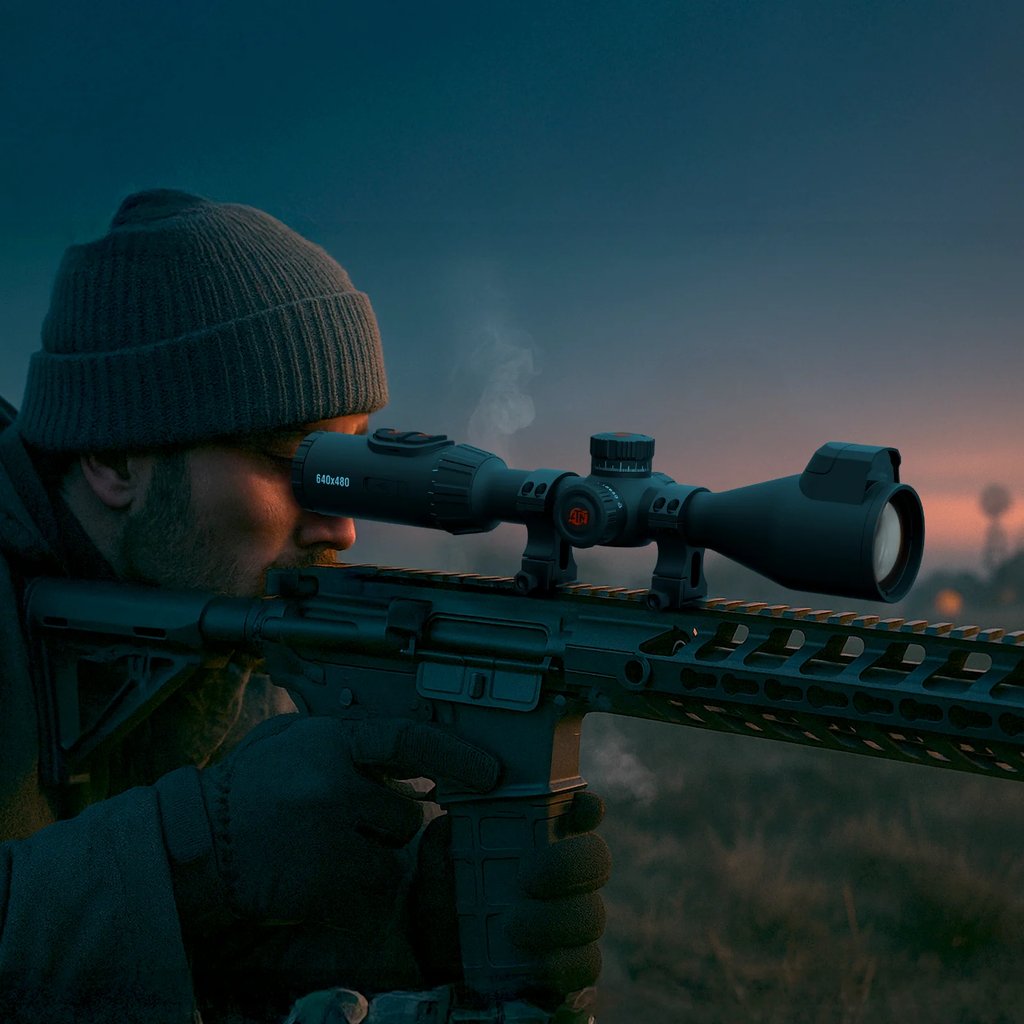
If your shots stretch and change from stand to stand, a thermal scope that ranges for you is the upgrade that pays off first. Take a closer look at the ATN ThOR 6 LRF 640x512, or browse the full ATN ThOR thermal scope line to compare the ranging model against the standard 640. Match the scope to the distances you really hunt, get it zeroed, and you will spend your nights confirming shots instead of guessing them.
Created: July 8, 2026 · 08:43:37 UTC