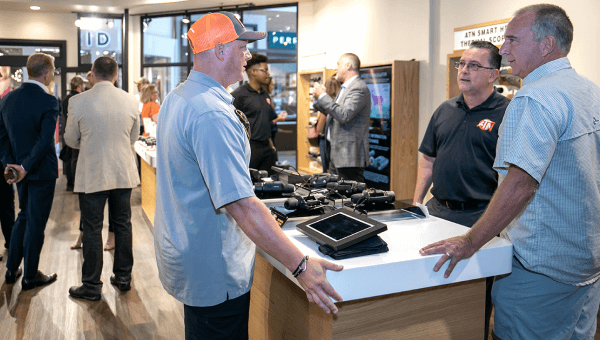
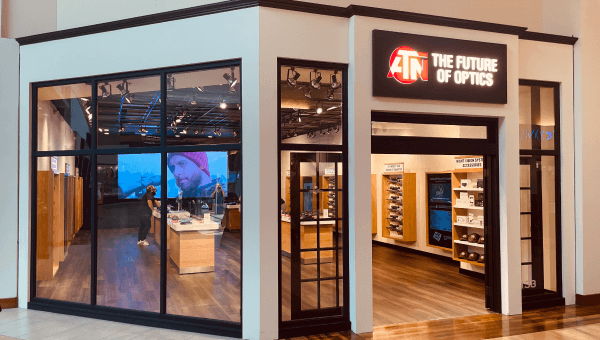
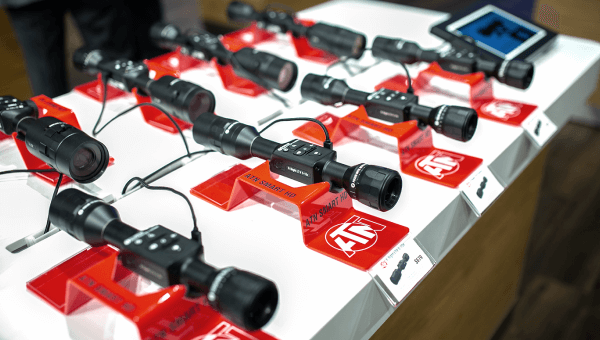
A thermal scope shows you the animal in the dark. A rangefinder tells you how far away it is. Put both in one unit and you have a scope that not only spots the target but hands you the firing solution, and that is the whole appeal of a thermal scope with rangefinder. The best one is the ATN ThOR 6 LRF 640x512: a high-resolution 640 thermal sight with a built-in laser rangefinder wired straight into its ballistic calculator, so you range the target, the scope solves the drop, and you hold or dial with confidence. This guide explains why the ThOR 6 LRF is the top pick, how it stacks up against the standard ThOR 6 640, and how the integrated rangefinder changes a shot after dark.
The best thermal scope with a rangefinder is the ATN ThOR 6 LRF 640x512. Its built-in laser rangefinder is accurate to about one meter out to 1,000 meters and feeds the ballistic calculator, so ranging and holdover happen in the scope. Add a sharp 640 sensor, 15mK sensitivity, and 3,650 meters of detection, and it puts far targets on the crosshair fast.
Quick answerBest overall: ATN ThOR 6 LRF 640x512 — built-in laser rangefinder feeding the ballistic calculator, sharp 640 image, long detection.
Best without built-in ranging: ATN ThOR 6 640x512 — same 640 sensor and detection at a lower step if you already carry a separate rangefinder.
Best for one-touch shots: the ThOR 6 LRF — range and drop solution happen inside the scope, so nothing leaves your cheek weld.
Why an ATN 6th-gen scope leads for built-in ranging
A built-in rangefinder matters because distance is the one variable you cannot eyeball in the dark. Guess it wrong on a far target and your drop is wrong. The ThOR 6 LRF solves that inside the scope: press a button, its 905nm Class 1 eye-safe laser reads the range to about a meter out to 1,000 meters, and that number flows into the onboard ballistic calculator, which carries up to six load profiles. You get a corrected hold without lowering the rifle or reaching for a separate unit. Both scopes here are from ATN's current 6th-gen line, so you also get a crisp 640x512 sensor, class-leading 15mK sensitivity for a clean picture in damp air, a fast 50 Hz refresh, Picture-in-Picture, and Recoil Activated Video. The LRF model is the pick when you want ranging built in; the standard 640 is the value alternative if you already range with a handheld.
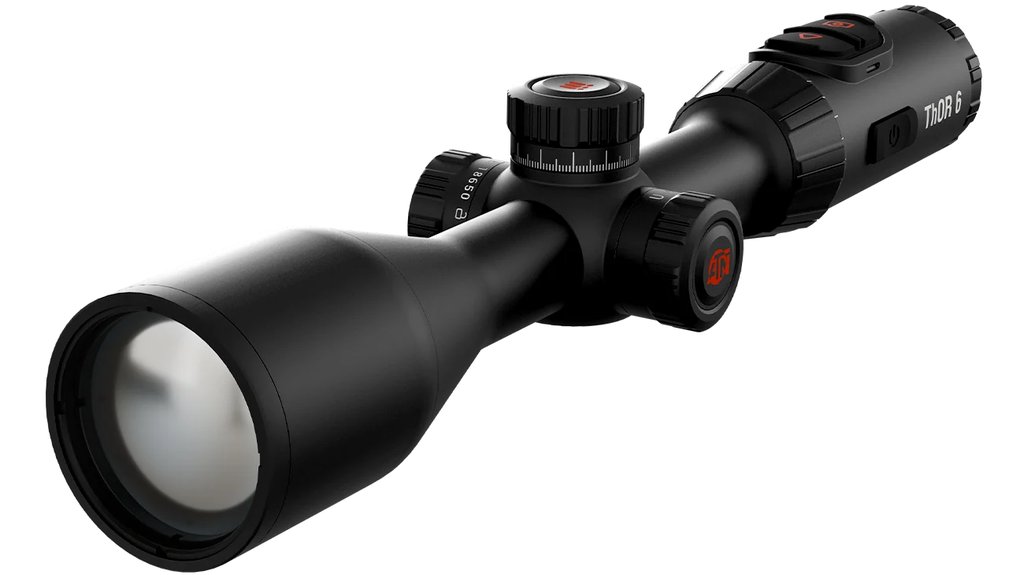
Best thermal scope with rangefinder: ATN ThOR 6 LRF 640x512
The ATN ThOR 6 LRF 640x512 is the top pick because it removes the guesswork and the extra step from a long shot in the dark. Its 640x512 sensor puts a lot of dots in the picture, so you can push the 3-24x magnification and digital zoom to identify a target far off before the image turns blocky. The 15mK NETD rating keeps that picture clean when fog rolls in or the air turns humid. And the star feature — the built-in laser rangefinder — reads distance to about a meter and hands it to the ballistic calculator instantly.
How the rangefinder changes the shot
Without built-in ranging you spot the animal, then break position to range it with a handheld, then get back on the rifle and hope it has not moved. With the ThOR 6 LRF you never leave the scope: range, solve, hold, send. The calculator's six profiles mean you can store different loads or rifles and switch between them. Reticle Transparency Control and Zeroing Freeze make dialing precise.
Reach and detail
Detection out to about 3,650 meters means you pick up heat long before the target is in gun range, and the 640 sensor gives you the resolution to confirm what you are looking at. Dual replaceable 18650 batteries run about nine hours, so a full night is covered with a swap on hand.
Who it's for: hunters who take longer shots after dark and want ranging and drop solutions handled inside the scope. Who it's not for: someone who only shoots close and does not need a laser rangefinder — the standard 640 saves the step up.
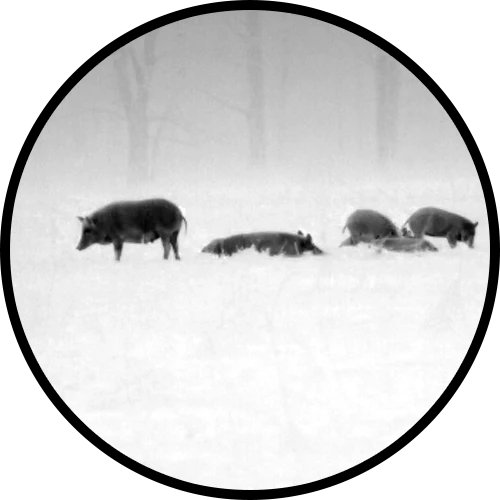
The alternative without built-in ranging: ATN ThOR 6 640x512
The ATN ThOR 6 640x512 shares the same 640 sensor, 15mK sensitivity, 3-24x magnification, and 3,650 meters of detection as the LRF model, but leaves out the built-in laser rangefinder. If you already carry a handheld rangefinder and are comfortable working distance separately, this is the way to get the same image quality and reach for a step less. It sits at the flagship tier on image performance; you are simply choosing not to pay for integrated ranging.
When to skip the built-in LRF
If most of your shots are at moderate distance where drop is minimal, or you already own a rangefinder you trust and do not mind the extra motion, the standard ThOR 6 640 gives you everything else the LRF offers. If your shots are long and you want the speed and repeatability of ranging inside the scope, the LRF is the clear pick.
Who it's for: hunters who want top 640 image quality and already range with a handheld. Who it's not for: long-range shooters who want one-touch ranging tied to the drop solution — choose the LRF.
Why a built-in rangefinder beats a separate handheld
A rangefinder built into the scope beats a handheld on speed, steadiness, and simplicity in the field. With a separate unit you break your shooting position, raise the handheld, find the target again through a second optic, read the number, set the handheld down, get back behind the rifle, and hope the animal has not drifted. Every one of those steps costs time and adds a chance for the target to move or spook. The ThOR 6 LRF collapses all of it into a button press without your eye ever leaving the eyepiece. You keep your cheek weld, your reticle stays on the animal, and the distance flows straight into the ballistic calculator. On a cold, dark stand where your hands are stiff and the pig is not going to wait, that difference is the whole reason the integrated laser exists.
The ballistic calculator and profiles
The rangefinder is only half the system — the calculator is what turns a distance into a hit. Once the ThOR 6 LRF ranges the target, its onboard ballistic calculator applies your load data and gives you a corrected hold or dial. It stores up to six profiles, so you can keep separate solutions for different rifles, calibers, or loads and switch between them without re-entering data. Pair that with Zeroing Freeze for a rock-steady sight-in and Reticle Transparency Control so your aiming point never disappears against a bright target, and the scope does the math a hunter used to do by hand or guess.
How to choose a thermal scope with a rangefinder
The core question is whether the rangefinder needs to live inside the scope. From there, match resolution and reach to your shots:
- Built-in vs handheld ranging — long shots where drop matters and speed counts? The ThOR 6 LRF's integrated laser wins. Comfortable with a separate rangefinder? The standard 640 saves the step.
- Ranging accuracy and reach — the ThOR 6 LRF reads to about one meter out to 1,000 meters and feeds the ballistic calculator directly, which is what makes a far shot repeatable.
- Resolution for target ID — both use a 640x512 sensor, so you get plenty of detail under zoom on either model.
- Clean image in bad air — both carry a 15mK NETD rating for a cleaner picture in fog and humidity.
- Battery and weight — both run about nine hours on dual 18650s and stay under 2.2 lbs; the LRF is a touch heavier at 855 g for the added laser.
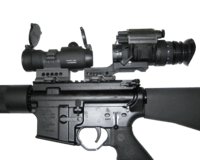
How we picked these ATN thermal scopes with ranging
We evaluated these on the things that decide a ranged shot in the dark: sensor resolution for identifying a target far off, NETD for a clean image in fog and humidity, detection range, refresh rate for tracking movement, the rangefinder's accuracy and how it ties into the ballistic calculator, plus battery and weight. We considered only ATN's current 6th-gen ThOR 6 line — no older or discontinued scopes. The honest trade-off is that a built-in laser rangefinder adds a little weight and steps up the price; if your shots are short you may not need it. This is an in-house comparison of ATN's own ThOR 6 range, not an independent lab test, so weigh the built-in LRF against your real shot distances before you decide.
Frequently Asked Questions
What is the best thermal scope with a rangefinder?
The ATN ThOR 6 LRF 640x512. It combines a sharp 640 thermal sensor with a built-in laser rangefinder that reads to about a meter out to 1,000 meters and feeds the ballistic calculator. That means you range the target and get a drop solution without leaving the scope.
How accurate is the built-in rangefinder?
The ThOR 6 LRF's laser is accurate to about one meter and ranges out to 1,000 meters. It uses a 905nm Class 1 eye-safe laser, and the reading flows straight into the ballistic calculator so your holdover is solved automatically.
Do I need a rangefinder built into my thermal scope?
It depends on your shots. For long-range hunting where drop matters, a built-in rangefinder is faster and more repeatable than reaching for a handheld. For close-to-moderate shots, the standard ThOR 6 640 gives you the same image quality without it.
What is the difference between the ThOR 6 LRF and the standard ThOR 6 640?
They share the same 640 sensor, 15mK sensitivity, 3-24x magnification, and 3,650 meters of detection. The LRF adds a built-in laser rangefinder tied to the ballistic calculator. The standard model leaves that out for those who already carry a handheld rangefinder.
How does the ballistic calculator use the range reading?
When you range a target with the ThOR 6 LRF, the distance feeds directly into the onboard ballistic calculator, which holds up to six load profiles. It then gives you a corrected hold or dial for that distance, so your first-round hits at range improve.
Will it stay clear in fog or humid conditions?
Yes. Both scopes carry a 15mK NETD rating, which means a cleaner picture in foggy, humid, or damp air. That matters for the low-ground and creek-bottom conditions where game often moves at night.
Want to range the target and solve the shot without ever leaving the scope? The ATN ThOR 6 LRF 640x512 puts a laser rangefinder, a ballistic calculator, and a sharp 640 thermal image in one sight, so far shots after dark get simpler and more repeatable. Compare it with the standard ThOR 6 640 and the rest of the line on the ATN thermal scope page, then pick the setup that matches how far you shoot. Range it, hold, send.
Created: July 7, 2026 · 14:32:46 UTC