Pick the rifle first, then the optic. A thermal scope rifle setup lives or dies on whether the glass matches the gun it rides — a light varmint rig, a heavier centerfire, or an all-rounder each ask something different of the scope on top. Recoil is the hidden variable: a thermal built for a rimfire can loosen up or lose zero on a hard-kicking centerfire, so the electronics have to be rated to take the punch. This roundup sorts ATN's 6th-generation thermal scopes by the rifle they belong on, anchored by the ThOR 6 640x512 3-24x. Every pick is an ATN model, chosen for how it mounts, how it handles recoil, and how it keeps zero shot after shot.
Best for an all-rounder rifle: ATN ThOR 6 640x512 2-16x — the same 640 sensor with a wider low end for a do-everything rig.
Best for a light varmint rifle: ATN ThOR 6 384x288 2.5-20x — the lightest ThOR 6, so it never throws off a nimble rimfire or light centerfire build.
Why ATN's 6th-gen thermal scopes ride well on a rifle
ATN's 6th-generation thermal scopes ride well on a rifle because they are engineered around recoil, not just around image quality. Every ThOR 6 here carries RAV — Recoil Activated Video — which means the electronics are built and validated to work through the shock of a shot, not merely survive it. That same toughness is what protects your zero: a scope that flinches internally under recoil is a scope that walks its point of impact, and these do not. On top of the recoil rating you get the fundamentals that make a thermal worth mounting at all — a 640 or 384 sensor (the pixel count that decides how much detail you see), an NETD of 15 mK or lower (the smallest temperature difference the scope can pick out, so lower means a cleaner picture in damp air), a 50 Hz refresh for smooth motion as an animal walks, SharpIR AI tidying the image, and roughly 9 hours of runtime. The right one for you is the one whose weight and reach suit the rifle you already shoot.
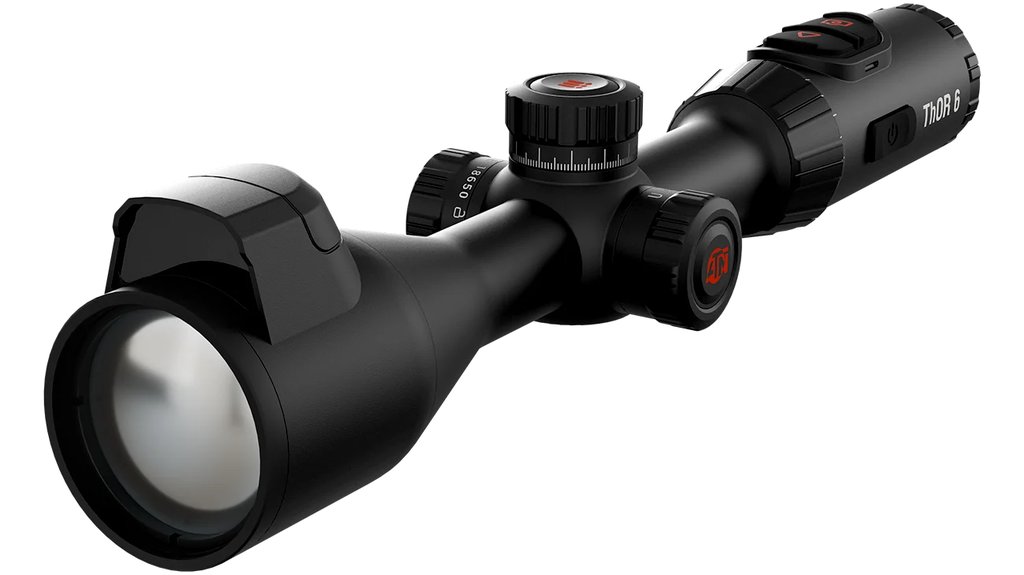
Best overall thermal scope rifle setup: ATN ThOR 6 640x512 3-24x
The ATN ThOR 6 640x512 3-24x is our best overall thermal scope rifle pick because it pairs the sharpest sensor in the line with electronics built to take a real centerfire beating. The 640x512 sensor is roughly two-and-a-half times the pixel count of a 384 chip, which at range is the difference between seeing a shape and seeing an animal you can positively identify. The 50 mm F/1.0 objective and that sensor push detection out to 3650 m, the farthest in the ThOR 6 line. Wound out to 24x on a settled rifle, you have the magnification to place a precise shot far out.
Built for recoil, keeps its zero
This is the ThOR 6 to bolt onto a rifle that hits back. RAV means the electronics are rated for the shock cycle of a hard-kicking centerfire, so the scope records the shot instead of stuttering through it, and, more importantly, the internals stay put — your point of impact does not creep after a magazine of magnum. Zeroing Freeze holds the reticle on your last shot while you dial the aiming point onto the true impact, so sighting in a stout rifle is a calm process rather than a fight against recoil-shy nerves. Hot Point Tracking keeps a far target flagged while you settle behind the rifle.
Who it's for: the hunter running a serious centerfire — a .308, 6.5, or a hard-recoiling predator or hog rifle — who wants maximum reach and a scope that laughs off the kick. Who it's not for: someone building a featherweight rimfire walk-and-stalk rig, where the 830 g / 1.83 lbs up top is weight the little rifle does not need.
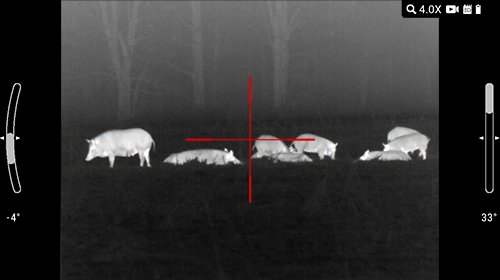
Best for an all-rounder rifle: ATN ThOR 6 640x512 2-16x
The ATN ThOR 6 640x512 2-16x is the pick for a do-everything rifle because it keeps the full 640 sensor but opens the low end to 2x, so the same rig handles a close hog in the brush and a coyote out across a cut field. Detection reaches 3100 m, and the wide bottom of the zoom band means you can scan a whole field fast, then climb the magnification when something worth a closer look appears. On a mid-weight all-rounder — think a versatile .223 or .308 that does a bit of everything — the same 830 g / 1.83 lbs sits comfortably without begging for a bench.
The wide low end that suits a versatile rig
A rifle that has to do it all wants a scope that does not force you to a single distance. The 2x low end gives you a genuinely wide field to sweep a treeline or a field edge, which is where most encounters actually start, and the replaceable 18650 battery means a long, mixed evening never ends because a cell ran flat — you swap and keep hunting. The 640 sensor is still there when a far target needs identifying, so nothing about the versatility costs you clarity. RAV rides along, so an all-rounder that sees both light and stout loads keeps its zero either way.
Who it's for: the hunter with one rifle that pulls double duty — brush and field, close and far — who values a flexible zoom band and hot-swap power. Who it's not for: a dedicated long-range shooter who will spend most of the night at the top of the zoom, where the tighter 3-24x band gives a touch more reach and precision.
Best for a light varmint rifle: ATN ThOR 6 384x288 2.5-20x
The ATN ThOR 6 384x288 2.5-20x is the pick for a light varmint rifle because at 790 g / 1.74 lbs it is the lightest ThOR 6, so it never throws off the balance of a nimble rimfire or a slim light centerfire. A light rifle points and swings on the weight of what is bolted to it; forty grams off the top keeps a quick-handling gun quick. The 384x288 sensor still resolves detail well out to a 2300 m detection range, which covers far more ground than most varmint shots ever call for, and the six color palettes let you tune the picture — white hot, black hot, or a color mode — to whatever the night and the background demand.
Light, balanced, and recoil-rated anyway
Light does not mean fragile here. The 384 build carries the same RAV recoil rating as its 640 siblings, so even though it is most at home on a soft-shooting rimfire or a light centerfire, it holds zero fine if you put it on something with more push. The 2.5-20x band gives a light rifle plenty of top-end for a careful varmint shot, and the lower overall weight means you can carry the rig all night on a walk-and-stalk without the muzzle feeling nose-heavy. It is the setup for a hunter who prizes a rifle that comes up fast and points naturally over the last few yards of maximum reach.
Who it's for: the varmint and predator hunter on a light rimfire or trim centerfire who wants a scope that respects the rifle's balance. Who it's not for: the shooter chasing maximum detection and identification at extreme range, where the 640 sensor of the two picks above pulls ahead.
How to match a thermal scope to your rifle
Match a thermal scope to your rifle by starting with recoil and weight, then reach. The rifle sets the constraints; the optic fills them. Work through these in order and the right ThOR 6 tends to pick itself:
- Recoil rating first — a hard-kicking centerfire needs a scope validated for the shock. Every ThOR 6 carries RAV, so all three take real recoil, but confirm the rating rather than assuming a rimfire-grade optic will survive a magnum.
- Weight and balance — a light varmint rifle points better with the 790 g / 1.74 lbs 384 build; a heavier centerfire barely notices the 830 g / 1.83 lbs 640, and gains reach for it.
- Mounting — use a solid one-piece mount or a matched ring set torqued evenly, sit the scope low and true over the bore for a repeatable cheek weld, and level the reticle against a plumb line before you tighten, since a canted scope throws shots sideways at distance.
- Keeping zero — torque to spec and mark your mount so a shift shows up early; a recoil-rated scope only holds zero if the mount holds it too. Re-confirm zero at the start of a season and after any hard knock.
- Reach vs. field — a tight 3-24x band favors long, deliberate shots; a wide 2-16x or 2.5-20x low end favors scanning and closer, faster work.
Mounting a thermal scope so recoil never wins
A recoil-rated scope is only half the story — the mount decides whether all that toughness reaches the rifle. Start with a mount matched to your action and rail, a solid one-piece unit or a quality ring pair, and set the scope as low as your cheek weld allows so recoil energy travels straight through the mount instead of levering the optic. Torque the base and ring screws evenly and to the maker's spec with a proper wrench; over-tight crushes, under-tight lets the 830 g / 1.83 lbs of scope creep under repeated recoil, and either one walks your zero. Level the reticle against a plumb line before the final tightening, because a scope canted even slightly throws long shots off to the side in a way you will never spot at close range. A thin film of the right thread locker on the base screws keeps a hard-kicking centerfire from shaking them loose over a season. Mount it once, mount it square, and the ThOR 6's RAV rating has a foundation that lets it do its job.
Where mounting goes wrong
Most lost-zero complaints trace back to the mount, not the scope. Ring screws left a quarter-turn shy, a base bedded on a gritty rail, a scope shoved forward for eye relief and then left with uneven ring tension — every one of these lets recoil do what recoil does, which is find the weakest joint and work it loose. On a hard-recoiling rifle the fix is discipline: clean the rail, degrease the screws, torque in a cross pattern, and re-check after the first box of ammo. The ThOR 6's electronics are built to ignore the kick; give the mount the same standard and the whole setup shrugs off recoil together.
Zeroing under recoil and confirming it holds
Zeroing a thermal scope rifle setup is easiest when the reticle holds still while you adjust, and that is exactly what Zeroing Freeze does. Get behind the rifle on a steady rest, fire a tight group, then freeze the frame so the reticle locks on your last shot. Now move the aiming point onto the true center of the group without having to hold the rifle rock-steady during the dial-in — the recoil-shy scramble of a live-fire adjust simply disappears. Save the profile, then fire a confirming group and check that the point of impact sits where you left it. That confirmation step matters most on a hard-kicking centerfire: a scope that is genuinely recoil-rated, like every RAV-equipped ThOR 6, should print the same group before and after a magazine of stout loads. If it does not, look to the mount first. Re-confirm the zero at the start of each season and any time the rifle takes a real knock, so recoil never quietly steals a few clicks between hunts.
A real night: matching the scope to the rifle in the field
Picture two hunters on the same field an hour after dark. One is running a heavy .308 on a bipod, the 3-24x ThOR 6 640x512 up top; the other carries a light .223 varmint rig with the 384 build. A hog eases out of the treeline at two hundred yards. The .308 shooter loads the bipod, climbs the zoom, and the 640 sensor with SharpIR AI resolves the animal cleanly — the rifle's weight and the recoil-rated scope let him make an unhurried, precise shot, and RAV rolls the moment the .308 barks. The varmint hunter, meanwhile, has a coyote slip in close from the flank; he brings the light rifle up fast, the trim 384 scope keeping the gun quick and balanced, and takes a snap shot inside a hundred yards. Same night, same field, two rifles — and each is carrying the scope that fits how it shoots. That is the whole point of matching optic to rifle: the setup does what the rifle was built to do, and the recoil rating means neither hunter loses zero doing it.
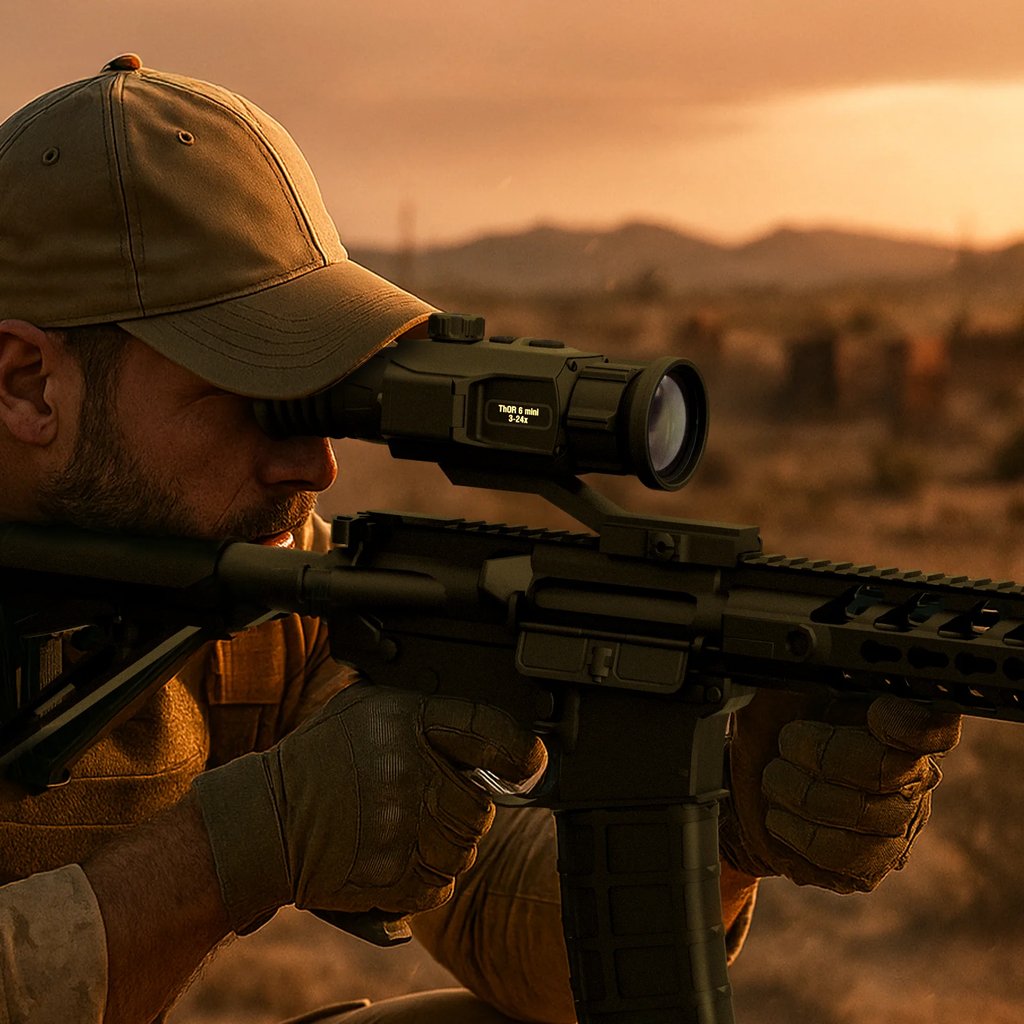
Caring for a thermal scope that rides a hard-kicking rifle
A scope that takes recoil for a living still needs a little care to keep taking it. After a hard session, re-check the mount torque and look for any witness-mark shift on the ring and base screws — catching a creeping screw early is far cheaper than chasing a lost zero later. Keep the objective and eyepiece clean with a proper lens cloth, and let a scope that has come in from a cold night warm gradually so condensation does not settle on the glass. Top up the 18650 cells or internal power before a hunt rather than nursing the roughly 9-hour runtime down to zero mid-sit, and carry a spare set for a long stand. Store the rig somewhere dry and stable so nothing works loose in the safe. None of this is fussy — it is the same routine you already run on a good day scope — and it keeps a recoil-rated ThOR 6 doing its job for many seasons on a rifle that hits back.
How we picked these ATN thermal scopes
This is an in-house comparison of ATN's own thermal scopes, sorted by the rifle each one belongs on, not an independent lab review — so treat it as a starting point and check the specs against your actual build. We weighed recoil rating (RAV), weight and balance, sensor resolution, NETD, detection range, refresh rate and battery against three real rifle setups: a hard-kicking centerfire, a versatile all-rounder, and a light varmint rig. Only the current 6th-generation ThOR 6 line was considered; we do not feature older models. The honest trade-off is that the sharpest, longest-reaching scope is also among the heaviest, and the lightest build gives up some reach and sensor detail to keep a nimble rifle nimble. Who these are not for: a shooter looking for a single 'best' with no thought to the rifle it will ride — the rifle, its recoil and its balance are exactly what change the answer, which is why we organized the picks that way.
Frequently Asked Questions
What makes a thermal scope safe to mount on a hard-recoiling rifle?
A thermal scope safe for a hard-kicking rifle has electronics rated to survive and function through recoil, not just image quality. Every ATN ThOR 6 here carries RAV — Recoil Activated Video — which means the internals are built to take the shock cycle of a centerfire and keep their zero. A recoil-rated scope paired with a properly torqued mount is what holds point of impact shot after shot.
Which ThOR 6 is best for a light varmint rifle?
The ATN ThOR 6 384x288 2.5-20x, at 790 g / 1.74 lbs, is the lightest in the line and the best match for a nimble rimfire or light centerfire. It keeps a quick-handling rifle balanced and still reaches a 2300 m detection range, which is well beyond most varmint shots. It carries the same RAV recoil rating as the 640 models.
Will a thermal scope lose zero under recoil?
A recoil-rated thermal scope on a properly mounted rifle should not lose zero. The ThOR 6 line is built with RAV electronics rated for the shock of a shot, and the common cause of a wandering zero is actually the mount — loose or unevenly torqued rings rather than the optic. Torque to spec, mark your screws, and re-confirm zero after a hard session.
How heavy is too heavy for a thermal scope rifle setup?
It depends on the rifle. On a heavy centerfire the 830 g / 1.83 lbs of the 640 ThOR 6 is barely noticeable and buys you reach and clarity. On a light, fast-handling varmint rifle that same weight can make the muzzle feel nose-heavy, which is why the 790 g / 1.74 lbs 384 build is the better balance there.
Do I need a 640 sensor or is 384 enough for a rifle scope?
For maximum detail and identification at long range, a 640 sensor like the ThOR 6 640x512 pulls ahead, since it carries roughly two-and-a-half times the pixels of a 384 chip. For a light varmint rig taking shots at closer to mid range, the 384x288 sensor resolves plenty of detail out to 2300 m and keeps the rifle lighter. Match the sensor to how far you actually shoot.
What magnification do I want on a thermal scope rifle?
For a centerfire built to reach out, the 3-24x band on the ThOR 6 640x512 gives you the top-end magnification for precise, distant shots. For an all-rounder that scans and shoots at mixed distances, the wider 2-16x low end helps you find targets fast. A light varmint rig does well with the 2.5-20x band.
Does the RAV feature affect the scope's image or battery?
RAV — Recoil Activated Video — automatically starts recording when the rifle fires, so you capture the shot for later review without touching a button. It rides alongside the normal image and does not degrade it, and the roughly 9-hour runtime already accounts for it. Its real value beyond the footage is that it reflects electronics built to work through recoil.
Ready to build your thermal scope rifle setup? Start with our best-overall pick, the ATN ThOR 6 640x512 3-24x, built to ride a hard-kicking centerfire and hold its zero, or compare the full range of ATN thermal scopes to match sensor, reach, weight and recoil rating to the exact rifle you shoot. Every ThOR 6 runs the same RAV recoil-rated electronics, SharpIR AI, Zeroing Freeze and the ATN Connect 6 app, so whichever rifle you mount it on — varmint, all-rounder or heavy centerfire — you are set up to find your target, place the shot and keep your zero night after night.
Created: August 10, 2026 · 10:05:21 UTC