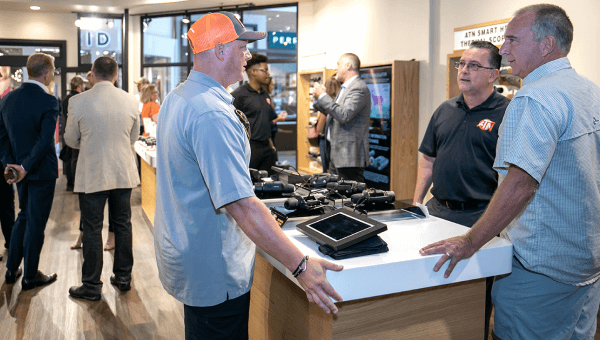
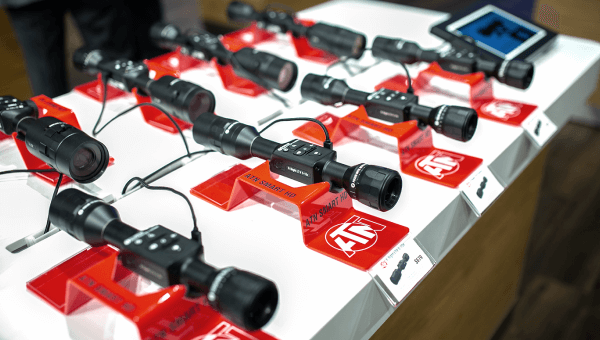
The terrain decides half of what a thermal scope has to do before you ever pull the trigger. A flat, open field asks for reach and a clean picture at distance. A tight treeline asks for a wide, fast image and quick target pickup at close range. A long ridgeline sits somewhere in between, with heat signatures fading in and out of folds and dead ground. When people search for a thermal scope military style setup, they are usually after that kind of rugged, all-condition capability — something that holds up across mixed ground and still gives a usable image. This roundup lines up three ATN ThOR 6 optics and matches each one to the terrain it handles best, so you can pick by the ground you actually walk.
For a thermal scope with military-grade, duty-style capability across mixed terrain, the ATN ThOR 6 640x512 3-24x is the best all-around pick — its 640 sensor, sub-15 mK sensitivity and long detection range read open fields, treelines and ridgelines cleanly. The 640 2-16x suits closer, faster ground; the 384 2.5-20x is the value tier for shorter engagements.
Quick answerBest overall / long-range & open terrain: ATN ThOR 6 640x512 3-24x — the flagship. Highest-resolution 640 sensor with a 50mm lens and the longest detection range here, so it owns open fields and ridgelines where distance is the whole game.
Best all-around / mixed terrain: ATN ThOR 6 640x512 2-16x — the mid tier. Same 640 clarity in a 35mm lens with lower starting magnification, so it swings fast in treelines yet still reaches out across a field.
Best value / closer engagements: ATN ThOR 6 384x288 2.5-20x — the value pick. A lighter, more affordable 384 build for shorter-range work where you do not need the full 640 reach.
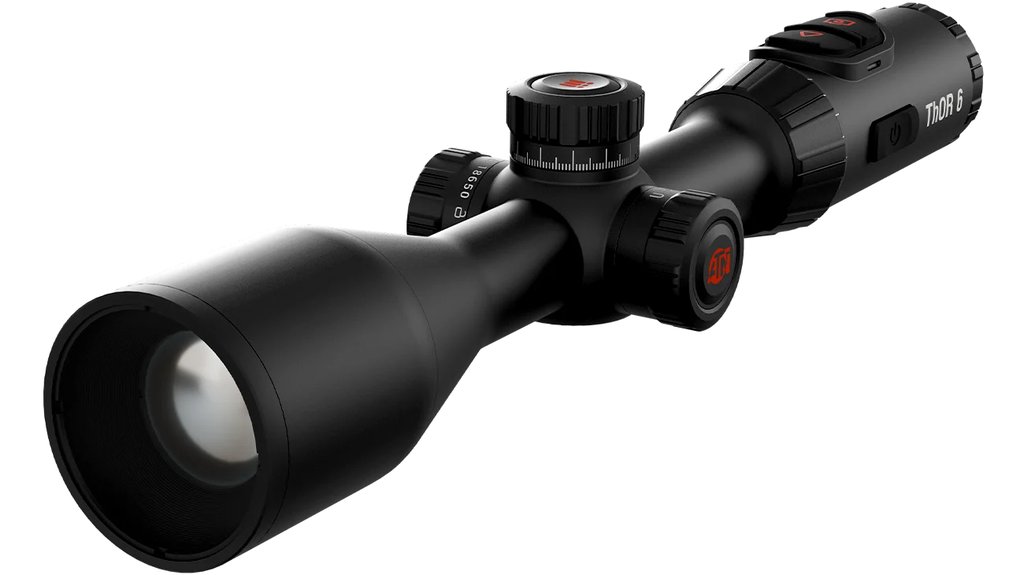
Why ATN's 6th-gen ThOR 6 line handles duty-style terrain
ATN's 6th-generation ThOR 6 line handles duty-style terrain because it pairs a high-sensitivity sensor with tools built for fast, repeatable work in the field. Every scope here reads heat down to a NETD of 15 mK or lower — NETD is the smallest temperature difference the sensor can pick out, and a lower number means a cleaner, higher-contrast picture when an animal is only a hair warmer than the brush behind it. That matters on a cold ridgeline at first light as much as it does in a humid treeline. On top of the sensor, the ThOR 6 line carries Recoil Activated Video so your shots record hands-free, Zeroing Freeze to hold a still frame while you dial your zero, Picture-in-Picture for a magnified aiming window without losing your wider view, and Hot Point Tracking to keep the hottest signature marked as it moves. These are the kind of practical, rugged features that make a scope feel duty-ready across changing ground — not a lab spec sheet. You can see the full line on the ATN thermal scope collection page.
ATN ThOR 6 640x512 3-24x — best overall for open terrain
The ATN ThOR 6 640x512 3-24x is the best overall pick for open, long-reach terrain because it stacks the highest-resolution sensor in this group behind the biggest lens and the longest detection range. On a flat field or a long ridgeline, distance is the whole problem, and this is the ThOR 6 built to solve it.
A 640 sensor that resolves detail at distance
The 640x512 sensor gives you roughly four times the picture data of a 384 sensor. Think of it like the jump from a standard-definition screen to a full HD one — the same scene, but far more dots making up the image, so edges stay crisp and a warm shape stops being a blob and starts being an animal you can read. Across an open field, that extra detail is what lets you tell a coyote from a stray dog before you commit, instead of guessing at a smudge.
Reach and clarity where it counts
A detection range out to 3650 meters means this scope picks up a heat signature at serious distance — detection is spotting that something warm is out there, not yet identifying it, but on open ground that early warning is everything. Pair that reach with a NETD of 15 mK or lower and a 50mm lens gathering plenty of thermal light, and the picture stays high-contrast even when the background is nearly the same temperature as your target. The 3-24x magnification, backed by 8x digital zoom, brings distant heat in close enough to identify and place a shot.
Duty-style tools and endurance
SharpIR image enhancement cleans up the fine detail, Recoil Activated Video records your shots automatically, and Hot Point Tracking keeps the hottest signature flagged as it drifts across the frame. Two 18650 batteries run it about 9 hours, and the batteries swap out, so a spare set keeps you in the field through a long night. Wi-Fi with ATN Connect 6 streams the Full-HD OLED view to your phone. At 1.83 lbs it is not the lightest here, but it is the most capable.
Who it's for: anyone whose ground is open — wide fields, long ridgelines, desert-style flats — and who wants the clearest, longest-reaching image ATN's 6th-gen line offers. Who it's not for: if you spend most of your time in tight timber at close range, the flagship's higher starting magnification and weight are more scope than you need — look at the 2-16x instead.
ATN ThOR 6 640x512 2-16x — best all-around for mixed terrain
The ATN ThOR 6 640x512 2-16x is the best all-around pick because it keeps the full 640 clarity but starts at a lower 2x magnification, so it moves fast in close cover and still reaches across a field. When your ground shifts from treeline to clearing to ridge in a single stalk, this is the ThOR 6 that adapts without fighting you.
Wide at the bottom, reach at the top
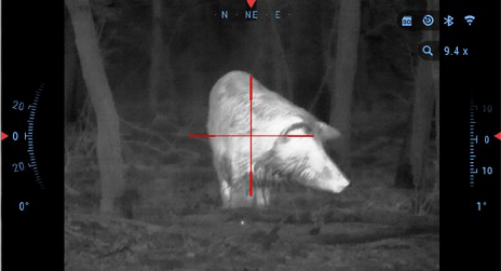
Starting at 2x gives you a wider field of view for scanning a treeline or picking up a hog that busts out of cover only a few yards off. Magnification is simply how much closer the target looks, and a lower floor means a bigger, faster picture when things happen quickly. When the ground opens up, the 2-16x range climbs to bring distant heat in. That flexibility is why it earns the all-around title.
The same 640 image quality
You get the identical 640x512 resolution and sub-15 mK sensitivity as the flagship, so the picture itself is just as clean and detailed — the difference is the 35mm lens and the lower magnification band tuned for closer, faster work. Detection reaches 3100 meters, which is still a long way to know something warm is on the move. For most mixed-terrain nights, that is plenty of reach with a friendlier, more agile view.
Field-ready features
Recoil Activated Video, Zeroing Freeze, Picture-in-Picture and Hot Point Tracking all carry over, and the 18650 battery is replaceable for about 9 hours of runtime with a spare on hand. Wi-Fi lets you stream and share the view. At 1.83 lbs it balances well on a general-purpose rifle.
Who it's for: the hunter or shooter who works varied ground and wants one scope that does a bit of everything without giving up 640 clarity. Who it's not for: if nearly all your work is long-range on wide-open terrain, step up to the 3-24x for the extra reach and lens; if you are watching your budget and shoot closer, the 384 is the smarter buy.
ATN ThOR 6 384x288 2.5-20x — best value for closer engagements
The ATN ThOR 6 384x288 2.5-20x is the best value pick because it delivers the same 6th-gen sensitivity and feature set in a lighter, more affordable 384 build aimed at shorter-range terrain. When your engagements sit inside the treeline or across a modest field, you do not need the full 640 reach, and this scope puts your money where it counts.
A capable 384 sensor for the distances you actually shoot
The 384x288 sensor carries fewer pixels than a 640, so it resolves a touch less fine detail at extreme range — think a few million fewer dots painting the picture. But inside its 2300-meter detection range, in the closer-in terrain it is built for, that difference rarely shows up in the field. You still get a sharp, usable image on hogs and coyotes at the ranges most people actually take.
Same sensitivity, six palettes
It holds the same NETD of 15 mK or lower as the pricier models, so contrast between a warm animal and cool brush stays strong — that is where the sensor's sensitivity earns its keep, not just raw pixel count. Six color palettes let you switch the display to whatever separates target from background best on the night's conditions, from a stark White Hot to an Iron scheme that paints heat in warm tones.
Light and full-featured
At 1.74 lbs it is the lightest scope here, which you feel on a long carry or a fast follow-up. It still packs Recoil Activated Video, Zeroing Freeze, Picture-in-Picture, Hot Point Tracking, Wi-Fi and about 9 hours of runtime. Nothing important is missing — you are trading top-end reach and pixel count for a lighter, better-value package.
Who it's for: shooters working closer, more enclosed terrain who want genuine 6th-gen performance without paying for the flagship's reach. Who it's not for: if you need to identify targets far out across open ground, the 384's shorter range and lower resolution will hold you back — go 640.
How to choose a thermal scope by your terrain
Choose your thermal scope by matching sensor and lens to the ground you hunt most. The single biggest factor is the terrain: open country rewards resolution and reach, tight cover rewards a wider, faster picture. Once you know your ground, the rest of the decision falls into place. Here is how the specs map to the field:
- Open fields & ridgelines — prioritize resolution and detection range. The 640 sensor and long reach of the 3-24x let you spot and identify heat at distance, where a smaller sensor would leave you guessing at a smudge.
- Treelines & close cover — prioritize a lower starting magnification and a wide field of view. The 2-16x picks up close, fast-moving targets and swings quickly, so you are not fighting a too-tight image.
- Mixed ground in one outing — the 640 2-16x is the safe all-around answer; its range spans wide-and-fast to reach-out-there without a compromise you'll notice.
- Value and weight — the 384 2.5-20x is lighter and easier on the wallet while keeping the same sensitivity, ideal if your shots stay at moderate range.
- NETD over hype — all three share sub-15 mK sensitivity, which is what actually gives you a clean, high-contrast picture. Do not chase magnification you'll never use at the cost of image quality.
- Battery and weight — all three run about 9 hours on swappable 18650 cells; carry a spare set for long nights regardless of which you pick.
How we picked these ATN thermal scopes
We built this list by matching real specs to the terrain-driven, duty-style use the keyword points at, and we only considered ATN's current 6th-generation ThOR 6 line — no older or discontinued models. The criteria that mattered most were sensor resolution (how much detail you can resolve at range), NETD or thermal sensitivity (how cleanly the scope separates a warm target from a cool background), detection range (how far out you can spot heat), refresh smoothness for tracking movement, plus weight and battery life for real nights in the field. We weighted resolution and detection range heavily for open terrain, and a low starting magnification for close cover. Honest trade-offs: the flagship 640 3-24x is the heaviest and priciest here, and its higher base magnification is more than you want in tight timber; the 384 gives up reach and fine detail at distance in exchange for lighter weight and better value. This is an in-house comparison of ATN's own range, not an independent lab test — we did not benchmark against outside optics, so treat it as guidance and check the specs against your own ground and the distances you actually shoot before you buy.
Frequently Asked Questions
Are these ATN ThOR 6 scopes actual military-issue optics?
No. "Thermal scope military" is a search term people use for rugged, duty-style thermal capability, and these ThOR 6 optics are civilian sporting scopes built to a high, hard-use standard. They are not government-issue equipment. This roundup treats "military" as shorthand for demanding, all-terrain performance.
Which ThOR 6 is best for open, long-range terrain?
The ATN ThOR 6 640x512 3-24x. It has the highest-resolution sensor here, the largest 50mm lens, and the longest detection range at 3650 meters, so it spots and identifies heat at distance across wide fields and ridgelines. If your ground is open, this is the one to reach for.
What does NETD mean and why does it matter?
NETD is the smallest temperature difference the sensor can detect, measured in millikelvin (mK). A lower number means a cleaner, higher-contrast image, so a warm animal stands out from cool brush. All three of these scopes hit 15 mK or lower, which is why the picture stays sharp even when target and background are close in temperature.
Is a 384 sensor good enough, or do I need a 640?
A 384 sensor like the one in the 2.5-20x is plenty for closer engagements and moderate ranges, and it keeps the same sensitivity as the 640 models. Step up to a 640 sensor when you need to identify targets at longer distances on open ground, where the extra pixels resolve fine detail a 384 cannot.
How long do these scopes run on a charge?
All three run about 9 hours on their 18650 batteries, which are replaceable. Carry a charged spare set and you can keep going through a long night without being tied to a charger. Runtime is similar across the line, so battery life is not a deciding factor between them.
What is Recoil Activated Video?
Recoil Activated Video, or RAV, automatically starts recording when the scope senses the recoil of a shot, so your footage captures the moment hands-free. Every scope in this roundup has it. It saves you from fumbling with a record button in the dark and means you never miss capturing a shot.
Which scope is the lightest?
The ATN ThOR 6 384x288 2.5-20x at 1.74 lbs is the lightest here, just ahead of the two 640 models at 1.83 lbs. The difference is small, but it adds up on a long carry or a fast follow-up shot. If weight is a priority and your ranges are moderate, the 384 is the pick.
The right thermal scope comes down to the ground you actually cover. If your terrain runs open and long, the ATN ThOR 6 640x512 3-24x gives you the clearest, longest-reaching picture in the 6th-gen line. If you work mixed ground or want to keep things light and value-focused, the 2-16x and the 384 2.5-20x each earn their place. Take a minute to compare all three side by side on the ATN thermal scope collection page, match the specs to your terrain and the distances you shoot, and you'll land on the ThOR 6 that fits your nights in the field.
Created: August 5, 2026 · 19:53:46 UTC