A crossbow hunt lives or dies on one thing: knowing exactly where the animal is before you draw. In the dark that is where a thermal scope for crossbow hunters earns its place — not clamped to the bow rail as a sight, but in your off hand to scan the field, pick a hog out of the brush, and read its line long before it steps into range. This roundup sorts ATN's current 6th-generation thermal scopes by how a crossbow hunter actually uses them, led by the ATN ThOR 6 640x512 3-24x. A quick, honest note first: a rifle-grade thermal scope is a scanning and locating tool for archery hunters, and where you can shoot with thermal on a crossbow varies by state — always check your local regulations before you rely on it in the field.
Best for close, mobile stalks: ThOR 6 640x512 2-16x — same 640 clarity with a wider low end and hot-swap batteries for still-hunting.
Best lightweight carry: ThOR 6 384x288 2.5-20x — the lightest unit for hunters who cover ground on foot.
Why ATN's 6th-gen ThOR 6 suits archery hunters
A crossbow hunter needs to detect and identify animals in the dark, then move into the tight range a bolt demands — and that is exactly what a 640-class thermal does. The 640x512 sensor packs far more pixels onto the target than a lower-resolution detector, so a warm shape at the field edge resolves into a hog, a coyote, or a raccoon instead of an anonymous blob. SharpIR, ATN's on-board AI enhancement, cleans the image in real time, and the 50 Hz refresh keeps a moving animal smooth rather than smeared as it works toward you. A NETD rated at 15 mK or lower means the sensor reads tiny temperature differences, so light fog or damp air over a food plot does not wash the picture out. Batteries are good for roughly 9 hours on a pair of 18650 cells you can swap in the dark — enough for a full night in the stand. Below, the three ThOR 6 options are sorted by the kind of archery hunting each fits.
Best overall for scanning: ThOR 6 640x512 3-24x
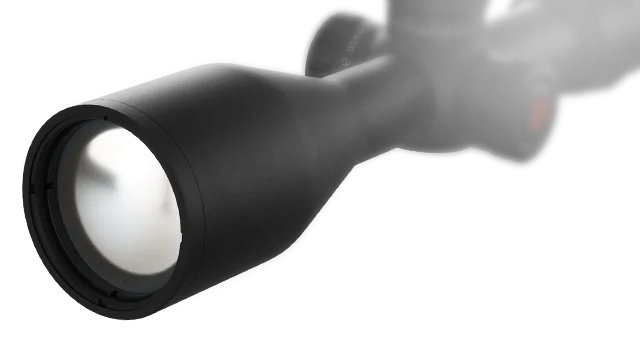
The ThOR 6 640x512 3-24x is the top choice for the crossbow hunter who watches open ground — a cut field, a river bottom, a food plot you can glass end to end. The 50 mm germanium objective and 640x512 sensor push a clean image out to a 3650 m detection range, and the 3-24x zoom lets you confirm what a distant heat signature actually is before you commit to a stalk that might take twenty minutes to set up right.
Locating game early, so the stalk starts on your terms
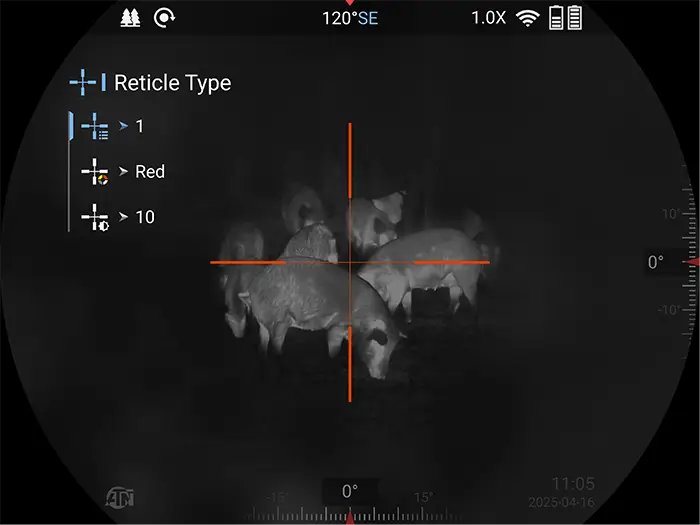
Bow range is short, so everything about a good archery kill happens before the shot: reading where the animal is heading, where the wind sits, and where you can intercept it. Because the 640 sensor and long detection range give you that first contact early, you have time to plan the approach instead of reacting. Hot Point Tracking flags the warmest object on screen as you sweep a tree line, and SharpIR sharpens the outline so you tell a mature hog from a piglet at a glance.
Who it is for — and who it is not
It is for the archery hunter who works wide-open ground and wants the earliest possible warning that game is moving. It is not the pick if most of your hunting is inside thick timber where you never see past sixty yards — there the wider low end of the 2-16x makes more sense than reach you will not use. See the full spec on the ThOR 6 640x512 3-24x product page.
Best for close, mobile stalks: ThOR 6 640x512 2-16x
The ThOR 6 640x512 2-16x keeps the full 640 sensor but drops to a 35 mm lens and a 2-16x zoom, which widens the field of view at the low end — a real advantage when you are still-hunting through mixed cover and need to catch movement close by, not glass a distant field. It still reaches a 3100 m detection range, and its swappable 18650 battery system means a spare cell in your pocket keeps a long, slow stalk alive.
Wider view for reading cover up close
Crossbow stalks often happen in edge habitat — brush lines, creek crossings, the seam between timber and field — where animals appear fast and near. The wider bottom end lets you pick up that movement without hunting for it through a narrow tube, then zoom in to confirm. You keep the same 640 clarity and 15 mK sensitivity as the flagship, so the image up close is every bit as sharp; you simply trade some top-end reach for a handier scanning package.
Who it is for — and who it is not
It is for the hunter who moves on foot through mixed cover and values a wide, quick-to-read view plus battery swaps. It is not the pick if you spend your nights glassing distant open ground, where the 3-24x reaches further into the dark.
Best lightweight carry: ThOR 6 384x288 2.5-20x
If you cover a lot of ground on foot, the ThOR 6 384x288 2.5-20x steps the sensor down to 384x288 and the weight down to 790 g / 1.74 lbs — the one you notice least on a long walk in. Detection lands at 2300 m, plenty for the ranges an archery hunter actually works, and it adds six colour palettes to dial in contrast for your ground.
Less weight to carry between sets
When you are moving stand to stand or spot-and-stalking across a property, ounces add up over a night. The 384 sensor is not a 640, but at the modest ranges bow hunting lives in, the on-screen difference is small, while the lighter build is something you feel every step. The 15 mK sensitivity and 50 Hz refresh carry straight over, so a moving hog still reads cleanly.
Who it is for — and who it is not
It is for the mobile archery hunter who prizes a light, easy-carry scanner for close-to-mid ranges. It is not the pick if you specifically want a 640 sensor for identifying game far out — that is the job of the two 640 models above.
How to choose a thermal scanner for crossbow hunting
Start from the ground you hunt and the way you hunt it, then let the specs follow. A crossbow hunter is buying a locating and identifying tool, so resolution and detection range matter most for open country, while field of view and weight matter most for close, mobile work.
- Match reach to your ground — wide-open fields reward the 3-24x and its 3650 m detection; brushy edge cover does fine on the wider 2-16x.
- Weigh how much you move — spot-and-stalk hunters who walk all night feel every ounce, which tips the choice toward the lighter 384.
- Be honest about resolution — a 640 sensor earns its keep when you identify game at distance; if your sightings are always close, the 384 saves weight without leaving much on the table.
- Plan your power — a swappable 18650 build means a long, patient stalk never ends because a battery died.
- Check your regulations first — thermal is a scanning aid for archery hunters in many places and a legal aiming device in only some; confirm what your state allows before you buy for a specific use.
A real night with a crossbow and a thermal scanner
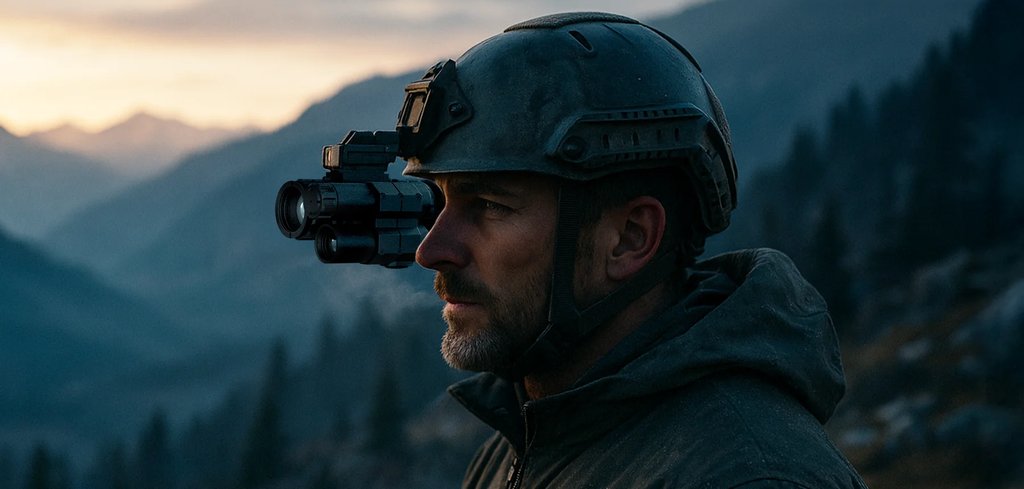
Picture a warm September evening on a hog-run cropland. You settle into the edge of the timber with the crossbow across your knees and the ThOR 6 640x512 3-24x in your off hand, sweeping the cut corn at its wide 3x setting. A cluster of warm shapes separates from the far tree line — a sounder feeding out. Because the 640 sensor and 3650 m detection range gave you that contact early, you have time to read the wind, pick the closest travel lane, and slip along the timber edge to cut the distance. You stop at a shooting lane, thumb the zoom up to confirm a mature hog and not a sow with piglets, and wait for it to close to the tight range a bolt needs. SharpIR keeps the outline crisp, Hot Point Tracking holds it flagged through the standing edge grass, and the 50 Hz refresh keeps it smooth as it feeds in. Every part of that sequence happened before you drew — which is precisely what thermal does for an archery hunter.
Getting the most out of your thermal on archery nights
The habits that pay off are simple. Scan at the low end of the zoom band to actually find animals, then zoom only to identify — cranking straight to the top narrows your view and hides movement. Learn the palettes across a few sits: White Hot reads well against cold cut fields, while Black Hot can separate an animal from frosty stubble more cleanly. Use Picture-in-Picture so a zoomed detail window rides above your wide scanning view, and let Recoil Activated Video and the ATN Connect 6 app capture your nights so you can review where animals travelled and set up smarter next time. And keep the device honest to its role: it finds and identifies game so your stalk and your shot are on your terms.
How we picked these ATN thermal scopes
This is an in-house comparison of ATN's own 6th-generation ThOR 6 line, not an independent lab test, so treat it as a starting point and match the specs to your own hunting before you buy. We judged each unit on what a crossbow hunter actually leans on: sensor resolution and thermal sensitivity (NETD) for identifying game, detection range for how early you spot it, refresh rate for tracking movers, and weight and battery life for long, mobile nights. Only the current ThOR 6 line was considered. The honest trade-off is straightforward — the 3-24x reaches farthest and reads sharpest but is the heaviest and priciest, while the 384 gives up range and pixels to stay light and affordable. Who it is not for: anyone expecting a bow-mounted aiming sight — these are scanning and locating optics, and legality for shooting varies by state, so verify your local rules.
Frequently Asked Questions
Can you mount a thermal scope on a crossbow?
A rifle-grade thermal scope like the ThOR 6 is designed and zeroed for firearm recoil, and in most jurisdictions it is used by archery hunters as a hand-held scanning tool rather than a bow-mounted sight. Whether you may legally aim with thermal on a crossbow varies by state, so check your local regulations before relying on it that way.
Why do crossbow hunters use a thermal scope at all?
Because bow range is short, locating and identifying an animal early is everything. A thermal scanner picks up a hog or coyote across a dark field long before it is in bolt range, so you can plan the wind, the approach, and the shooting lane in advance.
Which ThOR 6 is best for open-field archery hunting?
The ThOR 6 640x512 3-24x. Its 3650 m detection range and 640 sensor let you spot and confirm game far out across open ground, giving you the most time to set up a stalk into bow range.
Is the 384 model enough for a crossbow hunter?
For close-to-mid ranges, yes. The ThOR 6 384x288 2.5-20x reaches 2300 m and is the lightest to carry, which suits hunters who move on foot. Step up to a 640 only if you need to identify animals at longer distances.
Will a thermal scope work in fog on a damp field?
It will, with range reduced. Moisture scatters heat, but the ThOR 6's 15 mK or lower NETD keeps the image usable when the air turns damp — that low sensitivity number is exactly what earns its keep on foggy nights.
How long will the battery last on a night sit?
Plan on roughly 9 hours on a pair of 18650 cells. Because they are swappable, a spare set in your pocket keeps a long, patient stalk going with no downtime.
Ready to add thermal to your archery nights? Start with the ThOR 6 640x512 3-24x — our top pick for locating and identifying game before the stalk — or compare the full lineup of ATN thermal scopes to match sensor, reach and weight to the way you hunt. Every model runs SharpIR AI and the Connect 6 app, so you can review each night and set up smarter on the next. Just confirm your local rules first, then let the dark stop hiding your game.
Created: August 10, 2026 · 10:05:21 UTC