A thermal scope clip on earns its place because it lets you keep the day optic you already trust. Instead of buying a dedicated night scope and re-learning a reticle, you clip a thermal unit onto the rail ahead of your existing scope and it hands that scope a thermal picture after dark. This roundup ranks the current 6th-gen ATN TICO 6 clip-ons by the things that decide whether one belongs in front of your optic: return-to-zero, resolution and reach.
Best long-range / high-resolution: ATN TICO 6 640x512 1-15x — flagship 640 sensor and 3500 m reach for a precision day optic.
Shared bonus: both convert to a handheld thermal monocular with the removable eyepiece.
Why ATN's 6th-gen clip-ons keep your zero
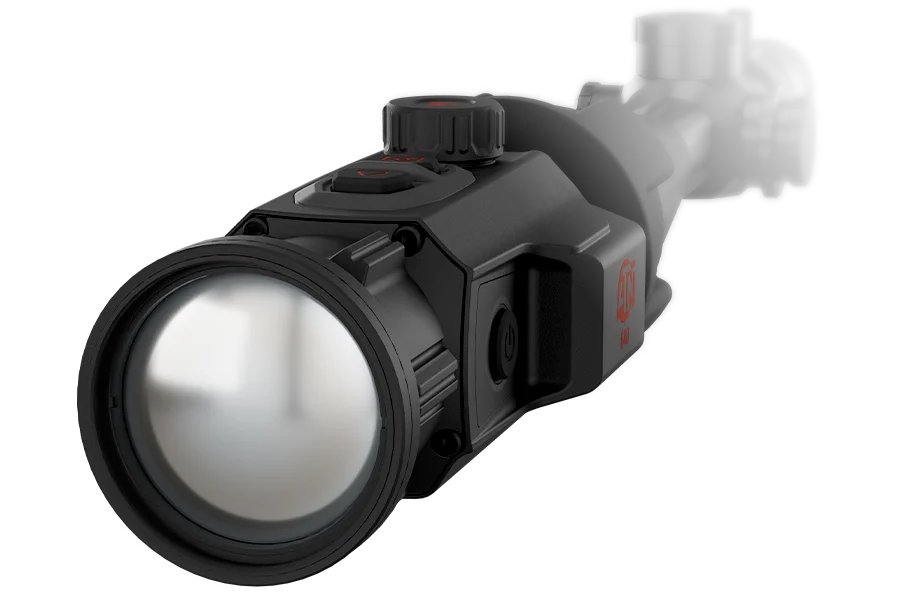
A clip-on keeps your zero because it never touches your day optic's reticle — it mounts ahead of the scope and simply feeds it a thermal image. The ATN TICO 6 clip-on family uses an included quick-detach mount, so you pop the thermal unit off for daylight and clip it back on after dark with your point of impact preserved. Every 6th-gen TICO also carries Recoil Activated Video to capture the shot hands-free, SharpIR AI enhancement and Hot Point Tracking for a clean, easy-to-read image, and a removable eyepiece that turns the same unit into a handheld scanner for clearing ground before you shoulder the rifle.
ATN TICO 6 384x288 1-12x — best all-round clip-on
The ATN TICO 6 384x288 1-12x is the clip-on that fits the widest range of rifles, because it lands in the sweet spot on the two things that matter most in front of a day optic — weight and resolution.
A weight your rail can carry
At 524 g the 384 sits ahead of your scope without unbalancing the rifle. It is light enough that the gun still handles naturally on a moving target, yet solid enough to lock down so it does not shift shot to shot.
Return-to-zero you can trust
The included quick-detach mount is what makes a clip-on practical. Because the thermal unit never changes your reticle, popping it off and back on returns your point of impact — no re-zeroing at the truck. That repeatable mount lets one rifle serve as a day gun and a night gun.
Detail at working range
The 384x288 sensor holds about 110,000 pixels — enough to tell a hog from a coyote well past any shot you would normally take — and its ≤18 mK NETD keeps the image clean on low-contrast nights. NETD is the smallest temperature gap the sensor can see, so a lower number means a sharper picture.
Who it's for: the hunter who wants one clip-on that mounts easily, holds zero and covers most night hunting. Who it's not for: a shooter running a dedicated long-range precision rifle who wants maximum reach.
ATN TICO 6 640x512 1-15x — long-range precision pick
The ATN TICO 6 640x512 1-15x is the clip-on for a precision day optic built to reach out. If your rifle wears good glass and you take deliberate long shots, the flagship 640 sensor is where a clip-on's resolution meets thermal range.
Resolution for positive ID at distance
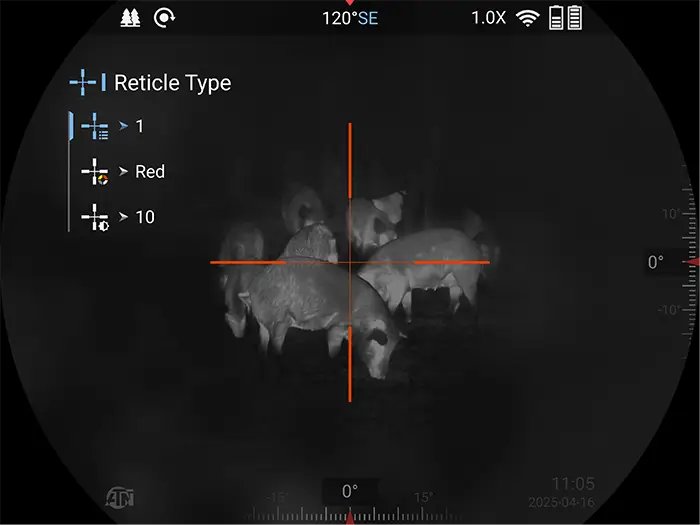
The 640x512 sensor carries over 327,000 pixels behind a 50 mm lens and detects heat to 3500 m. On a setup meant for distance, that resolution lets you positively identify a target at the far end of a field before you break the shot — the jump from a grainy image to a crisp one.
The cost on the rail
At 564 g it is the heavier of the two and steps up to the flagship tier in price. On a precision build that trade buys real reach; on a light, fast-handling rifle it may be more than you need.
Who it's for: the precision shooter taking longer, careful shots through a quality day optic. Who it's not for: anyone prioritizing the lightest, most affordable clip-on.
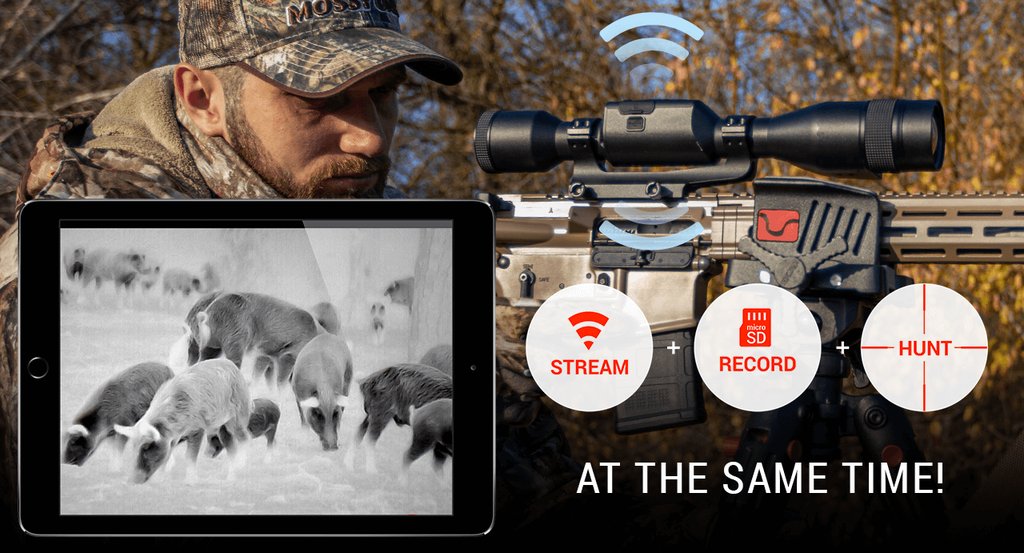
Two devices in one: clip-on and handheld monocular
A big reason the TICO 6 stands out is that it is really two tools in one body. Mounted ahead of your day optic it is a clip-on; slide off the eyepiece and it becomes a standalone handheld thermal monocular. That flexibility changes how you hunt. You can walk a field or a fence line scanning with the unit in your hand, spot a heat signature, and only then clip it onto the rifle to make the shot — no need to shoulder a whole rifle just to check what is moving out there.
For a lot of hunters this dual role is what justifies the purchase, because it replaces two devices with one. You get a scanner for finding game and a clip-on for shooting it, and both share the same clean image, the same SharpIR processing and the same recording features. The 384x288 comes with a wireless remote as well, which makes running it in either mode easier when your hands are busy.
Recording the hunt
In either mode, Recoil Activated Video captures your shot hands-free and built-in Wi-Fi with ATN Connect 6 lets you pull footage to your phone. Reviewing a recording is how you confirm a hit in the dark and study where the animals move, so the clip-on keeps earning its place after the trigger breaks.
What to check before you buy a clip-on
Before you commit, a couple of practical checks save headaches. Confirm your day optic sits far enough back to leave Picatinny rail ahead of it for the clip-on, and that the objective diameters are compatible so the thermal unit feeds a full image into your scope. Then think about how the added front weight changes the balance of your particular rifle. A clip-on that clears your rail, feeds a clean image and returns to zero is worth more than one with a spec you will not use. It also pays to think about your day optic's magnification, since a clip-on adds its own effective zoom on top of your scope's; a moderate-power day scope usually gives the widest, most usable night picture, while a very high-power optic can narrow the field more than you want after dark. Match the pair thoughtfully and the whole setup rewards you.
How to choose a thermal scope clip-on
Start with your day optic and rail, not the sensor. Confirm there is Picatinny room ahead of your scope and think about how the added front weight changes balance, then match resolution to the ranges you actually shoot. A clip-on that mounts solid and returns to zero every time is worth more than a spec you never use.
- Rail space — a clip-on lives ahead of your day optic, so verify there is room forward of the scope before buying.
- Weight forward — the 384 is lighter for easier handling; the 640 adds mass for its extra reach.
- Return-to-zero — both use a quick-detach mount so the thermal comes off for day use and back on without re-zeroing.
- Range you shoot — mixed and close work suits the 384; long-range precision favors the 640.
- Dual use — both convert to a handheld thermal monocular with the removable eyepiece for scanning.
How we picked these ATN thermal clip-ons
We judged the 6th-gen TICO 6 line specifically as clip-ons: how each mounts ahead of a day optic, how reliably the quick-detach returns to zero, how much weight it adds to the front of the rifle, and how its resolution, NETD and detection range line up with real shooting distances. The recoil-activated recording and the removable-eyepiece monocular mode rounded out the checklist, since a clip-on should capture the shot and double as a scanner.
Only current 6th-gen models were considered. We stayed honest about compromises — the 640 adds weight and price to the front of the rifle, while the 384 gives up some reach. This is an in-house look at ATN's own clip-on range, not an independent lab test, so match a model to your day optic and shot distances rather than taking the ranking as gospel.
Frequently Asked Questions
Does a thermal scope clip on need its own zero?
No. A clip-on mounts ahead of your existing day optic and never changes its reticle, so it uses the zero you already set. With the included quick-detach mount, you can remove it for daylight and reattach it after dark while keeping your point of impact.
Which ATN TICO 6 clip-on is best for most rifles?
The ATN TICO 6 384x288 1-12x. It balances resolution, weight and dependable return-to-zero, which suits the widest range of rifles. Step up to the 640x512 only if you need maximum resolution and reach on a precision setup.
How does a clip-on affect my rifle's balance?
It adds weight ahead of the receiver, shifting the rifle slightly muzzle-forward. The 384 at 524 g adds less than the 640 at 564 g, so a fast-handling rifle benefits from the lighter unit while a precision build tolerates the extra mass.
Can I use the clip-on off the rifle?
Yes. Each TICO 6 has a removable eyepiece that converts it into a handheld thermal monocular, so you can scan a field or clear a tree line before mounting it back on your rifle. That dual use is part of the value.
Do I need a 640 sensor in a clip-on?
Only for long-range work. The 384x288 identifies game well at close and mixed ranges and keeps weight down, while the 640x512 holds detail and reaches to 3500 m for a precision setup. Match the sensor to your longest realistic shot.
What is Recoil Activated Video on a clip-on?
It starts recording automatically when the rifle fires, so the shot is captured hands-free through your day optic and clip-on. It lets you review hits and share hunts without reaching for a record button in the dark.
A thermal scope clip on should add night capability without making you rebuild the rifle you trust. For most setups, the ATN TICO 6 384x288 1-12x nails the balance of weight, resolution and dependable return-to-zero, while the 640 stretches reach for precision builds. Compare the full family on the ATN thermal clip-on page and pick the one your day optic and your ranges call for.
Created: August 10, 2026 · 10:05:21 UTC