Thermal Scope Budget Planning 2026: How Much to Spend at...

If you've started shopping for a thermal scope in 2026 and immediately wondered how much is a thermal scope, you're not alone. The market has expanded dramatically, with options ranging from budget-friendly compact units to professional-grade long-range systems that cost more than some used trucks. The good news is that every price tier now delivers real, usable performance. The challenge is knowing which tier actually fits your mission, and which products within that tier give you the most return on your investment.
This guide breaks down every spending tier for thermal scope price 2026, explains what you realistically get at each level, and identifies exactly where the ATN ThOR 6 325 sits in the market and why it consistently earns its position as a top recommendation for serious hunters.
Why Thermal Scope Prices Vary So Dramatically
Before diving into tiers, it helps to understand what actually drives the cost of a thermal scope. Unlike traditional optical scopes where glass quality and mechanical precision dominate pricing, thermal scopes are priced primarily around three variables: sensor resolution, pixel pitch, and integrated smart features.
Sensor resolution determines how much detail you can resolve in a thermal image. A 256x192 sensor gives you a workable image at close to medium ranges. A 640x512 sensor gives you the kind of detail that lets you identify species, body position, and shot placement at several hundred yards. Pixel pitch, measured in micrometers, determines how sensitive and compact the sensor is. Smaller pixel pitch means higher image density at a given sensor size. The current industry benchmark is 12 micrometers, which is what ATN uses across its entire ThOR 6 lineup. Scopes using older, larger pixel pitch sensors are often cheaper but produce softer, less detailed images.
Smart features, ranging from onboard recording and Wi-Fi to ballistic calculators and laser rangefinders, add cost but also eliminate the need for additional gear. When you price a thermal scope, you're really pricing a complete observation, targeting, and documentation system in a single tube.
The 2026 Thermal Scope Price Tiers Explained
Entry Tier: Under $1,500
This is the starting point for anyone asking how much is a thermal scope for the first time. In 2026, the sub-$1,500 market has improved substantially. You can find scopes with 256x192 resolution sensors, basic digital zoom, and simple reticle systems in this range. These are functional tools for hog hunting on familiar ground, close-range coyote work, or simply getting started with thermal technology before investing more.
What you give up in this tier is meaningful. Sensor sensitivity is lower, typically in the 35mK to 50mK NETD range, which means less ability to detect faint heat signatures in warm ambient conditions. Detection ranges are often limited to 800 to 1,200 meters on a deer-sized target. Recording capabilities, if present at all, are often limited to lower resolutions with no onboard storage. Build quality tends toward plastic housings with limited waterproofing, and smart features like AI-enhanced imaging, automatic recording, or app connectivity are generally absent.
This tier suits the casual hunter who wants to experience thermal imaging without committing major budget, or a new landowner dealing with occasional predator pressure who just needs a reliable detection tool.
Mid Tier: $1,500 to $2,500
This is where the thermal scope price 2026 landscape starts getting genuinely interesting. The mid tier is where most serious hobby hunters and dedicated predator callers end up spending, and for good reason. At this level, you begin to see 384x288 resolution sensors with sub-20mK NETD sensitivity, proper weatherproof ratings like IP67, magnesium alloy housing, and the beginning of integrated smart features.
The ATN ThOR 6 Mini 325 lives in this space, bringing a 384x288 sensor with 18mK NETD sensitivity, SharpIR AI-enhanced imaging, a full-HD 0.49-inch OLED display at 1920x1080, onboard 64GB storage, RAV recording, Wi-Fi hotspot, and a detection range of 2,300 meters in a package weighing just 528 grams. That is a remarkable combination of specs for the price point and represents exactly the kind of capability compression that makes 2026 a great year to buy thermal.
In this tier, you're making a real trade-off between the compact form factor of something like the ThOR 6 Mini and the full-featured performance of a full-size scope. If rifle weight and pack weight matter to your hunting style, the compact mid-tier units make a compelling case. If you want maximum magnification range, detection distance, and sensor performance, you need to step up.
Performance Tier: $2,500 to $4,000
This is the tier where most expert hunters, professional guides, and serious predator hunters ultimately land after their first or second scope purchase. The performance tier represents the intersection of maximum practical capability and reasonable cost. It's also where the ATN ThOR 6 325 sits, and it's the scope that earns the most consistent praise across the hunting community in 2026.
At this price point, you expect and receive full-size optics with the best sensor technology currently available outside of military procurement, complete smart feature integration, rugged field-ready construction, and detection ranges that cover virtually any hunting scenario you're likely to encounter in North America.
Professional and Tactical Tier: $4,000 and Above
Above $4,000, you enter territory that is increasingly oriented toward law enforcement, border security, anti-poaching operations, and professional surveillance applications. At this level, you find 640x512 sensors with the best available sensitivity ratings, integrated laser rangefinders with ballistic calculators, extended battery systems, and often dual-use designs that bridge the gap between weapon-mounted scopes and handheld observation systems.
ATN covers this tier with models like the ThOR 6 650 LRF, which pairs a 640x512 sensor with a 50mm germanium lens for a 3,650-meter detection range, a built-in laser rangefinder accurate to plus or minus one meter, and a full ballistic calculator capable of storing five custom profiles for different firearms. For the professional user or the hunter operating at extreme ranges on large properties, this investment makes sense. For the average deer or hog hunter, it's overkill.
ATN ThOR 6 325: The Best Value in the Performance Tier
The ATN ThOR 6 325 review 2026 conversation keeps coming back to one central point: this scope delivers performance that would have cost twice as much just three years ago. Let's break down exactly what you get and why it matters in the field.
ATN ThOR 6 325 Specs: The Foundation
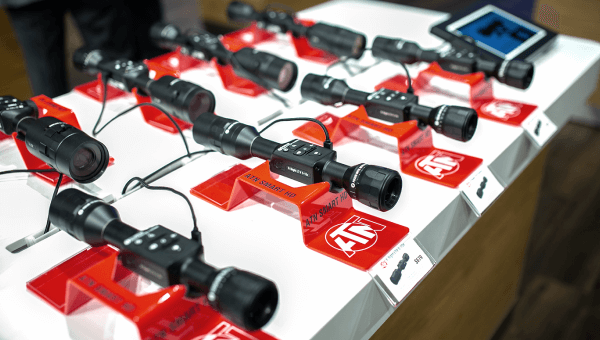
The ATN ThOR 6 325 specs start with a 384x288 resolution sensor built on a 12-micrometer pixel pitch with an ultra-sensitive NETD rating of 15mK or better. That sensitivity figure is critical. At 15mK, this sensor can detect temperature differences smaller than one-fifteenth of a degree Celsius. In practical terms, that means a deer bedded in tall grass on a cool morning, a coyote running along a fence line with its body heat partially masked by vegetation, or a hog rooting in the shadows of a tree line will all appear clearly in your view when lesser scopes would show you nothing but noise.
The 25mm germanium lens at F/1.0 produces a field of view of 10.53 degrees by 7.91 degrees with a magnification range of 2.5x to 20x. That magnification range is exceptionally versatile. At 2.5x, you have a wide scanning view for field observation. At 20x, you have the reach for ethical identification and shot placement at extended ranges. The 2,300-meter detection range is real-world useful, not just a spec sheet number. A full-sized deer-class animal in open terrain will show up at that distance when conditions are right.
Weight comes in at 790 grams or 1.74 pounds with dimensions of 410 by 85 by 66 millimeters. That is a full-size scope that won't feel like a burden on a standard rifle setup. The magnesium alloy housing is rated IP67, meaning it can survive submersion in one meter of water for 30 minutes and is fully dustproof. The operating temperature range runs from -30 degrees Celsius to +55 degrees Celsius, covering any realistic hunting environment from ice-covered northern states to the summer heat of south Texas hog operations.
Recoil tolerance is rated at 6,000 joules or 1,000g acceleration over 0.4 milliseconds, which means this scope will handle .338 Lapua Magnum, .300 Winchester Magnum, and any other hard-recoiling hunting cartridge without issue. The 30mm ring mounting system is standard across most quality scope rings, and the scope ships with two 18650 rechargeable batteries delivering approximately nine hours of continuous runtime.
SharpIR AI Enhancement: What It Actually Does
The feature that separates the ThOR 6 generation from previous ATN products in a meaningful way is SharpIR AI imaging. This is not a marketing term for simple digital sharpening. SharpIR uses machine learning algorithms to analyze each frame in real time, identifying heat signature edges and optimizing contrast between target and background dynamically.
The practical result is that when you're watching a coyote trot through mesquite brush at 150 yards, you see a clearly defined animal with visible body shape and movement, not just a white blob floating through gray noise. That edge definition matters for ethical shot placement. It matters for differentiating a doe from a buck at last light. It matters when you're running hogs in heavy cover and you need to confirm a clear shot path before pulling the trigger. AI-enhanced imaging is the single most impactful advancement in affordable thermal scope technology in the past two years.
Recording, Connectivity, and Smart Features
The ThOR 6 325 includes 64GB of internal storage, a built-in microphone for audio recording, and USB-C transfer. Recoil Activated Video, known as RAV, automatically saves ten seconds before and ten seconds after the shot, capturing your kill shot without requiring you to press any button during the moment of truth. This feature alone justifies a significant portion of the cost for hunters who want to document their hunts for review, sharing, or social media.
Built-in Wi-Fi hotspot connects directly to the ATN Connect 6 app on iOS or Android, allowing a hunting partner to watch your live feed, or allowing you to use your phone as a remote viewfinder when the scope is positioned on a tripod or vehicle rest. The scope also includes zeroing freeze, which pauses the image at the moment of impact so you can make reticle adjustments without rushing. Picture-in-picture mode maintains a wide-view window while showing a magnified inset, keeping situational awareness intact while you're zoomed in on a target. Hot Point Tracking automatically highlights the hottest object in the field of view, cutting acquisition time when you're scanning for movement in a dark field.
Six color palettes including White Hot, Black Hot, Iron Red, Alarm, Green Hot, and Sepia give you flexible options across different terrain and ambient temperature conditions. Reticle transparency control lets you dial back the brightness of the aiming point when you're shooting against a bright heat signature, preventing reticle washout at the exact moment you need the clearest aim.
The 0.49-Inch Full HD OLED Display
The eyepiece display on the ThOR 6 325 is a 0.49-inch OLED panel running at full 1920x1080 resolution. OLED technology matters here for a specific reason beyond just image quality. OLED panels have faster response times than LCD alternatives, which means moving targets appear sharper and with less motion blur. When a hog is running at 40 yards and you're swinging to lead the shot, a faster display means you see a more accurate representation of where the animal is in real time. The deeper blacks of OLED technology also improve perceived contrast in the thermal image, making faint heat signatures more visible against cold backgrounds.
Eye relief is 50mm and the diopter adjustment runs from -5 to +5, accommodating most shooters without requiring prescription inserts. The scope supports 10 reticle styles, so whether you prefer a simple duplex, a BDC-style holdover reticle, or something more elaborate, you have options without needing additional software purchases.

How the ThOR 6 325 Compares Across the Lineup
Understanding the ThOR 6 325's position within the full ATN ThOR 6 family helps clarify exactly what you're buying and what you'd gain by spending more. The lineup covers seven models total:
- ThOR 6 325: 384x288 sensor, 25mm lens, 2.5-20x magnification, 2,300m detection range, 790g
- ThOR 6 335: 384x288 sensor, 35mm lens, 3.5-28x magnification, 2,750m detection range, 830g
- ThOR 6 635: 640x512 sensor, 35mm lens, 2-16x magnification, 3,100m detection range, 830g
- ThOR 6 650: 640x512 sensor, 50mm lens, 3-24x magnification, 3,650m detection range, 855g
- ThOR 6 335 LRF, 635 LRF, 650 LRF: Same sensor and lens configurations as above but with integrated laser rangefinder, LRF accurate to plus or minus one meter at up to 1,000m, and full ballistic calculator with five profile storage
The 325 is the entry point into the full-size ThOR 6 series. For most hunters in the continental United States pursuing predators, hogs, deer, or varmints at practical hunting ranges, the 325's 2,300-meter detection range and 2.5-20x magnification covers 95 percent of real-world scenarios. Stepping up to the 335 adds a 350-meter detection advantage and higher maximum magnification, which is meaningful on open western terrain where shots at 400 to 600 yards are realistic. Stepping up to the 635 or 650 adds the 640x512 sensor, which delivers noticeably sharper image quality and significantly extended detection range, most relevant for professional applications or very large property surveillance.
If you need the rangefinder, the LRF models make an obvious case. If your shooting is at known distances or you carry a separate rangefinder, the standard models deliver the same optical performance at a lower price point.
Who Should Buy at Each Tier in 2026
The Entry Tier Buyer
You're a landowner dealing with occasional predator problems, a new hunter curious about thermal technology, or someone who wants a tool for property observation that occasionally gets mounted on a rifle. Your engagement ranges are typically under 150 yards and your frequency of use doesn't justify a major investment. An entry-tier affordable thermal scope with a 256x192 sensor will handle your needs.
The Mid-Tier Buyer
You hunt multiple nights per month, you're dealing with consistent hog pressure or predator activity, and rifle weight matters because you cover ground on foot. You want real smart features including recording and app connectivity, but you need the scope to travel light. The ATN ThOR 6 Mini series lives here and covers it extremely well, with the Mini 325 bringing 384x288 sensor performance in a sub-550 gram package.
The Performance Tier Buyer
You are a serious hunter who pursues predators, hogs, or large game regularly under low-light and no-light conditions. You want maximum detection range and image quality for your dollar, you want to document hunts, you want app connectivity for sharing live feeds with partners, and you want a scope that will outlast multiple rifle builds without becoming obsolete. The ATN ThOR 6 325 is your scope. It is the most complete combination of sixth-generation thermal performance, smart features, and value available in its class in 2026.
The Professional and Tactical Tier Buyer
Your missions involve large-scale property surveillance, law enforcement support, border security, or anti-poaching operations where detection range, target identification at extreme distances, and integrated rangefinding are operational requirements. You need 640x512 sensor performance and a laser rangefinder built in. The ThOR 6 LRF series serves this user, with the 650 LRF representing the top-end of ATN's 2026 civilian and professional thermal lineup.
The Real Cost Calculation for 2026
When someone asks how much is a thermal scope worth buying in 2026, the honest answer involves thinking beyond the sticker price. A thermal scope at the performance tier eliminates the need for a separate handheld thermal monocular for scouting. It eliminates the need for a clip-on night vision device. It eliminates the need for an expensive video recording rig to document your hunts. It eliminates the need for a laser rangefinder if you choose an LRF model. When you add up the cost of those individual pieces of gear, the ThOR 6 325 starts looking like a consolidation play as much as a scope purchase.
Battery life of nine hours on two 18650 cells means you're hunting through a full night session on a single charge, with the option to carry spare cells and swap in seconds without tools. The startup time of under seven seconds from standby means the scope is always ready to respond quickly. The startup is instant from standby mode, making it genuinely practical for situations where a deer walks into range unexpectedly and you need to be behind a ready scope in seconds, not minutes.
Common Budget Mistakes to Avoid in 2026
The most common mistake hunters make when budgeting for a thermal scope is underbuying on sensor resolution. A 256x192 sensor that costs $800 seems like a bargain until you're trying to determine if the heat signature at 200 yards is a boar or a sow, a deer or a dog, a legal target or something you can't shoot. The image quality difference between a 256x192 and a 384x288 sensor in real field conditions is substantial and directly affects your ability to make ethical, informed shooting decisions.
The second common mistake is ignoring NETD sensitivity ratings. In warm southern states hunting hogs where ambient temperatures are near body temperature, a scope with 40mK NETD will give you noticeably degraded performance compared to one rated at 15mK. That contrast loss means missed detections and failed shots. The 15mK rating on the ThOR 6 325 is a genuine performance advantage in exactly these conditions.
The third mistake is buying cheap and upgrading twice instead of buying right once. The thermal scope market has settled into a mature enough state in 2026 that the product you buy at the performance tier today will remain competitive for five to seven years. That calculus changes the value equation considerably when you run the numbers over a multi-year ownership period.
ATN ThOR 6 325 in the Field: What to Expect
Reading an ATN ThOR 6 325 review 2026 gives you specs and feature lists, but what does actual use look like? Mounting the scope is straightforward using standard 30mm rings, which are not included but are widely available. The three-button control interface is deliberately simple. Left button and right button navigate menus, center button selects. In practice, you can access any function with gloves on in the dark without looking at the controls, which is exactly what you need when a coyote is approaching your call stand at 2 AM.
The SharpIR enhancement is visible immediately when you first look through the scope and compare it to older thermal units. Animal outlines are defined, not soft. You can see individual legs, see ear position, identify antler presence on a buck at 200 yards in complete darkness with no ambient light whatsoever. That level of detail is what separates a hunting tool from a detection tool.
Hot Point Tracking is legitimately useful in open terrain where you're scanning a large field. Instead of sweeping methodically and potentially missing movement at the edge of your scan, the scope automatically highlights the hottest point in the frame, typically an animal. In dense cover, the feature is less decisive since there are many competing heat sources, but in open hunting environments it significantly reduces acquisition time.
The RAV recording system works exactly as described. You shoot, you recover your target, and when you get back to camp and connect via USB-C to your laptop or phone, you have a clean video clip that starts before the shot and ends after impact. No editing required, no digging through hours of footage. It is a simple feature that hunters who document their hunts will find genuinely valuable from the first session.
Final Recommendation: Where to Put Your Money in 2026
If your budget allows you to reach the performance tier, the ATN ThOR 6 325 is the scope to buy. The combination of a 15mK NETD 384x288 sensor, SharpIR AI enhancement, 2.5-20x magnification, 2,300-meter detection range, full HD OLED display, nine-hour battery life, 64GB onboard storage, RAV recording, Wi-Fi connectivity, and IP67 weatherproof magnesium alloy construction in a 1.74-pound package is simply the most comprehensive value proposition in the thermal scope price 2026 market at this tier.
If you need to stay in the mid tier, look at the ThOR 6 Mini 325 for compact performance that still delivers the 6th generation sensor platform and SharpIR imaging. If your missions require extreme range performance or integrated rangefinding, step up to the LRF models and budget accordingly.
What the thermal scope market has made clear in 2026 is that the technology gap between price tiers has narrowed considerably. You no longer need to spend $5,000 to get a genuinely capable, feature-rich thermal riflescope. But the difference between entry-tier and performance-tier products is still meaningful in the ways that matter most in actual hunting conditions. Spend at the level that matches your use case, buy from a manufacturer with a proven support infrastructure and warranty record, and choose a sensor resolution and sensitivity that fits the environments where you actually hunt.
The ATN ThOR 6 325 answers the question of how much is a thermal scope worth spending in 2026 with a straightforward answer: spend enough to get the sensor right, the display right, and the smart features right. This scope does all three at a price point that is within reach of serious hunters who are ready to stop compromising on thermal performance.