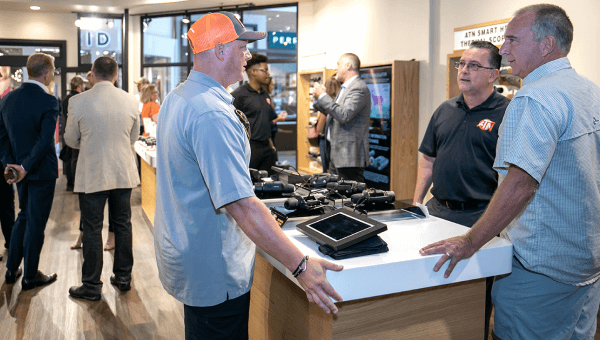
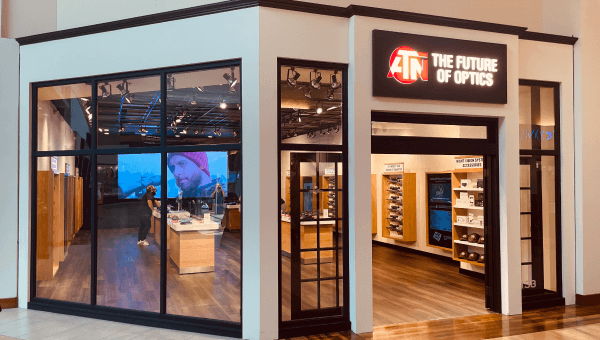
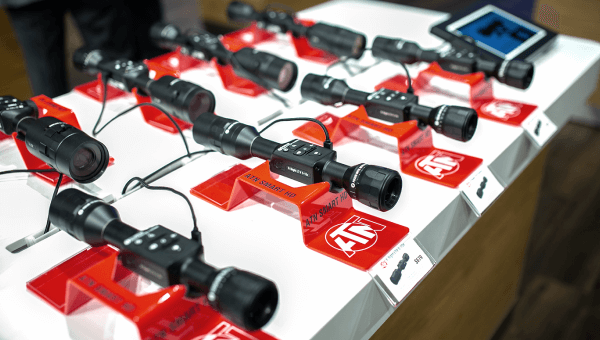
Sorting through thermal scope brands is really about learning which features separate a good thermal rifle scope from a frustrating one, so you can judge any maker on the same yardstick. Sensor resolution, thermal sensitivity, the software running the display, and the support behind the warranty matter far more than a logo. This guide walks you through what actually distinguishes one thermal scope from another and uses the current 6th-gen ATN ThOR 6 line as a worked example of how those pieces come together.
A thermal scope brand is a manufacturer of thermal rifle sights, and the ones worth your money are defined by four things: sensor resolution, thermal sensitivity (NETD), the display and software features, and the warranty and support behind the product. Judge any brand on those, not on marketing — the ATN ThOR 6 line is used here to show what a full-featured 6th-gen scope looks like.
What is a thermal scope brand?
A thermal scope brand is a manufacturer that designs and builds thermal rifle scopes — the electro-optics that let you see heat instead of light and aim off a digital reticle. What separates one from another is not the badge but the engineering underneath: the thermal detector, the processing that turns raw heat data into a usable picture, the on-board features, and the company standing behind the device after the sale. ATN is one such maker, and its 6th-gen ThOR 6 thermal scope line is a useful reference point because it packs the current generation of those features into one family.
How does a thermal scope actually work?
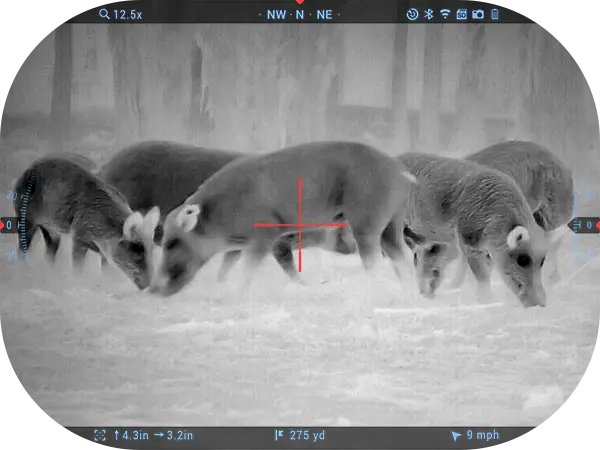
A thermal scope works by reading the infrared heat every object gives off and turning it into a live image, so warm animals stand out against a cooler background in total darkness. Here is the chain from heat to reticle:
- The germanium objective lens focuses incoming infrared energy onto the thermal detector.
- The detector — a grid of pixels, e.g. 640x512 — measures the heat at each point and produces raw thermal data.
- The processor applies image enhancement (ATN calls its version SharpIR) to sharpen edges and reduce noise.
- The result is drawn on the display with your chosen color palette — white-hot, black-hot or a colored mode.
- A digital reticle is overlaid so you can aim, and features like recording or zoom run on top of the same image.
What can you use a thermal scope for?
- Night hunting — spotting and identifying hogs, coyotes and other game in complete darkness where day optics are useless.
- Predator and pest control — locating warm animals against a cool field, often the main reason hunters buy thermal.
- Tracking — following a heat trail or recovering downed game after the shot.
- All-condition spotting — thermal cuts through light fog, smoke and brush that defeat both day optics and night vision.
- Recording the hunt — 6th-gen scopes capture video and stills for review and sharing.
Key features to understand when comparing brands
These are the specs that actually separate thermal scope brands, translated into what they do for you in the field:
- Sensor resolution — the detector's pixel count (e.g. 640x512 vs 384x288). More pixels mean finer detail and target ID at greater distance, like the difference between a standard and a high-megapixel photo.
- NETD — the smallest temperature difference the sensor can detect, in millikelvin. A lower number (ATN's ThOR 6 is ≤15 mK) means a cleaner, higher-contrast picture on low-contrast nights.
- Detection range — how far the scope can pick up a heat signature. The ThOR 6 640 reaches 3650 m; detection means spotting, not fully identifying.
- Magnification — the zoom range, such as 3-24x, spanning base optical through digital zoom.
- Refresh rate and display — a smooth image (the ThOR 6 uses a Full-HD OLED display) keeps moving animals crisp instead of smeared.
- On-board software — features like Recoil Activated Video, Zeroing Freeze and built-in Wi-Fi separate a modern scope from a bare one.
What to look for before buying from any brand
- Match resolution to your range — long shots want a 640 sensor; mid-range hunting is well served by a 384.
- Check NETD, not just pixels — a sensitive sensor keeps the image clean when contrast is poor.
- Look at the whole feature set — recording, ballistic tools and connectivity add real value in the field.
- Weigh battery and power — a replaceable-cell system lets you hot-swap spares on a long night.
- Consider support and warranty — a brand's service after the sale matters as much as the spec sheet.
Common mistakes when comparing thermal scope brands
- Chasing pixels alone — ignoring NETD and glass quality, which matter just as much as resolution for a clean image.
- Overbuying magnification — a huge zoom you never use adds cost and narrows your field of view for scanning.
- Ignoring the software — two scopes with the same sensor can feel very different depending on their processing and features.
- Forgetting battery logistics — a scope that dies mid-hunt with no spare plan cuts your night short.
- Skipping support — a great sensor is little help if the company behind it is hard to reach.
Example: the ATN ThOR 6
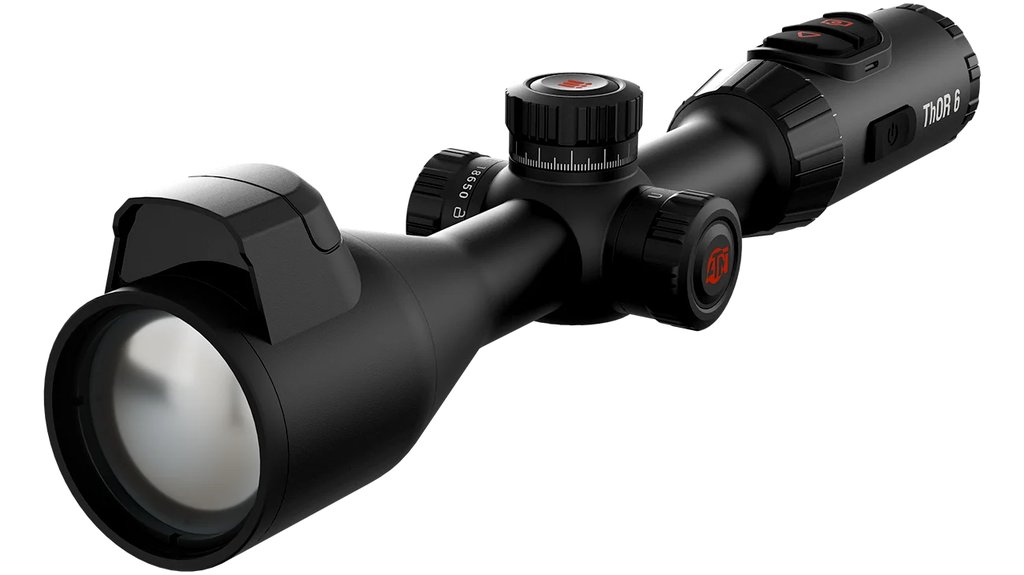
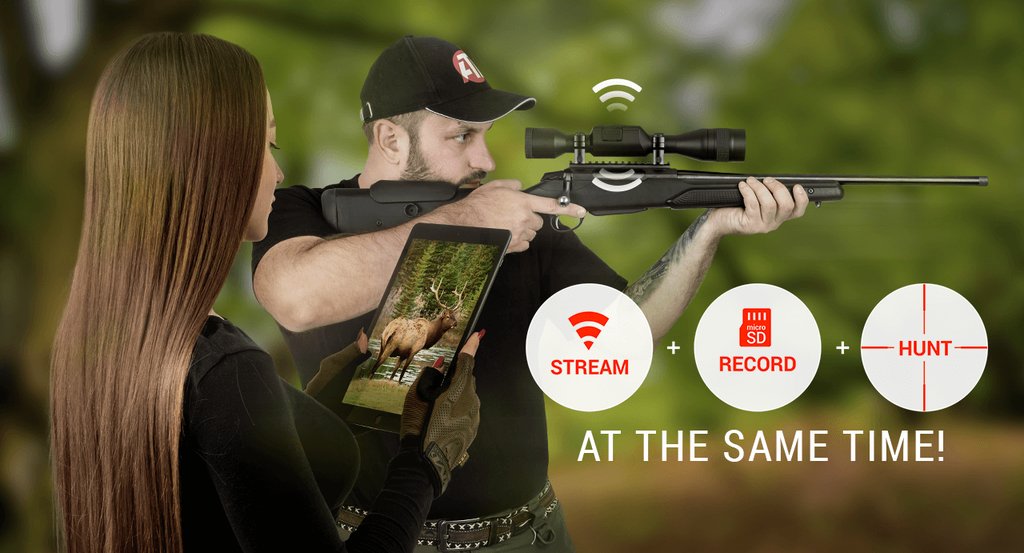
To make this concrete, the ATN ThOR 6 640x512 3-24x shows what a current-generation scope looks like against the checklist above. It runs a 640x512 sensor with a ≤15 mK NETD, so both resolution and sensitivity are strong; it detects heat to 3650 m; and it stacks SharpIR AI enhancement, Recoil Activated Video, Zeroing Freeze, Picture-in-Picture and built-in Wi-Fi with ATN Connect 6 on a Full-HD OLED display. The line scales down through the 640x512 2-16x for a wider field and the 384x288 2.5-20x as a value option, so one brand covers long-range, all-round and mid-range needs.
Is a full-featured thermal scope brand worth it?
For anyone hunting seriously after dark, yes — the resolution, sensitivity and software of a current-generation scope are what turn a vague heat blob into a confident, identifiable target. The trade is cost and a learning curve: a feature-rich scope has menus and modes worth spending time on before opening night. If you only ever glance across a small field at close range, a top-tier scope is more than you need; if you hunt varied ground and want to identify game before you shoot, a modern brand earns its price.
How this guide was put together
This guide frames the buying decision around the specs that genuinely separate thermal scope brands — sensor resolution, NETD, detection range, refresh rate and display, on-board software, battery and support — rather than around marketing claims. We used the current 6th-gen ATN ThOR 6 line as the worked example because it puts that full feature set in one family, and we kept the comparison to current-generation hardware so the guidance reflects what you can buy now.
Being honest about it: this is an in-house explainer from ATN using its own range as the reference, not an independent lab review of every maker. Use the checklist to judge any brand you are considering, and match the resolution and features to your real hunting distances rather than to the biggest number on a box.
Frequently Asked Questions
What actually separates one thermal scope brand from another?
The engineering under the badge: sensor resolution, thermal sensitivity (NETD), the display and image-processing software, and the warranty and support. Two scopes with the same sensor can perform very differently depending on their processing, so judge a brand on the whole package, not the logo.
Is higher resolution always better when comparing brands?
Not by itself. A 640x512 sensor gives finer detail and longer-range ID than a 384x288, but NETD and lens quality matter just as much for a clean image. Match resolution to how far you actually shoot rather than buying pixels you won't use.
What is NETD and why do brands advertise it?
NETD is the smallest temperature difference a sensor can detect, measured in millikelvin. A lower number, like the ATN ThOR 6's ≤15 mK, means a more sensitive sensor and a cleaner, higher-contrast picture, especially on low-contrast nights. It is one of the best single indicators of image quality.
Which ATN ThOR 6 model is the best example of the line?
The ATN ThOR 6 640x512 3-24x is the flagship example, with the highest resolution and longest reach in the family. The 640x512 2-16x offers the same sensor with a wider field, and the 384x288 2.5-20x is the value option for mid-range hunting.
Does the software really matter or is it just the sensor?
It genuinely matters. Features like Recoil Activated Video, Zeroing Freeze, Picture-in-Picture and built-in Wi-Fi change how usable a scope is in the field. A modern brand's processing also cleans up the raw sensor image, so the software can make or break the experience.
How important is warranty and support when choosing a brand?
Very. A thermal scope is a precision electronic device, and the company's service after the sale determines what happens if something goes wrong. Factor support and warranty into the decision alongside the spec sheet, not as an afterthought.
Quick reference specsATN ThOR 6 640x512 3-24x — key specs: 640x512 thermal sensor; ≤15 mK NETD; 3-24x magnification; 3650 m detection range; ~9 hrs on 2x 18650 cells; 830 g / 1.83 lbs; Full-HD OLED display with SharpIR AI enhancement, Recoil Activated Video, Zeroing Freeze, Picture-in-Picture and built-in Wi-Fi. It is the reference point for a fully featured 6th-gen thermal scope.
Once you know the four things that separate thermal scope brands — resolution, sensitivity, software and support — the choice gets a lot clearer. The ATN ThOR 6 640x512 3-24x is a strong yardstick to measure any maker against, and the line scales down to fit mid-range budgets too. Explore how the features line up with your hunting on the ATN thermal scope page and pick the model that matches how and where you hunt.
Created: August 10, 2026 · 10:05:21 UTC