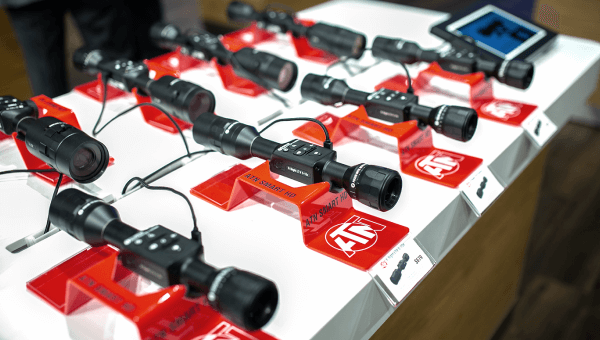
The best thermal rifle scope for coyote hunting is the one that keeps up with how a called coyote behaves: it comes in fast, hangs at the edge of your range, and rarely offers a second look. That means you want a scope that spots a lean, moderately warm predator quickly, holds it sharp as it circles, and lets you confirm the shot before it slips off. This roundup ranks three ATN ThOR 6 options by how each one serves a predator caller working coyotes in the dark.
Best for close-calling: ATN ThOR 6 640x512 2-16x — wide field to catch a coyote that circles in tight.
Best value predator scope: ATN ThOR 6 384x288 2.5-20x — light and quick for typical calling ranges.
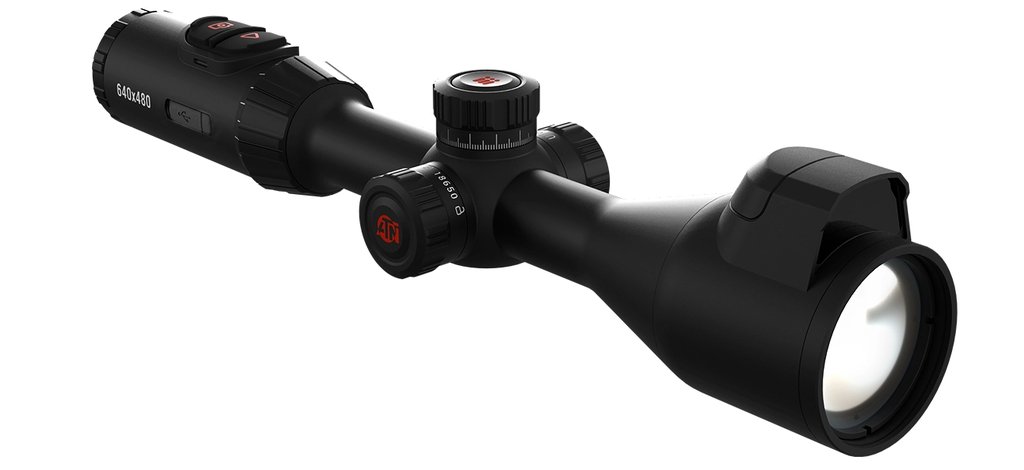
Why ATN's 6th-gen ThOR 6 suits predator hunting
ATN's 6th-generation ThOR 6 line fits coyote hunting because coyotes are leaner and run cooler than a hog, so contrast and speed matter more. A sensor rated at 15 mK helps here — NETD in millikelvin is the smallest temperature difference the sensor can resolve, and a lower number means a lean predator still stands out sharply against cold ground. Hot Point Tracking flags the coyote's signature as it circles, the fast refresh keeps a trotting dog from smearing, and Recoil Activated Video captures the shot when it finally stops. The model you pick comes down to how far your coyotes hang up.
ATN ThOR 6 640x512 3-24x — best for coyotes that hang up far
See the lean dog before it sees you
The ATN ThOR 6 640x512 3-24x is the pick for the caller whose coyotes stop out at the edge of the field instead of committing. Its 640x512 sensor holds four times the pixels of a 384 detector — the jump from standard definition to HD — so a lean predator 250 yards out resolves into a coyote you can confirm, not a warm dot. The 50 mm lens and 3650 m detection give you the reach to catch a wary dog circling downwind, and Hot Point Tracking keeps you locked on it.
Who it's for and who it's not
It's for the predator hunter on open ground where coyotes hold at distance. It is not the pick for tight timber calling where dogs pop in close, and it's the flagship tier, so it costs the most.
ATN ThOR 6 640x512 2-16x — best for close-calling
Wide enough to catch the circle
The ThOR 6 640x512 2-16x keeps the 640 sensor but starts at 2x, giving a wider field of view that helps when a coyote circles downwind and shows up off to your side. You keep the crisp 640 image and reach 3100 m of detection, while the replaceable 18650 battery lets you run a fresh cell on a long calling night. When dogs commit close and move fast, the wider view catches them sooner.
Who it's for and who it's not
It's for the caller working closer country where coyotes come in tight. It's not the best when dogs consistently hang up far, where the 3-24x reaches better.
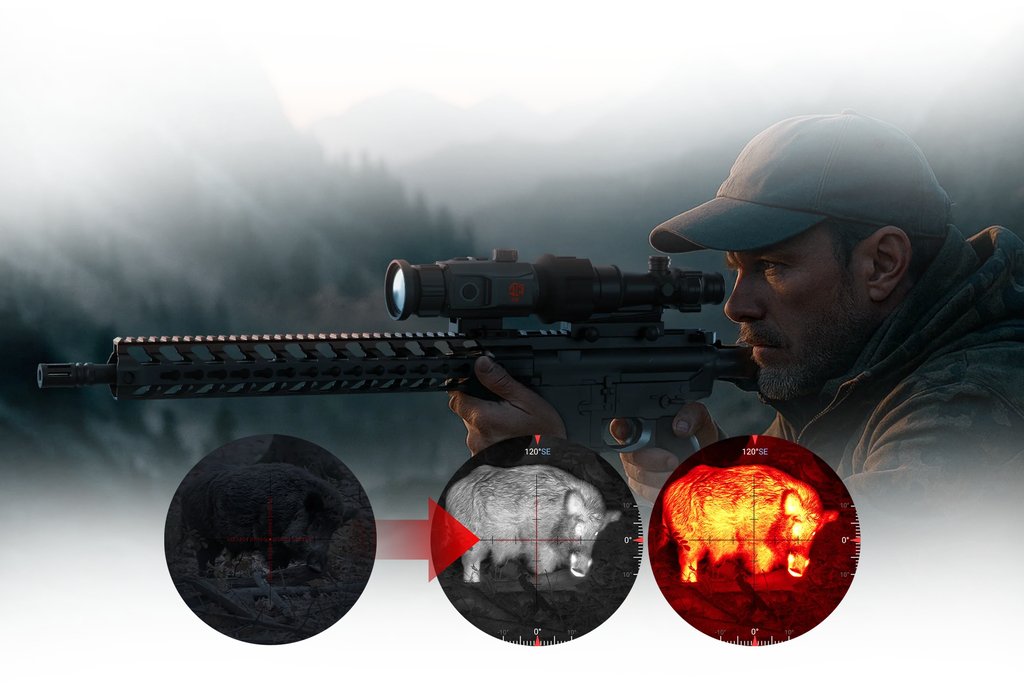
ATN ThOR 6 384x288 2.5-20x — best value for calling
Light, quick, and affordable
The ATN ThOR 6 384x288 2.5-20x is the value pick and covers the ranges most predator callers actually shoot. Coyotes usually commit inside a couple hundred yards, and at those distances the 384 sensor puts a sharp, high-contrast dog on the reticle — detection reaches 2300 m. It's the lightest model in the line, which matters when you carry it set to set and swing on a coyote that appears without warning.
Who it's for and who it's not
It's for the value-minded caller working normal ranges who wants a light, capable scope. It's not for the hunter who must identify coyotes at the far end of a big open field, where the 640 models pull ahead.
Why coyotes are harder on a thermal scope than hogs
A coyote asks more of a thermal scope than a hog does, and understanding why steers you toward the right features. A hog is big, heavily built, and runs hot, so it lights up strongly and forgivingly on almost any thermal image. A coyote is lean, lightly furred, and smaller, which means it presents a smaller and cooler heat signature — especially in cold weather when a thick winter coat insulates the body heat you are trying to see. That puts a premium on sensor sensitivity: at 15 mK, the ThOR 6 resolves the modest temperature difference a coyote offers against cold ground, where a less sensitive sensor might leave you squinting at a faint smudge.
Coyotes are also warier and more mobile than hogs on a stand. A called dog often circles to get downwind, hangs up at the edge of shooting light, and rarely stands still for long. That behavior rewards a wide field of view to catch a coyote coming in off to the side, a fast refresh rate so a trotting dog stays sharp instead of smearing, and Hot Point Tracking to help you stay locked on it as it moves. Where a hog might give you several seconds of a stationary target, a coyote may give you one brief, moving window — and the scope has to be ready for it.
Setting up for a night of calling
Success on coyotes is as much about how you set up as which scope you carry, and a thermal optic changes some of the old rules. Because thermal sees heat regardless of light, you can set up in total darkness and still pick a dog out of a black field, so you are free to choose stands based on wind and terrain rather than available moonlight. Position with the wind in your favor and give yourself a clear view of the downwind side, since that is where a circling coyote will try to come in to scent-check the call. Then scan slowly and deliberately; sweeping too fast is the quickest way to skip right past a dog that has slipped in at the edge of the field.
When a coyote does commit, a low starting magnification lets you find it and swing on it fast, and you zoom in only to confirm and settle the shot. Keep the scope's video running so a miss can be reviewed and learned from — coyotes rarely give a second chance the same night, and understanding what went wrong makes the next stand better. A thermal scope tuned for predators, set up with the wind and scanned patiently, turns the coyote's cautious game against it.
How to choose a thermal scope for coyote hunting
Choose by how your coyotes respond to the call and how far they hang up, because a lean, fast predator rewards contrast, a wide field, and quick handling more than raw magnification.
- Contrast finds lean dogs — all three sit at 15 mK, so a cool-running coyote still separates from cold ground.
- Field of view for the circle — a wider low end catches a coyote coming in downwind off to your side.
- Resolution for distant hang-ups — 640 confirms a dog at the field edge; 384 is ample when they commit close.
- Fast refresh for movement — a trotting coyote stays sharp instead of smearing, so you can settle the shot.
How we picked these ATN thermal scopes
We ranked these three around the way coyotes actually behave on a call — coming in fast, hanging at range, offering brief windows — weighing sensor resolution, NETD sensitivity, detection range, refresh rate, weight, and battery against short- and long-range calling. Only the current 6th-gen line was considered. The trade-off is that the long-range pick trades close-in field width for reach, while the value model is the reverse and gives up distant identification. None suits a hunter who wants a fixed, low-power setup with no zoom range. This is an in-house comparison of ATN's own range, not an independent lab test, so match the specs to how your coyotes respond.
Frequently Asked Questions
What is the best ATN thermal scope for coyote hunting?
It depends on your ground. For coyotes that hang up far on open fields, the ThOR 6 640x512 3-24x gives the reach and detail to confirm a distant dog. For closer calling, the wider 640x512 2-16x or the light value-tier 384 handle it well.
Do I need a 640 sensor for coyotes?
Not at typical calling ranges. A 384 sensor spots and confirms coyotes inside a couple hundred yards easily. The 640 sensor earns its cost when coyotes hang up far and you need to identify a lean dog at the edge of the field.
Why does a lean coyote show less heat than a hog?
Coyotes are smaller and leaner than hogs, so they present a smaller, cooler heat signature. That is why sensor sensitivity matters; at 15 mK, the ThOR 6 still separates a coyote clearly from cool surroundings.
How does Hot Point Tracking help on a called coyote?
It marks the hottest signature in the frame, so as a coyote circles and moves you can keep your attention on it. Combined with the fast refresh, it helps you stay on a dog that will not sit still for long.
Is the value ThOR 6 good enough for predator hunting?
For most calling, yes. The 384x288 model detects heat far past normal calling distance and keeps the full feature set, and its light weight helps you swing on a coyote fast. It only trails on identifying dogs at extreme range.
What magnification works best for coyotes?
A range that starts fairly low is useful because coyotes often appear close and to the side; a wide low end catches them sooner. You then zoom in to confirm and take the shot, which is why variable magnification suits predator work.
Called coyotes do not give you time to fumble, so pick the ThOR 6 that matches how yours respond. Open country where dogs hang up far calls for the 640 3-24x, close timber for the wider 640 2-16x, and the light value-tier 384 covers typical ranges. Compare all three, read the specs, and check current pricing on the ATN thermal scope collection. Match the scope to your calling ground and you will catch more dogs before they catch your wind.
Created: August 10, 2026 · 10:05:21 UTC