A thermal imaging thermal scope lives or dies by its sensor — how many pixels it reads, how faint a heat difference it can pick up, and how smoothly it renders a moving animal. This roundup ranks ATN's current 6th-generation thermal scopes purely on that imaging performance, not on looks or feature counts. Our top pick is the ThOR 6 640x512 3-24x, and every option is an ATN model measured on what the detector actually delivers in the dark.
Best balanced imaging: ThOR 6 640x512 2-16x — the full 640 sensor with a wider low-end view and swappable power.
Best value imaging: ThOR 6 384x288 2.5-20x — steps the sensor down for a lighter, friendlier build with the same <=15mK sensitivity.
Why ATN's 6th-gen thermal imaging leads the pack
Thermal imaging works by reading the heat every object gives off and turning those tiny temperature differences into a picture — no light needed, so it sees in total darkness, through smoke and light cover. What separates a good thermal imaging thermal scope from a poor one is how much of that heat information the sensor captures and how faithfully the electronics render it. ATN's ThOR 6 line stacks the parts that matter: a sensor reading down to <=15mK NETD for high contrast in damp, foggy air; a 50 Hz refresh that keeps a running animal smooth instead of ghosting; and SharpIR, ATN's on-board AI, which cleans edges in real time so a hog reads like a hog. Add a 640x512 detector where you want maximum detail and a 3650m detection range, and the imaging holds up at distances that expose weaker sensors. Below, the three ThOR 6 options are ranked on that imaging performance.
Sharpest imaging: ThOR 6 640x512 3-24x
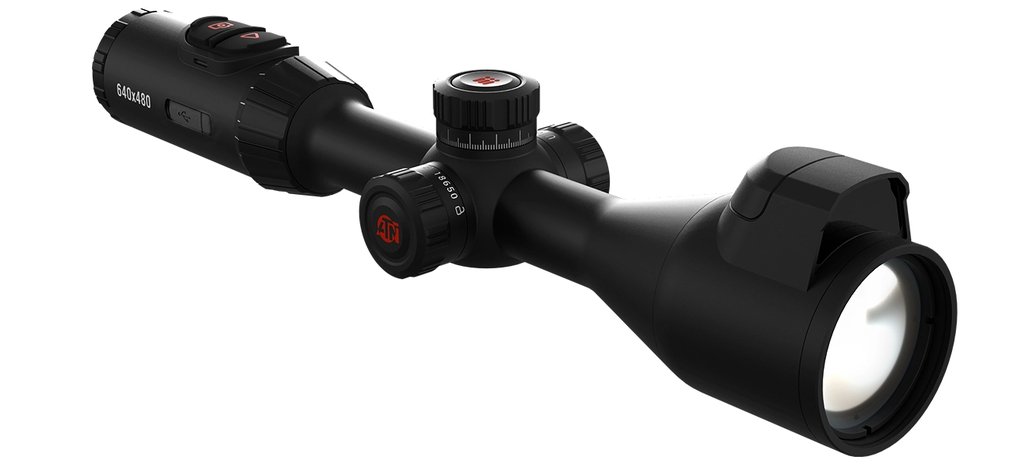
The ThOR 6 640x512 3-24x is our top thermal imaging thermal scope because it pairs the full 640x512 sensor with a 50mm germanium objective, and that combination is what carries clean detail to the edge of a 3650m detection range. More pixels on the target is the difference between a warm blur and a recognizable animal when you push the zoom.
What the sensor buys you
A 640x512 detector reads finer temperature differences across a wider grid than a 384, so the image holds together as you zoom instead of dissolving. The <=15mK NETD means light drizzle or river fog does not turn the scene to soup, and the 50 Hz refresh keeps a trotting coyote crisp. SharpIR AI sharpens the outline in real time, so you confirm the animal rather than guess at it.
Who it is for — and who it is not
It is for the hunter who wants the cleanest possible image at distance and will pay the flagship outlay for it — open-country predator work, long identification, bad-weather nights. It is not the pick if all your shots fall inside a couple hundred yards, where the lighter models deliver imaging that is hard to tell apart on screen. Compare it directly on the ThOR 6 640x512 3-24x page.
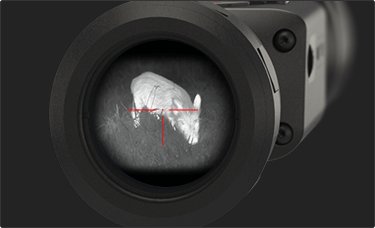
Best balanced imaging: ThOR 6 640x512 2-16x
The ThOR 6 640x512 2-16x keeps the full 640 sensor and its <=15mK sensitivity but pairs it with a 35mm lens and a 2-16x zoom, widening the low-end field of view for scanning while still reaching a 3100m detection range. Its imaging is identical to the flagship up close; you trade top-end reach for a wider search picture and a swappable 18650 battery.
What the sensor buys you
Because it is the same 640x512 detector, the picture quality matches the flagship pixel for pixel at working range — the same clean edges, the same contrast in fog. The wider bottom end makes it easier to pick up movement across a field before you zoom to confirm, and the 50 Hz refresh keeps that scan smooth.
Who it is for — and who it is not
It is for the hunter who works mixed ranges and wants full 640 imaging with battery swaps to outlast the night. It is not the pick if you only ever shoot long, where the flagship's larger lens carries the image farther.
Best value imaging: ThOR 6 384x288 2.5-20x
The ThOR 6 384x288 2.5-20x steps the sensor down to 384x288 and the weight to 790 g / 1.74 lbs, landing detection at 2300m — plenty for mid-range work. It keeps the same <=15mK NETD and 50 Hz refresh, so the imaging fundamentals carry over even though the pixel grid is smaller, and it adds six colour palettes to tune contrast for your ground.
What the sensor buys you
A 384 sensor is not a 640, but at realistic mid-range distances the on-screen difference is small, and the low NETD keeps the picture sensitive in bad air. The extra palettes let you read a coyote out of frost or heat-soaked stubble more cleanly than a single palette allows.
Who it is for — and who it is not
It is for the hunter who wants genuine ThOR 6 imaging in the lightest, most affordable package for closer work. It is not the pick if you specifically came for a 640 sensor — this is the value step-down for those who do not need it.
How to choose a thermal imaging thermal scope
- Put resolution first — a 640 sensor is what lets you identify at distance; choose it if your work is long and open, step to the 384 if your ranges are close.
- Read the NETD number — <=15mK across the line means the imaging stays usable in fog and drizzle, which decides more nights than magnification does.
- Value the refresh — 50 Hz keeps fast movement smooth; it is where cheaper thermal imaging usually falls down.
- Match lens to range — the bigger 50mm objective carries the image to 3650m; smaller lenses trade reach for a wider, lighter package.
- Plan power and storage — the swappable 18650 build outlasts long sits, and Recoil Activated Video plus ATN Connect 6 turn a hunt into reviewable footage.
How the imaging performs on a real night
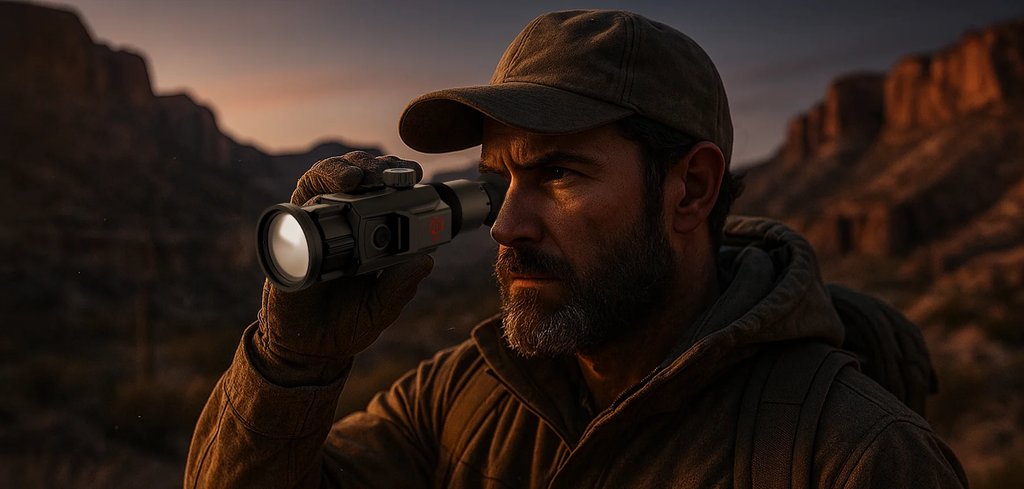
Picture a cold, damp field an hour after dark. You raise the ThOR 6 640x512 3-24x at its wide setting and sweep the tree line, where a warm shape separates from the shadows. Because the 640 sensor and <=15mK NETD hold contrast in the moisture, that shape reads as an animal, not a smudge — and as it starts working the call, the 50 Hz refresh keeps it crisp while it moves. You thumb the zoom up only when it slows inside range, and SharpIR sharpens the outline enough to confirm a coyote and not a stray dog. That whole sequence is the imaging chain doing its job: sensitive sensor, smooth refresh, AI cleanup, clean identification.
Getting the most from your thermal imaging
Good imaging still needs good habits. Learn the palettes — White Hot reads well against cold open ground, while Black Hot can pick an animal out of frost more cleanly, and the 384 model's extra palettes give you more to work with in odd conditions. Scan at low magnification where the field of view is widest, then zoom to confirm; cranking straight to the top of the band narrows your search picture and finds nothing faster. Zero carefully with Zeroing Freeze so the sensor's detail is aimed where it counts, set Picture-in-Picture so the zoomed window rides above your scanning view, and let Recoil Activated Video roll so every stand is reviewable in the ATN Connect 6 app the next morning.
Resolution versus digital zoom
It is tempting to judge a thermal imaging thermal scope by its top magnification, but the sensor is what actually carries information. Pushing past the optical range into digital zoom enlarges the picture without adding a single new pixel of detail, so a distant animal gets bigger but no clearer. The 640x512 sensor is what keeps real detail out to the edge of that 3650m detection range; treat the top of the zoom band as a fine-tuning tool for the final aim, not as the thing that finds your target.
How we picked these ATN thermal imaging scopes
These rankings are an in-house comparison of ATN's own 6th-generation ThOR 6 imaging platform, not an independent lab review, so use them as a guide and check the specs against your own hunting. We judged each scope on the things that decide imaging quality in the dark — sensor resolution and thermal sensitivity (NETD), refresh rate, detection range, lens size, weight and battery life — measured against the range each model is built for. Only the current ThOR 6 line was considered. The honest trade-off is plain: the flagship's larger sensor-and-lens pairing gives the cleanest image at distance but costs the most and weighs a touch more, while the 384 gives up pixels and reach to stay light and affordable. Who it is not for: anyone expecting digital zoom to substitute for a bigger sensor, or wanting a cheap novelty rather than a season-long tool.
Frequently Asked Questions
What is a thermal imaging thermal scope?
It is a rifle scope that builds its picture from heat instead of light, reading the temperature differences between an animal and its surroundings. That lets you see and aim in total darkness, through smoke and light cover, without any illumination.
What makes the imaging on a 640 scope better than a 384?
A 640x512 sensor packs far more pixels onto the target, so it holds detail as you zoom and reads finer temperature differences. On the ThOR 6 that means identifying an animal where a 384 would show only a warm shape.
Why does NETD matter for image quality?
NETD is the smallest temperature difference the sensor can detect. The ThOR 6 line's <=15mK rating means it picks up faint heat for a high-contrast picture, which keeps the image usable in fog, drizzle and heat-soaked conditions.
Does refresh rate affect the thermal image?
Yes. A 50 Hz refresh updates the picture 50 times a second, so a moving animal stays smooth rather than smearing or ghosting. It is one of the clearest differences between capable and cut-rate thermal imaging.
Can I record what the thermal imaging shows?
Yes. Every ThOR 6 records on-board and includes Recoil Activated Video, and the ATN Connect 6 app lets you stream the image and pull footage off the unit to review later.
Which ThOR 6 has the best thermal imaging?
The 640x512 3-24x, thanks to its full 640 sensor paired with a 50mm lens for the cleanest detail out to a 3650m detection range. The 640x512 2-16x matches its sensor at closer range, and the 384x288 2.5-20x is the lighter value option.
Ready to see what modern thermal imaging looks like? Start with the ThOR 6 640x512 3-24x — our top pick for a thermal imaging thermal scope — or browse the full range of ATN thermal scopes to compare sensors, refresh rates and detection ranges side by side. Every ThOR 6 runs the same <=15mK sensor sensitivity, SharpIR AI and ATN Connect 6 app, so whichever tier you choose, the imaging is built to hold up on the nights that matter most.
Created: August 10, 2026 · 10:05:21 UTC