The best thermal binoculars for hunting are the ones that help you find and range game before you ever raise the rifle. A weapon sight only shows you what the muzzle is already pointed at; binoculars let you glass a whole field or tree line with both eyes, hold the view steady in your hands, and read the distance to an animal before you move a step. That is the real job of a hunting binocular: scan wide, spot the heat, range it, then plan your stalk. Judged on that scan-and-range workflow, ATN's 6th-gen Binox-6 line is where we point people first, because it is not just a thermal viewer but a 4-in-1 optic with a built-in laser rangefinder. This roundup is organized around how you actually work the ground, not around a spec sheet.
Best for long-range observation — ATN Binox-6 Dual 384x288 5.5-44x: the same 4-in-1 design and 1000 m rangefinder, reaching up to 44x for reading distant ground, with 2750 m detection. The pick for open country where you glass far before moving.
Both share the same core: Day, Night, Thermal, and Twilight modes, a 4K UHD CMOS day sensor, IR illuminator, GPS and compass, dual view switching, SharpIR AI, and DeFog. Pick by how far you glass and how much magnification you want.
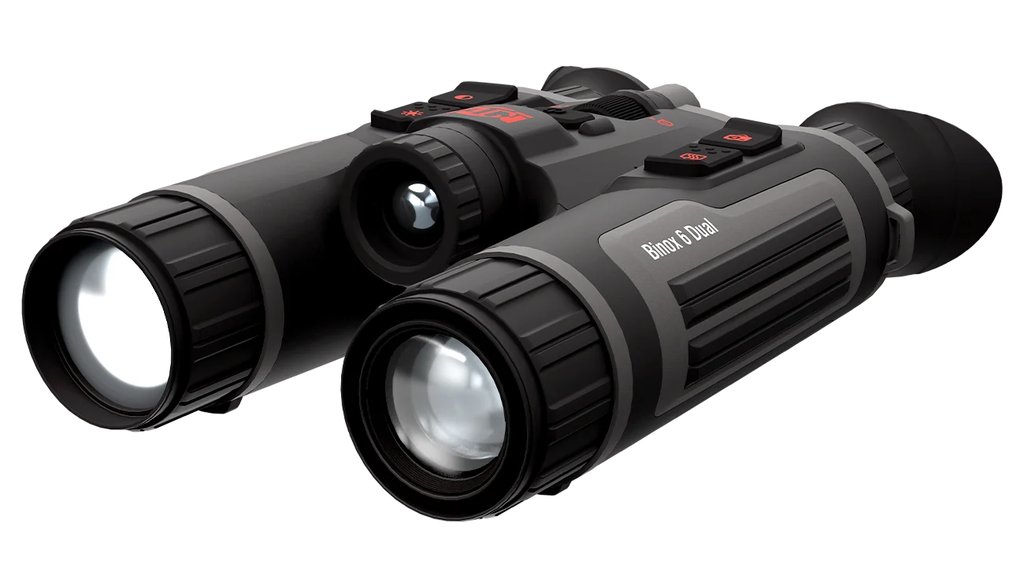
Why ATN's 6th-gen Binox-6 fits the way you hunt
ATN's 6th-gen Binox-6 fits hunting because it does the whole pre-shot job in one optic: scan, identify, and range. You hold it in both hands and glass with both eyes, which is more comfortable for long sessions than squinting through a single tube. The 640x512 thermal sensor picks warm bodies out of cool cover, and with NETD under 15 mK the contrast stays high, so a bedded animal reads clearly against the ground. When you spot something, the built-in laser rangefinder tells you the distance to 1000 m with about a meter of accuracy, so you know before you move whether it is a shootable stalk or too far. On top of thermal it runs four modes, Day, Night, Thermal, and Twilight, with a 4K UHD CMOS day sensor for full-color glassing when the light is good. Add GPS, a compass, dual view switching, SharpIR AI to sharpen the image, DeFog, and Wide Dynamic Range, and you have a full field tool. Every model below comes from this current 6th-gen line only.
ATN Binox-6 Dual 640x512 3-24x - best overall
The ATN Binox-6 Dual 640x512 3-24x is the best overall thermal binocular for hunting because it pairs the sharpest thermal image in the line with the ranging and multi-mode tools you use before a shot. The 640x512 sensor and 35mm F/1.0 thermal lens push detection out to 3100 m, and NETD under 15 mK keeps warm targets crisp against cool ground while you glass.
A 640x512 sensor for scanning wide and clean
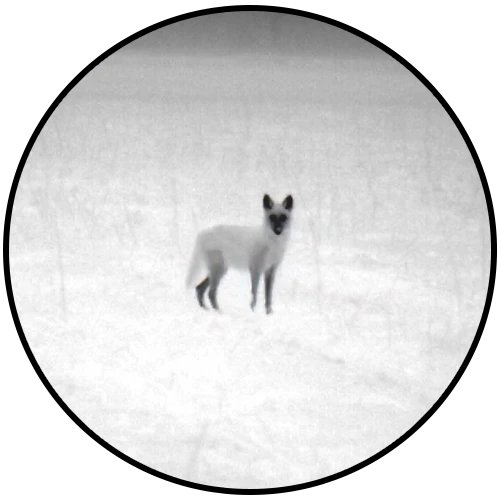
The 640x512 thermal sensor is like moving from a standard-definition picture up to a full HD one: more pixels mean you can tell a coyote from a stump at distance, not just spot a warm blob. With NETD under 15 mK the image holds high contrast, so a bedded deer or a hog rooting in brush stands out against the cool background. Starting at 3x gives you a wide field to sweep a whole tree line, and you zoom in with up to 24x once something catches your eye.
Built-in laser rangefinder to plan the stalk
The built-in laser rangefinder reads the distance to a target out to 1000 m with about a meter of accuracy, so the moment you spot an animal you know how far it is. That number decides your next move: close the gap, hold, or let it go. Ranging from the same optic you glass with means you are not fumbling between two devices in the dark, which is exactly what you want when a stalk depends on staying quiet and still.
4-in-1 modes and a 4K day sensor
Beyond thermal, the Binox-6 runs Day, Night, and Twilight modes, with a 4K UHD CMOS day sensor for full-color glassing when the light is good, plus an IR illuminator and Night mode for after dark. Dual view switching lets you flip between thermal and day/night views, and SharpIR AI, DeFog, and Wide Dynamic Range clean up the picture in tough conditions. GPS and a compass help you mark and find spots. It is a full-day scanning tool, not just a night viewer.
Who it's for: the hunter who wants the sharpest thermal image and ranging in one hand-held optic for scanning fields and cover before the shot. Who it's not for: someone who only needs top-end magnification for glassing wide-open country at long range, or a hunter who wants a rifle-mounted sight rather than a scanning binocular.
ATN Binox-6 Dual 384x288 5.5-44x - best for long-range observation
The ATN Binox-6 Dual 384x288 5.5-44x is the best pick for open country because it keeps the 4-in-1 design and the built-in 1000 m rangefinder but reaches up to 44x for reading distant ground. If you hunt fields, cutovers, or wide draws where you glass far before you ever move, that high magnification lets you study an animal from across a property.
High magnification for reading far ground
Reaching 5.5x to 44x, this model is built for looking a long way. On open ground you can pick up a warm body far off, zoom in to judge what it is and which way it is moving, and range it, all without giving up your position. The 35mm F/0.9 thermal lens and 2750 m detection back that up. Think of it as a spotting-scope approach to thermal scanning, letting you plan a long stalk from a distance.
Same 4-in-1 tools, lighter step in resolution
You still get the built-in laser rangefinder to 1000 m, the four modes, the 4K UHD CMOS day sensor, the IR illuminator, GPS and compass, and SharpIR AI with DeFog. The trade is a 384x288 thermal sensor rather than 640, which is a step down in raw detail, the way fewer dots on a screen show less fine texture than more. At high magnification you notice it a little, but the extra reach is what this model is for, and at 720 g it is a touch lighter to hold up while you glass.
Who it's for: the open-country hunter who glasses far and wants maximum magnification and ranging in a scanning binocular. Who it's not for: someone in thick cover who works closer and would get more from the 640 sensor's finer detail, or a hunter who wants the sharpest possible thermal image over reach.
How to choose thermal binoculars for hunting
Choose thermal binoculars for hunting by matching sensor, magnification, and ranging to the ground you cover and the way you glass. Because a binocular is a scanning and observation tool, prioritize a clean wide view and the ability to range what you spot, then let magnification and detection sort the rest.
- Built-in rangefinder — for hunting, knowing the exact distance to an animal before you move is huge; the Binox-6's laser rangefinder reads to 1000 m so you plan the stalk from where you stand.
- Sensor resolution — a 640x512 thermal sensor resolves more detail so you identify game rather than guess at a warm shape; a 384x288 gives more reach in a high-magnification body.
- NETD — thermal sensitivity; NETD under 15 mK keeps the image high-contrast, so a warm animal separates cleanly from cool cover or ground.
- Magnification — a wider start (3x) sweeps a whole tree line fast; a higher ceiling (up to 44x) reads far ground in open country, but too much zoom narrows your field.
- Detection range — be honest about your real distances; detection tells you how far you can spot heat, not identify or ethically shoot it.
- Multiple modes — Day, Night, Thermal, and Twilight plus a 4K day sensor let one optic glass in full color by day and by heat after dark.
- Weight and battery — you hold a binocular up for long sessions, so weight matters; both models here sit near 720-730 g and run about 8 hours on 18650 cells.
How we picked these ATN thermal binoculars
We ranked these against one job: scanning, identifying, and ranging game before the shot as a hand-held hunting binocular, not a weapon sight. We put the tools that matter for that workflow first, a built-in laser rangefinder so you know the distance the moment you spot an animal, and the multi-mode design that lets one optic glass in full color by day and by heat after dark. From there we weighed thermal sensor resolution (640 vs 384), thermal sensitivity (NETD under 15 mK), detection range, magnification for the ground you cover, and the comfort factors of weight and roughly eight hours of runtime on 18650 cells. We only considered ATN's current 6th-gen Binox-6 line, so nothing here is an older or discontinued model. The honest trade-offs: the 384 5.5-44x reaches farther but gives up resolution, so it is happiest in open country, while the 640 3-24x is sharper but tops out lower; and holding any binocular steady at high magnification for a long glassing session takes some effort or a rest. Neither is the right tool if you want a rifle-mounted sight to shoot through. This is an in-house comparison of ATN's own range, not an independent lab test, so weigh the specs against the country you hunt and how you glass before you decide.
Frequently Asked Questions
What are the best thermal binoculars for hunting?
The ATN Binox-6 Dual 640x512 3-24x is our best overall pick for hunting. It is a 4-in-1 Day/Night/Thermal/Twilight binocular with a 640x512 thermal sensor, NETD under 15 mK, a built-in 1000 m laser rangefinder, and 3100 m detection. For open country where you glass far, the 384x288 5.5-44x reaches up to 44x while keeping the same 4-in-1 design and rangefinder.
Why use thermal binoculars instead of a thermal rifle scope?
Binoculars are built for scanning and observation before the shot, not for aiming. You glass a wide area with both eyes, hold the view comfortably in your hands, and range what you spot, all without pointing a rifle. A scope only shows what the muzzle is aimed at. Many hunters use a binocular to find and range game, then move in with a scoped rifle.
Does the ATN Binox-6 have a rangefinder?
Yes. Both Binox-6 models here have a built-in laser rangefinder that reads distance to a target out to 1000 m with about a meter of accuracy. That lets you range an animal the moment you spot it, so you know before you move whether it is a workable stalk or too far. Ranging from the same optic you glass with keeps you quiet and still.
Can the Binox-6 be used in daylight?
Yes. The Binox-6 is a 4-in-1 optic with Day, Night, Thermal, and Twilight modes and a 4K UHD CMOS day sensor, so you can glass in full color when the light is good. After dark you switch to Thermal or Night mode, aided by the IR illuminator. That means one optic covers a full day and night of hunting.
Do I need the 640 sensor or is 384 enough for hunting?
For scanning cover and identifying game at practical ranges, the 640x512 sensor is the sharper, more detailed choice and our overall pick. Go with the 384x288 5.5-44x if you hunt open country and want maximum magnification to read far ground, accepting a step down in resolution for the extra reach. The 640 is like moving from standard definition to full HD.
How far can the Binox-6 detect game?
The Binox-6 Dual 640x512 3-24x detects heat out to about 3100 m, and the 384x288 5.5-44x reaches about 2750 m. Keep in mind that detection is the distance at which you can spot a heat source, not the distance at which you can identify or ethically shoot it. You will identify game and read the built-in rangefinder well inside those numbers.
How long does the Binox-6 battery last?
Both Binox-6 models run about 8 hours on two 18650 cells, which covers a full evening-into-night glassing session. Because the cells are replaceable, you can carry spares and keep going through a long hunt. Running the day sensor, IR illuminator, and rangefinder heavily will draw more power, so pack extras for an all-night sit.
If you want to find and range game before you ever raise the rifle, start with a scanning optic built for exactly that. The ATN Binox-6 line is a 4-in-1 hand-held binocular that glasses wide, reads heat after dark, and ranges what you spot out to 1000 m, so you plan the stalk from where you stand. Compare both the 640 and 384 models and their specs on the ATN thermal binoculars collection, then match one to the country you hunt and how far you glass. Whichever you choose, you get a full-day tool for spotting, identifying, and ranging before the shot.
Created: August 10, 2026 · 10:05:21 UTC