Two very different technologies promise to let you see after dark, and choosing wrong costs you animals. The night vision vs thermal scope question is really a question about how each one sees: night vision amplifies the faint light that is already there, while thermal reads heat and needs no light at all. Both have a place, but for detecting and identifying game on a dark night they behave nothing alike. This comparison lays out how each works and when to choose it, and lands on a clear recommendation — the ATN ThOR 6 640x512 3-24x thermal scope from ATN's current 6th-generation line.
How a thermal scope works
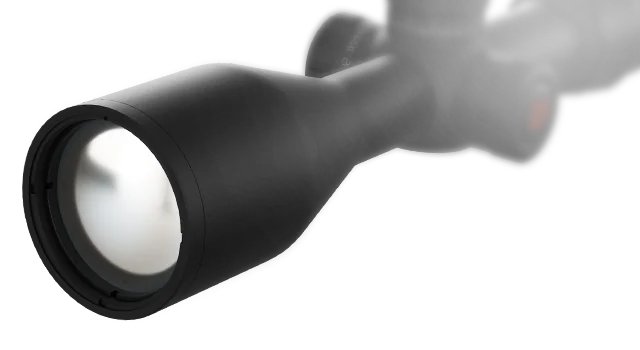
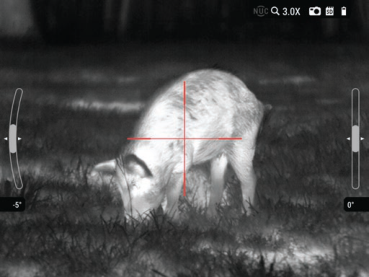
A thermal scope sees heat, not light, so darkness simply does not matter to it. Every animal, every warm object, radiates infrared energy, and the sensor turns those temperature differences into an image where a living body glows against cooler ground. On the ATN ThOR 6 640x512 3-24x, the 640x512 sensor packs a lot of pixels onto that heat picture — more dots on the target — so a warm shape at distance resolves into an identifiable animal rather than a blur. A NETD rated at 15 mK or lower means the sensor reads very small temperature differences, which is why it still produces a usable image in fog or light drizzle when other tools go blind. The 50 Hz refresh keeps a moving animal smooth, and SharpIR AI cleans the edges in real time. Because heat is always present, a thermal scope works in total blackness with no moon and no illuminator.
How night vision works
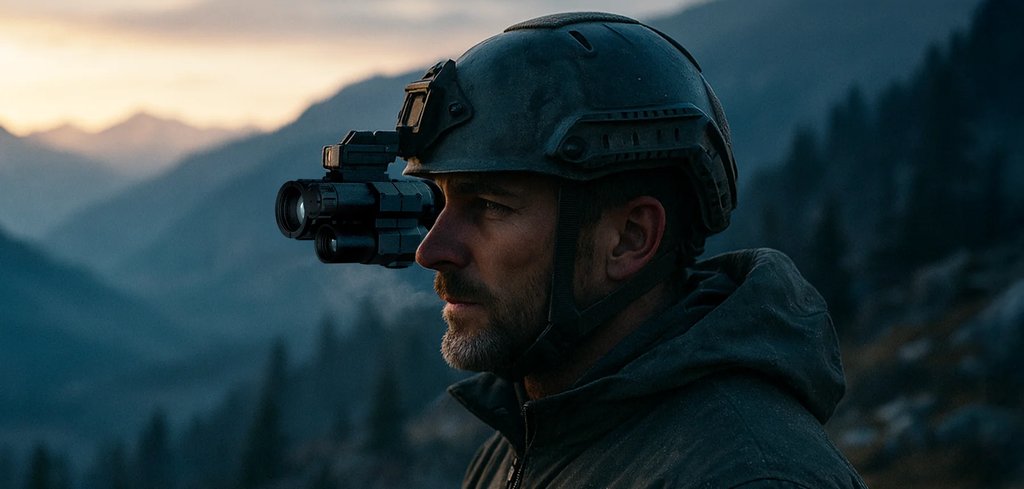
Night vision works by amplifying the small amount of light already in a scene — moonlight, starlight, or infrared from an illuminator — and intensifying it into a viewable image. Because it depends on light, it gives you a natural-looking picture that reads a lot like daytime: you see textures, terrain, and surface detail the way your eye would in dim conditions. That is its real strength. Its weakness is the flip side: in true darkness with no moon and no IR source, there is little light to amplify, and a target that blends into its background by contrast can be hard to pick out. Night vision does not see heat, so an animal lying still in brush offers no glowing signature to catch your eye — it is only as visible as the available light makes it.
When to choose thermal
Choose thermal when the job is to detect and identify living animals in the dark — which is most night hunting. Because a warm body stands out sharply against cooler ground, thermal is unmatched at picking a hog out of standing crops, spotting a coyote at the far edge of a field, or catching a bedded animal you would walk right past with any light-based tool. It works with no moon, sees through light haze and fog better than night vision, and reveals heat behind thin brush that would hide an animal from the eye. For the hunter whose first problem every night is simply finding game across dark ground, thermal is the right technology, and the ATN ThOR 6 640x512 3-24x is built precisely for that job.
When to choose night vision
Choose night vision when you need natural detail and there is light to work with. If you want to read terrain, distinguish fine features, identify markings, or navigate at close range under a decent moon, a light-amplifying device gives a more familiar, detail-rich picture than a heat map. Some hunters also prefer it for the way it shows the whole scene rather than just the warm objects in it. If your nights are lit and detail matters more than raw detection, night vision has a genuine place — and ATN builds light-based day/night optics for exactly that kind of use. But it asks for available light or an illuminator, and it cannot conjure a heat signature out of a dark field the way thermal can.
Our recommendation
For most hunters weighing night vision vs a thermal scope, thermal is the more versatile night tool, and the ATN ThOR 6 640x512 3-24x is our pick. It works in total darkness, its 640x512 sensor and 3650 m detection range let you find and identify game far out across dark ground, and its 15 mK NETD keeps the image usable when fog rolls in — the exact conditions that stall a light-based optic. The 50 Hz refresh keeps movers smooth, SharpIR AI sharpens the picture, and Recoil Activated Video plus the ATN Connect 6 app let you review every night. Browse the full lineup of ATN thermal scopes to match sensor and reach to your ground; if you specifically want light-amplified detail in lit conditions, ATN also builds day/night optics for that role. But if your first job every night is finding animals in the dark, the thermal ThOR 6 is the stronger buy.
How we compared them
This is an in-house comparison from ATN's own range, not an independent lab test, so treat it as guidance and match the technology to your own conditions before you buy. We compared the two approaches on what decides a night hunt: how each sees in the dark, how well it detects and identifies animals, how it copes with fog and light cover, and how much detail it shows — judged against the ThOR 6's real specs (640x512 resolution, 15 mK NETD, 50 Hz refresh, 3650 m detection range, roughly 9 hours on swappable 18650 cells). Only the current 6th-generation ThOR 6 line was considered on the thermal side. The honest trade-off: thermal wins on detection and works in zero light, but a light-based optic shows more natural surface detail when light is available. Who thermal is not for: a hunter whose main need is reading fine terrain detail under a good moon rather than finding heat in the dark.
Frequently Asked Questions
What is the main difference between night vision and a thermal scope?
Night vision amplifies existing light to make a dark scene visible, while a thermal scope reads heat and needs no light at all. That is why thermal works in total darkness and excels at detecting warm animals, while night vision shows more natural surface detail when there is some light to amplify.
Is a thermal scope better than night vision for hunting?
For finding and identifying animals in the dark, usually yes. A warm body stands out sharply against cool ground, so thermal detects game that night vision can miss, and it works with no moon and through light fog. Night vision is better mainly when you need fine detail and have available light.
Does thermal work in complete darkness?
Yes. A thermal scope like the ATN ThOR 6 640x512 3-24x reads heat rather than light, so it produces a full image on a moonless night with no illuminator — something light-based night vision cannot do without an IR source.
Can night vision see heat?
No. Night vision only amplifies light, so an animal offers no heat signature to it — it is visible only as much as the available light and contrast allow. That is why a bedded animal in brush is far easier to catch with thermal.
Which sees better through fog, thermal or night vision?
Thermal generally copes better with light fog and haze because it reads heat, which penetrates thin moisture more effectively than amplified light does. The ThOR 6's 15 mK NETD is what keeps its picture usable when the air turns damp; heavy fog still shortens range for both.
Which ATN thermal scope should I choose for night hunting?
For long-range detection and identification, the ATN ThOR 6 640x512 3-24x, with its 640 sensor and 3650 m detection range. If your ranges are closer or your budget is tighter, the ThOR 6 640x512 2-16x or the value-tier 384x288 2.5-20x share the same core features.
Still weighing night vision against thermal? If your nights are about finding and identifying game in the dark, start with the ATN ThOR 6 640x512 3-24x — it works in zero light and reaches far across open ground — or compare the full range of ATN thermal scopes to match sensor and reach to your terrain. Every ThOR 6 runs SharpIR AI and the Connect 6 app, so you can review each hunt and get sharper season after season.
Created: August 10, 2026 · 10:05:21 UTC