The night vision scope vs thermal question comes down to how each one sees. A thermal scope reads heat, so it finds a warm animal in total darkness, brush, or fog. A digital night vision scope amplifies light to build a picture that looks more like the real scene and works in daylight too. Both are excellent, but they win at different jobs. This comparison uses two current ATN optics to make it concrete: the thermal ATN ThOR 6 640x512 and the day-and-night ATN X-Sight 5 5-25x. Here is how each one works, when to pick it, and which one we would put on the rifle first.
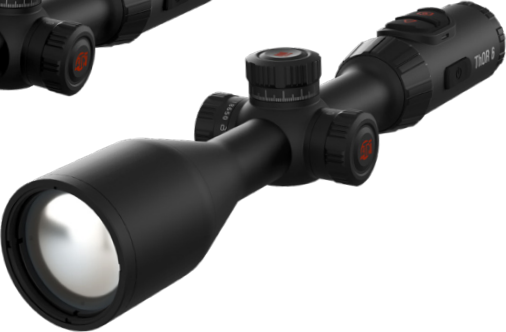
How the thermal ATN ThOR 6 works
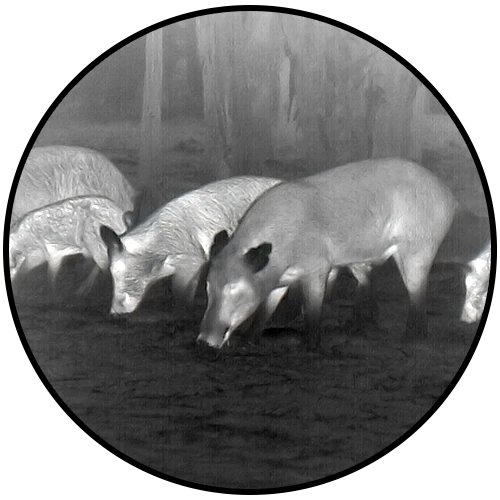
A thermal scope works by reading the heat every object gives off, not the light bouncing off it. The ATN ThOR 6 640x512 uses a thermal sensor to turn temperature differences into a picture, so a warm animal glows against a cooler background. Because it needs no light at all, it works in pitch dark, and because heat passes through light brush, smoke, and fog, it finds game other optics miss. Its 640x512 sensor and class-leading 15mK sensitivity give a clean, detailed heat picture, detection reaches about 3,650 meters, and the 50 Hz refresh keeps a running animal smooth. Six color palettes let you view the heat as White Hot, Black Hot, or Iron Red to suit conditions. The trade-off: thermal shows heat, not fine surface detail, so reading small markings can be harder than with a light-based picture.
How the night vision ATN X-Sight 5 works
A digital night vision scope works by amplifying the light already in the scene and rendering it on a screen, so the picture looks much like what your eye would see, only brighter. The ATN X-Sight 5 5-25x uses an Ultra HD 4K+ sensor and Enhanced Night Vision Mode to pull a sharp, natural-looking image out of low light, and because it reads light rather than heat, the same scope also works perfectly in daylight. That makes it a true day-and-night optic on one rifle. It adds a ballistic calculator, 5-25x smooth zoom, and up to 14 hours of battery. The trade-off: in true pitch dark with no ambient light it wants an IR illuminator to give it something to amplify, and it will not see a hidden animal through brush the way heat does.
When to choose thermal (ATN ThOR 6)
Choose thermal when the priority is finding warm game in the dark, fast. If you hunt hogs or predators that move at night, bed in cover, or sit in tall grass, the ThOR 6 640 picks up their heat where a light-based optic sees nothing. It is the tool for detection: scanning a field and instantly spotting the hot blob of an animal that is otherwise invisible. Fog, light brush, and total darkness are exactly where it shines. If your hunting is defined by locating animals after dark and getting on them quickly, thermal is the pick.
When to choose night vision (ATN X-Sight 5)
Choose digital night vision when you want detail, easy target identification, and one scope for day and night. The X-Sight 5's 4K+ picture makes it easier to positively identify a target and read the scene the way your eye would, and it doubles as your daytime scope so you never swap optics. If you value a natural-looking image, want to shoot the same rifle at noon and midnight, and are willing to add an IR illuminator for the darkest nights, night vision is the better fit. It is also the choice when day capability matters as much as night.
Our recommendation
For pure night hunting where the job is to find and shoot warm game in the dark, our pick is the thermal ATN ThOR 6 640x512. Nothing beats heat for detection through brush, fog, and total darkness, and the 640 sensor with 15mK sensitivity gives a clean picture with the reach most hunters need. Choose the day-and-night X-Sight 5 instead if you want one optic for daytime and after dark, prize natural detail for identification, and do not mind an IR source on the blackest nights. Both are current ATN optics — browse the full ATN thermal scope lineup to match one to your hunting. In short: thermal to detect, night vision to identify and to cover both halves of the day.
How we compared them
We compared these on the factors that separate the two technologies for a hunter: how each one sees (heat vs amplified light), performance in total darkness and through brush or fog, target detail for identification, sensor resolution, daytime capability, and battery life. We used only ATN's current 6th-gen ThOR 6 and 5th-gen X-Sight lines — no older models. The honest trade-offs are built into the tech: thermal detects superbly but shows heat rather than fine detail, while night vision renders natural detail and works in daylight but wants some light to amplify. This is an in-house comparison of ATN's own optics, not an independent lab test, so weigh detection versus identification against your own hunting before choosing.
Frequently Asked Questions
What is the main difference between night vision and thermal?
Thermal reads heat, so it detects warm animals in total darkness, brush, and fog. Night vision amplifies available light to build a natural-looking picture and also works in daylight. Thermal is best for finding game; night vision is best for identifying it.
Which is better for hog hunting, thermal or night vision?
For pure night detection, the thermal ATN ThOR 6 640 wins because it spots hogs by their heat through cover and total dark. If you want one scope for day and night and prize natural detail, the ATN X-Sight 5 is the better all-rounder. Many hunters lean thermal for after-dark pig work.
Can thermal see in complete darkness?
Yes. Thermal reads heat, not light, so the ATN ThOR 6 works with no ambient light at all. That is its biggest advantage over night vision, which needs some light or an IR illuminator to build a picture in the pitch dark.
Does night vision work during the day?
Yes. The ATN X-Sight 5 is a true day-and-night scope. Because it amplifies light rather than reading heat, it functions as a normal day scope and switches to night vision after dark on the same rifle. Thermal is not meant for daytime shooting.
Which gives a clearer image of the animal?
For fine detail and identification, night vision's natural-looking, high-resolution picture is easier to read. Thermal shows a heat signature that is unbeatable for detection but less detailed for reading small markings. It depends on whether you are finding the animal or identifying it.
Do I need an IR illuminator with the X-Sight 5?
In moonlight or with some ambient light, no. In true pitch dark with no light to amplify, adding an IR illuminator gives the X-Sight 5 the light it needs for a clear picture. Thermal never needs one because it reads heat.
Still weighing heat versus light for your rifle? If your hunts are about finding warm game in the dark, the thermal ATN ThOR 6 640x512 detects through brush, fog, and total darkness. If you want one scope for day and night with natural detail, look at the ATN X-Sight 5. Explore both and the full range on the ATN thermal scope page, then match the technology to how and when you hunt. Detect with thermal, identify with night vision.
Created: July 7, 2026 · 14:32:46 UTC