When hunters weigh a night vision and thermal scope against each other, they are really asking one thing: which one puts the animal on screen when the sun is down? Both let you hunt in the dark, but they get there in very different ways — one amplifies faint light, the other reads heat. This comparison stays inside ATN's thermal line and pits two 6th-generation ThOR 6 scopes head to head, the long-range ATN ThOR 6 640x512 3-24x against the value-minded 384x288 2.5-20x, so you can see how the same thermal technology scales and which fits your night. First, a quick word on how thermal and night vision differ, then the two-scope face-off.
Thermal versus night vision, in one minute
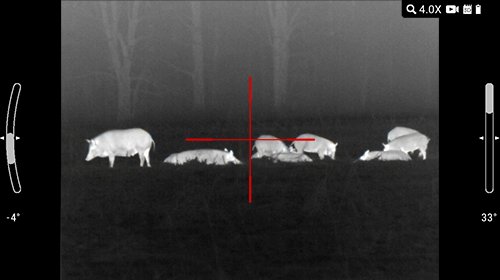
A thermal scope detects heat, so it works in pitch black, through light brush, and in fog or smoke, and every warm animal glows against the cooler background — which is why it excels at finding game. A night-vision scope amplifies whatever light is already there (starlight, moonlight), so it needs some ambient light and can be blinded by none, but it can show more natural, ID-friendly detail when conditions allow. For night hog and predator work, most hunters reach for thermal because it does the finding no light can. That is the technology both ThOR 6 scopes below use.
How the ATN ThOR 6 640x512 3-24x works
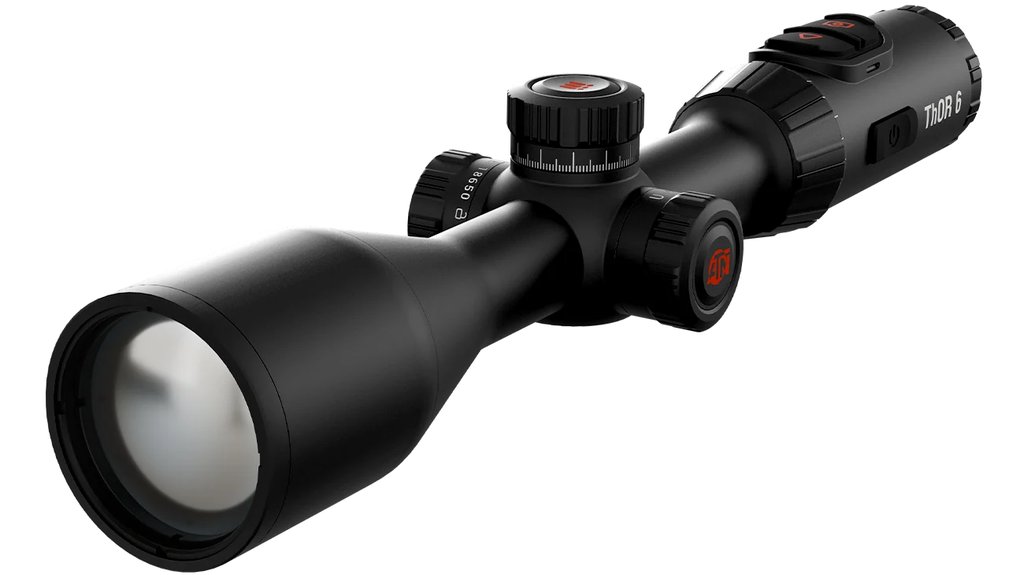
The 640x512 3-24x is the long-range thermal option, built around a high-resolution 640x512 sensor. More pixels mean finer detail — roughly the difference between standard definition and high definition — so a distant animal reads as a clear shape rather than a warm blob. A ≤15 mK NETD keeps that image clean and high-contrast even on a mild night, the 50 mm lens pushes detection to about 3,650 m, and the 3-24x zoom reaches far out with 8x digital zoom headroom. SharpIR AI sharpening, Recoil Activated Video, Hot Point Tracking and Zeroing Freeze come standard.
How the ATN ThOR 6 384x288 2.5-20x works
The 384x288 2.5-20x uses the same 6th-gen platform and the same ≤15 mK NETD, but on a capable mid-range 384x288 sensor and a shorter 25 mm lens. That trims detection to roughly 2,300 m — still ample for timber and pasture-edge shots — and the package is the lighter of the two at about 790 g. You keep the full feature set: SharpIR, Recoil Activated Video, Zeroing Freeze, Hot Point Tracking, Wi-Fi with ATN Connect 6 and six color palettes. The savings live entirely in the sensor and range, not in the features.
When to choose the 640x512 3-24x
Choose the 640x512 3-24x when your shots run long and your ground is open. If you glass across ag fields, pastures or river bottoms and want to identify game far out before you ever move, the higher-resolution sensor and the longer detection range earn their keep. It is also the pick if you want maximum magnification headroom and the crispest possible image on a moving target at distance. The trade-off is that it is a flagship-tier optic — more scope than a close-in timber hunter needs.
When to choose the 384x288 2.5-20x
Choose the 384x288 2.5-20x when most of your shots stay inside a couple hundred yards and value matters. In timber, on pasture edges, or for a hunter getting into thermal for the first time, its mid-range sensor and roughly 2,300 m detection range are plenty, and you give up none of the ThOR 6 features. It is the lighter scope on a long walk-in, too. The trade-off is reach and fine detail at long distance — that is where the 640 pulls ahead.
Our recommendation
For most hunters who hunt varied ground and want one scope to do it all, we recommend the ATN ThOR 6 640x512 3-24x. Its high-resolution sensor and long detection range give you room to grow into longer shots without buying twice, and the image quality holds up on the toughest, mildest nights. If your hunting is honestly close-to-mid range and you would rather put the savings elsewhere, the 384x288 2.5-20x is the smart call and loses nothing in features. Either way, you are choosing thermal over night vision because thermal is what finds warm game in the dark — browse both in the full ATN ThOR thermal scope lineup and match the sensor to your ground.
How we compared them
This is an in-house comparison of two ATN thermal scopes from the same 6th-generation family, not an independent lab review, so check the specs against your own needs. We compared them on the things that decide a night hunt: sensor resolution and NETD for image clarity, detection range and magnification against realistic distances, refresh rate for tracking moving game, and weight and battery for a long session. We only looked at current ThOR 6 models because older units trail on sensor and processing. The honest trade-off is a straight one — the 640 costs more and carries more range than a close-in hunter needs, while the 384 gives up fine detail and reach at long distance. Neither replaces a night-vision optic's light-amplified look; both are thermal tools for finding heat in the dark. Match the pick to your ground and your longest realistic shot.
Frequently Asked Questions
What is the difference between a night vision and thermal scope?
A thermal scope detects heat and works in complete darkness, fog and light brush, showing warm animals as bright shapes. A night-vision scope amplifies existing light such as starlight or moonlight, so it needs some ambient light but can show more natural detail. For finding and shooting warm game at night, thermal is usually the stronger tool, which is why the ATN ThOR 6 scopes here are thermal.
Which is better for hog hunting, night vision or thermal?
Thermal is generally better for hog hunting. Hogs move after dark and often stay in cover, and a thermal scope reveals their heat signature where night vision would show only shadow. Both ATN ThOR 6 scopes in this comparison are thermal for that reason. The 640x512 3-24x reaches farther on open ground, while the 384x288 2.5-20x is the value pick for closer work.
Is the ThOR 6 640x512 3-24x worth it over the 384x288 2.5-20x?
It is worth it if you hunt open ground and take longer shots. The 640x512 sensor resolves finer detail and its 50 mm lens detects heat out to about 3,650 m versus roughly 2,300 m on the 384. If your shots stay inside a couple hundred yards, the 384x288 2.5-20x carries the same features on a value sensor and is the smarter buy.
Do both scopes have the same features?
Yes, they share the full ThOR 6 feature set: SharpIR AI sharpening, Recoil Activated Video, Zeroing Freeze, Hot Point Tracking, Picture-in-Picture and Wi-Fi with ATN Connect 6, plus the same ≤15 mK NETD. The differences are the sensor resolution, the lens size and the resulting detection range and magnification, not the features.
Can a thermal scope replace a night-vision scope?
For most nighttime hunting of warm game, yes — a thermal scope finds animals in total darkness where night vision cannot. Night vision still has an edge for reading fine, natural detail when there is ambient light. If your main job is locating and shooting hogs or predators after dark, a thermal scope like the ATN ThOR 6 does that job well on its own.
How much lighter is the 384x288 2.5-20x?
The 384x288 2.5-20x weighs about 790 g (1.74 lbs) versus roughly 830 g (1.83 lbs) for the 640x512 3-24x. It is a modest difference, but a hunter feels it on a long walk-in or a night of scanning. The lighter scope pairs naturally with its closer-range, value-focused role.
Choosing between a night vision and thermal scope usually ends the same way for night hunters: thermal finds the game. If your ground is open and your shots run long, the ATN ThOR 6 640x512 3-24x is the reach-and-resolution pick; if you hunt closer, the 384x288 2.5-20x gives you the same features for less. Compare them side by side in the full ATN ThOR thermal scope lineup, match the sensor to your longest realistic shot, and get set up before the next dark night.
Created: August 10, 2026 · 10:05:21 UTC