The fastest way to lose a new hunter is to take them out on a cold night, show them nothing, and send them home at two in the morning. I have watched it happen at enough camps to know it is not a gear problem. Night hunting for beginners works when the mentor plans the evening around teaching rather than killing, and thermal changed that job more than anything else in thirty years of building this industry — because for the first time you and the person next to you can look at the same animal, at the same moment, and talk about it.
Plan a beginner's first night hunt as a short, early, low-pressure sit on ground you know, with the newcomer watching through a second device rather than behind the rifle. Thermal makes teaching easier because it lets two people see the same animal and discuss it before anything happens. The ATN ThOR 6 384 2.5-20x at $1,595 is where most first setups land.

What a First Night Hunt Should Actually Be
A first night hunt is a teaching session that happens to involve a rifle, not a hunt that happens to include a beginner. The measure of success is whether the new hunter saw animals, understood what they were looking at, and wants to go again — and none of that requires anything to be shot.
Decide that before you leave the house, because it changes every other choice you make. You will go out earlier, stay closer to the truck, pick ground where you know animals move, and talk more than you normally would. If something presents itself cleanly and the newcomer is ready, good. If not, you still had a successful night.
How to Plan the Evening
Plan the night backwards from the newcomer's attention span, which is shorter than yours and much shorter than you think. Here is the order I use.
- Pick known ground, not the best ground. A place you have hunted twenty times beats a promising new lease. You want to spend the night teaching, not navigating.
- Go out at last light, not at midnight. Arriving while there is still some light lets you show the terrain, the lanes and the backstops with your own eyes before the optics take over.
- Set a short window. Three hours. If it goes well you can always stay. Ending early with someone still interested is better than ending late with someone cold and bored.
- Put the newcomer behind glass, not behind the trigger, for the first hour. They watch and ask questions; you handle the rifle. Nobody learns target identification and muzzle discipline at the same time.
- Debrief in the truck. Five minutes on what you both saw. This is where the night actually turns into learning.
Why Thermal Makes Teaching Easier
Thermal makes teaching easier because it removes the two things that used to make night instruction nearly impossible: you can both see, and you can both see the same thing. On a dark night with an image intensifier, you spend half your time describing where to look. With two thermal devices, you say "the warm shape left of the second fence post" and the newcomer finds it.
It also gives you a replay. The ThOR 6 line records video and stills to 64 GB of internal storage and has Recoil Activated Video, so a clip of the evening is available over Wi-Fi afterwards. Watching the same ten seconds together at the kitchen table teaches more than an hour of commentary in the dark.

Handheld or Rifle-Mounted for the Newcomer?
Give a beginner a handheld device, not the rifle, for the first part of the night. A monocular separates looking from shooting, which is exactly the habit you want built: the newcomer scans, finds, points out and asks, with both hands on something that is not a firearm.
There is a practical argument too. A handheld unit like the BlazeSeeker 6 weighs 270 g, gives a 24°×18° field against 12.5°×10.0° through a rifle scope, and costs $429. Wider field means the beginner actually finds animals instead of getting frustrated, and $429 is a defensible price for a second device that lives in the truck for exactly these nights.
What the New Hunter Needs to Understand
- Heat is not identification. A warm shape is an animal, not a species and not a target. Teach the habit of naming the animal out loud before the rifle is involved, every single time.
- Detection range is a comparison number. A scope rated at 2,300 m does not mean you can identify anything at 2,300 m. Working distances are a fraction of the spec, and the shot is a fraction of that again.
- What is behind the animal matters more at night. Thermal shows you heat, not fences, buildings or rising ground. Backstops get judged in daylight, which is why you walked the place earlier.
- Palettes are tools, not preferences. White Hot for general scanning, Black Hot when ground clutter interferes. The ThOR 6 carries six, and switching is a button press — let the beginner try them and form an opinion.
- Cold ends nights. A new hunter who is cold stops learning an hour before they say anything. Overdress them.
Before You Go
- Check your local regulations first. What you may hunt at night, with what, and with what light or optic varies by state and sometimes by county. Confirm before the trip, not from the truck.
- Charge everything and carry a spare cell. The ThOR 6 bodies run about nine hours on a replaceable 18650, which covers a full night with margin — but a dead optic is the fastest way to end a first hunt badly.
- Zero the rifle in daylight, with the beginner watching. They should see where the shot goes before they are asked to trust it in the dark.
- Agree the rules out loud. Who carries loaded, who calls the shot, what happens if either of you is unsure. Say it in the driveway, not in the field.
Mistakes Mentors Make
- Treating it like your own hunt. If you are watching the field instead of the newcomer, nobody is teaching.
- Too much gear. Two devices and one rifle. A beginner with four unfamiliar things in the dark learns none of them.
- Explaining specs instead of behaviour. Nobody's first night is improved by a lecture on sensor resolution. Talk about what the animals are doing.
- Pushing a shot. If the newcomer hesitates, the answer is always no. You are building judgment, and you only get one chance to show that hesitation is respected.
- Staying out too long. End it while they still want more.
The Setup I Hand a New Hunter: ATN ThOR 6 384 2.5-20x
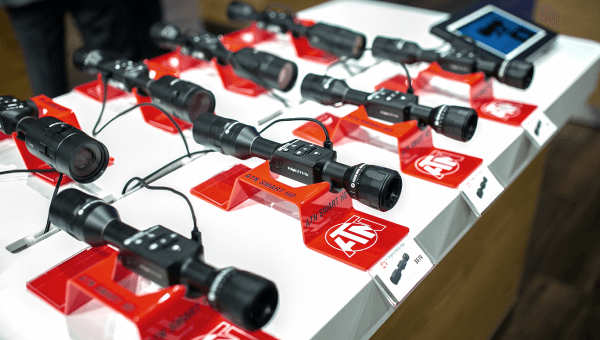
If you are buying one scope that a new hunter will learn on and keep, I would put the ATN ThOR 6 384 2.5-20x on the rifle at $1,595. A 384×288 sensor on a 12μm core at ≤15mK sensitivity, 2.5-20x magnification through a 25 mm germanium objective, 2,300 m detection range, about nine hours on a replaceable cell, 790 g, 64 GB of storage and six palettes in a magnesium alloy housing.
The reason I pick the 384 rather than the 640 for a first setup is not the money, though $700 is real. It is that ≤15mK sensitivity is identical across the full-size ThOR 6 bodies, so a beginner gets the same ability to separate an animal from a background — the thing that actually teaches them to see — while giving up pixels they would only miss past 200 yards, which is not where a first hunt happens.
Buy this if you are setting up a rifle someone will learn on and grow into. Skip it if your new hunter is going straight to open country past 300 yards, where the 640 sensor earns its price.

Is It Worth Taking a Beginner Out at Night?
Yes, and night is often an easier introduction than dawn, which surprises people. The animals are more active, thermal removes the frustration of not being able to see, and a short evening sit asks less of someone than a 4 a.m. start. The one condition is that you treat it as instruction. A beginner taken along as a spectator on your hunt learns that hunting is standing in the cold being quiet; a beginner taken out to be taught learns why anyone does this at all.
Frequently Asked Questions
What age can someone start night hunting?
That depends on your local regulations and on the individual, not on a number anyone can give you here. Legal hunting ages, supervision requirements and night-hunting rules vary by state, so check your wildlife agency first. Maturity around firearm handling matters more than age itself.
Do you need two thermal devices to take a beginner out?
Not strictly, but one between two people is a frustrating night. A second handheld unit lets the newcomer look while you keep the rifle, which is both safer and far better teaching. A monocular at $429 is the usual answer.
Should a beginner shoot on the first night?
Only if they have already shot that rifle in daylight, have identified the animal themselves, and are not hesitating. If any of those three is missing, the answer is no and the night is still a success.
Is thermal better than night vision for teaching a new hunter?
For spotting and discussing animals, thermal is easier to teach with, because a heat signature is obvious to an untrained eye in a way that a green intensified image is not. Thermal shows heat rather than detail, so it finds animals quickly but you still confirm identification carefully.
How long should a beginner's first night hunt last?
About three hours, starting at last light. Short enough that cold and boredom do not set in, long enough to see animal movement in the first part of the night. End while the newcomer still wants to stay out.
What thermal scope should a beginner start with?
One with low magnification at the bottom end and good sensitivity, rather than the highest resolution you can afford. A 384×288 sensor at ≤15mK gives a beginner everything they need inside 200 yards, and a 2.5x bottom end keeps the field wide enough to find animals without help.
What I Would Tell You Before Thanksgiving
Take someone out. Plan three hours, pick ground you know, hand them something to look through, and make the evening about what you both see rather than what you bring home. That is the whole method, and it works whether the newcomer is fourteen or forty. If you are still assembling the gear, the current lineup breakdown picks a winner for each job, the guide to choosing stand, blind or stalk covers where to put the two of you, and the detection range explainer is worth reading before you quote any number to a beginner. The full range is on the ATN thermal scopes page.
Quick Spec Reference
- ATN ThOR 6 384x288 | 2.5-20x: $1,595 · 384×288, 12μm · ≤15mK · 25 mm germanium, F/1.0 · detection 2,300 m · 790 g / 1.74 lbs · ~9 hrs · 64 GB · IP67
- ATN BlazeSeeker 6 256x192 | 1.2-9.6x: $429 · 256×192, 12μm · ≤20mK · FOV 24°×18° · detection 345 m · 270 g / 0.6 lb · ~8 hrs · 32 GB · IP67