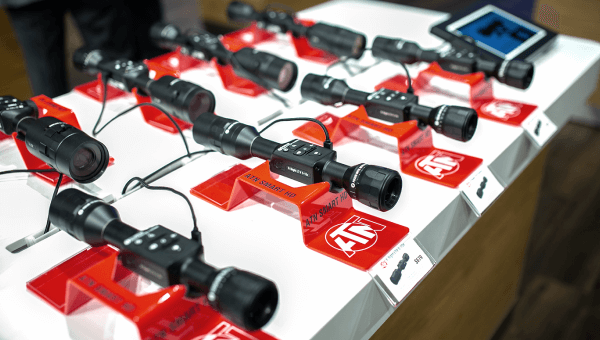
How to Get the Most Out of the Cheapest Thermal Scope...

If you've been searching for the cheapest thermal scope that still delivers real-world hunting performance, the ATN ThOR LT 160 deserves your full attention in 2026. This guide breaks down exactly how to get the most out of it, from unboxing and mounting to zeroing, field optimization, and advanced settings that most buyers never touch. Whether you're a first-time thermal user or upgrading from night vision, this is your complete playbook.
Why the ATN ThOR LT 160 Is the Top Entry-Level Thermal in 2026
The thermal optics market has matured significantly, and ATN has consistently pushed the price floor lower without gutting the feature set. The ATN ThOR LT 160 sits at the bottom of ATN's thermal lineup in terms of cost, but it punches well above its weight class for predator hunting, hog control, and varmint shooting at practical distances.
This is not a surveillance monocular dressed up with rings. It is a purpose-built thermal riflescope with a proper germanium lens, a dedicated uncooled focal plane array detector, and ATN's on-device software platform. For hunters who want reliable heat detection without the four-figure price tag attached to higher-resolution sensors, the ThOR LT 160 is the entry point that makes the most sense in 2026.
Understanding what it does well, and where its limitations are, is the key to getting everything out of it. That starts with knowing the specs cold.
ATN ThOR LT 160 Specs: What You're Actually Working With
The ATN ThOR LT 160 specs define the performance envelope you're operating inside. Before you can optimize any thermal scope, you need to know what the hardware is capable of doing.
- Sensor resolution: 160×120 uncooled focal plane array
- Detector type: VOx uncooled microbolometer
- Refresh rate: 30 Hz
- Lens: 19mm germanium, F/1.0
- Magnification: 2x–8x digital zoom
- Display: OLED, 640×480
- Battery: Internal rechargeable lithium, approximately 10 hours runtime
- Connectivity: Built-in Wi-Fi with ATN app support
- Recording: Onboard video and photo capture
- Zeroing system: Digital, with Recoil Activated Video (RAV) and Zeroing Freeze
- Weight: Approximately 1.1 lbs
- Recoil rating: Up to .308 Winchester class cartridges
- IP rating: Water resistant
- Color palettes: White Hot, Black Hot, and additional modes
The 160×120 sensor is the defining trade-off of the ThOR LT 160. Compared to higher-tier ATN models with 384×288 or 640×512 sensors, the image detail at distance is reduced. At ranges under 150 yards, this matters far less than you might expect. Coyotes, hogs, and other predators generate strong heat signatures that the 160-core detector picks up clearly at realistic hunting distances. The practical detection range for a standing deer-sized target is approximately 700 to 900 meters, while confident identification and ethical shot placement is best kept inside 200 yards with this sensor class.
That said, the entry level thermal scope category is defined by this type of sensor, and the ThOR LT 160 makes excellent use of its hardware through ATN's software suite. Most competing units at this price in 2026 offer fewer features, worse app integration, or no onboard recording at all.
What's in the Box and What You'll Need to Add
ATN ships the ThOR LT 160 with the scope unit, a USB charging cable, a lens cloth, a quick start guide, and a warranty card. What it does not include are scope rings or mounting hardware. Before you can use this optic, you need to plan your mounting setup.
For most hunting rifles, a set of quality 30mm rings in the appropriate height for your rifle's action and barrel profile will work. ATN recommends medium or high rings depending on your stock geometry. If you're running an AR platform, a flat-top Picatinny rail makes this straightforward. On bolt-action rifles, verify ring height carefully to avoid objective lens contact with the barrel or the bolt handle clearing the scope body on cycling.
Additional items worth having before your first session:
- A charged smartphone with the ATN Obsidian 4 app installed (iOS and Android)
- A bore sighter or laser boresighter for initial alignment
- A known 50-yard or 100-yard zero target with a heat-producing element, or a chemical hand warmer taped to a cardboard backer for a thermal-visible aiming point
- A torque wrench or screwdriver calibrated to your ring manufacturer's specs to avoid over-tightening
How to Mount the ATN ThOR LT 160 Correctly
Mounting a thermal scope is mechanically identical to mounting any other rifle optic, but there are a few considerations specific to the ThOR LT 160's form factor and intended use in darkness or low-light conditions.
First, position the scope as far forward as comfortable eye relief allows. The ThOR LT 160 has a generous eye box compared to traditional optical scopes, which means you have more flexibility in fore-aft positioning. Moving the scope slightly forward reduces the risk of scope contact during recoil and generally improves the shooting position for users who wear hearing protection or use raised cheekpieces.
Second, ensure the scope is level before fully torquing the rings. Use a bubble level on the rail and one on the scope's turret housing. Even a few degrees of cant will cause point-of-impact shift as you move through zoom levels, and it makes the digital reticle adjustments during zeroing less intuitive.
Third, torque your rings to the manufacturer's specification. Over-tightening rings on any scope can cause internal damage. Under-tightening rings on a hunting rifle will result in scope shift under recoil, which destroys your zero. This is especially important for the ThOR LT 160 if you're running it on anything heavier than a .308-class cartridge, which is at the upper end of the scope's recoil rating.
ATN ThOR LT 160 Review 2026: First Power-On and System Setup
Before you fire a single round, there are several software and hardware settings worth configuring. This section of the ATN ThOR LT 160 review 2026 covers everything from initial startup to profile configuration.
Step 1: Charge the Unit Before First Use
The ThOR LT 160 ships with a partial charge. Before your first session, connect it via USB and charge to full. A full charge supports approximately 10 hours of continuous use, which covers multiple nights of hunting. In cold weather below freezing, expect a reduction of 15 to 25 percent in battery life due to lithium battery chemistry performance degradation at low temperatures.
Step 2: Set Date, Time, and Unit Preferences
Power on the scope and navigate through the initial setup menu. Set your date and time accurately. This matters because the onboard video recording system timestamps files, which is useful when reviewing footage or confirming shot times for game reports. Set your preferred distance unit (yards or meters) and temperature unit preference if applicable to your menu version.
Step 3: Connect to the ATN Obsidian App
Enable Wi-Fi on the scope from the settings menu. On your smartphone, connect to the ATN hotspot network broadcast by the scope. Open the ATN Obsidian 4 app. The live view stream from the scope will appear on your phone screen. This connection gives you access to full settings adjustment, live view streaming for a spotter partner, firmware updates, and footage review without removing the scope from the rifle.
Check for firmware updates at this stage. ATN regularly releases firmware improvements that refine image processing, fix menu bugs, and occasionally unlock new features. Running outdated firmware on a brand-new scope is one of the most common mistakes new ThOR LT users make, and it directly impacts performance quality.
Step 4: Create a Weapon Profile
The ThOR LT 160 supports multiple weapon profiles, allowing you to store separate zero data for different rifles or calibers. Name your profile clearly (for example, "AR-15 .223 100yd" or "Savage .308 100yd") before you zero so the data saves to the correct slot. If you ever swap this scope between rifles, you can switch profiles without re-zeroing from scratch, as long as your rings and mount are repeatable in position.
How to Zero a Thermal Scope: Complete ATN ThOR LT 160 Process
Understanding how to zero thermal scope hardware correctly is where many new buyers lose confidence. The process is different from optical zeroing because you cannot see a traditional paper target through a thermal scope. You need a heat-visible target. Here is the full process as it applies to the ThOR LT 160.
Create a Thermal-Visible Target
Options include ATN's heated target accessory, chemical hand warmers taped to cardboard, or a small container of hot water placed behind a target backer. Some hunters use heat-resistant tape shaped into an aiming cross on a metal plate that retains heat from sunlight. Whatever method you use, the target must produce a heat differential visible to the 160-core sensor at your intended zero distance.
Boresight First to Save Ammunition
With the scope mounted and powered on, use a bore sighter or simply look down the bore at your target. Adjust the thermal reticle position in the scope's menu so the crosshairs align as closely as possible with where the bore is pointing. This initial alignment gets you on paper for your first shots without expending unnecessary ammunition trying to find your group.
Fire a Three-Shot Group at 50 Yards
Start at 50 yards rather than 100. At 50 yards, even a poorly boresighted rifle will typically produce a group on a standard 18-inch target. Fire three shots from a stable rest. Note the group center relative to your point of aim.
Use Zeroing Freeze to Lock the Image
The ATN ThOR LT 160's Zeroing Freeze feature is one of its most practical tools for efficient zeroing. After your shot group is visible on the target, activate Zeroing Freeze from the menu. The scope pauses the live image, locking the display on your last frame. You can then use the reticle adjustment controls to move the crosshairs to your group center without the image shifting or refreshing. This eliminates the problem of trying to simultaneously fire, observe impact, and adjust before the heat signature fades. Once your reticle is positioned on the group center, confirm and save. Your point of aim now matches your point of impact at that distance.
Confirm at 100 Yards
Move to 100 yards and fire a confirmation group. Most hunters using the ThOR LT 160 for predator work inside 200 yards find a 100-yard zero works across the entire practical engagement envelope with standard rifle cartridges. Make any final small adjustments using Zeroing Freeze again. Save your zero to the weapon profile. You are now zeroed and ready to hunt.
Use Recoil Activated Video to Verify Shot Placement
Enable RAV (Recoil Activated Video) before heading into the field. This feature automatically records 10 seconds before and after the shot trigger by recoil detection. It captures your point of aim at the moment of the shot, the reticle position, and the immediate post-shot view. Reviewing this footage is one of the best ways to verify your zero is holding and confirm the scope is not shifting under recoil between sessions.

Thermal Scope Setup Guide: Optimizing the ThOR LT 160 for Night Hunting
Following the basic thermal scope setup guide gets you zeroed and operational, but truly maximizing the ThOR LT 160 requires dialing in the settings for your specific hunting environment and conditions. The following adjustments make a measurable difference in the field.
Color Palette Selection
The ThOR LT 160 offers multiple color palette options. White Hot is the default for most users and works well in most conditions. Animals appear bright white against a darker background, which is intuitive for target identification. Black Hot inverts this, which some hunters find easier on the eyes during extended glassing sessions. In dense brush or heavy vegetation where foliage retains heat from daytime warming, switching to Black Hot or an alternative palette sometimes improves target separation by reducing background clutter. Experiment with both during your first few sessions to develop a personal preference.
Digital Zoom Usage
The ThOR LT 160 offers 2x through 8x digital zoom. Understanding how digital zoom works on a 160-core sensor is critical. Digital zoom in a thermal scope is pixel interpolation. It enlarges the image, but it does not add resolution. At 2x zoom, image quality remains acceptable for positive target identification at typical predator hunting ranges. At 4x and 8x zoom, the image degrades noticeably because you are stretching a 160×120 pixel image across a larger display space.
The practical recommendation for the ThOR LT 160: use 1x to 2x zoom for target detection and initial identification, and use higher zoom levels only for confirmation when you already know something is there. Do not rely on 4x or 8x zoom for species identification or shot placement decisions at extended distances. This is a sensor limitation, not a flaw in ATN's design, and it applies to every scope in the 160-core category regardless of brand.
Non-Uniformity Correction (NUC)
The ThOR LT 160 automatically runs NUC cycles to calibrate the sensor and eliminate fixed-pattern noise that builds up as the detector temperature stabilizes. You will notice the scope briefly pauses and displays a flat field for a fraction of a second during auto-NUC. This is normal and necessary. If you notice increasing image grain or fixed horizontal lines developing in your field of view, trigger a manual NUC from the settings menu. Doing this when transitioning between very cold outdoor temperatures and warmer environments reduces visible noise significantly.
Managing the Display Brightness
In very dark conditions, the OLED display at full brightness can create eye adaptation issues when you briefly look away from the scope. Reducing display brightness slightly in the menu maintains your night-adapted vision better during real hunting situations where you need to scan with your naked eye between views through the scope.
Wi-Fi and Spotter Use
If you hunt with a partner or guide, the ATN app's live view function lets your partner watch the same image you see through the scope on their smartphone. This is practically useful for calling predators: your caller can watch the screen to monitor approaching animals and time their calling without needing a separate thermal monocular. It also allows a hunting mentor to guide a new shooter through proper target identification and shot placement in real time, which the more advanced ATN ThOR 6 series highlights as a key use case for its Wi-Fi connectivity feature.
Where the ThOR LT 160 Performs Best: Real-World Hunting Applications
The ThOR LT 160 is not a 600-yard predator hunting tool. Framing it correctly helps hunters get maximum value from this entry level thermal scope rather than being disappointed by comparing it to units costing three or four times more.
Hog Hunting Inside 150 Yards
This is where the ThOR LT 160 excels. Hogs are large, generate strong heat signatures, and are commonly encountered at close to medium range in field edge, feedlot, and brush country environments. The 160-core sensor delivers more than adequate image quality to identify a hog, confirm a safe shooting lane, and place an ethical shot at 75 to 150 yards. The lightweight form factor and compact dimensions make it easy to carry on a quick-movement hog shoot without adding significant weight to a patrol-style setup.
Coyote and Predator Calling
Called coyotes typically close to within 50 to 150 yards before presenting a shooting opportunity, making the ThOR LT 160 entirely appropriate for this application. From a field position with a call set out at 50 to 100 yards, you will clearly see incoming predators long before they are visible to the naked eye. The 30 Hz refresh rate handles moving targets at typical calling engagement distances without significant motion blur.
Property Surveillance and Perimeter Checking
The detection range of 700 to 900 meters for person-sized heat signatures makes the ThOR LT 160 a capable tool for scanning fields, pastures, and fence lines at night. While you cannot identify a specific animal species or a human face at 800 meters with a 160-core sensor, you can detect presence and movement, which is often enough for livestock protection decisions or trespasser deterrence awareness.
Varmint Control at Close Range
Raccoons, possums, foxes, and other small predators raiding a chicken coop or garden present very well on a 160-core detector at close range. If your application is primarily inside 75 yards on smaller animals, the ThOR LT 160 delivers a clean, identifiable image with no practical limitations imposed by its sensor resolution at those distances.
Common Mistakes to Avoid With the ATN ThOR LT 160
Most of the frustrations new users report with the ThOR LT 160 come from user error rather than genuine hardware limitations. Avoiding these common mistakes makes the experience significantly better from the first night out.
- Expecting optical scope image quality: A thermal scope does not produce a photographic image. Heat signatures render as gradients of brightness, not the fine-detail color image you see through a daytime riflescope. Understanding this before you put your eye to the scope prevents unrealistic expectations.
- Zeroing with an invisible target: A paper target at 100 yards is essentially invisible to a thermal scope in most conditions. Always use a heat-visible aiming point during zeroing, or you will be unable to locate your shot impacts.
- Running outdated firmware: Check for ATN firmware updates before every hunting season and after any major firmware release announcement. Performance improvements are regularly pushed through ATN's update system.
- Using maximum digital zoom for shot decisions: At 8x digital zoom, the 160-core image becomes difficult to read clearly. Use low zoom for hunting and reserve high zoom only for initial area scanning from a fixed position.
- Neglecting NUC cycles: Fixed pattern noise that is not corrected by a NUC cycle makes the image look grainy and can create false-positive impressions of objects in the field of view. Run a manual NUC when transitioning between temperature environments.
- Draining the battery completely before recharging: Lithium battery longevity is best preserved by avoiding complete discharge cycles. Recharge after each hunting session rather than running the unit to shutdown.
How the ATN ThOR LT 160 Compares to Higher-Tier ATN Models in 2026
Understanding where the ThOR LT 160 sits in the broader ATN lineup helps buyers calibrate their expectations and identify when it makes sense to step up to a more capable platform.
ATN's ThOR 6 Mini series, starting with the ThOR 6 Mini 215 at the entry tier, uses a 256×192 sensor with a 12μm pixel pitch and ATN's SharpIR AI image enhancement technology. This represents a meaningful step up in image resolution and processing sophistication. The 256×192 sensor delivers noticeably better target definition at 100 to 200 yards and supports longer confident engagement distances than the 160-core ThOR LT. ATN's ThOR 6 Mini lineup also includes Hot Point Tracking, which automatically highlights the hottest object in your field of view, and Reticle Transparency Control for an unobstructed sight picture.
The full-size ATN ThOR 6 series moves into 384×288 and 640×512 sensor territory with ≤15mK NETD ultra-sensitive detection, detection ranges up to 3,650 meters on the top-tier 640×512 50mm model, a large 0.49-inch 1920×1080 OLED display, and optional built-in laser rangefinder on LRF variants. These are purpose-built tools for serious long-range predator hunters, professional pest control operators, and users who need maximum detection capability in challenging environments like fog, humid conditions, or low-contrast terrain where lesser sensors struggle.
The honest assessment: the ThOR LT 160 is the right choice when budget is the primary constraint and your hunting scenarios keep engagements inside 150 to 200 yards. If you regularly hunt at 200 to 400 yards or need clear species identification before deciding to shoot, the ThOR 6 Mini 215 or 225 represents the minimum appropriate specification, and the full ThOR 6 series becomes compelling for serious long-range work.
Maximizing the ATN App Integration for Better Hunting Results
The ATN Obsidian app significantly extends the capability of the ThOR LT 160 beyond what the scope's onboard controls alone allow. Hunters who invest time in learning the app get noticeably more from their scope.
Live View for Spotters and Guides
As covered earlier, the live view streaming function allows a hunting partner to monitor the shooter's scope view in real time. For guided hunts, predator calling setups, or training new hunters in shot placement and species identification, this is a genuinely useful capability that most comparable budget thermal scopes do not offer.
Footage Review and Transfer
Video clips recorded via RAV and manual recording save to the scope's internal memory. The ATN app allows wireless transfer of these files to your smartphone for immediate sharing or review. You can also review clips directly on your phone while the scope remains mounted on the rifle, which is useful for checking shot placement before a recovery walk in low light.
Firmware Management
The app provides a direct path to ATN's firmware update system. When a new firmware version is available, the app will notify you and walk you through the update process wirelessly. This keeps your scope performing at peak capability without requiring computer connections or manual file transfers.
Settings Access
Some menu settings on the ThOR LT 160 are more easily accessed through the app interface than through the scope's physical buttons, particularly when making fine adjustments in a dark hunting blind where reading small on-scope menu text is difficult. Using the phone as a remote control for settings changes keeps your eyes forward and your hands steady.
Maintenance and Long-Term Care for the ATN ThOR LT 160
Thermal scopes require different care than optical scopes. The germanium objective lens on the ThOR LT 160 is not glass. It is a crystalline material with different cleaning requirements than standard glass optics.
- Cleaning the germanium lens: Use only a lens cleaning solution rated for thermal optic lenses. Standard glass cleaning solutions contain compounds that can damage germanium coatings. A soft lens cloth in a gentle circular motion is appropriate. Never use paper towels or abrasive materials.
- Storing the scope: When not in the field, store the ThOR LT 160 with the lens caps on in a padded case away from direct sunlight. Germanium lenses are sensitive to prolonged UV exposure when not in use.
- Battery maintenance: If storing the scope for an extended period between seasons, charge the battery to approximately 50 to 60 percent before storage. Storing lithium batteries at full charge for months reduces their long-term capacity.
- Mount inspection: After the first season of use, inspect ring torque and verify your zero has not shifted. This is good practice for any hunting scope but particularly relevant for thermal scopes used on higher-recoil platforms.
Final Verdict: Getting Maximum Value From the Cheapest Thermal Scope That Works
The ATN ThOR LT 160 earns its position as the top recommendation in the cheapest thermal scope category in 2026 not because it is perfect, but because it offers the most complete feature set at its price point and is backed by ATN's established software ecosystem. The 160-core sensor is a real limitation at distance, but within its operational envelope, the scope is reliable, functional, and capable of delivering genuine hunting results.
The combination of Zeroing Freeze, RAV recording, Wi-Fi connectivity, the ATN app platform, and multiple weapon profiles puts the ThOR LT 160 in a different league from bare-bones thermal scopes that offer only a basic detector and a reticle. These features are not marketing additions. They solve real problems that thermal hunters encounter in the field, and they make the zeroing process significantly less frustrating for new thermal users.
Follow this thermal scope setup guide, take the time to configure your weapon profile, zero correctly using Zeroing Freeze at 100 yards, manage your zoom levels realistically, keep your firmware updated, and run NUC cycles when conditions shift. Do those things, and the ThOR LT 160 will perform at the top of what its sensor class can deliver, every session, every season.
When your hunting scenarios evolve and you find yourself wanting more range, more resolution, or AI-driven image enhancement for difficult environments, the ATN ThOR 6 Mini and ThOR 6 series offer a clear, well-defined upgrade path that builds on the same software platform you have already learned. But for the hunter getting started in thermal in 2026 who wants a proven, feature-rich optic at the lowest viable entry price, the ATN ThOR LT 160 remains the benchmark in its class.