Learning how to choose thermal binoculars for hunting comes down to five things: sensor resolution, thermal sensitivity, detection range, field of view and how long the battery lasts. Get those right for the way you hunt and the rest is comfort and features. Binoculars matter for scouting because two eyes cut fatigue on a long scan and give you a steadier, more natural picture than squinting through one tube. This guide walks the checklist in plain terms, explains what each spec actually buys you in the field, and uses the ATN Binox-6 as a worked example so you can see how the numbers translate to a real hunt.
What are thermal binoculars for hunting?
Thermal binoculars are a two-eyed optic that sees heat instead of light, letting you spot warm-bodied game in total darkness, fog or heavy cover. Unlike night vision, they need no ambient light at all: a deer, hog or coyote glows against the cooler background because its body is warmer than the trees and grass around it. The two-eyepiece design is the key difference from a monocular. Both eyes stay open and working, which cuts the eye strain of a long scanning session and gives depth and comfort a single tube cannot. For scouting and spotting before the shot, that comfort adds up over a full night.
How do thermal binoculars work?
- Every animal and object gives off heat as infrared energy; warmer things give off more.
- A germanium lens focuses that infrared energy onto a thermal sensor (the microbolometer) instead of visible light.
- The sensor turns heat differences into an electronic signal, mapping temperature across the scene.
- A processor builds an image where hot game stands out against the cooler background, then applies a color palette like White Hot or Black Hot.
- That picture shows on the internal displays for both eyes, so you scan naturally and pick out animals by their heat signature.
What can you use thermal hunting binoculars for?
- Scouting before the shot — sweep a field or tree line and locate game fast before you ever raise a rifle.
- Night hunting for hogs and predators — spot a sounder or a called coyote in total dark, when your eyes see nothing.
- Counting and patterning game — glass a property at dusk and dawn to learn how deer and hogs move.
- Ranging the target — a built-in laser rangefinder tells you exactly how far a spotted animal is before you plan the stalk or shot.
- Recovery and tracking — a downed animal still holds body heat, so thermal makes blood trails and carcasses far easier to find in the dark.
- Foggy or low-light dawn glassing — thermal sees through light fog and shadow where day optics quit.
Thermal binoculars vs a monocular for hunting
Choose binoculars over a monocular when you scan for long stretches and want the least eye fatigue and the most natural, depth-filled picture. A monocular is lighter and cheaper and rides easily on a strap, which suits a hunter who only glasses in short bursts. But keeping one eye shut for an hour of scanning wears you out, and a two-eyed view is steadier and easier on the eyes. If scouting and spotting is a big part of your hunt, the comfort of binoculars earns its keep over a long night.
Key features to understand before you choose
- Sensor resolution — This is how many dots build the picture. Higher resolution like 640x512 is like stepping from standard definition to HD: more dots mean you can zoom in further before the image turns blocky, so a distant hog still reads as a hog.
- NETD (thermal sensitivity) — Measured in millikelvin; lower is better. A low NETD around or under 15mK gives a cleaner picture in humid, foggy or rainy air, where a less sensitive sensor washes out.
- Detection range — How far away you can first pick up an animal's heat. A longer range means you spot game sooner and have more time to plan.
- Field of view — A wider field of view makes scanning and tracking a moving animal easier; a narrow view reaches farther but you have to hunt for the target.
- Refresh rate — A faster 50Hz refresh keeps a running hog or coyote smooth instead of smeared, which matters when you follow moving game.
- Color palettes — White Hot, Black Hot and Iron Red each reveal detail differently; more palettes let you pick the one that shows game best in the conditions.
- Battery life and power — Longer runtime means a full night without a swap; replaceable cells let you carry spares.
- Built-in rangefinder — A laser rangefinder in the unit tells you the exact distance to a spotted animal, so you can plan the shot or stalk without a second device.
What to look for before buying
- Match resolution to your distances — if you glass long fields, favor a 640 sensor so zoomed-in game stays sharp; short-range brush work is more forgiving.
- Weigh NETD for your climate — humid, coastal or foggy country rewards a low-NETD sensor that stays clean in damp air.
- Confirm the field of view fits your scanning — wide-open ground and moving predators want a wider view; long, narrow lanes tolerate a tighter one.
- Check battery and spares — an all-night hunter wants a runtime that covers the session and cells you can swap in the dark.
- Decide if you need day vision and ranging built in — a 4-in-1 unit that adds day, twilight and a rangefinder replaces several tools with one.
- Look at weatherproofing — an IP67-rated body shrugs off rain and dew, which you will meet on almost every night hunt.
Common mistakes when choosing thermal binoculars
- Chasing magnification over resolution — cranking the zoom on a low-resolution sensor just makes a bigger, blockier picture. Detail comes from the sensor, not the zoom.
- Ignoring NETD — a spec sheet can look great until the first foggy morning washes the image out. Sensitivity is what keeps the picture usable in bad air.
- Buying too narrow a field of view — a tight view reaches far but makes finding and tracking game slow and frustrating on open ground.
- Forgetting battery reality — a short runtime with no spare cells ends the hunt early. Plan for the full night.
- Skipping the rangefinder need — spotting an animal is only half the job; without knowing the distance you are guessing on the stalk or shot.
- Overlooking weatherproofing — dew and rain are part of night hunting, and a poorly sealed unit will not survive many seasons.
Example: the ATN Binox-6
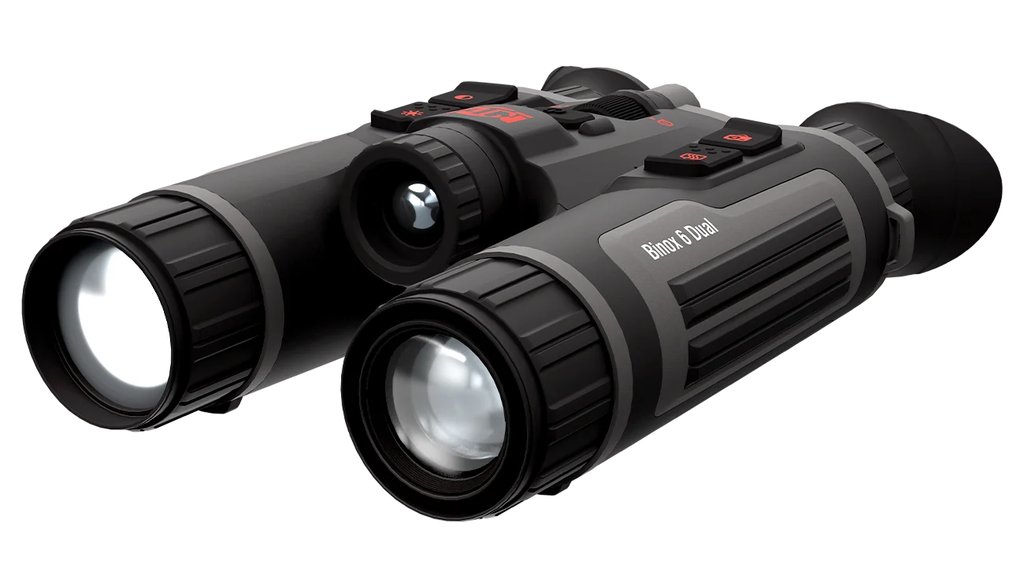
The ATN Binox-6 Dual 640x512 is a clean worked example of the checklist above because it hits every point a hunter should weigh. Its 640x512 sensor keeps distant game sharp when you zoom, and a NETD of 15mK or better holds a clean picture in humid, foggy air where lesser sensors mush out. Detection range reaches out to 3100 meters, so you spot heat long before it knows you are there, and the 3-24x magnification with up to 8x digital zoom lets you scan wide and then reach in on a target. A 50Hz refresh keeps a running hog smooth, not smeared. What sets it apart is the 4-in-1 design: it is thermal, but also day, night and twilight vision in one unit, with a 4K Ultra HD day sensor. A built-in laser rangefinder reads distance out to 1000 yards, so you know exactly how far a spotted animal is before you move. SharpIR image enhancement, six color palettes, Hot Point Tracking, GPS and compass, dual replaceable 18650 batteries for roughly eight hours, 64 GB of storage and an IP67 waterproof body round it out. At 730 grams it stays comfortable on a long scan.
Are thermal binoculars worth it for hunting?
Thermal binoculars are worth it if you scout and spot for long stretches and want the least eye strain and the most natural picture, because two eyes make a genuine difference over a full night. They sit at the flagship end because a two-eyed thermal system with day vision and a rangefinder built in is doing the work of several separate tools. If your hunting leans on finding game before the shot, patterning a property, and recovering downed animals in the dark, the comfort and capability pay off season after season. If you only glass in short bursts, a lighter monocular may serve. For a hunter who lives behind the glass, binoculars are the better long-term buy.
How this guide was put together
This guide is built on ATN's published 6th-generation specifications and real field use, not marketing copy. Every spec is explained in plain terms with its practical meaning for how to choose thermal binoculars for hunting, and the honest limits are flagged as clearly as the strengths. The example device is ATN's own current-line model, shown to make the numbers concrete — treat it as an in-house reference, and compare the specs against your own needs before buying.
Frequently Asked Questions
How do I choose thermal binoculars for hunting?
Match four specs to your ground: resolution (640 stays sharp when you zoom), NETD (lower is cleaner in fog and humidity), detection range (how far you pick up heat) and field of view (wider is easier to scan). Then weigh battery life, weatherproofing and whether you want day vision and a rangefinder built in. The ATN Binox-6 covers all of these.
What resolution do I need in thermal hunting binoculars?
For long fields, favor a 640x512 sensor because more dots mean you can zoom further before the image turns blocky, so distant game stays readable. Short-range brush work is more forgiving. Resolution, not magnification, is what preserves detail when you zoom in on a target.
What is NETD and why does it matter?
NETD is thermal sensitivity, measured in millikelvin, and lower is better. A low NETD around or under 15mK gives a cleaner, sharper picture in humid, foggy or rainy air, where a less sensitive sensor washes out. It matters most in damp climates and at dawn.
Are binoculars better than a thermal monocular for hunting?
For long scanning sessions, yes. Two eyes cut fatigue and give a steadier, more natural picture with depth, which a single tube cannot match over a full night. A monocular is lighter and cheaper and suits short bursts of glassing, so the best choice depends on how much you scout.
Do I need a built-in rangefinder?
It helps a lot. Spotting an animal is only half the job; without the distance you are guessing on the stalk or the shot. A built-in laser rangefinder like the one in the Binox-6 reads distance out to 1000 yards, so you can plan the move without reaching for a second device.
How long should the battery last for a night hunt?
Aim for a runtime that covers your full session and, ideally, cells you can swap in the dark. The Binox-6 runs roughly eight hours on dual replaceable 18650 batteries, so you can carry spares and keep hunting instead of packing up when the charge runs low.
Ready to put the checklist to work? The ATN Binox-6 ticks every box a hunter should weigh: a sharp 640 sensor, low-NETD clarity in bad air, long detection range, a wide scanning view, day vision and a built-in rangefinder in one waterproof unit. Whether you scout at dusk, hunt hogs at midnight or track a downed deer, it does the work of several tools. Browse the full range of thermal binoculars, match the specs to your ground, and choose a pair that makes every night behind the glass easier.
Created: July 7, 2026 · 08:31:01 UTC