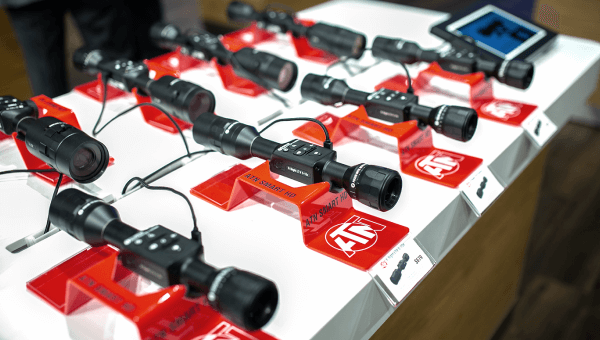
Flagship ATN Thermals Ranked 2026: ThOR 6 325 to ThOR 6...

If you are serious about thermal hunting in 2026, ATN's ThOR 6 lineup is the standard everything else gets measured against. Seven models, one platform, and a range of sensor configurations that take you from capable entry-level performance all the way to the most expensive thermal scope in the series — the ATN ThOR 6 650 LRF. This article breaks down every ThOR 6 model side by side so you can see exactly what you are paying for, where the performance jumps are, and why the top-tier model earns its price tag.
The ATN ThOR 6 Platform: What Every Model Shares
Before getting into the differences, it is worth understanding what all seven ThOR 6 models have in common. Every scope in the lineup is built on ATN's 6th Generation thermal engine — the most advanced thermal core ATN has ever produced. That foundation includes a 12μm pixel pitch VOx uncooled focal plane array sensor, SharpIR© AI-enhanced imaging that processes and sharpens every pixel in real time, a full-HD 0.49-inch 1920×1080 OLED display, and a rugged magnesium alloy housing rated IP67 for waterproofing.
Every ThOR 6 also ships with a 50Hz refresh rate, a diopter range of -5 to +5D, 50mm eye relief, 10 reticle styles, and six color palette options including White Hot, Black Hot, Iron Red, Alarm, Green Hot, and Sepia. The battery system uses two 18650 rechargeable cells — one internal, one replaceable — delivering approximately nine hours of runtime. Built-in Wi-Fi hotspot connects directly to the ATN Connect 6 app on iOS and Android. Onboard recording includes 64GB of internal storage, a built-in microphone, Recoil Activated Video (RAV), an internal gallery for field playback, and USB-C media output.
Precision features across all models include Zeroing Freeze, Picture-in-Picture (PIP), Hot Point Tracking, Reticle Transparency Control, step and smooth digital zoom, and auto/semi-auto/manual Non-Uniformity Correction. The housing handles recoil up to 6000 joules and operates from -30°C to +55°C. That is an exceptionally capable baseline before you even start comparing models.
ThOR 6 Sensor Tiers: The Two Configurations That Define the Lineup
Every ThOR 6 splits across two sensor resolutions. Four models use a 384×288 sensor and three use a 640×512 sensor. Both feature ATN's ultra-sensitive ≤15mK NETD rating, which means both are highly capable of detecting faint heat differentials in difficult environments. The resolution difference, however, matters significantly when it comes to image detail, magnification quality at high zoom levels, and maximum detection range.
The 384×288 models — the ThOR 6 325, ThOR 6 335, and ThOR 6 335 LRF — top out at 2750m detection range at best. The 640×512 models — the ThOR 6 635, ThOR 6 650, ThOR 6 635 LRF, and ThOR 6 650 LRF — push detection range up to 3650m and deliver noticeably finer image detail, especially when you start applying digital zoom. For any application where long-range detection matters — open country predator hunting, hog control across wide fields, or professional surveillance — the 640×512 tier is the clear choice.
Lens Focal Length: Where Magnification and Field of View Diverge
The second major split in the ThOR 6 lineup is lens focal length. Models are built around either a 25mm, 35mm, or 50mm germanium lens, all at f/1.0. The lens you choose determines your base magnification range and your field of view.
- ThOR 6 325 — 25mm lens, 384×288 sensor, 2.5-20x magnification, 10.53°×7.91° FOV, 2300m detection range, 790g
- ThOR 6 335 — 35mm lens, 384×288 sensor, 3.5-28x magnification, 7.53°×5.65° FOV, 2750m detection range, 830g
- ThOR 6 635 — 35mm lens, 640×512 sensor, 2-16x magnification, 12.52°×9.41° FOV, 3100m detection range, 830g
- ThOR 6 650 — 50mm lens, 640×512 sensor, 3-24x magnification, 8.78°×6.59° FOV, 3650m detection range, 830g
- ThOR 6 335 LRF — 35mm lens, 384×288 sensor, 3.5-28x magnification, 7.53°×5.65° FOV, 2750m detection range, 830g
- ThOR 6 635 LRF — 35mm lens, 640×512 sensor, 2-16x magnification, 12.52°×9.41° FOV, 3100m detection range, 830g
- ThOR 6 650 LRF — 50mm lens, 640×512 sensor, 3-24x magnification, 8.78°×6.59° FOV, 3650m detection range, 855g
The pattern is clear. Shorter lenses give you wider fields of view and lower base magnification — better for close-to-mid range hunting with a lot of scanning. Longer lenses give you higher base magnification and tighter fields of view — better for long-range work, calling predators at distance, or any application where reaching out with precision matters more than situational awareness breadth.
The LRF Models: Built-In Laser Rangefinder Changes Everything
Three of the seven ThOR 6 models include a built-in laser rangefinder: the ThOR 6 335 LRF, ThOR 6 635 LRF, and ThOR 6 650 LRF. The LRF system is rated to 1000m with ±1m accuracy, using a 905nm Class 1 eye-safe laser. It is fully integrated into the scope — no external ranging device, no syncing required.
On LRF models, the ballistic calculator activates automatically. You can store up to five custom ballistic profiles and swap between rifles, air guns, or crossbows without re-zeroing. The system adjusts your reticle for range and angle automatically, so you are not doing mental math at the moment of the shot. Combined with Zeroing Freeze and PIP mode, the LRF models represent a complete precision targeting system that non-LRF models simply cannot match.
For hunters who work at variable ranges — calling coyotes across open ground, hunting hogs over bait stations in the dark, or managing deer populations across large properties — the integrated LRF eliminates one of the most critical variables in shot placement. The weight difference is minimal: LRF models weigh between 830g and 855g versus 790g to 830g for non-LRF versions. For the capability gained, that trade is easy to justify.
ATN ThOR 6 650 LRF: Full Review and Specification Breakdown for 2026
The ATN ThOR 6 650 LRF review 2026 starts with one question: what does combining the best sensor, the longest lens, and the integrated rangefinder actually get you in the field? The answer is a scope that does things no other model in the lineup can.
The ATN ThOR 6 650 LRF specs are as follows. The sensor is a 640×512 resolution, ≤15mK NETD, 12μm pixel pitch VOx uncooled focal plane array — the highest-resolution sensor in the ThOR 6 series. The lens is 50mm germanium at f/1.0, giving a base magnification of 3x that steps and smoothly zooms to 24x. Field of view is 8.78°×6.59°. Detection range reaches 3650m — the longest in the entire lineup. The display is the same 0.49-inch 1920×1080 OLED across the board. The integrated LRF reaches 1000m with ±1m accuracy using a 905nm Class 1 eye-safe laser. Ballistic calculator supports five profiles. Weight is 855g / 1.89 lbs. Dimensions are 430×85×80mm. Battery life is approximately nine hours on two 18650 cells.
In practical field terms, the 50mm lens combined with the 640×512 sensor gives you both the resolution and the optical reach to use that resolution effectively at long range. Where the 35mm lens starts to show pixel limitations at maximum digital zoom, the 50mm lens keeps image quality strong deeper into the zoom range. The 3650m detection range is not just a spec on paper — it reflects the real-world combination of a larger collection aperture and higher pixel count working together to resolve heat signatures at extreme distance.
SharpIR© AI-enhanced imaging applies in real time regardless of zoom level, continuously sharpening edges and improving target separation. In low-contrast environments — think humid mornings, fog, warm early-season nights — that processing makes a meaningful difference in your ability to distinguish an animal's body outline from background clutter at range. It is not just image enhancement for the sake of it. It directly accelerates target identification and shot timing.
The combination of 3-24x magnification with PIP mode means you can lock a tight zoomed view on a target while keeping a secondary wide-angle window active. For hog hunters working big fields or predator hunters calling at night, that awareness matters. You are not flying blind at maximum zoom. The Hot Point Tracking feature adds another layer by instantly flagging the hottest object in your field of view, cutting scan time significantly when there is movement in cluttered terrain.
At 855g on the rifle, the ThOR 6 650 LRF is not a lightweight hunting tool — but it is well-balanced for its size, and ATN's redesigned housing keeps it under 1.9 lbs total. For stand hunting, vehicle-based predator work, or any setup where the rifle stays on a rest or bipod, the weight is completely irrelevant. For spot-and-stalk, it is manageable, especially given that nine-hour battery life means you are not adding spare power packs to your load.
Thermal Scope Comparison 2026: How the ThOR 6 Models Stack Against Each Other
A thermal scope comparison 2026 within the ThOR 6 family reveals three logical purchase points depending on your intended use.
The ThOR 6 325 is the entry point of the full-size lineup — a 25mm, 384×288 scope with 2.5-20x magnification and 2300m detection range. It is the widest field of view model in the series at 10.53°×7.91°, which makes it the best option for hunters who prioritize scanning speed and situational awareness over long-range reach. No LRF, no ballistic calculator. Straightforward thermal performance at the most accessible price in the full-size lineup.
The ThOR 6 335 and ThOR 6 335 LRF represent the mid-tier 384×288 options. The jump to a 35mm lens tightens the field of view but pushes magnification up to 3.5-28x and detection range to 2750m. The LRF version adds everything the ballistic calculator system brings. These are capable scopes for hunters who are confident that most of their shots will happen inside 500 yards and want strong magnification range without paying for the 640×512 sensor upgrade.
The ThOR 6 635 and ThOR 6 635 LRF step up to the 640×512 sensor with a 35mm lens. The wider field of view at 12.52°×9.41° compared to the 50mm-equipped 650 models makes these the go-to choice for hunters who want the high-resolution sensor but prefer a broader situational view. Detection range is 3100m. The LRF version again adds the full ranging and ballistic system.
The ThOR 6 650 and ThOR 6 650 LRF are the top-tier models. The 640×512 sensor paired with the 50mm lens gives you the longest detection range at 3650m and the tightest, most detailed view at distance. The non-LRF ThOR 6 650 is the choice for hunters who want maximum optical and sensor performance without the rangefinder premium. The ThOR 6 650 LRF is the complete package — the most expensive thermal scope in the lineup, and the one that justifies every dollar of its price for serious long-range thermal hunters and professionals.
ATN vs Pulsar Thermal: How the ThOR 6 650 LRF Competes at the Top of the Market
The ATN vs Pulsar thermal debate is a genuine one at this price tier. Pulsar builds quality hardware, particularly in the Thermion 2 XP50 Pro and Trail 2 LRF XP50 range. But the ThOR 6 650 LRF has several clear advantages that become more relevant the more seriously you hunt.
First, the onboard technology stack. The ThOR 6 650 LRF includes 64GB of internal storage, built-in video and audio recording, RAV, internal gallery, Wi-Fi hotspot to the ATN Connect 6 app, a ballistic calculator with five profiles, and geomagnetic plus gyroscope sensors — all integrated into a single platform. Pulsar scopes require separate accessories or do not offer the same level of onboard processing for ballistics and smart features.
Second, the SharpIR© AI processing is ATN's proprietary advantage. Real-time AI image enhancement is not a software gimmick — it is a genuine improvement in the usability of thermal imagery in difficult conditions. When you are looking at a coyote at 800 yards in fog at 3am, the difference between a raw thermal image and a SharpIR-processed image is real target confidence versus guesswork.
Third, the sensor specification. The ≤15mK NETD rating on the 640×512 core is highly competitive at this tier. Pulsar's top models also run 640×480 or 640×512 sensors at 17μm pixel pitch — ATN's 12μm pixel pitch provides higher pixel density per degree of field, which directly translates to finer image detail at equivalent magnification.
Where Pulsar has historically competed well is in optical polish and display quality on certain models, and in the appeal of a more traditional scope form factor. For hunters who prioritize a clean, simple optic without onboard technology, Pulsar has a case. But for hunters who want their scope to be a complete hunting and documentation platform — and who want the best sensor performance available — the ThOR 6 650 LRF is the stronger choice in 2026.
Who Should Buy the ATN ThOR 6 650 LRF
The ThOR 6 650 LRF is not the right scope for every hunter. If you primarily hunt in thick timber where shots rarely exceed 200 yards, a wide-field model with a shorter lens will serve you better. If budget is a real constraint, the ThOR 6 635 LRF gives you the same 640×512 sensor with integrated ranging at a lower price point.
But if you match one or more of the following profiles, the ThOR 6 650 LRF is the scope to buy:
- You hunt open country — big fields, ag land, river bottoms — where animals can be detected and shot at 300 to 600+ yards regularly.
- You need precise distance data for ethical shot placement at variable ranges in the dark.
- You run multiple rifles or calibers and need fast profile-switching without re-zeroing.
- You document hunts for content creation, client use, or personal review.
- You operate in a professional or semi-professional capacity where equipment failure is not acceptable.
- You want the maximum ATN ThOR 6 performance available without exception.
For that group, spending up to the most expensive thermal scope in the ATN lineup is not excess — it is precision budgeting. You are buying the scope that will perform at maximum capability in every scenario you put it through, with integrated tools that reduce errors and improve outcomes on every hunt.
Key Specifications at a Glance: ATN ThOR 6 650 LRF
- Sensor: 640×512, ≤15mK NETD, 12μm VOx Uncooled FPA
- Lens: 50mm Germanium, f/1.0
- Magnification: 3-24x (Step and Smooth Zoom)
- Detection Range: 3650m
- Field of View: 8.78°×6.59°
- Display: 0.49-inch OLED, 1920×1080
- Refresh Rate: 50Hz
- LRF Range: 1000m, ±1m accuracy, 905nm Class 1 eye-safe laser
- Ballistic Calculator: Yes, 5 profiles
- Internal Storage: 64GB
- Battery: 2× 18650 (1 internal, 1 replaceable), ~9 hours
- Wi-Fi: Built-in hotspot, ATN Connect 6 app (iOS and Android)
- Weight: 855g / 1.89 lbs
- Dimensions: 430×85×80mm (16.93×3.35×3.15 in)
- IP Rating: IP67
- Recoil Rating: 6000 Joules / 1000g acceleration over 0.4ms
- Operating Temperature: -30°C to +55°C
- Housing: Magnesium alloy
- Mounting: 30mm rings (not included)
Final Verdict: The ThOR 6 Lineup Ranked
Ranked from entry-level to flagship, the ATN ThOR 6 series progresses in a logical, well-structured way. The ThOR 6 325 is the accessible wide-field option for hunters on a budget or those prioritizing scanning performance. The 335 and 335 LRF serve hunters who want stronger magnification at the 384×288 sensor tier. The 635 and 635 LRF are where the high-resolution sensor performance starts, with a wide field of view that suits active, mobile hunting. The 650 and 650 LRF are where the platform maxes out — longer lens, farthest detection, highest precision.

The ATN ThOR 6 650 LRF review 2026 conclusion is straightforward: this is the best thermal riflescope ATN builds. The ATN ThOR 6 650 LRF specs are best-in-class within the lineup across every measurable category. In a direct thermal scope comparison 2026, it holds its own against or outperforms anything else in its class, including top Pulsar models. For hunters and professionals who want to operate at the highest level with a platform that brings detection range, precision ranging, AI imaging, and complete onboard documentation together in one rugged package — the ThOR 6 650 LRF is the answer.
Shop the ATN ThOR 6 650 LRF and the full ThOR 6 lineup directly at ATN to see current pricing, availability, and bundle options.