Late August, last light, and I’m standing at the corner of a cut bean field with a thermal monocular instead of a rifle. No stand yet, no scent control, just me confirming what’s been crossing this field before the season opener. That’s deer season prep — most of the useful work happens before you ever load a rifle, and thermal is one of the best tools for that part of it. What it’s not built for, in most states, is the shot itself.
Deer season prep means scouting your land, patterning deer movement, and lining up support tools before opening day — and thermal optics do real work in that phase, even though most states don’t let you point one at a deer once the season starts.

What thermal actually does for deer season prep
Thermal optics let you find warm bodies in low light or full dark by reading heat instead of reflected light. For deer season prep specifically, that means you can confirm activity on your land — how many deer are moving, when, and where — without waiting for a trail camera card to fill up or hoping you catch movement at last shooting light. It’s a scouting and support tool first. The legal picture on using it to actually take a deer is a separate question, and we’ll get to that below.
How thermal fits into your pre-season routine
Here’s the order most of our customers actually work in, from late summer through opening morning:
- Late-summer scouting. Glass field edges and travel corridors at dawn and dusk with a thermal monocular or binocular to see how many deer are using a piece of ground before you commit a stand location to it.
- Pattern confirmation. Run the same edges over several evenings. If you’re seeing the same doe group crossing the same fence gap at the same time, that’s a stand site — not a guess.
- Predator and hog check. Use the same glassing sessions to spot coyotes working a field or hogs rooting a food plot. Thinning either one before season protects the deer sign you’ve been patterning.
- Gear check on the rifle. If your state allows a digital day/night optic for legal hunting hours, mount and zero it now — not the week of opening day.
- Recovery plan. Decide before you hunt how you’ll track a hit deer if the blood trail runs out after dark, and check what your state allows for that specific situation.
What you can use thermal for once the season opens
Three uses hold up across almost every hunting situation, regardless of what your state allows for taking a deer at night:
- Blood trailing a hit animal after dark. A downed or wounded deer often still carries residual heat, and a thermal monocular can cut a search that would take an hour with a flashlight down to a few minutes. Many states treat this as a distinct use case from hunting — check yours before you assume it’s covered.
- Predator control in the off-season and between hunts. Coyotes pressure fawns and disrupt the deer pattern you’ve spent weeks building. Most states regulate predator hunting separately from deer season, often with looser rules on hours and optics.
- Hog control where hogs overlap your deer ground. Hogs tear up food plots and compete for the same mast and crop edges deer use. Where legal, night hog hunting with thermal is one of the most direct ways to protect the ground you’ve prepped.
What doesn’t hold up everywhere: using a thermal scope to shoot a deer itself, especially at night. That’s the part of the conversation that actually needs a legality check, not a guess — see the checklist below before you build a plan around it.
Key features to understand before you buy for deer season
- Thermal vs. digital day/night. A thermal scope reads heat and works regardless of light. A digital day/night scope, like the X-Sight 5, uses a sensor that runs full color in daylight and switches to an enhanced night vision mode after dark — closer to how a traditional night vision device behaves, and in more states, the category actually legal for hunting deer after dark where night hunting is permitted at all.
- Detection range vs. identification range. Thermal shows you a heat signature at real distance, but confirming it’s a legal buck and not a doe, or not your neighbor’s dog, takes more resolution and a closer look. Don’t confuse “I saw something” with “I identified it.”
- One optic vs. two. A digital day/night unit like the X-Sight 5 covers daylight sits and legal night hours without swapping glass. A dedicated thermal scope is built for detection and identification of heat signatures and is the better tool for scouting, predator work, and recovery.
- Smart features that matter for prep work. A ballistic calculator, Wi-Fi streaming to a phone or tablet, and Recoil Activated Video help you document and refine your setup before the season counts, not just during it.

What to look for before buying
Match the tool to the job you’ll actually use it for. If most of your thermal use will be pre-season scouting, off-season predator work, and post-shot recovery, prioritize detection range and battery life over magnification — you’re usually scanning wider ground, not threading a shot. If you also want a legal night-hunting option for deer where your state allows it, look at a digital day/night scope with enough magnification to identify an animal cleanly, not just spot it. Weight and mounting matter too — a scope that throws off your rifle’s balance gets left at home on the hunts where it matters most.

Common mistakes hunters make with thermal and deer season
- Assuming thermal is legal for deer because it’s legal for hogs or coyotes. These are frequently regulated as separate categories in the same state. Don’t carry over an assumption from one to the other.
- Buying a scope before checking the state rule. Work the checklist first, then buy the optic that fits what you’re actually allowed to do with it.
- Treating a heat signature as a confirmed identification. A shape at distance needs a closer, clearer look before you commit to anything — thermal tells you something is there, not always exactly what it is until you’ve closed the gap.
The state legality checklist
Rules on thermal and digital night vision for deer hunting vary by state, and they change from one season to the next — sometimes mid-year. Don’t rely on what a buddy told you, a forum post, or last year’s regulations. Before you build a season around night optics, check these directly on your state wildlife agency’s website:
- Is thermal or digital night vision legal for hunting deer at all in your state — day or night?
- Do the rules differ for predators (coyotes) or hogs compared to deer? Many states treat these as separate categories with different equipment rules.
- Is night hunting itself permitted for any species you’re after, regardless of optic type?
- Does using thermal or night vision require a separate permit, endorsement, or landowner authorization beyond your standard hunting license?
- Do the rules differ on private land versus public land or wildlife management areas?
- Is thermal specifically allowed for locating a wounded or downed deer after legal shooting hours, even where hunting with it isn’t?
Rules vary by state and change season to season — check your state wildlife agency before you hunt. That single step protects you more than any optic on the market.
Featured Product: ATN X-Sight 5 3-15x
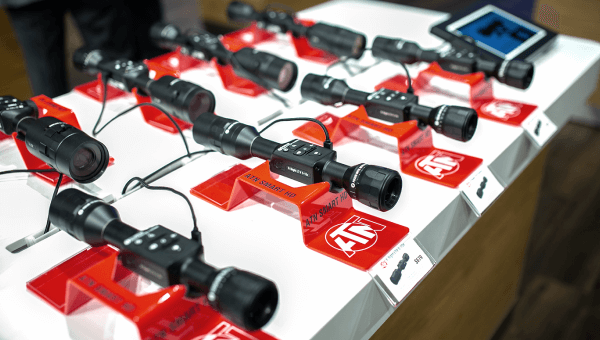
The X-Sight 5 3-15x (DGWSXS3155P) is ATN’s digital day/night rifle scope, built around a 4K+ sensor at 4056x3040 resolution with an ATN Gen V Quad Core processor and a 1280x960 micro display. In daylight it runs a full-color image; after dark it switches to an enhanced Night Vision Mode for legal night hunting hours where your state allows it. It carries a dynamic Smart Mil Dot reticle that adjusts through the 3-15x zoom range, a built-in ballistic calculator, Wi-Fi streaming to the ATN Connect app, and Recoil Activated Video that saves a clip automatically around every shot. Battery life runs up to 14 hours, it weighs 1.87 lb, and it ships with 30mm rings included. Price is $659 ($599.00 promo).

Is it worth adding to your deer season kit?
If you scout your own ground, deal with predator or hog pressure, or want a recovery tool for after-dark blood trailing, yes — a thermal monocular or scope earns its place well before the season opens. If you’re hoping to use one to shoot a deer at night without checking your state’s rule first, hold off on that specific plan until you’ve confirmed it’s actually legal where you hunt. The prep-work case for thermal is strong regardless of how that legal question shakes out.
FAQ
Is it legal to use a thermal scope for deer hunting?
It depends entirely on your state, and the rule can differ from how that same state treats predator or hog hunting. Check your state wildlife agency’s current regulations before you plan around it — don’t assume based on another state or another species.
Can I use thermal to scout for deer before the season?
Generally yes, since scouting with an optic isn’t the same regulated activity as hunting, but glassing land you don’t own or lease still requires permission. Confirm any local rule on using night optics on land you’re scouting, especially near property lines.
Can I use a thermal scope to find a deer I shot after dark?
Many states allow thermal for locating a wounded or downed animal even where hunting with thermal isn’t permitted, but this is state-specific and sometimes requires notifying game wardens or following a specific recovery procedure. Check your state’s rule on this exact scenario before you rely on it.
What’s the difference between thermal and the ATN X-Sight 5 for deer hunting?
Thermal reads heat signatures and works regardless of light; the X-Sight 5 is a digital day/night scope that runs full color by day and an enhanced night vision mode after dark, closer to traditional night vision. In states that permit night hunting for deer, digital day/night optics are more commonly the legal category than thermal.
Do I need a special license to use night vision or thermal for hunting?
Some states require a separate permit or endorsement beyond your standard hunting license to use night optics, even where the equipment itself is legal. This is one of the items worth confirming directly with your state wildlife agency before season.
Are the rules the same for coyotes, hogs, and deer?
Usually not. Most states that restrict thermal or night vision for deer allow more latitude for predator and hog hunting, since those are typically managed as pest or nuisance species rather than regulated game. Always verify each category separately rather than assuming one rule covers all three.
Get Ready the Right Way
Do the scouting work now, confirm your state’s rule on night optics before you build a plan around one, and mount and zero whatever you’re carrying well before opening morning. Browse the full X-Sight 5 lineup to compare magnification options, or read our guide to night vision vs. thermal if you’re still deciding which category fits your season.