The cheapest thermal scope that is actually worth owning is not the one with the smallest sticker — it is the most affordable one that still sees clearly. Plenty of bargain optics cut the wrong corners, and you find out on the first cold, damp night when the picture smears and a warm body vanishes into the background. This roundup sorts ATN's 6th-generation thermal scopes by value tier, entry-first, so you can see exactly what you can give up to save money and what you must not. The value anchor is the ThOR 6 384x288 2.5-20x, and every pick is an ATN ThOR 6.
Best step-up for more reach: ThOR 6 640x512 2-16x — a full 640 sensor and swappable batteries when the value tier feels tight.
If you can stretch — flagship: ThOR 6 640x512 3-24x — the farthest-reaching, highest-magnification scope in the line.
Why ATN's 6th-gen thermal scopes hold value at the entry tier
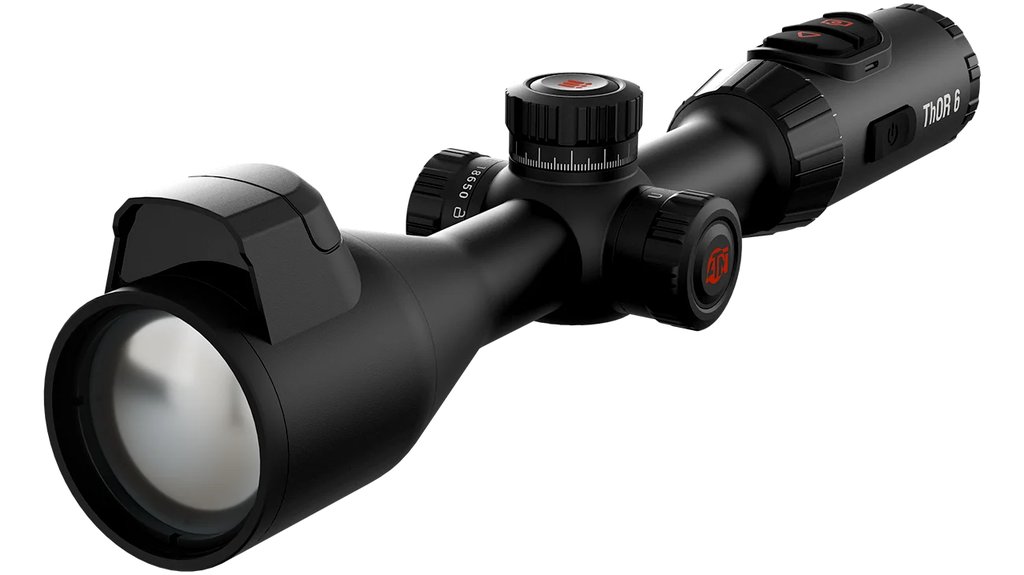
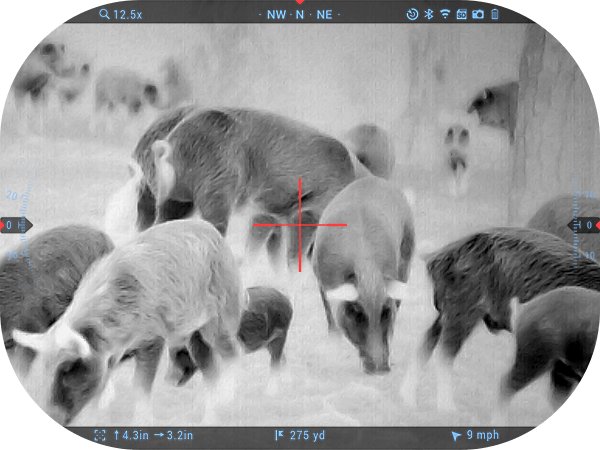
ATN's 6th-generation ThOR 6 line keeps the core image quality high even on its most affordable model, which is what makes a cheap pick worth owning. Every scope here shares the same fundamentals: an ≤15mK NETD, a 50 Hz refresh, SharpIR AI cleaning the picture and roughly nine hours of runtime. NETD is the smallest temperature difference the sensor can tell apart, and lower is cleaner — think of it as the scope's ability to separate a lukewarm animal from a cooling field, so an ≤15mK rating means fine detail instead of a blurry heat blob. Because that number does not change as you step down to the value tier, the entry ThOR 6 does not look like a budget scope through the eyepiece. What changes down-tier is sensor resolution, objective size and top magnification — the reach features — not the clarity features. That is the whole trick to buying cheap without regret: you give up how far, not how well.
Best cheapest pick: ThOR 6 384x288 2.5-20x
The ThOR 6 384x288 2.5-20x is our cheapest thermal scope worth owning, because it lands in the value tier without giving up the parts that matter after dark. It carries the same ≤15mK NETD as the flagship, so the picture stays clean, and a 384x288 sensor still resolves an animal into a shape you can identify at practical ranges. Detection reaches 2300m, the 2.5-20x band covers close scanning to a mid-long shot, and at 790 g / 1.74 lbs it is the lightest full-featured ThOR 6. You are trading raw reach for a lower price, not trading away image quality.
Why it is the smart cheap buy
Resolution is a pixel count — the number of dots the sensor paints your target with — and 384x288 is roughly a hundred and ten thousand of them, plenty to tell a hog from a coyote out to the distances most hunting actually happens. Step down from a 640 and you lose dots, which shows up as reach and fine detail at the far edge, not as a muddy picture up close. The value tier keeps SharpIR AI, six color palettes, Zeroing Freeze, Picture-in-Picture, Hot Point Tracking and Wi-Fi with ATN Connect 6, so nothing about how the scope works feels stripped. For a hunter buying their first thermal or a second rig they do not want to overspend on, this is the model that earns its keep the first night out.
Who it is for: hunters who work inside a couple hundred yards on hogs, coyotes and predators and want the most affordable clean picture they can get. Who it is not for: shooters who regularly reach past that on wide open country — the extra dots of a 640 will serve you better there.
Best step-up: ThOR 6 640x512 2-16x
When the value tier feels a touch tight on reach, the ThOR 6 640x512 2-16x is the honest next step. It swaps the 384 sensor for a full 640x512 — over three hundred thousand pixels, nearly triple the dots — which stretches detection to 3100m and sharpens what you can identify at distance. The wide 2-16x low end makes it a fast scanner, and a replaceable 18650 battery system means a dead cell is a quick swap rather than the end of your sit. It steps up in price over the value pick, but the money buys reach and runtime, not just a bigger number on the box.
What the extra spend buys
Going from 384 to 640 is like going from standard definition to HD — the animal is still the same animal, but there are far more dots drawing it, so the edges stay crisp when you climb the zoom at range. The 3100m detection means you spot things sooner, and the swappable batteries suit longer stands where the value pick's runtime would have you thinking about power. This is the pick for a hunter who has outgrown close-in work but is not chasing the absolute maximum the line offers.
Who it is for: hunters who scan wide country and want 640 clarity plus all-night hot-swap power without paying flagship money. Who it is not for: someone whose shooting stays close and who would rather keep the savings of the value tier.
If you can stretch — flagship: ThOR 6 640x512 3-24x
The ThOR 6 640x512 3-24x is the flagship, and it is here as the pick for when the cheapest option genuinely will not cover your ground. A 50mm objective and the 640 sensor push detection to 3650m, the longest in the line, and the 3-24x band with up to 8x digital zoom gives you the magnification to identify and place a shot far out on a stable rest. It costs more than the value and step-up picks, and it earns that on wide open country where every yard of reach matters. On the flip side, it is overkill — and weight you rarely use — if your shooting stays close, which is exactly why the 384 leads this roundup and the flagship sits at the end of it.
When the stretch is worth it
Detection range is simply how far out the scope can first pick up a heat signature, and 3650m is a long way to reach into the dark. If you hunt long fields, cut ground and open rises where shots stretch well past a couple hundred yards, the flagship's reach and top-end magnification turn a distant blob into an identifiable, ethical shot. If you do not have those sightlines, you are paying for reach you cannot use — which is the whole reason a cheaper scope is often the better buy. Match the tier to the ground, not to the spec sheet.
Who it is for: hunters with real long-range sightlines and a stable platform who want the maximum the ThOR 6 line offers. Who it is not for: anyone shooting close or on a tight budget — the value 384 does the same job for less on that ground.
How to choose the cheapest thermal scope worth owning
Choosing the cheapest thermal scope worth owning comes down to one rule: cut the reach features, never the clarity features. A cheap scope that sees dirty is money wasted, because you will not trust the picture when it counts. Start with the ground you hunt and the distances you actually shoot, then buy the least expensive ThOR 6 that keeps a clean image at those ranges — for most hunters that is the value-tier 384. Here is what you can safely give up versus what you should protect:
- Give up: raw detection range — a 2300m reach on the 384 still covers far more ground than most hunting shots ever use.
- Give up: top-end magnification — a 2.5-20x band handles close-to-mid shots fine; you rarely need the flagship's 24x up close.
- Give up: the biggest objective — a smaller 25mm lens saves weight and money and still gathers plenty for practical ranges.
- Keep: NETD — the ≤15mK sensitivity is the clarity spec; a higher, worse NETD is where cheap optics fail on damp nights.
- Keep: real sensor resolution — a genuine 384 sensor gives enough dots to identify your target, not just detect a smear.
- Keep: refresh rate and image processing — the 50 Hz refresh and SharpIR AI keep moving animals smooth and readable at every tier.
What 'cheap' should never mean in a thermal scope
Cheap should never mean a dirty picture, and that is the trap most bargain optics fall into. The temptation is to chase the lowest number, but a scope with a poor NETD will smear a warm animal into a cooling background exactly when you need it clear — a still, humid night an hour after dark. The reason the value-tier ThOR 6 is worth owning is that it refuses to make that cut: it keeps the ≤15mK sensitivity, the 50 Hz refresh and SharpIR AI that a flagship has, and saves you money by trimming reach instead. Think about it in real terms. A hog steps out of a treeline at a hundred and fifty yards on a damp night. With a clean ≤15mK sensor you see its shape, its edges, whether it is quartering or facing you — enough to make an ethical call. With a bargain sensor you see a warm blur and a guess. The cheapest scope worth buying is the one that still gives you the first picture, not the second.
It also should never mean a scope you cannot live with day to day. A truly worthwhile cheap pick keeps the features that make thermal usable: Zeroing Freeze so sighting in is painless, Picture-in-Picture so you can hold zoom without losing the field, Hot Point Tracking to flag the warmest object, and Wi-Fi with ATN Connect 6 so you can review and share footage. The value 384 keeps all of it. Saving money by losing those would be a false economy — you would spend less and enjoy the scope less every night you carry it.
Value tier in the real world: a night on the ground
Picture the value-tier 384 on a light rifle, an hour into a warm, still evening on a modest property. You are scanning a field edge at low magnification, the wide 2.5-20x band letting you sweep quickly for movement. A coyote slips out at around a hundred and thirty yards. You climb the zoom, and because the ≤15mK NETD is doing the heavy lifting, the animal resolves into a clean shape rather than a warm cloud — you can read its posture and pick your moment. Hot Point Tracking flags it, the 50 Hz refresh keeps it smooth as it trots, and you settle the reticle and make the shot. Nothing about that night asked for a 640 sensor or 3650m of reach; the value pick had everything the situation needed. That is the case for buying the cheapest scope that still sees clearly — most of your nights look like this one, not like a thousand-yard field.
Now flip it. If that field opened onto cut ground stretching four or five hundred yards, the story changes: you would want the extra dots of a 640 to identify at distance and the reach to spot early. The point is not that cheaper is always right — it is that cheaper is right for the ground most hunters actually hunt. Buy for your real nights, and the value tier is usually the honest answer.
Stretching runtime and getting more from the value pick
A value-tier scope rewards a little discipline, and the ThOR 6 384 gives you the tools to get a long, useful night out of it. Its roughly nine-hour runtime on two 18650 cells covers a full evening, and keeping a charged spare pair in a pocket turns a dead battery into a thirty-second swap. Scan at the low end of the 2.5-20x band and only climb the zoom to confirm and shoot, which keeps the picture bright and your eyes fresh. Use the six color palettes to your advantage — White Hot for general scanning, Black Hot when you want a natural-looking scene, an Iron palette to make a faint warm body pop against a cool background. A few habits and the cheapest scope in the line behaves like a much dearer one.
- Carry a charged spare pair of 18650s so the ~9-hour runtime is never the thing that ends your sit.
- Scan low, shoot high — sweep at the wide end of the 2.5-20x band and only zoom to confirm and take the shot.
- Match the palette to the scene — White Hot to scan, Black Hot for a natural look, Iron to lift a faint signature.
- Lean on SharpIR AI and the ≤15mK NETD to pull detail out of damp air the value tier would otherwise struggle with.
- Save your zero as a profile with Zeroing Freeze so the scope is ready the moment you get behind it.
How we picked these ATN thermal scopes
This is an in-house comparison of ATN's own thermal scopes sorted by value tier, not an independent lab review, so treat it as a starting point and check the specs against the ground you actually hunt. We judged each scope on the things that decide whether a cheap optic is worth owning — NETD, sensor resolution, magnification band, detection range, refresh rate, weight and battery — against a value use-case: a hunter who wants the least expensive clean picture for practical ranges. Only the current 6th-generation ThOR 6 line was considered; we do not point you at older or discontinued models. The honest trade-off is that the cheapest pick gives up reach and top-end magnification, and if your shooting is genuinely long, the step-up 640 or the flagship will serve you better. Who this roundup is not for: someone chasing the biggest spec sheet regardless of the distances they shoot — value means matching the scope to your night, and the value tier is the right answer only when your ground fits it.
Frequently Asked Questions
What is the cheapest ATN thermal scope worth owning?
The ATN ThOR 6 384x288 2.5-20x is the most affordable ThOR 6 that still keeps a clean image. It sits in the value tier but carries the same ≤15mK NETD as the flagship, so it trims reach and top magnification, not clarity.
What should I give up to buy a cheaper thermal scope?
Give up reach features, not clarity features. Raw detection range, the biggest objective and the highest top-end magnification are safe to trim on a budget. The NETD, sensor resolution and refresh rate are what keep the picture clean, so protect those.
Is a 384 sensor good enough for hunting?
For most hunting inside a couple hundred yards, yes. A 384x288 sensor paints your target with enough dots to identify a hog or coyote and place a shot. If you regularly reach much farther on open ground, a 640 sensor gives more detail at distance.
Why does NETD matter more than a low price?
NETD is the smallest temperature difference the sensor can tell apart, and it decides whether a warm animal reads as a clear shape or a smeared blob on a damp night. A cheap scope with a poor NETD fails exactly when you need it, which is why the ≤15mK rating is the spec you should never cut to save money.
How far can the value-tier ThOR 6 detect?
The ThOR 6 384x288 2.5-20x reaches a 2300m detection range. That covers far more ground than most hunting shots ever use, which is why it is enough for the majority of nights while costing less than the longer-reaching 640 models.
When is it worth stepping up from the cheapest scope?
Step up when your ground genuinely runs long. If you shoot on wide open country where targets appear past a couple hundred yards, the ThOR 6 640x512 2-16x or the 3-24x flagship give you the extra dots and reach to identify at distance. On closer ground, the value pick does the same job for less.
Do the cheaper ThOR 6 scopes lose any features?
No — the value tier keeps the working features. The ThOR 6 384 includes SharpIR AI, Zeroing Freeze, Picture-in-Picture, Hot Point Tracking, six color palettes and Wi-Fi with ATN Connect 6. What steps down at the entry tier is reach: sensor resolution, objective size and top magnification, not usability.
Ready to buy the cheapest thermal scope that is actually worth owning? Start with the value-tier ThOR 6 384x288 2.5-20x — the most affordable ThOR 6 that keeps a clean ≤15mK picture — or compare the full range of ATN thermal scopes to match sensor, reach and weight to the ground you hunt. Every model runs the same SharpIR AI, Zeroing Freeze and Connect 6 app, so even the entry pick feels like a serious scope the first night you carry it. Buy for your real nights, keep the clarity, and let the value tier do the rest.
Created: August 10, 2026 · 10:05:21 UTC