You're standing at the edge of a field at 2 a.m., a monocular in your hand, and a decision you made weeks ago is either paying off or costing you. That decision wasn't which brand to buy. It was which sensor, which NETD rating, and which magnification range actually matched the ground you hunt. Spend too little and you're squinting at a smear where a hog should be. Spend too much and you're carrying features you'll never touch on a 200-yard scan.
This guide is about finding the best value thermal monocular for the way you actually hunt — not the cheapest unit on the shelf, and not the most expensive one either. It's about knowing exactly what each dollar buys you as you move up the lineup, so you can stop paying at the point where the upgrade stops mattering.
Value in a thermal monocular isn't the lowest price tag — it's the last dollar that actually changes what you can do in the field. For most hunters scanning brush, tree lines, and pasture out to a few hundred yards, that dollar stops at a 640×512 sensor with sub-20mK sensitivity, which is exactly what the ATN BlazeTrek 6 640 delivers without the extras you'd only use once a season.
Quick Answer: Where the Value Actually Sits
- Best overall value: ATN BlazeTrek 6 640 1.75-14x (TIMNBLT625G6) — 640×512 resolution, ≤18mK NETD, 1000 m detection range, no wasted spend on features a handheld scanner doesn't need.
- Best for the money if you scan more than you shoot: ATN BlazeSeeker 6 256 1.7-13.6x (TIMNBLS210G6) — same 6th Generation engine, smaller sensor, real savings for short-range work.
- Best lightweight pick: ATN BlazeTrek 6 640 — 320 g, pocket-sized, no bulk penalty for the resolution jump.
- Best step-up if range is the bottleneck: ATN BlazeHunter Pro 640 2.5-20x with built-in LRF — adds a laser rangefinder and reach for hunters working open country.
- Budget pick: ATN BlazeSeeker 6 256 1.2-9.6x (TIMNBLS207G6) — the floor of the current lineup, still built on the same sensor generation.
Why the Latest Generation Stands Out
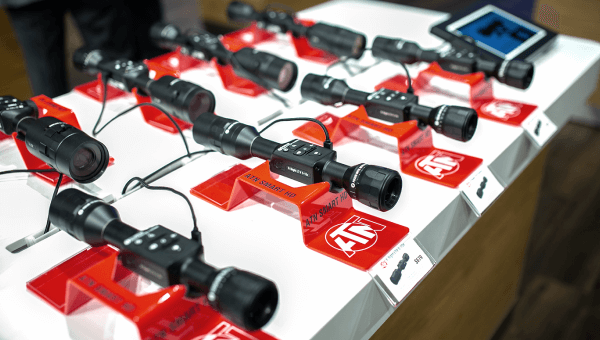
Every monocular in this roundup runs ATN's 6th Generation thermal engine, and that matters more than any single spec on the page. It's a 12 μm VOx uncooled sensor platform that scales across resolutions — 256×192 up through 640×512 — while keeping the same 50 Hz refresh rate, the same SharpIR image processing, and the same six color palettes across the board. That consistency is what makes an honest value comparison possible: you're not weighing an old sensor against a new one, you're weighing how much sensor you need.
The other piece that changes the value math is Wi-Fi and app connectivity. Every model here links to the ATN 6 Connect app for live view, file transfer, and gallery management, plus a built-in AI assistant trained on the product manual. That used to be a feature you paid a premium for. Now it's standard from the bottom of the lineup up, which pushes more of your budget toward the sensor itself instead of the software wrapped around it.

Comparison Table
| Model | Sensor | NETD | Magnification | Detection Range | Battery | Weight | Price |
|---|---|---|---|---|---|---|---|
| BlazeSeeker 6 256 (TIMNBLS207G6) | 256×192 | ≤20mK | 1.2-9.6x | — | ~8 hrs | — | $499 |
| BlazeSeeker 6 256 (TIMNBLS210G6) | 256×192 | ≤20mK | 1.7-13.6x | — | ~8 hrs | — | $569 |
| BlazeTrek 6 384 (TIMNBLT319G6) | 384×288 | ≤18mK | 2.25-18x | — | ~6.5 hrs | — | $995 |
| BlazeTrek 6 640 (TIMNBLT625G6) | 640×512 | ≤18mK | 1.5-12x | 1000 m | ~6.5 hrs | 320 g / 0.7 lb | $1,895 |
| BlazeHunter Pro 640 2.5-20x LRF | 640×512 | ≤18mK | 2.5-20x | — | — | — | $2,495 |
| BlazeHunter XD Elite 1280 LRF | 1280×1024 | ≤15mK | 2-16x | — | — | — | $4,995 |
Best Overall Value: ATN BlazeTrek 6 640 (TIMNBLT625G6)
The BlazeTrek 6 640 earns the top spot because it's the point in the lineup where the sensor upgrade still shows up in the field every single time you use it, not just on paper.
Image Quality
The 640×512 sensor at ≤18mK NETD is the real story here. Step down to 384×288 or 256×192 and you're not just losing pixels — you're losing the ability to tell a hog from a stump at 150 yards in anything but perfect conditions. At 640×512, a heat signature holds its shape long enough for you to read ear position and body posture before you decide whether to raise a rifle or keep walking. The 12 μm pixel pitch and SharpIR processing keep edges defined instead of blurring into a blob, which is the difference between "something's out there" and "that's a doe, not a hog."
Range and Magnification
Rated to 1000 m detection range with 1.5-12x magnification, this monocular is built for scanning — walking a fence line, glassing a green field edge, checking a feeder before you commit to a stand. It's not trying to be a rangefinding rifle-ready unit, and that's fine. If you need a built-in laser rangefinder because you're working open pasture past 300 yards regularly, that's the one upgrade worth paying for, and it shows up in the BlazeHunter Pro LRF models below.
Battery and Build
At 320 g and 158×57×50 mm, it disappears in a jacket pocket, which matters more than people expect. A monocular you leave in the truck because it's bulky isn't saving you money — it's a $1,895 investment paying you zero return on the nights you don't bring it. Battery life runs about 6.5 hours on the internal rechargeable cell, with USB-C external power support for anyone doing an all-night sit.
Smart Features
32 GB of onboard storage, Wi-Fi streaming to the ATN 6 Connect app, hot point tracking, and six color palettes come standard. None of that is unique to this model — it's the same feature set across the whole 6th Generation line. What you're actually paying the premium for, moving up from the BlazeSeeker tier, is the sensor and nothing else. That's what makes it the value pick: you're not subsidizing features, you're buying resolution.
Buy this if you scan brush, tree lines, and open pasture out to a few hundred yards and need enough resolution to identify before you commit. Skip it if your longest realistic shot or scan distance is under 100 yards in tight cover — the BlazeSeeker tier will do that job for less.

Best for the Money If You Scan More Than You Shoot: BlazeSeeker 6 256
If your monocular's job is a quick walk-around check before dark, or confirming movement at a feeder 80 yards off the porch, the 256×192 sensor at ≤20mK NETD in the BlazeSeeker 6 does that job for less than a third of what the 640 costs. It runs the same 6th Generation engine, the same app connectivity, the same 8-hour battery life. What it doesn't do is hold detail at range — past 150 yards or so, a 256×192 sensor starts turning "raccoon" and "housecat" into the same blob. For short-range confirmation work, that trade-off is worth the savings. For anything past your backyard, it isn't.
Best Step-Up If Range Is the Bottleneck: BlazeHunter Pro 640 LRF
Once your primary limitation shifts from resolution to distance measurement — you're glassing across a cut cornfield and need to know if that hog is 220 yards or 340 — the built-in laser rangefinder on the BlazeHunter Pro 640 2.5-20x LRF is the upgrade that pays for itself. It carries the same 640×512, ≤18mK sensor as the BlazeTrek 6 640, with more magnification reach and integrated ranging. That's a real functional gain, not a spec-sheet bump, which is why it's the one step up from our best-value pick that we'd actually recommend before you go further.
Where the Ceiling Is: BlazeHunter XD Elite 1280
At the top of the current lineup sits the 1280×1024 sensor with ≤15mK NETD — roughly four times the pixel count of the 640 tier, wrapped in a built-in LRF. It's a legitimate tool for professional-grade scouting or long-range predator work where every extra pixel of resolution buys you an earlier, more confident identification. It's also priced well past what most hunters need for routine scanning. If you're not regularly working distances where a 640 sensor starts to lose definition, that jump doesn't change your outcomes enough to justify the gap.

How to Choose
Start with the distance you actually scan, not the distance you'd like to be able to shoot. If most of your nights involve checking a feeder, a fence line, or a yard inside 150 yards, a 256×192 sensor gets the job done and saves real money. If you're glassing pasture, crop edges, or tree lines out to 300-400 yards and need to tell species apart before you move, step up to 640×512 — that's where the BlazeTrek 6 640 sits, and it's the point where more resolution stops being optional.
Weight matters more than most buyers plan for. A monocular that stays in your pack because it's heavy isn't doing its job. At 320 g, the BlazeTrek 6 640 rides in a jacket pocket without you noticing it's there, which means it actually comes out when something moves at the edge of the field.
Budget in two stages: what you can spend now, and what the next tier up buys you if your hunting changes. If you're not sure whether you'll need a laser rangefinder in a year, buying the BlazeTrek 6 640 now and upgrading later to an LRF model costs less over time than overbuying today for a capability you're not using yet.
FAQ
What's the best value thermal monocular for most hunters?
For most hunters scanning brush, fence lines, and open pasture out to a few hundred yards, the ATN BlazeTrek 6 640 1.75-14x offers the best balance — a 640×512 sensor with ≤18mK NETD at a price well below the LRF-equipped tiers above it.
Is a 256 resolution thermal monocular worth buying?
Yes, if your use case is short-range — checking a yard, feeder, or barn within about 150 yards. The BlazeSeeker 6 256 runs the same 6th Generation sensor engine at a lower resolution, which is a reasonable trade-off for close work and a real savings.
Do I need a laser rangefinder on a thermal monocular?
Only if you're regularly estimating distances past 200 yards in open terrain. For handheld scanning at typical brush and field-edge distances, a rangefinder adds cost without changing what you can identify or how fast you spot movement.
How much does thermal resolution actually matter for identification?
It's the single biggest factor. A 640×512 sensor holds enough detail at 200-300 yards to distinguish a hog from a deer by body shape and ear position; a 256×192 sensor at the same distance often reduces both to a similar-sized blob.
What's the difference between the BlazeTrek 6 and BlazeHunter Pro lines?
Both use the same 6th Generation sensor platform. BlazeHunter Pro models add higher magnification ranges and, in LRF variants, a built-in laser rangefinder — useful if you're working longer, more open terrain and need integrated ranging rather than just detection.
Will a lightweight monocular sacrifice image quality?
Not with the current generation. The BlazeTrek 6 640 weighs 320 g and still runs the full 640×512 sensor — the weight comes down through the housing and internals, not by cutting resolution.
How long does the battery last on a thermal monocular?
The BlazeTrek 6 640 runs about 6.5 hours on its internal rechargeable battery, with USB-C support for external power banks if you need to extend a long sit or all-night scouting session.

Bottom Line
Value isn't the lowest number on the price tag — it's the point where spending more stops changing what you see in the field. For the vast majority of hunters, that point is a 640×512 sensor at sub-20mK sensitivity, and the ATN BlazeTrek 6 640 delivers exactly that without charging you for a rangefinder or resolution you won't use at handheld scanning range. If your terrain and shot distances genuinely call for more, the BlazeHunter Pro LRF tier is the honest next step. For everyone else, this is where the math stops favoring an upgrade. See the full specs on the BlazeTrek 6 640 product page or browse the complete lineup on the thermal monoculars category page.