Most thermal optics do one thing. The ATN Binox-6 Dual 640x512 3-24x does four. That is the whole reason it tops this list of the best thermal vision binoculars: it is a multispectral unit, so a single pair covers day glassing, low-light dusk, full-dark night vision, and true thermal heat detection — plus it ranges the target with a built-in laser. Instead of hanging three devices around your neck and fumbling between them when a hog steps out, you hold one Binox-6 and switch modes with a button. For scouting, observation, and confirming what you are looking at before first light, nothing in the Binox line stacks up like the flagship 640.
Best for high zoom: ATN Binox-6 Dual 384x288 5.5-44x — same 4-in-1 platform and rangefinder, with a taller magnification band for far-off glassing at a lower price tier.
Bottom line: if you want the clearest picture and the most reach, take the 640. If you glass at extreme zoom and want to spend less, the 384 5.5-44x is a smart step down.
Why ATN's 6th-gen Binox-6 leads on thermal vision
Thermal binoculars earn their keep two ways: how well they see heat, and how comfortably you can use them for hours. The Binox-6 is strong on both. Its 640x512 thermal sensor packs more dots into the picture — think going from a standard TV to a crisp HD screen — so an animal stays a recognizable animal as you zoom, instead of melting into a warm smear. Its NETD of 15mK or lower means it holds a clean image even in humid, foggy, or damp air, exactly the conditions that wreck cheaper thermal. Then it adds what a plain thermal cannot: a 4K day sensor and true day, night, and twilight modes, so you can identify color and detail when there is any light at all, and a laser rangefinder to tell you how far out the target sits. Two eyepieces instead of one also means less eye fatigue on long scans. That combination is why the Binox-6 is the flagship of ATN's thermal binoculars lineup.
There is a practical reason the multispectral design matters so much in the real world. Pure thermal is brilliant at answering "is something warm out there?" but it is poor at answering "what exactly is it?" A hot blob at 400 yards could be a deer, a hog, a stray dog, or a person walking a dog. With the Binox-6 you find that blob in thermal, then flip to the 4K day mode or the low-light night mode and read antlers, ear shape, or a jacket — the details that make an identification safe and legal. That layered workflow, thermal to confirm, is exactly what separates a serious observation binocular from a heat-only toy, and it is the heart of the 4-in-1 promise.
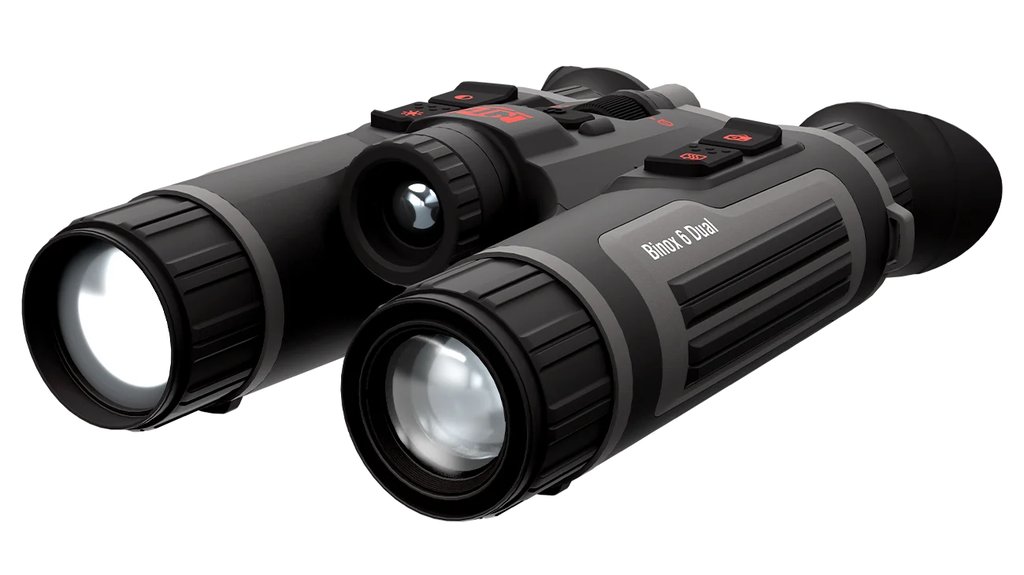
Best overall: ATN Binox-6 Dual 640x512 3-24x
The ATN Binox-6 Dual 640x512 3-24x is the best thermal vision binocular because it does the most with the clearest picture. The 640x512 sensor is the highest-resolution thermal in the Binox line, and it pairs with a 4K Ultra HD day sensor, so you move from a heat picture at night to a full-color, high-detail picture by day without changing devices. Detection range runs out to 3100m — you pick up heat from far off — and the 3-24x zoom band starts wide for scanning and reaches deep for a closer look. This is the model to buy if you want one optic to do everything well. In the hand it feels balanced at 730 grams, light enough to hold up for a long scan yet solid enough to feel like a real instrument rather than a gadget, and the twin eyepieces let you keep both eyes open the way you naturally glass with day binoculars.
Four kinds of vision in one unit
Day, night, thermal, and twilight modes mean the Binox-6 works in any light. Thermal finds the heat, then you can flip to night or day mode to confirm exactly what species and how big before you ever commit. That layered look is what a single-mode thermal simply cannot give you.
Ranges the target for you
The built-in laser rangefinder reads out to 1000 yards with about a meter of accuracy, so you know the distance before you plan a stalk or a shot. That single feature replaces a whole separate device on your chest. Add Hot Point Tracking to lock onto the warmest object, six color palettes so you can pick the look that reads best on a given night, and the ATN Connect 6 app over Wi-Fi to stream and share what you see, and you have a serious field tool rather than a novelty.
Built to survive the field
An optic you carry all night has to take abuse. The Binox-6 640 is IP67 waterproof, runs on dual replaceable 18650 batteries for about eight hours, and holds 64 GB of storage for video and stills. Because the batteries swap, you can carry a spare set and keep glassing well past a single charge. That combination of durability and staying power is what separates a serious observation tool from a fair-weather gadget. Who it's for: hunters and observers who want the sharpest image and the most all-around capability. Who it's not for: someone who only ever glasses at extreme magnification and wants to spend less — that person should read on.
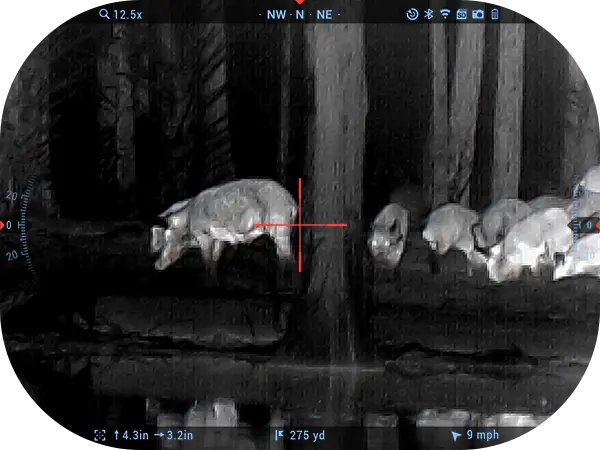
Best for high zoom: ATN Binox-6 Dual 384x288 5.5-44x
If your glassing is all about reaching way out — scanning distant field edges, ridgelines, and tree lines — the Binox-6 Dual 384x288 5.5-44x is the value-minded choice. It runs the same 4-in-1 multispectral platform, the same laser rangefinder, and the same clean 15mK image, but its 5.5-44x zoom band climbs much higher for detailed looks at far targets. The trade is a 384 sensor instead of 640, so the picture holds a touch less fine detail, and detection range is a little shorter at 2750m. It sits in a lower price tier than the 640, which is why high-magnification hunters on a tighter budget like it.
Do not read the 384 as a weak sibling, though. It carries the same weatherproofing, the same swappable dual batteries, and the same app connectivity, so the day-to-day experience feels identical — you just zoom higher and pay less, in exchange for a sensor that softens a little sooner at the extreme end. For a lot of open-country observers, that is exactly the right set of compromises. Who it's for: open-country glassers who prize top-end zoom. Who it's not for: anyone who wants the crispest possible thermal picture — that is the 640's job.
How to choose the best thermal vision binoculars
Pick by the two things that matter most in the field — picture clarity and how you actually use the optic:
- Sensor resolution — 640x512 holds more detail and lets you zoom further before the image goes blocky; 384x288 is still sharp and costs less. Choose 640 if identification at distance matters most.
- NETD — both Binox-6 models hit 15mK or lower, so they stay clean in fog, humidity, and rain where cheaper thermal falls apart.
- Vision modes — the 4-in-1 day/night/thermal/twilight design lets you find heat and then confirm what it is. That is a real edge over single-mode thermal.
- Rangefinder — a built-in laser that reads to 1000 yards means you range and identify without a second device.
- Magnification vs field of view — the 640 3-24x scans wide and reaches well; the 384 5.5-44x trades some field of view for much higher top-end zoom.
- Comfort — two eyepieces reduce eye strain on long scans, which matters when you glass for hours.
- Battery strategy — replaceable 18650 cells mean you can carry spares and stay out all night instead of racing a fixed charge.
- Storage and sharing — 64 GB and the Connect 6 app let you record, review, and send footage from the field.
The honest short version: if you want the best thermal vision binoculars and money is not the deciding factor, buy the 640 for its sharper picture and longer reach. If you glass at very high magnification and want to spend less, the 384 gives you the same platform and rangefinder for less money. Both are real multispectral tools, not single-mode thermal, and that is what puts the Binox-6 ahead of a plain thermal binocular no matter which one you pick.
How we picked these ATN thermal binoculars
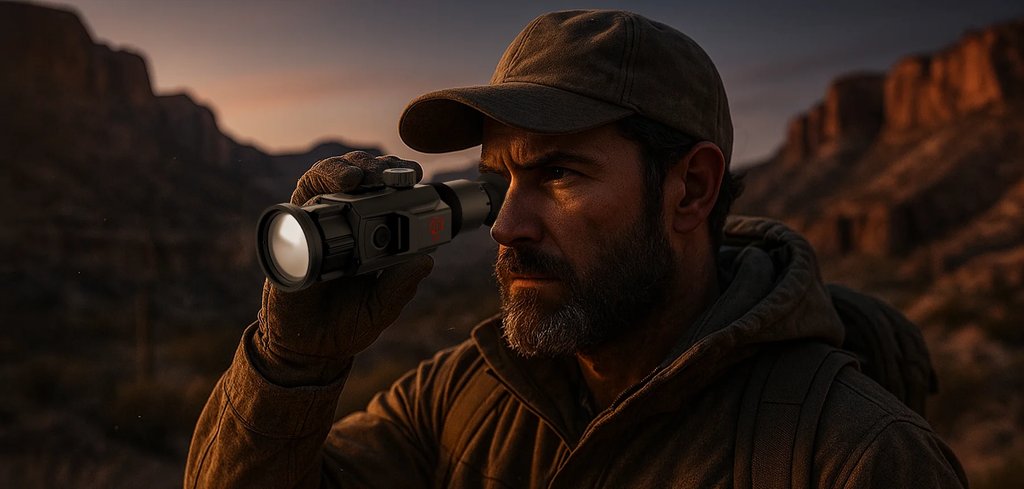
Here is how these picks were chosen, so you can judge them for yourself. Every option here is from ATN's current 6th-generation line only — no discontinued models padding the list. Each was weighed on the specs that decide a real hunt: sensor resolution, thermal sensitivity (NETD), detection range, refresh rate, and battery life, then sanity-checked against how it actually performs for 4-in-1 multispectral. Where a model gives something up, that trade-off is called out plainly rather than hidden. These are the maker's own optics, so treat this as an honest in-house comparison of the range — not an independent lab review — and cross-check the specs against your own needs.
Frequently Asked Questions
What makes thermal vision binoculars better than a thermal monocular?
Binoculars use both eyes, which cuts eye fatigue on long scans and gives a more natural, immersive view. The ATN Binox-6 also adds day, night, and twilight modes plus a laser rangefinder, so one unit does far more than a single-mode monocular.
What does 4-in-1 multispectral mean on the Binox-6?
It means the Binox-6 has four vision modes in one body: day, night, thermal, and twilight. You use thermal to find heat in the dark, then switch to a light-based mode to confirm exactly what and how big the target is.
Which Binox-6 has the clearest picture?
The Binox-6 Dual 640x512 3-24x. Its 640 thermal sensor packs more dots into the image, so detail holds up better as you zoom and animals stay easy to identify at distance. The 384x288 model is still sharp but keeps a little less fine detail.
How far can the Binox-6 detect heat?
The 640x512 model detects heat out to about 3100m and the 384x288 model to about 2750m. Detection range is how far away you can pick up a heat signature; identifying the animal happens closer in, especially with the day and night modes.
Does the Binox-6 have a rangefinder built in?
Yes. Both Binox-6 models include a laser rangefinder that reads out to 1000 yards with roughly a meter of accuracy. You can range the target without carrying a separate rangefinder.
Is the Binox-6 weatherproof?
Yes. It carries an IP67 waterproof rating, so it stands up to rain, dust, and rough field conditions. Its low NETD also keeps the thermal picture clean in fog and humidity.
Want one optic that does the work of three? The ATN Binox-6 Dual 640x512 3-24x combines day, night, thermal, and twilight vision with a laser rangefinder and a sharp 640 sensor, so you find heat, confirm the target, and range it — all with both eyes. If you glass at extreme zoom and want to spend less, the 384 5.5-44x runs the same platform. See the full range of ATN thermal binoculars and match the sensor to the way you hunt and observe.
Created: July 7, 2026 · 08:31:01 UTC