The hunters who fill the truck at night rarely rely on one device — they scan with a handheld, then bring the rifle up only once they've found something. That two-tool rhythm is what the best thermal scopes monoculars night hunting 2026 setup is really about: a monocular does the searching so your rifle isn't waving around the field, and a scope does the shooting once you've got a target locked. The ATN ThOR 6 640x512 anchors that pair as the sight, backed by a high-detail monocular for the scan. This roundup walks the whole setup, not just one piece of glass.
Best scanning monocular: ATN BlazeHunter XD 1280x1024 — extreme-definition handheld with a built-in laser rangefinder for finding and ranging targets.
Best value scope: ATN ThOR 6 384x288 2.5-20x — lighter, lower tier, same night-hunting features.
Why ATN's 6th-gen line suits a scan-then-shoot setup
A good night setup splits two jobs that fight each other on one device: searching wide and shooting precisely. Scanning wants a light handheld you can sweep freely without pointing a loaded rifle everywhere. Shooting wants a scope locked to the gun with the detail to identify and place the shot. ATN's 6th-gen family covers both with matched technology, so the picture and controls feel the same in each hand. The scope side runs a 640x512 sensor — more dots in the image, so you can zoom before it turns blocky — behind a Full-HD OLED. The monocular side runs an even higher 1280x1024 sensor, which is over a million more pixels, so faint heat at distance shows up while you're still searching. Both hold NETD at 15mK or lower for a clean picture in damp, foggy air, and both refresh at 50Hz so a running hog stays smooth rather than smeared. The result is a two-piece kit that behaves like one system.
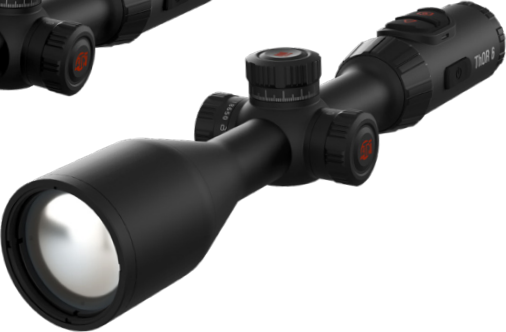
Best scope in the setup: ATN ThOR 6 640x512 2-16x
The ATN ThOR 6 640x512 is the rifle-mounted half because it has the detail to confirm and place a shot once the monocular has done the finding. The 640 sensor and Full-HD OLED give you a picture clean enough to tell a hog from a stump at the ranges where night shots actually happen.
Why it's the shooter, not the scanner
A scope's job is precision, not sweeping. You bring it up already knowing where the target is, so it can be locked to the gun and tuned for the shot: Hot Point Tracking to keep the animal marked, Recoil Activated Video to capture it, Zeroing Freeze for a clean zero. Under 2.2 lbs, it doesn't overload the rifle.
Rest of the package
SharpIR enhancement, six palettes, dual replaceable 18650 batteries for about nine hours, 64GB storage, IP67 body. Who it's for: the hunter who scans first and shoots second and wants a top-detail sight for the shot. Who it's not for: someone who wants a single do-everything device instead of a two-piece setup.
How the handoff feels in the field
The value of a matched pair shows up in the handoff — the moment you go from the monocular to the scope. Because both run the same 6th-gen platform, the palette you were scanning in is the palette you shoot in, the target still looks the way it did in the handheld, and there's no jarring change that costs you a second while your brain re-adjusts. You spot a hog in White Hot with the monocular, note it's the closer of a pair, bring the rifle up, and the ThOR 6 shows the same White Hot picture at a magnification you set for the shot. Hot Point Tracking keeps the animal marked so you don't lose it in the swing to the rifle. That seamless transfer is exactly why buying the scope and monocular from the same family beats mixing mismatched gear.
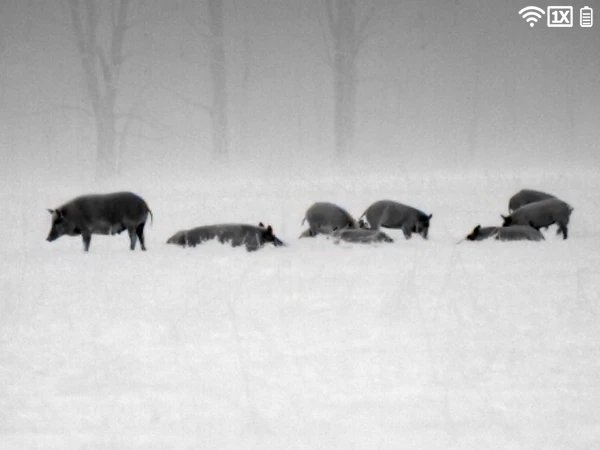
Best scanning monocular: ATN BlazeHunter XD 1280x1024
The ATN BlazeHunter XD is the searching half of the setup, and its 1280x1024 sensor — over a million more pixels than a 640 — means faint heat at distance shows up while you're still sweeping the field. At 1.1 lb you can glass for a long time without fatigue, and the built-in laser rangefinder tells you the distance the moment you spot something, so you shoulder the rifle already knowing how far.
Why scan with the handheld
Sweeping a field with a rifle means pointing the muzzle at everything you look at — that's the habit the monocular breaks. You search safely with the handheld, confirm the target and range, and only then bring the gun up. It's faster and it's safer. Who it's for: hunters who work fields and edges and want to find game before committing the rifle. Who it's not for: someone who only sits over a fixed bait and never scans.
Best value scope: ATN ThOR 6 384x288 2.5-20x
If you want the same scan-then-shoot setup for less, the ATN ThOR 6 384x288 2.5-20x is the value shooter. The 384 sensor renders slightly less fine detail than the 640 but keeps every night-hunting feature — OLED, 50Hz, Recoil Activated Video — and adds a higher 2.5-20x zoom. Pair it with the BlazeHunter XD and the setup still works exactly the same way. Who it's for: budget-minded hunters building the pair. Who it's not for: those who want maximum scope detail at the longest ranges.
A night on the field with the pair
Here's how the setup earns its keep over a single evening. You reach your spot before full dark and start sweeping the field with the BlazeHunter XD, both feet planted, rifle slung and pointed at the ground. Its higher-resolution sensor catches a warm shape near the treeline that a lesser scanner would miss at that distance, and the built-in laser tells you it's out past 200 yards. You watch through the monocular a minute, confirm it's a hog and not a stump, and note it's drifting your way. Only then do you set the handheld down and bring up the rifle. The ThOR 6 shows you the same scene at a magnification you chose for the shot, Hot Point Tracking keeps the hog marked, and you take it clean. Then it's straight back to the monocular to check whether the rest of the group is still nearby. That loop — scan, confirm, range, shoot, scan again — is faster and safer than trying to do all of it through the scope, and it's the whole reason to run two devices instead of one.
How to choose a scope-and-monocular night setup
Build the setup around the two jobs. Pick the monocular for how you search — light and high-detail so you find game without shouldering the rifle — and pick the scope for how you shoot, matched in picture quality so switching between them feels seamless.
- Split the roles — a light handheld scans, a locked scope shoots; don't ask one device to do both.
- Match the picture — same sensor family and OLED means the view looks consistent from hand to rifle.
- Detection range on the scanner — the monocular should out-reach the scope so you spot before you shoot.
- Ranging — a built-in laser on the monocular hands you the distance before you commit the rifle.
- Weight and battery — the scope stays under 2.2 lbs and the monocular is about a pound, and both run long enough for a full night.
How we picked these ATN thermal optics
We judged this trio as a system, not three separate products, against the way night hunters actually work: scan safe, then shoot. The criteria were sensor resolution for both finding and confirming targets, NETD for a clean picture in damp air, refresh rate for moving game, detection range so the scanner out-reaches the scope, the monocular's ranging, plus weight and battery for a real night. We only considered ATN's current 6th-gen line, so the picture and controls match across the kit. Honest trade-off: a two-piece setup costs more than one device and is one more thing to carry — if you only sit over bait, a single scope may be enough. This is an in-house comparison of ATN's own gear, not an independent lab test, so weigh it against how you hunt.
Frequently Asked Questions
What is the best thermal scope and monocular setup for night hunting in 2026?
The ATN ThOR 6 640x512 2-16x scope paired with the ATN BlazeHunter XD monocular. You scan wide with the handheld and shoot with the rifle-mounted scope, a workflow that's both faster and safer than doing everything through the optic.
Why use a monocular and a scope instead of just a scope?
Scanning with a rifle means pointing the muzzle at everything you look at. A handheld monocular lets you search safely, confirm the target, and only then shoulder the gun. It keeps your muzzle discipline intact and gets you on game faster.
Which scope should I mount, the 640 or the 384?
The ThOR 6 640x512 gives the most detail for confirming and placing a shot, so it's the top pick. The ThOR 6 384x288 is the value option with a higher zoom range; it keeps every night-hunting feature and works in the same setup for less.
Why is the BlazeHunter XD the scanner?
Its 1280x1024 sensor shows faint heat at distance while you're still sweeping, and at about a pound it's easy to glass with for a long time. Its built-in laser rangefinder also hands you the distance the instant you spot a target.
Do the scope and monocular look the same through the eye?
They're built on the same 6th-gen platform, so the palettes, controls, and picture behave consistently. That consistency is the point — switching from scanning to shooting doesn't force you to relearn the view.
Will this setup work in fog and humidity?
Yes. Both devices hold NETD at 15mK or lower, which separates small heat differences, so a faint target stays visible in damp, foggy air whether you're scanning or aiming.
Do I need a rangefinder in this setup?
It helps a lot, and the BlazeHunter XD includes a built-in laser rangefinder, so the scanning device also hands you the distance. That means you shoulder the rifle already knowing how far the target is, without carrying a separate handheld ranger.
Can I run this setup solo, or is it a two-person job?
One hunter can run it easily. You scan with the monocular in one hand, and when you find a target you set the handheld down and bring up the rifle. Many hunters do exactly this alone; the workflow just adds a safe searching step before the shot.
A night setup is really a rhythm — find, range, then shoot — and the ATN ThOR 6 640x512 is the sight that finishes it once the monocular has done the finding. Want to see the scope options in full before you build the pair? Browse ATN's thermal scopes and match the sensor to your ranges, then add a scanning monocular to complete the setup. Pick the two pieces around how you actually hunt at night, and the whole thing clicks together.
Created: July 7, 2026 · 11:11:27 UTC