Hogs do not show up one at a time. They roll in as a sounder, mill in a tight knot at the edge of a field, and give you seconds to read the group before the shot. The best thermal scope for hog hunting is the one that lets you see the whole group at once, pick your pig, and stay locked on it while the rest scatter. This roundup ranks ATN's current 6th-generation thermal rifle scopes for exactly that job. Our top pick is the ATN ThOR 6 640x512 3-24x, and every option here is an ATN model judged on how it handles hogs, not on spec-sheet bragging.
Best for timber and travel routes: ThOR 6 640x512 2-16x — the same 640 clarity with a wider low end and hot-swap batteries for long sits.
Best light, mobile hog rig: ThOR 6 384x288 2.5-20x — steps down the sensor to save weight for stalking small groups at closer range.
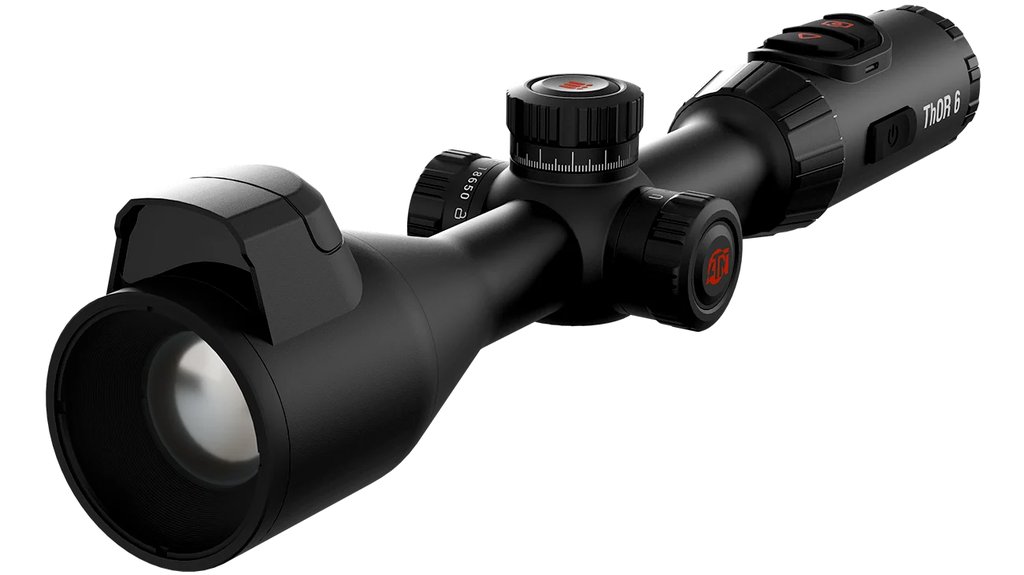
Why ATN's 6th-gen ThOR 6 line suits hog hunting
Hog hunting rewards a scope that can tell one warm body from another in a crowd, and that comes down to the sensor. Every scope here runs a 6th-generation ThOR 6 core, and the two flagship picks carry a 640x512 detector — think of it as the jump from a low-megapixel phone camera to a proper one, where a packed sounder resolves into individual pigs instead of one glowing mass. That resolution sits under SharpIR, ATN's on-board AI enhancement, which cleans edges in real time so a boar reads like a boar and not a blob. A <=15mK NETD keeps the picture usable when a river bottom fills with fog or a warm field radiates heat back at you, both common on hog ground. The 50 Hz refresh matters more with pigs than almost any other quarry, because a spooked sounder erupts in every direction and a lower refresh smears that motion. Add roughly 9 hours of runtime on swappable 18650 cells, and you can sit a field edge from dusk until the pigs finally commit. The three options below are sorted by the kind of hog ground you hunt most.
Best overall for hogs: ATN ThOR 6 640x512 3-24x
The ATN ThOR 6 640x512 3-24x is our best thermal scope for hog hunting when the pigs work big, open cropland. Its 50mm germanium objective and 640x512 sensor push a clean image out to a 3650m detection range, so you catch a sounder stepping out of a treeline on the far side of a soybean field long before it feeds into range. The 3-24x zoom band lets you sit wide to count the group, then zoom in to sort the shooter boar from sows and young.
Reading the whole sounder at once
The 640x512 sensor is what earns this scope its place on a hog rig. When eight or ten pigs bunch up at a bait pile, more pixels on the target mean the group resolves into separate animals instead of one lump of heat. You can pick the biggest body, watch for a clear lane, and squeeze without second-guessing which pig you are actually on. SharpIR sharpens those outlines so you are making that call on shapes, not guesses.
Staying on your pig when the sounder blows
Hogs go from calm to chaos in an instant, and this is where the 50 Hz refresh pays off. As the group scatters, the image stays smooth instead of tearing, so you can track your chosen pig through the panic. Hot Point Tracking flags the warmest body on screen, a real help when several hogs cross in front of each other, and the <=15mK NETD keeps them all bright against cool ground so none disappear into the background.
Who it is for — and who it is not
The ATN ThOR 6 640x512 3-24x is for the hog hunter who works open fields and takes longer shots, and who wants the most reach and clarity in the line. It is not the pick if you hunt tight timber where a shot past 150 yards never happens — there the shorter 640 or the lighter 384 gives you a wider view and less scope to carry.
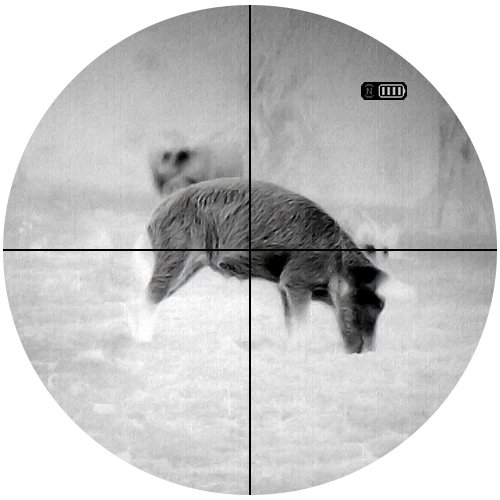
Best for timber and travel routes: ATN ThOR 6 640x512 2-16x
The ATN ThOR 6 640x512 2-16x keeps the full 640x512 sensor but drops to a 35mm lens and a 2-16x zoom, which widens the low end for scanning brushy edges and hog travel routes while still reaching a 3100m detection range. Its standout for hog hunters is the replaceable 18650 battery system — hot-swap a spare and an all-night sit over a feeder simply continues.
A wider view for pigs in cover
Hogs living in timber move along creek bottoms and trail systems, and you rarely see them coming from far off. The wider 2x low end gives you more field of view to catch a sounder slipping through the brush before you zoom to confirm. You keep the same 640 clarity and <=15mK sensitivity as the flagship, so once you settle on a pig the image quality is identical — you simply trade top-end reach for a friendlier scanning view in close country.
Sitting the feeder until they finally come
Pigs are patternless, and a productive hog sit can mean waiting hours for the sounder to show. The swappable 18650 system removes the one hard limit on that patience: when a set of cells runs low, you drop in fresh ones and keep hunting instead of packing up right before the pigs arrive. Recoil Activated Video rolls the whole time, so every shot is captured for review in the ATN Connect 6 app.
Who it is for — and who it is not
This one is for the hunter who runs feeders and creek-bottom timber and values battery swaps over the longest possible reach. It is not the pick if nearly all your hogs come on wide-open cropland at distance, where the 3-24x flagship's extra reach earns its keep.
Best light, mobile hog rig: ATN ThOR 6 384x288 2.5-20x
If you spot and stalk small groups rather than sit a fixed field, the ATN ThOR 6 384x288 2.5-20x steps the sensor down to 384x288 and the weight to 790 g / 1.74 lbs. Detection lands at 2300m — well beyond most timber and pasture shots — and you gain six color palettes to dial in contrast on whatever ground you are covering.
The scope you notice least on a stalk
Chasing hogs on foot means the rifle is in your hands for hours, and a lighter scope is the one you stop noticing. The 384 sensor is not a 640, but on a small group inside a couple hundred yards the on-screen difference is modest, and the <=15mK sensitivity and 50 Hz refresh carry straight over so a running pig still tracks clean. For run-and-gun hog control, weight saved is stamina kept.
Palettes for changing hog ground
Stalkers cross a lot of different terrain in one night — pasture, plowed dirt, brush. The six color palettes let you switch contrast to match: White Hot for pigs on cool grass, Black Hot to pull a hog out of a warm, heat-soaked field. Small adjustments, but they make a moving group easier to keep separated when you are hunting on the move.
Who it is for — and who it is not
This is for the mobile hog hunter who prizes a light, affordable rig for spotting and stalking small groups at closer range. It is not the pick if you specifically want a 640 sensor to sort big sounders at distance — for that, step up to one of the ThOR 6 640 models above.
How to choose the right hog thermal scope for you
- Match reach to your ground — open cropland rewards the 3-24x and its 3650m detection; timber and feeders do fine on the wider 2-16x.
- Favor resolution for big sounders — a 640 sensor is what lets you sort one pig from a packed group; the 384 is enough for small bunches up close.
- Weigh the power system — if you sit feeders for hours, the swappable 18650 build lets a spare set keep the night alive.
- Think about how you hunt — spot-and-stalk hunters feel every ounce, so the lighter 384 can beat a heavier 640 on foot.
- Plan to review your hunts — Recoil Activated Video and the ATN Connect 6 app turn every sounder into footage you can study later.
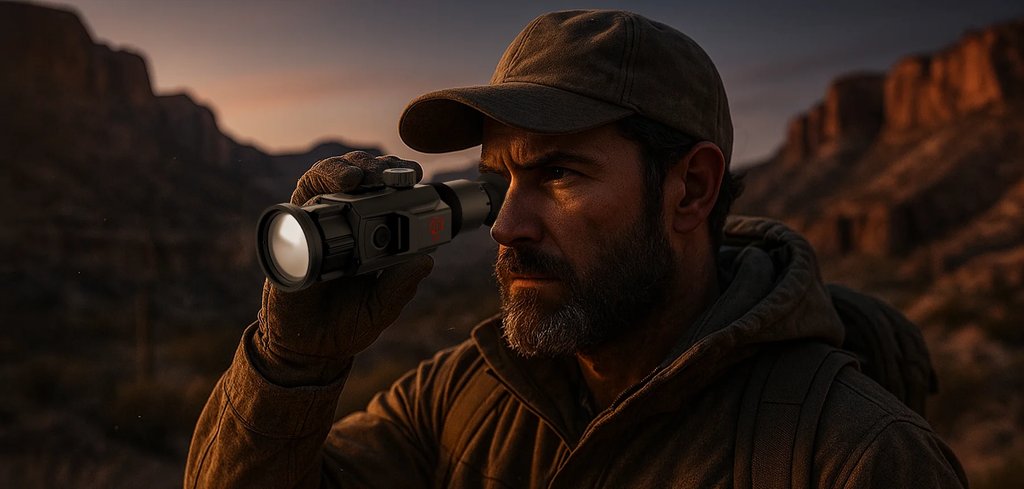
What a hog sit looks like through the ThOR 6
Picture a food plot cut into a stand of timber, a feeder ticking down at last light, wind steady into your face. You settle behind the ATN ThOR 6 640x512 3-24x at 3x and glass the treeline. The 640 sensor and 3650m detection range catch a string of warm bodies filing out of the timber long before they reach the feeder, so you have time to count them and read the group. As the sounder bunches up, you thumb the zoom toward the top of the band and the extra pixels let you separate a heavy boar from the sows working around him. Hot Point Tracking keeps him flagged as pigs cross in front of each other, SharpIR sharpens the outline so you confirm the shooter, and the 50 Hz refresh holds the picture clean when the group finally spooks and pours back into cover. Identify early, pick your pig, hold on it through the chaos — that is the sequence this scope is built for.
Setting up a ThOR 6 for hogs
A hog scope pays off only if it is set up for the way pigs behave. Mount it with enough eye relief for your usual shooting positions, then zero carefully at the distance you actually engage sounders — use Zeroing Freeze so your point of impact locks while you fire the confirming shots, which is a real time-saver in low light. Set Picture-in-Picture so a zoomed aiming window rides above your wide scanning view; on a big group that lets you keep an eye on the whole sounder while your reticle stays on one pig. Learn the palettes on a couple of sits so switching contrast becomes automatic when the ground changes. And let Recoil Activated Video run every time you are behind the scope, so a fast multi-shot opportunity on a sounder is captured start to finish without you fumbling for a record button.
Detection is not identification
With hogs it is tempting to shoot at the first warm shape that steps into a field, but detection range and identification range are not the same thing. At the far edge of that 3650m detection the ThOR 6 tells you something warm is there — it does not yet confirm it is a legal, safe target. Let the sounder work closer or zoom in until the 640 sensor resolves clear pig shapes before you commit. On mixed-use ground where livestock, dogs or other hunters may be about, that discipline matters as much as any spec.
Matching the pick to how the hogs behave
Hog behavior on your ground should drive the choice as much as raw distance. Big agricultural sounders that feed on open fields at range are the classic case for the ATN ThOR 6 640x512 3-24x: you need the reach to catch them entering the field and the resolution to sort a crowd. Pigs living in river-bottom timber, hitting feeders on unpredictable schedules, reward the wider low end and swappable batteries of the 2-16x, because the shots are closer and the sits are longer. If you mostly bump into small groups while covering ground on foot, the lighter 384x288 2.5-20x keeps the same SharpIR AI and <=15mK NETD without the bulk that wears you down over a night of walking. Log a few hunts, note whether your pigs come as big field herds or small timber bunches, and the right variant tends to pick itself.
One scope or a two-scope kit
If you can own only one hog scope, buy for the harder problem. Close timber forgives a scope that reaches too far, but open-field work punishes one that does not reach far enough, so a hunter split between both jobs is usually safer with the long-reach 3-24x. If the budget stretches to two, pair the 3-24x for open cropland stands with the lighter 384x288 2.5-20x for mobile timber work, and let each scope do what it is best at instead of asking one optic to cover every hog situation. Either way, buy for the hogs you actually hunt, not the longest shot you can imagine taking.
Common mistakes hog hunters make with a thermal scope
- Zooming in to search — cranking straight to the top of the band narrows your view and you miss pigs entering the edges; scan wide, then zoom to sort the group.
- Shooting into a bunched sounder blind — take the second to separate your pig with the 640 sensor and Hot Point Tracking before you press the trigger.
- Skipping a real zero — a scope zeroed roughly wastes its reach on hogs; use Zeroing Freeze and confirm at the range you actually shoot.
- Running one palette all night — sticking to White Hot on a warm, heat-soaked field throws away contrast that Black Hot would give you.
- Ignoring battery discipline — hog sits run long, so plan around the roughly 9-hour runtime and carry spares rather than quitting right before the sounder shows.
How we picked these ATN thermal scopes
These are an in-house comparison of ATN's own 6th-generation ThOR 6 scopes for hog hunting, not an independent lab review, so use them as a starting point and check the numbers against your own ground. We ranked on what actually decides a hog sit: sensor resolution and thermal sensitivity (NETD) for sorting pigs in a crowd, detection range for catching a sounder early, refresh rate for tracking a group when it blows, and weight and battery life for the way you hunt. Only the current ThOR 6 line was considered. The honest trade-off is simple — the 640 flagship reaches farthest and separates a packed sounder best but is the heaviest and priciest, while the 384 gives up range and pixels to stay light for stalkers. Who it is not for: anyone wanting a cheap toy for a single night rather than a scope that earns its place over a season of hog control.
Frequently Asked Questions
What is the best thermal scope for hog hunting?
For most hog hunters the ATN ThOR 6 640x512 3-24x is the best all-round pick. Its 640x512 sensor sorts one pig from a packed sounder, the 50 Hz refresh keeps a scattering group sharp, and the 3650m detection range spots hogs entering a field early. Hunters in tight timber may prefer the wider 2-16x version.
Why does sensor resolution matter so much for hogs?
Hogs arrive in groups and bunch up tightly, so you often need to pick one animal out of a crowd. A 640x512 sensor puts more pixels on the target, which resolves a packed sounder into individual pigs instead of one glowing mass, letting you choose your shooter with confidence.
Can a thermal scope see hogs in fog or a warm field?
Yes, though heavy fog shortens range. The ThOR 6's <=15mK NETD is a measure of sensitivity, and a low number keeps the picture usable when a river bottom fills with mist or a heat-soaked field radiates back at you, both common on hog ground.
How long can I sit a feeder on one battery?
Plan on roughly 9 hours of runtime. The ThOR 6 640x512 2-16x uses a replaceable 18650 system, so when a set of cells runs low you hot-swap a spare and keep hunting rather than packing up right before the sounder finally shows.
Is the 384 model good enough for hogs, or do I need a 640?
The 384x288 model is plenty for small groups at closer range, especially if you spot and stalk on foot and value the lighter weight. If you regularly face big sounders on open fields at distance, the extra pixels of a 640 sensor make sorting the group much easier.
Can I record my hog hunts through the scope?
Yes. Every ThOR 6 records on-board and includes Recoil Activated Video, which captures the moments around each shot automatically. The ATN Connect 6 app lets you stream the view and pull footage off the unit to review your sits later.
Which ThOR 6 should a new hog hunter buy first?
If your pigs work open cropland at range, start with the 3-24x. If they live in timber and hit feeders up close, the 2-16x is the smarter first buy. Choose the lighter 384 only if you hunt mostly on foot and do not need a 640 sensor.
Ready to gear up for hogs? Start with the ATN ThOR 6 640x512 3-24x — our top choice for the best thermal scope for hog hunting — or browse the full range of ATN thermal rifle scopes to compare sensors, lenses and sizes side by side. Every model runs SharpIR AI, Hot Point Tracking and the Connect 6 app, so you can read a sounder, pick your pig and stay on it from the first sit.
Created: August 10, 2026 · 10:05:21 UTC