I've sat behind a call for forty-five minutes waiting on a coyote that never showed the way I expected. He came in from the side, low, stopping every thirty yards to test the wind. If you're glassing through a monocular with one eye squinted shut for that long, you're not reading his behavior anymore — you're just trying not to blink at the wrong moment. That's the argument for thermal binoculars over anything single-eyed when you're hunting coyotes: two eyes, no fatigue, and enough time behind the glass to actually watch how the animal moves instead of just confirming it exists.
Most coyote hunting content treats the scope as the whole story. It isn't. The scope is where the night ends. The binocular is where it starts, and where it stays for most of the sit. A coyote coming to a call rarely walks a straight line to your muzzle — he circles, he checks wind, he hangs up at the edge of range and just watches. You need glass that lets you watch him back for as long as it takes, without your eye giving out before he commits. That's what the best thermal binoculars for coyote hunting for me is built for, and right now that's the ATN Binox-6 Dual 640 3-24x (MSBNB6635A).
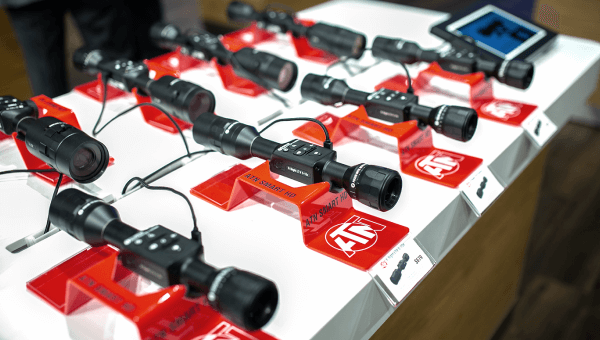
The ATN Binox-6 Dual 640 3-24x combines a 640×512 thermal sensor, a 4K daylight camera, and a built-in laser rangefinder in one binocular — built for the long, two-eyed glassing sessions that reading coyote behavior on the approach actually requires.
Quick answer: best thermal binoculars for coyote hunting
- Best overall: ATN Binox-6 Dual 640 3-24x (MSBNB6635A) — 640×512 thermal sensor, 3,100 m detection range, built-in LRF.
- Best for the money: ATN Binox-6 Dual 384 5.5-44x (MSBNB6335A) — same 4-in-1 platform on a 384×288 sensor at a lower price.
- Best for long stationary sits: ATN Binox-6 Dual 640 3-24x — ~8-hour battery life, two-eyed viewing built for fatigue-free watching.
- Best for confirming range before the shot: ATN Binox-6 Dual 640 3-24x — integrated 1,000-yard laser rangefinder, no second device needed.
- Budget-conscious pick: ATN Binox-6 Dual 384 5.5-44x — lower resolution, same core feature set.

Why two eyes beat one on a coyote stand
I started this company in a garage-sized space in Silicon Valley in 1995, and one lesson never changed: the device that wins is the one people can actually use for the full length of the job, not just the first five minutes. A monocular gets tiring fast when a coyote decides to take his time. You end up switching eyes, losing your place, missing the moment he breaks stride. A binocular doesn't have that problem. Depth perception is real with two eyes open, and on a coyote that's circling wide before committing, that depth cue tells you how far off he is without needing to check a rangefinder every ten seconds.
The other reason I like a multispectral unit specifically for coyote work: conditions change fast between glassing and calling. You set up in the last daylight, watch the terrain in 4K while there's still color to see, and as the light drops you're in thermal without missing the transition. One coyote hunt, one device, the whole time.
Thermal binocular comparison for predator work
| Model | Thermal sensor | NETD | Magnification | Detection range | Battery | Weight | Price |
|---|---|---|---|---|---|---|---|
| Binox-6 Dual 640 3-24x (MSBNB6635A) | 640×512 | ≤15 mK | 3-24x (8x digital) | 3,100 m | ~8 hrs | 730 g / 1.61 lbs | $3,955.00 |
| Binox-6 Dual 384 5.5-44x (MSBNB6335A) | 384×288 | ≤15 mK | 5.5-44x (8x digital) | 2,750 m | ~8 hrs | 720 g / 1.59 lbs | $3,185.00 |
Best overall for coyote hunting: ATN Binox-6 Dual 640 3-24x
Image quality
The 640×512 sensor at ≤15 mK NETD is what separates "something's moving out there" from "that's a coyote, and he just stopped to scent-check." A coyote's body temperature signature against cold ground or snow is usually strong, but the detail that tells you ears-up versus head-down, which way he's facing, whether he's about to bolt — that's resolution, not just heat contrast. SharpIR sharpens those edges in real time, and Wide Dynamic Range keeps his outline visible whether he's against a cold treeline or a sun-warmed field edge.
Range and magnification
3-24x optical range covers everything from a coyote hanging up at the tree line to one working the far edge of a cut field, and the 8x digital zoom lets you close in without moving your position and blowing the setup. ATN rates the 640 sensor's detection range at 3,100 m — more than enough to pick him up long before he's in range of the call, which gives you time to read his approach and decide whether to stay still or adjust.
Battery and build
Two swappable 18650 batteries deliver roughly 8 hours — a full night's sit without a mid-hunt battery change. Magnesium alloy housing, IP67-rated, rated -30°C to 55°C. Coyote season in a lot of places means frozen fingers and frozen ground; this thing doesn't care.
Smart features
Hot Point Tracking flags the hottest object in frame automatically, which matters when you're scanning a wide field fast and don't want to miss him working the edge in low contrast. The built-in laser rangefinder measures to 1,000 yards at ±1 m accuracy, so once he commits to the call, you already know the number without lowering the glass to grab a separate rangefinder — and losing him in that half-second.
Buy this if: you spend real time glassing before you ever call, and you want to read a coyote's approach instead of just detecting that one exists.
Skip it if: your coyote hunting is close-cover, fast-reaction work where you rarely glass more than a hundred yards out — a lighter, cheaper monocular might suit that style better.

Best for the money: ATN Binox-6 Dual 384 5.5-44x
Image quality
Same ≤15 mK sensitivity, same SharpIR and WDR processing, fewer pixels to work with at 384×288. For most coyote setups inside a few hundred yards, that's plenty of resolution to read behavior, not just confirm presence.
Range and magnification
5.5-44x magnification with the same 8x digital zoom stack, and a 2,750 m detection range — still well past realistic calling distance for most coyote setups. Same built-in 1,000-yard laser rangefinder as the 640 model.
Battery and build
Identical two-battery 18650 system, same ~8-hour runtime, same rugged magnesium housing at 720 g — barely lighter than the 640 model.
Smart features
Everything carries over from the 640: Hot Point Tracking, six color palettes, Wi-Fi streaming through ATN Connect 6, GPS and compass, 64 GB onboard recording.
Buy this if: your calling setups stay inside a few hundred yards and you'd rather save the difference for more nights in the field.
Skip it if: you're working big open ground where the extra resolution of the 640 buys you real decision-making time before the coyote closes distance.
How to choose a thermal binocular for coyote hunting
Think about how you actually call. If you're set up on open pasture or agricultural edges where coyotes come from 400-plus yards out, resolution at distance matters — that's the 640 sensor's job. If you're working brush lines and tight cover where most action happens under 300 yards, the 384 sensor identifies just as well and saves you money.
Terrain matters more than most people admit. Flat open country rewards magnification range and detection distance. Broken terrain and tree cover reward a wider field of view and fast scanning — you're not reaching for maximum zoom, you're trying to catch movement across a bigger slice of ground before he circles downwind of you.
Weight is a non-issue at this class — both Binox-6 Dual models sit around 730 g, light enough to hold up through an hour of glassing without your arms giving out. Budget honestly: a coyote hunter running multiple stands a week gets more out of the 640's extra range than someone hunting a handful of nights a season, where the 384 does the job without the extra spend.
One more thing I'd factor in: how you actually work a stand. If you're calling solo, you're doing everything yourself — glassing, ranging, watching wind — and the built-in rangefinder on either Binox-6 Dual model earns its keep by cutting a step out of that sequence. If you're hunting with a partner, the Wi-Fi streaming to a second phone or tablet through ATN Connect 6 means your caller can watch the same approach you're watching, which matters when the decision to call again or go silent has to happen fast and both of you need to be reading the same animal.

FAQ
What's the best thermal binocular for coyote hunting?
The ATN Binox-6 Dual 640 3-24x is built for it — a 640×512 thermal sensor, 4K daylight glass, and a built-in laser rangefinder in one two-eyed optic, suited to the long glassing sessions coyote calling demands.
Why use binoculars instead of a thermal monocular for coyotes?
A monocular forces one eye closed for extended periods, which fatigues fast during a long calling sit. Binoculars let both eyes stay open, reducing strain and giving you depth perception that helps judge a coyote's distance and approach angle.
How far can thermal binoculars detect a coyote?
On the Binox-6 Dual 640, ATN rates detection range at 3,100 m. That's spotting a heat signature — confident identification as a coyote specifically happens at a shorter distance depending on background clutter and the animal's posture.
Do I need a laser rangefinder built into my thermal binocular?
It saves you from lowering the glass and grabbing a separate device the moment a coyote commits to the call — exactly when you can least afford to lose visual contact. The Binox-6 Dual's built-in LRF ranges to 1,000 yards at ±1 m accuracy.
What thermal resolution do I actually need for coyote hunting?
A 384×288 sensor handles most calling setups inside a few hundred yards. A 640×512 sensor earns its keep in open country where coyotes hang up at longer range and you need more detail to read behavior before they close.
How long will a thermal binocular last on a night hunt?
The Binox-6 Dual runs approximately 8 hours per charge on two replaceable 18650 batteries, which covers a full night's sit without a battery swap.
Can thermal binoculars handle cold-weather coyote season?
The Binox-6 Dual is rated for -30°C to 55°C operation with an IP67 waterproof rating, built for the frozen ground and wet conditions common in peak coyote season.
What color palette works best for spotting coyotes at night?
White Hot is the default most hunters run because it renders a coyote's heat signature as a bright, high-contrast shape against a darker background, which is easy to read at a glance. The Binox-6 Dual also offers Black Hot, Iron Red, Alarm, Green Hot, and Sepia if conditions or personal preference call for a different palette.

Bottom line
I built this company on the idea that a device should work as hard as the person using it, not the other way around. Coyote hunting rewards patience and reading behavior over pure reaction speed, and that only happens if your glass doesn't wear you out before the animal commits. The ATN Binox-6 Dual 640 3-24x is what I'd carry to that stand. Check specs and availability on the Binox-6 Dual 640 product page, browse the full lineup on the thermal binoculars category page, or read our roundup of the best thermal binoculars overall if coyotes aren't your only target this season.