You're standing at the edge of a field at 2 a.m., and the gear question isn't "night vision or not." It's which format. A rifle scope, a handheld monocular, or a pair of goggles solve different problems, and picking the wrong one means fighting your equipment instead of the dark. If you're shopping for the best night vision device for your next season, the honest answer starts with what you're doing with your hands and eyes at that edge of the field, not with a single "best" model.
The best night vision setup depends on the task: a weapon sight like the ATN X-Sight 5 5-25x for taking a shot, a monocular for scanning and confirming, or goggles for moving and working hands-free. Match the format to the job first, then compare specs inside that category.
Quick answer: best night vision by category
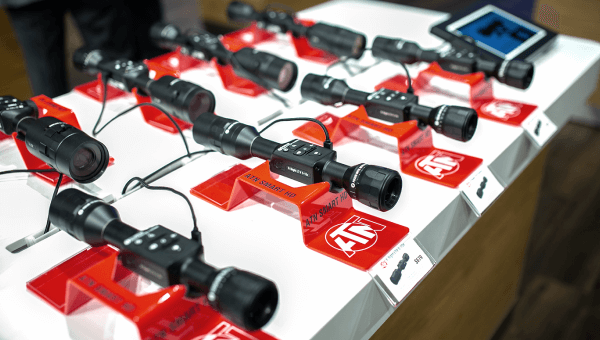
- Best overall / best for taking the shot: ATN X-Sight 5 5-25x — Smart Day & Night rifle scope with Ultra HD 4K+ resolution and a built-in ballistic calculator.
- Best for hands-free scanning and movement: ATN night vision goggles — worn on a helmet, freeing both hands for the walk in or a downed-animal recovery.
- Best single-eye device for scanning, mounting, or head use: ATN PVS14-3HFW monocular — one unit that works handheld, head-mounted, or behind a weapon optic.
- Best for long glassing sessions: a dedicated scope with high magnification range, so you're not squinting through low zoom at distant movement.
- Best for one-device simplicity: the X-Sight 5 again, since it covers day and night in the same housing without swapping optics.

Why the latest generation stands out
The current line of ATN smart optics moved past the grainy green-tube stereotype most people still picture when they hear "night vision." The X-Sight 5 runs an Ultra HD 4K+ sensor through ATN's Gen V Quad Core, which means the Night Vision Mode on the scope isn't a downgraded fallback — it's built to deliver a crisp, vivid image after dark, not just a usable one. That matters because a scope you can't identify an animal through at 100 yards isn't a scope you can ethically shoot with.
The same generational jump shows up across formats. The PVS14-3HFW monocular uses Gen 3, Auto-Gated tube technology with a FOM (Figure of Merit) rating of 2376+, which is the number that actually predicts how much detail you'll resolve in near-total darkness — not a marketing "HD" label. Auto-gating also means the tube reacts instantly when a headlight or muzzle flash crosses the field of view, instead of white-outing and leaving you blind for a few seconds. Whichever format you land on, look for that combination: a real resolution number, not just a resolution claim, and gating or processing that handles sudden light changes without punishing you.
Comparison: rifle scope vs. monocular vs. goggles
| Format | Primary use | Hands | Typical mount | Best for |
|---|---|---|---|---|
| Rifle scope (X-Sight 5 5-25x) | Aiming and taking the shot | On the gun | 30 mm rings, included | Hunters who need day and night in one optic with a ballistic calculator |
| Monocular (PVS14-3HFW) | Scanning, confirming, or aiming | Free, on helmet, or on weapon | Handheld, head mount, or weapons mount | Anyone who wants one device that moves between roles |
| Goggles | Moving and working hands-free | Both free | Helmet mount | Walking in, tracking, or recovery work in the dark |
Best overall: ATN X-Sight 5 5-25x
The X-Sight 5 5-25x earns the top spot because it does the one job that matters most after dark — putting a bullet where you're looking — better than a general-purpose device ever will. It's a dedicated Smart Day & Night Vision Rifle Scope, not a converted daytime optic.
Image quality
The scope runs an ATN 4K+ sensor at 4056x3040 with capture up to 30/60/120 FPS, pushed through the ATN Gen V Quad Core processor. In practice, that horsepower is what lets the Night Vision Mode stay clean instead of turning into a smeared mess the moment the magnification climbs. The 1280x960 micro display is the window you're actually looking through, and at this resolution the reticle stays sharp against the target instead of blurring into the background.
Magnification and range
5-25x magnification covers everything from a close feeder shot to a longer field crossing without switching optics. The field of view is 6.3 degrees, or 11 meters at 100 meters — wide enough to track a moving animal at the low end of the zoom range, tight enough at the top end to confirm what you're looking at before you commit to the shot.
Smart features and battery
The built-in Ballistic Calculator adjusts your reticle hold for your specific load, which removes the guesswork that used to come with digital optics. Recoil Activated Video automatically saves the moments before and after a shot without you touching a button. Bluetooth, WiFi streaming through iOS and Android, a 3D gyroscope, and an electronic compass round out the smart layer. Battery life runs up to 14 hours on the Li-ion pack, which is enough for a full night hunt without a mid-sit battery swap.
Build and weight
At 2.1 lb and 14.2 inches long, the scope carries like a traditional glass optic rather than a bulky electronics package. It's rated for -20°F to +120°F operation, and it ships with 30 mm standard rings, a sunshade, an IR850 illuminator, and a flip-open cap — everything you need to mount and go.
Buy this if you want one optic that handles day hunting and night hunting without a swap, and you need a ballistic calculator built into the glass. Skip it if your primary need is scanning or moving hands-free before you ever shoulder a rifle — that's a monocular or goggle job, not a scope job.

Best for hands-free work: night vision goggles
Goggles win the moment your task shifts from aiming to moving. Walking a fence line, tracking blood at your feet, or working a gate latch in the dark all require both hands, and a scope or a monocular you're holding up to one eye can't give you that. A binocular-style goggle mounted to a helmet frees both hands while still giving you the depth perception a single-tube device can't match, since two eyes reading the same scene reduces the eye strain that comes with hours of single-eye viewing.
The other reason goggles earn their own category instead of getting lumped in with monoculars: field of view. A wider FOV means less time spent turning your head to piece together a scene, which matters when you're picking footing on uneven ground in the dark. Generation and phosphor color also change the picture — white phosphor renders a scene closer to a black-and-white photo, which some people read faster than the traditional green tube image, especially in brushy terrain where subtle contrast differences are what separate a stump from a bedded animal. We cover the goggle lineup, generation differences, and field-of-view comparisons in a dedicated breakdown — see best night vision goggles for the full rundown.

Best single-eye flexibility: the monocular route
If you don't want to commit to a single format, a monocular is the middle ground. The right one works handheld for a quick scan, mounts to a helmet for hands-free glassing, and clips behind a weapon optic for a co-witnessed shot — all without buying three separate devices. That flexibility is the whole argument for a monocular over a dedicated scope or goggle when your nights don't look the same twice.
It also holds its natural night vision advantage in one eye while the other eye stays adapted to ambient light, which matters if you're moving between a lit truck cab and a dark trail, or checking a map with a red-lens flashlight without losing your night eye entirely. Add a magnifier lens to the front of the objective and the same handheld unit reaches further out for confirmation before you commit to a stalk. We go deep on that exact use case, including the lens accessories that extend it, in our best night vision monoculars guide.
How to choose: distance, terrain, weight, and budget
Start with distance. If you're taking shots past 150 yards regularly, you need the magnification range and stabilization of a dedicated scope — a monocular's low fixed power won't get you there. If most of your work is inside 100 yards or you're mainly identifying, not shooting, a monocular or goggle covers it without the recoil-rated housing of a scope.
Terrain matters more than people expect. Open fields reward a wider field of view at lower magnification, since you're tracking movement across a big area. Wooded or brushy terrain rewards a device you can bring to your eye quickly and move with — which usually means handheld or head-mounted over a rifle-mounted scope.
Weight adds up over a long sit or a long walk. A rifle-mounted scope adds weight to a gun you're already carrying; a goggle adds weight to your head for hours at a stretch. If you're hiking any real distance to your spot, test how the device feels after 20 minutes, not just when you first pick it up.
Budget should follow function, not the other way around. Buying a scope because it's the "best" device on a list, when what you actually need is a hands-free goggle for a recovery walk, means you paid for the wrong capability. Decide the task first, then shop inside that category.
FAQ
What is the best night vision device for hunting?
It depends on the task: a weapon sight like the X-Sight 5 5-25x is best for taking the shot, while a monocular or goggle is better for scanning, tracking, or moving hands-free before you ever raise a rifle.
Is digital night vision as good as traditional tube-based night vision?
Modern digital sensors like the ATN 4K+ used in the X-Sight 5 close much of the old gap, delivering a crisp Night Vision Mode image, while tube-based devices like a Gen 3 monocular still lead in raw low-light sensitivity for near-total darkness.
Can one night vision device cover both scanning and shooting?
A monocular comes closest, since models like the PVS14-3HFW can be handheld for scanning, head-mounted for hands-free work, or mounted behind a weapon optic for a shot — but a dedicated rifle scope still aims more precisely at longer range.
How much magnification do I need for night vision hunting?
The X-Sight 5 5-25x covers close feeder shots and longer field crossings in one range; if you're mainly scanning rather than shooting, a lower fixed-power monocular or goggle is usually a better fit than high magnification.
Does night vision work in complete darkness?
Yes — both digital Night Vision Mode optics and tube-based devices are designed to function with no ambient light, though tube-based Gen 3 devices like the PVS14-3HFW generally resolve more detail in the darkest conditions.
What's the difference between night vision and thermal?
Night vision amplifies available light (including infrared) to produce a visible image, while thermal reads heat signatures directly; the X-Sight 5 handles day and Night Vision Mode in one scope, which is a different technology path than a dedicated thermal optic.
Do I need a separate IR illuminator for night vision?
The X-Sight 5 ships with an IR850 illuminator included, which supplements the Night Vision Mode in low ambient light; tube-based monoculars like the PVS14-3HFW also include a built-in IR illuminator for total darkness.
Can I use the same night vision device on a helmet and on a rifle?
Only a monocular built for it can do both — the PVS14-3HFW switches between a head mount and a dedicated weapons mount, while a rifle scope like the X-Sight 5 stays mounted to the gun and a goggle stays mounted to the helmet.
Bottom line
Don't buy "the best night vision device" — buy the best device for what you're doing at 2 a.m. If that's pulling the trigger, the ATN X-Sight 5 5-25x gives you Ultra HD 4K+ resolution, a built-in ballistic calculator, and a Night Vision Mode built for the shot, not just for looking around. If your night looks more like scanning, moving, or working with both hands, start with our monocular and goggle guides instead. Check out the full ATN X-Sight 5 5-25x specs and pricing on the product page, or browse the complete lineup at ATN Smart HD Weapon Sights.