"Military grade" should mean the toughest job: identify a target at distance, in the dark, and know exactly how far it is. That takes resolution and ranging, not marketing. For the best military grade thermal monocular 2026 pick, the ATN BlazeHunter XD LRF 1280x1024 leads: the highest-resolution monocular in ATN's line, paired with a built-in laser rangefinder for exact distance.
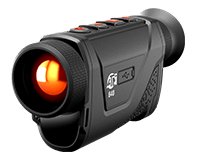
Best hands-free multi-role option: ATN Odin MFT LRF 640x480 - helmet-capable, multi-role, with ranging.
Best wide-scanning partner: ATN BlazeTrek 6 640x512 - a light, wide-view unit to find targets before you reach out with the XD.
Why ATN's 6th-gen BlazeHunter XD meets demanding standards
ATN's 6th-generation BlazeHunter XD meets demanding standards because it carries the resolution and tools that hard use requires. The 1280x1024 sensor packs far more dots into the picture than a 640 - the way a 4K screen holds detail a standard HD screen can't - so a distant target stays a recognizable shape when you zoom to 16x. A NETD of 15mK or better pulls a faint signature out of cool background, the measure of how small a temperature difference it detects, and detection past 3,400 meters means you pick up heat at distances most monoculars never reach. The built-in laser rangefinder then supplies the exact distance that turns a detection into actionable information.
For professional-style use, that resolution-plus-ranging pairing is what matters. Many monoculars detect heat far off; far fewer let you positively identify what it is and know precisely how far away it sits. The BlazeHunter XD does both, and it runs on two swappable batteries for 10-plus hours total, so it lasts the long, patient tasks demanding work involves.
Best military-grade pick: ATN BlazeHunter XD LRF 1280x1024
The ATN BlazeHunter XD LRF 1280x1024 is the choice for the most demanding identification-at-distance work. Its ultra-high-resolution sensor is the reason a target stays identifiable at 16x rather than dissolving, detection past 3,400 meters finds heat long before anything else would, and the built-in rangefinder confirms exact distance. Running two batteries for 10-plus hours total, it endures the long observation tasks that professional-style use demands.
Why resolution defines a serious monocular
At distance, resolution is what separates identification from a guess. Zoom only magnifies the detail the sensor captured, so the 1280x1024 core gives you real information to enlarge - posture, movement, outline - where a lesser sensor leaves a blur. That is the capability that earns the "military grade" label in practice, not on a sticker.
Who it's for - and who it's not
It's for the user who needs to identify and range targets at the longest distances and will carry a heavier, more capable unit to do it. It's not the pick for someone who needs hands-free operation on the move - that points to the Odin MFT - or for fast, close scanning where a lighter wide-view unit is handier.
Best hands-free option: ATN Odin MFT LRF 640x480
The ATN Odin MFT LRF 640x480 is the multi-role, hands-free alternative. Its 640 sensor and built-in rangefinder cover detection and ranging, and its compact, helmet-capable body works head-worn or handheld as the task changes. It doesn't match the XD's long-range resolution, but when you need both hands free to move and work, its versatility is the right kind of capable.
Best scanning partner: ATN BlazeTrek 6 640x512
The ATN BlazeTrek 6 640x512 is the light, wide-view partner to the XD. Its broad field of view finds heat fast, so you locate a target with the Trek and then bring up the BlazeHunter XD to identify and range it. At 320 grams it's easy to carry alongside a heavier primary unit, making a smart two-piece kit for demanding work over big ground.
Using a high-resolution monocular in the field
Identification at distance is a skill the XD's resolution lets you practice. At long range you read shape, posture, and movement more than fine detail, so study known subjects through the sensor at high zoom until those patterns are instant. Brace the unit on a tripod, pack, or fixed rest before you judge a target - at 16x even slight shake hides the cues you need - and let the picture settle before deciding.
Use the tools together. When you detect heat, range it to know the exact distance, then decide whether to observe, reposition, or act on that information. Watch the wind and the target's direction of travel as you plan, and manage power by carrying spare batteries and swapping on your own schedule. The XD's reach usually buys you time - use it to gather information first and move deliberately second.
How to choose a demanding-use thermal monocular
Choose for identification distance and ranging, not just detection. The serious pick tells you what a distant signature is and how far away it sits.
- Sensor resolution - the single most important spec for identifying targets at distance; higher is better.
- Rangefinder - a built-in laser turns a distant detection into an exact, actionable distance.
- Detection range - more range means earlier awareness of activity far out.
- Durability and battery - hard use needs a rugged body and long, swappable runtime.
- Magnification - useful only when backed by resolution; pair high zoom with a high-resolution sensor.
Getting the most from a high-resolution unit
A high-resolution monocular rewards operators who treat identification as a trained skill. At distance you read shape, posture, and movement more than fine features, so spend time studying known subjects through the 1280x1024 sensor at high zoom until those patterns are instant. Learn how the different palettes render a subject against various backgrounds, and practice switching to whichever one gives the cleanest separation for the conditions. The resolution gives you the raw detail; your trained eye is what turns that detail into a confident call.
Stabilize and sequence your workflow so the unit's reach actually pays off. Brace the monocular on a tripod, pack, or fixed rest before you judge anything at 16x, because even slight shake hides the cues you rely on at that magnification. When you detect heat, range it to fix the exact distance, then decide whether to observe, reposition, or act - information first, movement second. Carry spare batteries and swap on your own schedule so a long observation task never ends because the power did, and the XD's reach becomes a genuine advantage rather than an impressive spec.
It also helps to think of the BlazeHunter XD as the long-range half of a two-piece kit rather than a do-everything unit. A high-resolution monocular is heavier and narrower in view than a quick scanner, so pairing it with a light, wide-field spotter lets each tool play to its strength: sweep fast and wide to find heat, then bring the XD up to identify and range what you found. That division keeps your eyes fresh over a long task and stops you from missing nearby activity while you're focused far out. For anyone covering big, varied ground, the find-wide-then-reach-far habit is what turns the XD's resolution and rangefinder into confident calls instead of merely impressive detections, and it's how demanding users actually run their optics in the field.
Durability and consistency round out what 'grade' should really mean. A serious monocular has to give the same clean picture on the last hour of a task as the first, in weather that would fog or blind lesser gear, and survive being carried, braced, and knocked around. The BlazeHunter XD's sealed, rugged body and low-NETD sensor are built for exactly that kind of repeatable performance, and its swappable batteries mean a long observation task is limited by how many cells you carry, not by a single charge. When a tool has to be trusted in conditions that don't forgive failures, that reliability - not any single headline number - is what separates a genuinely capable unit from a spec sheet, and it's why resolution plus ranging plus ruggedness together define the pick.
How we picked these ATN monoculars
We judged only ATN's current 6th-generation monoculars for demanding, professional-style use, prioritizing identification at distance and ranging. The criteria were sensor resolution, rangefinding, detection range, durability, battery life, and usable magnification backed by resolution - weighed for identifying and ranging targets far out rather than close scanning. The honest trade-off is reach and detail versus weight and simplicity: the BlazeHunter XD is the most capable at distance but is heavier than a hands-free or wide-scanning unit and overkill for close work. This is an in-house comparison of ATN's own monoculars, not an independent lab test, so match the pick to the distances and tasks you actually face.
Frequently Asked Questions
What is the best military grade thermal monocular in 2026?
The ATN BlazeHunter XD LRF 1280x1024. Its ultra-high-resolution sensor keeps distant targets identifiable at zoom, detection reaches past 3,400 meters, and a built-in laser rangefinder gives an exact distance for demanding use.
Why does resolution matter for a military-grade monocular?
Because identifying a target at distance depends on detail, and zoom only magnifies what the sensor captured. A 1280x1024 sensor gives real detail to enlarge, so at 16x you see a recognizable shape instead of a blur.
Does the BlazeHunter XD have a rangefinder?
Yes, a built-in laser rangefinder. It measures exact distance to a target through the optic, turning a long-range detection into actionable information without a separate device.
How long does the BlazeHunter XD run?
About 10-plus hours total on two swappable batteries, roughly five hours each. Swapping cells keeps it running through the long observation tasks demanding use involves.
Is the BlazeHunter XD good for hands-free use?
It's a handheld unit built for maximum detail and reach. For hands-free, helmet-capable operation on the move, the Odin MFT LRF is the better fit, and some users carry both.
How far can it detect a target?
Detection reaches past 3,400 meters, well beyond most monoculars. Positive identification happens closer than detection, which is exactly where the high-resolution sensor proves its worth.
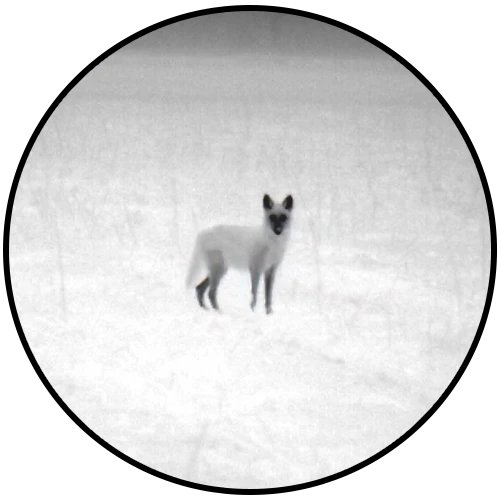
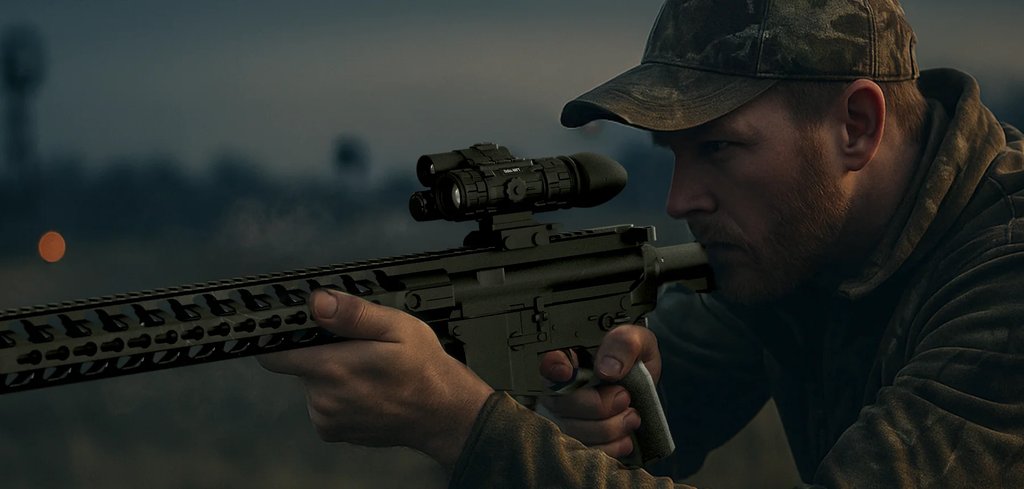
When the job is to identify and range at distance, reach for resolution. See the ATN BlazeHunter XD LRF 1280x1024 and compare it across the ATN thermal monocular lineup to build the capability your work demands. Pair reach with ranging, brace for steady long-range reads, and you'll identify what others only detect.
Created: July 8, 2026 · 09:02:56 UTC