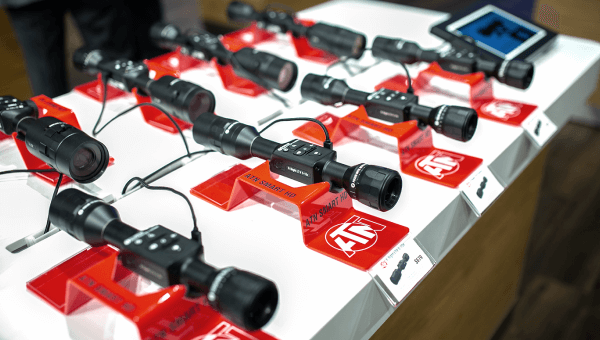
Best Cheap Thermal Scope for Raccoon and Possum Control...

If raccoons are raiding your chicken coop at 2 AM or possums are tearing through your trash and garden every night, you already know that daytime solutions do not cut it. These animals are almost entirely nocturnal, and trying to manage them with a standard scope and a flashlight is a losing game. What you need is a thermal scope for hunting that lets you see heat signatures in complete darkness, through brush, and in any weather condition.
The problem most people run into is cost. Quality thermal optics have historically cost thousands of dollars, putting them out of reach for anyone dealing with a nuisance animal problem on a reasonable budget. That has changed. In 2026, the ATN ThOR LT 160 stands out as the clear top pick for anyone who wants capable thermal performance without spending a fortune. It is the cheapest thermal scope option that still delivers real-world results in the field.
This guide breaks down exactly what the ATN ThOR LT 160 offers, why it works so well for raccoon and possum control specifically, and what you need to know before you buy.
Why Raccoon and Possum Control Demands a Night Hunting Thermal Scope
Raccoons and possums operate almost entirely after dark. They are smart, cautious, and fast-moving once they detect a threat. Traditional night vision depends on ambient light or an IR illuminator, which can tip off animals and is often inconsistent in heavily wooded or rural settings.
A night hunting thermal scope works differently. Instead of amplifying light, it detects body heat. A raccoon hiding in tall grass or a possum tucked under brush still radiates a heat signature that shows up clearly on a thermal display. You do not need moonlight, you do not need a torch, and you do not need to wait for the animal to step into a clearing. You see them where they are, when they are active.
For property protection and pest management, this changes everything. You can scan a field or treeline in seconds, identify targets at distance, and make ethical, accurate shots in conditions that would otherwise make a clean harvest impossible.
ATN ThOR LT 160 Review 2026: What You Are Actually Getting
The ATN ThOR LT 160 review 2026 picture is straightforward: this is a purpose-built entry-level thermal riflescope that strips away premium extras to deliver core thermal imaging performance at a price point that makes sense for a landowner or property manager who does not need military-grade capability.
ATN positioned the ThOR LT as their accessible thermal option, designed for hunters who are stepping into thermal imaging for the first time. It uses a 160x120 thermal sensor with a 12 micron pixel pitch, which is the same pixel pitch technology used in higher-tier ATN platforms. The sensor detects heat differences and renders them on a clear OLED display, giving you a usable thermal picture even at range.
As an entry level thermal scope, the ThOR LT 160 does not include advanced features like ballistic calculators, laser rangefinders, or onboard video recording. What it does include is accurate heat detection, multiple color palettes, digital zoom, a reticle system that actually works under magnification, and ATN's proven build quality in a lightweight package.
For raccoon and possum work, those are exactly the features that matter. You are not shooting at 600 yards. You are clearing out a chicken run, scanning a fence line, or covering a bait station at 50 to 150 yards. The ThOR LT 160 handles those engagements reliably.
ATN ThOR LT 160 Specs: The Numbers That Matter
Here is a breakdown of the ATN ThOR LT 160 specs that directly affect how the scope performs in the field for nuisance animal control.
Sensor Resolution: 160x120
A 160x120 thermal sensor is considered entry level in the current market, but it is more than sufficient for detecting raccoon and possum-sized heat signatures at typical engagement distances. At 50 to 100 yards, which covers most backyard and farm scenarios, the image is clear enough to positively identify your target and make a clean shot. You will not get the razor-sharp detail of a 384x288 or 640x512 sensor, but you will get a thermal image that shows you exactly where the animal is and what direction it is moving.
Pixel Pitch: 12 Micron
The 12 micron pixel pitch is a significant spec for a scope at this price point. Smaller pixel pitch means more pixels packed into the same sensor area, which translates to a sharper, more detailed image relative to sensor resolution. This is the same pixel pitch architecture used across ATN's more advanced ThOR 6 platform, which gives the ThOR LT 160 better image quality than many competing entry-level scopes using older 17 or 25 micron sensors.
Digital Zoom
The ThOR LT 160 offers digital zoom, giving you magnification flexibility for scanning at distance and then zooming in for target confirmation. For varmint control work where shots typically fall between 30 and 150 yards, the zoom range covers everything you need without over-complicating the controls.
Multiple Color Palettes
Multiple viewing modes including White Hot, Black Hot, and color options give you flexibility depending on environmental conditions. White Hot is the most commonly preferred palette for identifying animals against a cool background. Black Hot works well in warm ambient conditions where the background and target temperatures are closer together. Having the ability to switch modes in the field is a meaningful operational advantage.
Battery Life and Build Quality
The ThOR LT 160 runs on standard batteries and is built to ATN's typical field-ready standard, meaning it can handle the recoil of common rifle calibers and the environmental conditions typical of night hunting operations. The scope is lightweight, which matters when you are holding it steady for extended scanning sessions or moving around a property at night.
Why the ATN ThOR LT 160 Is the Cheapest Thermal Scope Worth Buying in 2026
The cheapest thermal scope category is full of products that underdeliver. There are no-name imports with unproven sensors, poor build quality, and nonexistent customer support that can look attractive on a spec sheet but fall apart in practice. The ATN ThOR LT 160 sits at the entry-level price point but is backed by a company with a long track record in thermal and night vision optics.
What makes the ThOR LT 160 worth the investment over cheaper alternatives comes down to a few critical factors.
- ATN brand reliability. ATN has been producing thermal and night vision equipment for decades. Their products are used by hunters, law enforcement, and property managers across North America. When you buy into the ATN ecosystem, you are buying a scope backed by real engineering and real customer service.
- 12 micron pixel pitch technology. Many budget thermal scopes in the same price range use older, lower-quality sensors. ATN's use of 12 micron pixel pitch at this price point is a genuine technical advantage that shows up in image clarity.
- Practical feature set for varmint work. The ThOR LT 160 does not try to be everything. It focuses on doing the core job, detecting heat signatures and helping you make accurate shots at night, without adding complexity or cost from features most nuisance hunters will never use.
- Recoil-rated construction. Budget thermal scopes often fail under rifle recoil. ATN rates the ThOR LT series for the recoil levels typical of rifle hunting, which means it will hold zero and stay functional over repeated shooting sessions.

Field Performance for Raccoon and Possum Control
Using the ATN ThOR LT 160 as a thermal scope for hunting nuisance animals like raccoons and possums in a real-world property setting, the scope performs exactly as you would expect from a well-designed entry-level thermal.
Scanning a field edge or fence line at night, raccoon-sized heat signatures are clearly visible at 100 yards in White Hot mode. The image has enough contrast to distinguish the animal from the background, confirm its size and movement direction, and place a shot confidently. At 50 yards, which covers most chicken coop or garden raids, the image is sharp enough to identify the target with certainty before you engage.
Possums are typically encountered at closer range, often under a structure, in a garden bed, or along a fence. The ThOR LT 160 handles these close-range, cluttered environments well. Even through vegetation, the heat signature of a possum is distinct enough to track, and the scope's zoom capability lets you close in on the target for precise shot placement.
One practical note: raccoons and possums rarely offer long, stationary shot windows. They move, they freeze, and they move again. The ThOR LT 160's real-time thermal display tracks that movement naturally, which is a significant advantage over any non-thermal night hunting setup that depends on the animal staying still in a beam of light.
Who Should Buy the ATN ThOR LT 160
The ATN ThOR LT 160 is the right choice for a specific type of buyer. If you match any of these profiles, this scope makes sense for your situation in 2026.
- Landowners and property managers dealing with ongoing raccoon or possum problems who need a reliable, affordable solution that works every night without complicated setup.
- First-time thermal buyers who want to step into thermal imaging without committing to a premium-priced scope before they have hands-on experience with the technology.
- Hunters focused on close-to-mid range varmint work where the 160x120 sensor resolution is more than adequate for the engagement distances involved.
- Budget-conscious buyers who understand the limitations of an entry-level sensor but want the build quality, brand support, and technical foundation that ATN provides over no-name alternatives.
The ThOR LT 160 is not the right scope if you need to engage targets at 300 yards or beyond, if you need built-in video recording for documentation purposes, or if you want the advanced smart features found in ATN's ThOR 6 series. For those applications, stepping up to the ThOR 6 platform is worth the additional investment.
ATN ThOR LT 160 vs. Higher-Tier ATN Platforms: Understanding the Difference
Understanding where the ThOR LT 160 fits in the broader ATN lineup helps set accurate expectations. ATN's ThOR 6 series, for example, offers 384x288 or 640x512 resolution sensors with NETD ratings of 15mK or better, SharpIR AI-enhanced imaging, full HD OLED displays, onboard video and audio recording, built-in Wi-Fi, recoil-activated video, hot point tracking, laser rangefinder options, and ballistic calculators on LRF models.
The ThOR 6 mini, another option in ATN's 2026 lineup, brings that same 6th Generation thermal core into a compact package weighing under 500 grams, with sensor options from 256x192 up to 640x512, detection ranges from 1200 meters to 3500 meters depending on configuration, and a full smart feature set including SharpIR AI enhancement, Wi-Fi connectivity, RAV recording, and up to seven hours of battery life.
The ThOR LT 160 deliberately sits below these platforms. It gives up resolution, smart features, and extended detection range in exchange for a significantly lower price point. For raccoon and possum work at typical property distances, those trade-offs are entirely acceptable. The core thermal capability that matters most for this application, detecting warm-bodied animals in total darkness at practical hunting distances, is present in the ThOR LT 160.
If your property management needs grow, or if you want to expand into longer-range predator control for coyotes or hogs, the ThOR 6 series provides a clear upgrade path within the same ATN ecosystem you are already familiar with.
Setting Up the ATN ThOR LT 160 for Maximum Performance
Getting the most out of the ThOR LT 160 for night hunting thermal scope use requires a few setup decisions that will significantly affect your results in the field.
Zeroing
Zero the scope at a distance that matches your most common engagement range. For most raccoon and possum work, a 50-yard zero gives you practical accuracy from contact distance out to 100 yards with minimal holdover. Use a heated target or a target in sunlight to maximize thermal contrast during the zeroing process.
Color Palette Selection
Start with White Hot for most night hunting conditions. Switch to Black Hot if ambient temperatures are warm and you are finding it harder to distinguish animal heat signatures from the background. Black Hot often provides better contrast in summer months when ground and vegetation temperatures are elevated.
Magnification Management
Use the lowest effective magnification for scanning to maximize your field of view, then zoom in once you have identified a potential target. Digital zoom on a 160x120 sensor will show pixelation at maximum zoom, so use higher zoom settings for target confirmation and shot placement rather than for primary detection.
Mounting
Mount the ThOR LT 160 using quality 30mm rings on a Picatinny rail. A secure, properly torqued mount is critical for maintaining zero under repeated recoil. Do not cut corners on the mounting hardware, as this is the most common cause of scope zero shift in the field.
Frequently Asked Questions About the ATN ThOR LT 160
Is the ATN ThOR LT 160 good enough for regular raccoon control?
Yes. At the distances where raccoon and possum encounters happen on most properties, the 160x120 sensor provides clear enough imaging for confident target identification and accurate shot placement. It is a capable tool for the specific job of nocturnal nuisance animal control at close to mid range.
How far can you detect raccoons with the ThOR LT 160?
Detection range depends on conditions, but a raccoon-sized heat signature is typically detectable at 150 to 200 yards with the ThOR LT 160. Confirmed identification and confident shot placement is most reliable within 100 yards with this sensor resolution.
Does the ThOR LT 160 work in rain and fog?
Thermal imaging performs in fog, rain, and darkness because it detects heat rather than light. The ThOR LT 160 maintains detection capability in weather conditions that would completely defeat a traditional scope or night vision system. Heavy rain can reduce thermal contrast slightly, but the scope remains functional and useful.
Can the ThOR LT 160 be used on an AR-platform rifle?
Yes. The ThOR LT series is rated to handle typical centerfire rifle recoil, including AR-platform calibers commonly used for varmint and nuisance animal control such as .223/5.56 and .22-250.
The Bottom Line: Best Entry Level Thermal Scope for Varmint Control in 2026
For anyone dealing with nocturnal nuisance animals in 2026, the ATN ThOR LT 160 is the clearest answer to the question of how to get capable thermal performance without overspending. It is the cheapest thermal scope from a proven manufacturer that actually delivers results in the conditions where raccoons and possums operate.
The ATN ThOR LT 160 review 2026 case is straightforward: solid build quality, a 12 micron sensor that punches above its weight for an entry level thermal scope, multiple color palettes for adapting to different conditions, and ATN's track record behind the product. It does exactly what nuisance hunters need it to do, showing them where the animals are in total darkness so they can act decisively.
If your needs eventually grow toward longer-range predator control or you want a full-featured smart scope with AI image enhancement, Wi-Fi connectivity, and onboard recording, ATN's ThOR 6 and ThOR 6 Mini platforms offer a clear upgrade path with the same quality foundation. But for raccoons and possums on a budget, start here. The ThOR LT 160 is the right tool for the job.
Shop ATN and check current pricing on the ATN ThOR LT 160 directly at atncorp.com to get the most accurate availability and bundle options for 2026.