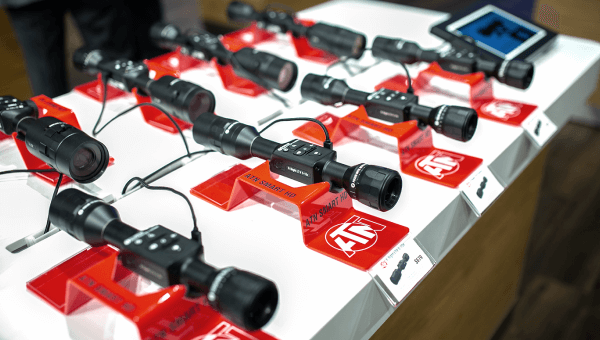
Best Cheap Thermal Scopes for Coyote Hunting in 2026: Budget Picks That Work
 Let's be direct about something: cheap thermal scopes have a mixed reputation, and some of it is earned. There are options in the budget tier that genuinely disappoint in the field — weak image quality, shaky zeros, and battery life that dies before the coyotes come in. But writing off every affordable thermal option as junk misses the bigger picture.
The thermal optics market in 2026 has matured considerably. Prices have dropped, competition has increased, and the performance floor for entry-level and mid-range options is meaningfully higher than it was a few years ago. The goal when searching for the best cheap thermal scope for coyote hunting should not be finding the absolute lowest price. It should be finding the best combination of reliable detection, usable image quality, practical battery life, and durable construction for a budget that makes financial sense.
That is a solvable problem in 2026 if you know what to look for and what to avoid. This guide covers both.
What "Cheap" Really Means in Thermal Scopes in 2026
In thermal optics, cheap is a relative term. What counted as mid-range three years ago now sits closer to the budget tier as technology costs have fallen. That shift is good news for hunters shopping with limited budgets — but it does not eliminate the trade-offs that come with lower price points.
An inexpensive thermal scope in 2026 typically means some combination of the following compromises: lower sensor resolution, shorter detection distance, a less sensitive thermal core, a smaller or lower-quality display, fewer smart features, shorter battery life, or lighter build materials. Not all of these compromises matter equally for every hunter. A coyote caller who works inside 100 yards on a small farm cares much less about maximum detection range than a hunter covering open fields at 300 yards.
Understanding which trade-offs you can absorb and which ones will cost you shot opportunities is the core of smart budget thermal shopping in 2026. The worst outcome is buying something so compromised that it fails to perform under actual hunting conditions — at that point, the money spent on a cheap scope could have been part of a better investment.
Quick Picks: Best Cheap Thermal Scopes for Coyote Hunting in 2026
Here is a practical roundup by category for hunters evaluating budget thermal options in 2026.
- Best Overall Cheap Thermal Pick: ATN ThOR 6 Mini (256x192 model) — Entry point into the 6th generation thermal platform from ATN. Weighs around 500 grams, Picatinny rail mount included, up to eight hours of battery life from a replaceable 18650 cell, SharpIR AI image enhancement, and basic smart features. A practical and honest entry into capable thermal for hunters on a tighter budget.
- Best Compact Budget Pick: ATN ThOR 6 Mini (256x192 model) — The compact housing and Picatinny mount make it easy to fit onto most rifles without additional hardware. Keeps rifle weight additions manageable at around 500 grams.
- Best for Beginner Coyote Hunters: ATN ThOR 6 Mini (256x192 model) — Simple 3-button controls, Zeroing Freeze for easy sighting in, and enough detection capability for hunters learning how coyotes respond to calls at normal engagement distances.
- Best for Mobile Calling Setups: ATN ThOR 6 Mini — Light weight and compact form factor make it practical for hunters who walk to stands or change positions between setups. Does not upset rifle balance the way a heavier full-size thermal scope can.
- Best Value for Occasional Predator Hunters: ATN ThOR 6 Mini (256x192 model) — Hunters who go out a handful of nights per season get real thermal capability without the cost of a full-featured premium optic they may not fully utilize.
- Best Step-Up Option Without Going Premium: ATN ThOR 6 (384x288 model) — For hunters who can stretch the budget slightly, the full-size ThOR 6 at the 384x288 level offers meaningfully better sensor sensitivity, a longer detection range, a larger OLED display, and approximately nine hours of battery life. A strong option for hunters who want more performance than the entry-level tier provides without paying for the top-end configurations.
Buyer's Guide: What to Look for Before Buying a Cheap Thermal Scope
Shopping for an entry-level thermal riflescope requires honest evaluation of what each specification means in practice. Here is what actually matters when the budget is limited.
Sensor Resolution
Resolution determines the amount of thermal detail captured. At the budget end, 256x192 is the common entry point. It is functional for close to mid-range coyote hunting but shows its limitations at longer distances and in low-contrast conditions. The 384x288 step up provides meaningfully more detail and detection capability. Know what resolution you are buying and what trade-offs come with it.
Detection Range vs. Identification Range
These are not the same number. Detection range is how far the scope can see a heat source. Identification range — close enough to confirm the target species before shooting — is considerably shorter. Budget scopes with lower-resolution sensors narrow the identification window faster than higher-resolution alternatives. For hunters who need to confirm their target before taking the shot, this gap matters.
Refresh Rate
A 50 Hz refresh rate produces smooth motion when tracking moving coyotes. Lower refresh rates create choppy images on fast-moving targets. For a thermal scope that will be used on actively called or running coyotes, 50 Hz is worth prioritizing even in the budget tier.
Display Clarity
OLED displays provide better contrast, faster response, and more detail than older LCD technology. In the 2026 budget thermal market, some entry-level options have stepped up to OLED. Confirm display type before purchasing — the difference is visible in the field, particularly in low-contrast conditions.
Battery Life and Replaceability
Short battery life is one of the most common and frustrating failures in cheap thermal scopes. Confirm actual rated runtime before purchasing, and strongly prefer scopes with a replaceable battery system. Being able to carry a spare 18650 cell and swap it in the field costs almost nothing and completely eliminates battery anxiety on longer hunts.
Weight and Rifle Balance
Even budget thermal scopes add noticeable weight to a rifle. Compact options in the 500 to 580 gram range cause less disruption to rifle handling than full-size alternatives. For hunters running lighter rifles or walking setups, scope weight is not a minor consideration.
Mounting System
Confirm that the scope's mounting system is compatible with your rifle before purchasing. Some scopes include a mount; others require separate ring purchase. Scopes with Picatinny rail mounts fit most rifles directly without additional hardware.
Ease of Zeroing
Zeroing Freeze — which pauses the displayed image at the moment of impact for precise reticle adjustment — makes zeroing thermal scopes significantly faster and less frustrating. This feature matters especially for hunters new to thermal optics who may not have a routine for zeroing in the dark.
Menu Simplicity
A thermal scope with confusing menus that require three hands and full concentration to operate in the dark is a liability in the field. Prioritize scopes with simple, intuitive controls that work with gloves on. Three-button interfaces with logical navigation are a practical benchmark.
Weather Resistance
Coyote hunting season runs through rain, fog, frost, and cold. IP67 waterproofing is the standard to look for on any thermal scope intended for real hunting use. Budget scopes with no waterproofing rating are a gamble in wet or cold conditions.
Durability and Build Materials
Magnesium alloy housings are more durable than plastic alternatives and are found on quality budget and mid-range thermal scopes. Confirm housing material and recoil rating before mounting on harder-kicking rifles.
Warranty and Support
A budget thermal scope from a manufacturer with documented warranty support and a real service infrastructure is a safer investment than a lower-cost import with no meaningful support. If the scope fails after the first season, warranty coverage is the difference between a repair and a full replacement cost.
ATN ThOR 6: A More Capable Budget-Minded Option
The ATN ThOR 6 sits above the true entry-level tier but remains within reach for hunters who want meaningfully more capability than a bare-minimum thermal scope delivers. For hunters who call coyotes regularly, hunt varied terrain, and care about image quality and field performance over time, it represents a step up that pays for itself across a full season of use.
The ThOR 6 is built on a 6th generation thermal core with sensor options at 384x288 and 640x512, both featuring ultra-sensitive NETD sensors rated at 15mK or better on a 12-micrometer pixel pitch. That sensor sensitivity matters in the conditions where budget thermal scopes often fall short — low temperature differentials on warm autumn nights, early-morning fog, or hunting terrain where the ground and the coyote are nearly the same temperature.
SharpIR AI image enhancement processes the thermal image in real time, automatically improving edge definition and target contrast without any manual input. For a hunter new to thermal who is still learning to interpret the image, this automatic processing reduces the gap between what the sensor captures and what the shooter can act on confidently.
Hot Point Tracking highlights the hottest object in the field of view automatically, which in most predator hunting situations means the incoming coyote. Zeroing Freeze simplifies the zeroing process. Recoil Activated Video captures footage without any button interaction during the shot. The dual 18650 battery system delivers approximately nine hours of runtime with replaceable cells. IP67 waterproofing, a magnesium alloy housing, and a 6,000-joule recoil rating round out a durable, field-ready package.
Best fit: Hunters who call coyotes with some regularity, want stronger thermal performance than the entry-level tier provides, and value image quality, simple controls, and a feature set that will remain useful as their thermal hunting experience grows. Not the cheapest option available, but arguably the best value for hunters who take predator hunting seriously.
ATN ThOR 6 Mini: A Compact Choice for Budget-Conscious Hunters
For hunters looking for a cheap but reliable thermal optic that does not sacrifice the features that matter most in the field, the ATN ThOR 6 Mini is worth understanding carefully before dismissing it as too expensive or overlooking it as too simple.
The ThOR 6 Mini brings the same 6th generation thermal platform into a significantly smaller and lighter package. At 500 to 580 grams depending on configuration, it is compact enough to mount on most rifles — bolt guns, ARs, and lightweight hunting platforms alike — without creating the muzzle-heavy handling problems that full-size thermal scopes can cause on lighter builds.
It is available in three sensor configurations. The 256x192 entry model with a 20mK NETD enhanced-sensitivity sensor is the most accessible price point in the Mini lineup. The 384x288 and 640x512 options with 18mK NETD high-sensitivity sensors step up in performance and price. All three configurations run on the same 12-micrometer pixel pitch thermal core with SharpIR AI image enhancement, Hot Point Tracking, Picture-in-Picture, Reticle Transparency Control, Zeroing Freeze, multiple weapon profiles, Recoil Activated Video, built-in Wi-Fi via the ATN Connect 6 app, 64 GB internal storage, and a replaceable 18650 battery.
The 256x192 model uses a 0.32-inch OLED display at 800x600 resolution and delivers up to eight hours of battery life. The higher-resolution models step up to a 0.49-inch OLED display at 1920x1080 with approximately seven hours of runtime. All models mount via Picatinny rail directly, and the housing is rated to IP67 and minus 30 degrees Celsius.
For a hunter who wants a compact, capable thermal optic from an established manufacturer with real warranty support — and wants to keep the total cost as low as possible within those constraints — the ThOR 6 Mini 256x192 is the honest starting point to evaluate in 2026.
Comparison Table: ATN ThOR 6 vs ATN ThOR 6 Mini
| Scope / Option | Best For | Main Value Point | Possible Trade-Off | Ideal Hunter Type |
|---|---|---|---|---|
| ATN ThOR 6 Mini (256x192) | Close to mid-range setups, beginner thermal hunters, lightweight rifles | Lowest entry cost in the ThOR 6 Mini line; 500 g weight; Picatinny mount; 8-hour battery | Smaller display; limited detection range vs. higher-resolution models; identification range narrows faster at distance | Budget-focused beginner, occasional hunter, or mobile caller who primarily works inside 150 yards |
| ATN ThOR 6 Mini (384x288) | Mobile hunting, AR builds, mid-range calling setups | Full 1920x1080 OLED display; 18mK sensor; strong feature-to-weight balance; detection to 2,300 m | Higher cost than 256x192 entry model; single battery with ~7-hour runtime | Experienced mobile hunter who wants compact thermal with full smart feature set |
| ATN ThOR 6 (384x288) | Open country, varied terrain, hunters who go out regularly | 15mK sensor sensitivity; 9-hour battery; larger OLED display; full smart feature set; strong detection range | Heavier at 1.74 to 1.89 lbs; uses 30mm rings not included; higher investment than Mini | Frequent predator hunter who wants strong image performance and a complete feature-driven thermal optic |
| ATN ThOR 6 (640x512) | Long-range open-field hunting, maximum detection distance | Highest resolution in the ThOR 6 line; detection ranges exceeding 3,000 meters | Heaviest and most expensive configuration; excess capability for close-range setups | Serious open-country predator hunter who calls at extended distances and needs maximum resolution |
Cheap Thermal Scope vs. Bad Thermal Scope
This distinction matters and is worth being blunt about. Not every low-priced thermal scope is a reasonable gamble, and the hunting market in 2026 still includes options that are cheap in the worst sense of the word — poorly built, poorly performing, and poorly supported.
A genuinely cheap-but-useful thermal scope can detect coyotes at realistic hunting distances for your terrain. It produces an image clear enough to make confident decisions about what you are seeing. It holds zero after transport and repeated shots. It survives normal field conditions including cold, moisture, and recoil. Its controls are usable in the dark with cold hands. And it delivers enough battery runtime to cover a typical hunt.
A bad thermal scope fails on multiple fronts. The image is so soft or noisy that distinguishing a coyote from a deer, a fence post, or a distant animal becomes genuinely uncertain. The zero drifts after a few shots or a bumpy truck ride. Battery life falls short of the manufacturer's claims by a significant margin. The menus require a manual to navigate under any time pressure. The mounting hardware feels uncertain under recoil. And when something goes wrong, there is no meaningful support to contact.
The price difference between these two categories in 2026 is not always as large as hunters expect. Spending a modest amount more to get a scope from a manufacturer with documented field use, real user feedback, and actual warranty support is almost always the smarter financial decision when viewed across the total cost of ownership over a full season or two.

Is a Cheap Thermal Scope Good Enough for Beginners?
For beginner predator hunters specifically, a thermal scope for beginners that is reliable and usable can be the right starting point — but only if the hunter is honest about what they actually need versus what they assume they need.
Most new coyote hunters overestimate how far they will be shooting in their first several seasons. The majority of successful predator calling setups result in shots inside 150 yards, often much closer. An entry-level thermal with a 256x192 sensor and detection capability out to 1,200 to 1,500 meters is not going to limit a beginner working inside that distance envelope. What matters more at that stage is learning how coyotes move and respond to calls at night, understanding how to interpret a thermal image, and practicing the mechanics of detecting, identifying, and engaging a target under actual low-light conditions.
Where beginners run into problems is buying an entry-level scope that lacks usable image clarity. If the thermal image is so noisy or indistinct that the hunter cannot confidently tell a coyote from a deer at 80 yards, the scope has failed at its most basic job regardless of its price. That is the line that separates an acceptable budget thermal from an unacceptable one, and it applies to beginners just as much as to experienced hunters.
If the budget absolutely cannot stretch to a scope with adequate image quality, it is worth considering waiting and saving more rather than buying something that will undermine confidence in the field from the first hunt. A season with a quality night vision scope or even a spotlight setup is a better learning experience than a season frustrated by a thermal scope that cannot be trusted to show you what is actually out there.
Features You Can Skip to Save Money
Not every thermal scope feature adds real value for every hunter. Here is where budget buyers can reasonably trim without giving up meaningful field performance.
- Advanced video recording systems — If reviewing hunt footage or sharing video is not important to you, a scope without sophisticated recording features is entirely adequate for hunting purposes.
- Extra-high magnification — Most coyote hunting happens at low to moderate magnification. A scope with a maximum zoom of 16x or 20x covers the real-world range of most calling setups without the cost of a higher-magnification configuration.
- Built-in laser rangefinder — Useful for hunters who engage at variable distances in the dark, but not necessary for hunters running fixed setups or who carry a separate handheld rangefinder.
- Ballistic calculator — Valuable for variable-distance shooting in the dark but not needed for hunters who work consistent setups at known distances.
- Ultra-long detection range — A detection rating significantly beyond what your terrain allows does not add any hunting value. Calibrate the scope's detection capability to your actual hunting distances, not the maximum stated range.
- Premium app connectivity features — Live view streaming and remote viewing via app are convenient but not essential for most solo predator hunters. Skip these features if they are driving up cost without adding to your core hunting experience.
Features You Should Not Compromise On
Regardless of how tight the budget is, these are the features that matter for real coyote hunting performance in 2026. Compromising on them costs you more than the money saved.
- Reliable zero — A scope that cannot hold zero is not a hunting tool, it is a liability. This is non-negotiable at any price point.
- Usable image clarity — Enough sensor sensitivity and display quality to make confident target identification decisions at the distances you hunt. This is the core function of a thermal scope. Everything else is secondary.
- Durable mounting — A secure, stable mount that does not shift under recoil is required for consistent accuracy. Budget on the mount as well as the scope.
- Practical battery life — Enough runtime to cover a typical hunting session without requiring a mid-session swap, or a replaceable battery system that allows the hunt to continue with a spare cell.
- Simple, operable controls — Menus and controls that can be operated reliably in the dark with cold hands or gloves. If operating the scope requires removing gloves or consulting a manual in the field, it will cost you shot opportunities.
- Weather resistance — IP67 waterproofing or equivalent. Coyote hunting conditions include rain, fog, frost, and cold. A thermal scope that cannot handle these conditions reliably is not suited for real predator hunting use.
- Adequate field of view — Enough viewing angle to scan efficiently and track approaching animals without excessive scanning effort. Narrow field of view increases the chance of missing animals that approach from the edges of the area you're monitoring.
- Warranty and customer support — A meaningful manufacturer warranty from a company with real support infrastructure. This matters if the scope fails after the first season.
Common Mistakes Hunters Make When Buying Cheap Thermal Scopes
Buying Only by Price
The lowest price is not the best value. A thermal scope that fails to detect coyotes reliably, holds zero inconsistently, or dies before the hunt is over has no value regardless of how little it cost.
Believing Exaggerated Range Claims
Budget thermal scopes frequently carry inflated detection range numbers in marketing materials. A stated detection range of 1,800 meters on a 256x192 sensor with modest sensitivity is almost certainly optimistic under real field conditions. Apply appropriate skepticism to range claims that seem high for the sensor specification.
Ignoring Identification Distance
Detection range is not the same as identification range. The distance at which you can confidently confirm the target is a coyote rather than a deer, a dog, or another animal is much shorter than the detection ceiling. Budget scopes with lower resolution narrow this gap faster, which matters for ethical shot placement.
Choosing Too Much Magnification
High magnification narrows field of view. For close calling setups where coyotes approach from multiple angles, a wider field of view at lower magnification is more useful than maximum zoom at a tight angle. Higher-magnification configurations also typically cost more and are often unnecessary for the distances involved.
Forgetting About Battery Life
Buyers compare features and resolution but overlook battery life until they are in the field at 2 a.m. with a dead scope. Always confirm actual rated runtime and whether the battery is replaceable before purchasing.
Ignoring Rifle Balance
A cheap thermal scope that weighs significantly more than the rifle's original optic can upset handling balance enough to affect accuracy and fatigue over a long session. Consider the scope's weight relative to the rifle it will be mounted on.
Not Checking Mounting Compatibility
Confirm the mounting system before purchasing. A scope that requires separate ring hardware adds unexpected cost. A scope that does not fit the rail system on the rifle requires adapters or a different mount entirely.
Assuming All Budget Thermal Optics Are the Same
There is meaningful performance variation within the budget thermal tier in 2026. A compact scope from an established manufacturer with verified specifications and real warranty support performs very differently from a similarly priced unknown import with inflated claims and no service infrastructure.
Not Practicing Before the First Hunt
Learning to read a thermal image, understand what different heat signatures look like in your terrain, and operate the scope controls quickly in the dark requires practice time before the hunt — not during it. Hunters who skip this step make slower shot decisions and miss opportunities that practice would have prepared them for.
Final Verdict: Best Cheap Thermal Scope for Coyote Hunting in 2026
The honest answer is that the best cheap thermal scope for coyote hunting in 2026 is whichever option delivers reliable detection, usable image clarity, a solid zero, and practical battery life at the lowest price point that clears all of those bars. That threshold exists, and several options in 2026 meet it.
For hunters with the tightest budget who want to enter thermal hunting through a manufacturer with a documented track record, the ATN ThOR 6 Mini at the 256x192 entry level is the most accessible starting point that clears the minimum usability threshold for close to mid-range coyote hunting. It is compact, durable, IP67-rated, and backed by real warranty support — things that matter when evaluating a purchase you are planning to take into a dark field in cold weather on a regular basis.
For hunters who can stretch the budget modestly, the ATN ThOR 6 at the 384x288 level delivers a substantially more capable thermal setup — better sensor sensitivity, longer detection range, a larger OLED display, and a longer battery life — that justifies the additional cost across a full hunting season for anyone who goes out more than a few times per year.
Cheap thermal can work in 2026. Choose carefully, understand the trade-offs, practice before the season opens, and match the optic to how and where you actually hunt.
Compare the full ATN ThOR 6 and ATN ThOR 6 Mini lineups at atncorp.com and find the configuration that fits your 2026 hunting style, terrain, rifle setup, and budget.
Frequently Asked Questions
What is the best cheap thermal scope for coyote hunting in 2026?
The best cheap thermal scope for coyote hunting in 2026 depends on hunting distance and setup. For the tightest budgets, the ATN ThOR 6 Mini at the 256x192 level is the most accessible entry point from an established manufacturer that delivers real field capability for close to mid-range calling setups. For hunters who can stretch slightly further, the ATN ThOR 6 at the 384x288 level offers meaningfully better performance at a still-competitive price.
Are cheap thermal scopes actually worth buying?
In 2026, yes — if you choose carefully. The thermal market has matured enough that there are genuinely capable options at lower price points. The key is buying from a manufacturer with verified specifications, real warranty support, and documented field use rather than chasing the absolute lowest price from an unknown source. A genuinely useful inexpensive thermal scope beats a frustrating hunt-after-hunt experience with a poorly made cheaper alternative.
What should I avoid in an inexpensive thermal scope?
Avoid scopes with no stated NETD sensor sensitivity rating, inflated detection range claims unsupported by resolution, no IP waterproofing rating, plastic housing with no recoil tolerance documentation, and no meaningful manufacturer warranty. Also avoid scopes where the stated battery life is the only specification that seems competitive while everything else is vague or missing.
Is ATN ThOR 6 good for coyote hunting?
Yes. The ATN ThOR 6 in 2026 delivers 6th generation thermal core performance with 15mK or better sensor sensitivity, SharpIR AI image enhancement, Hot Point Tracking, 50 Hz refresh rate, and approximately nine hours of battery life. It is a strong choice for predator hunters who call regularly and want a capable, feature-complete thermal optic that performs across varied terrain and conditions.
Is ATN ThOR 6 Mini good for beginners?
The ATN ThOR 6 Mini is a practical option for a thermal scope for beginners in 2026, particularly the 256x192 entry configuration. Simple 3-button controls, Zeroing Freeze for straightforward zeroing, a compact lightweight housing, and adequate detection capability for close to mid-range setups make it accessible for hunters new to thermal without overwhelming them with complexity or cost.
How much should a beginner spend on a thermal scope?
The honest answer is: spend enough to get a scope that will actually perform under real hunting conditions. The worst outcome is buying the cheapest possible option that fails to detect or identify coyotes reliably, which wastes the full purchase amount. Setting a minimum performance floor — usable OLED display, adequate NETD sensor sensitivity, IP67 waterproofing, and a replaceable battery system — is more useful guidance than a specific dollar figure.
Is thermal better than night vision for beginner coyote hunters?
For most beginner coyote hunters, thermal provides a more significant detection advantage than night vision, particularly in conditions where ambient light is absent or where animals are partially hidden or stationary. Thermal does not require any light source and detects heat regardless of cover, shadow, or movement. Night vision can be adequate for known, close-range setups, but thermal gives beginners a faster detection experience that makes learning predator hunting at night more productive. The trade-off is higher cost, which is why matching the entry-level thermal option to realistic shooting distances and frequency of use matters at the beginning stage.