Hogs move at night in groups and hide in thick cover, so finding them is half the battle - and doing it on a budget means a monocular that still has enough zoom to pick a pig out of the brush. For the best cheap thermal monocular for hog hunting, the ATN BlazeSeeker 6 1.7-13.6x is the value pick: a pocketable budget scanner with the higher-zoom reach to spot a sounder and confirm hogs before you move in.
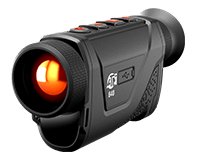
Best cheap wide-view option: ATN BlazeSeeker 6 1.2-9.6x - a wider low end for closer, fast-moving pigs.
Best step up: ATN BlazeTrek 6 384x288 - more sensor and detection for hunters working bigger country.
Why the BlazeSeeker 6 is a smart cheap hog scanner
The BlazeSeeker 6 is a smart cheap hog scanner because it keeps a real thermal sensor and, in the 1.7-13.6x variant, the reach to identify pigs in a group. Hogs pile up in sounders and tuck into brush, so you need enough zoom to count the group and pick a target rather than staring at one big warm mass. The 256 sensor detects heat with a NETD of 20mK or better - the measure of how faint a temperature difference it can see - out past 460 meters, and the 13.6x top end lets you lean in and read a hog before you plan a stalk. At 270 grams it rides in a pocket until the pigs show.
For hogs on a budget, reach plus portability is the winning combination. You want a light scanner you can carry all night and use to find and count a sounder from a distance, so you can approach with the wind and pick the right shot. The BlazeSeeker 6's higher zoom gives you that identification reach at a budget price, which is exactly what a hog hunter needs from an affordable spotter.
Best cheap hog scanner: ATN BlazeSeeker 6 1.7-13.6x
The ATN BlazeSeeker 6 1.7-13.6x is the value scanner for hog hunters. Its 13.6x top end gives budget-tier reach to pick a pig out of a sounder and read it in cover, the 256 sensor detects the group against cool ground out past 460 meters, and at 270 grams it's a pocketable tool you can carry all night. It's the affordable way to find and count hogs before you ever move in.
Why zoom matters on hogs
Hogs bunch up and hide, so telling one pig from another - and a shooter from a sow with piglets - takes magnification. The 13.6x top end lets you lean in and read the sounder from a distance, so you can plan the right approach and shot instead of guessing at a warm blob.
Who it's for - and who it's not
It's for the hog hunter who wants an affordable, pocketable scanner with the reach to confirm pigs at practical distances. It's not the pick for reading hogs across big open fields at the longest range - that calls for a higher-resolution monocular with more detection distance.
Best cheap wide-view option: ATN BlazeSeeker 6 1.2-9.6x
The ATN BlazeSeeker 6 1.2-9.6x is the same budget scanner with a wider low end. It trades some top-end zoom for a broader view, which suits closer, fast-moving pigs in tight cover where a wide picture catches the whole group. For a hog hunter who works thick country and wants the widest budget view, it's the alternative pick.
Best step up: ATN BlazeTrek 6 384x288
The ATN BlazeTrek 6 384x288 is the move for bigger, more open hog country. Its 384 sensor shows more detail, and detection roughly doubles to around 1,000 meters, so you spot and read sounders farther out. It costs more and leaves the budget tier, but for hunters working large fields the extra sensor and range earn their price.
Getting the most from a budget hog scanner
Use the reach to plan before you move. When you pick up heat, hold the monocular steady and zoom in to count the sounder, find the boars and sows, and watch which way the group is feeding before you commit to a stalk. That patient read from a distance keeps you from bumping pigs by moving too soon, and it steers you to the best shooting angle rather than the first one you find.
Then work the conditions and the wind. Cool, dry nights after the ground cools give the cleanest contrast, so hogs pop against the background even at zoom, while warm, humid evenings call for slower scanning and a palette change. Keep the breeze in your face as you close, run a quick calibration when the picture turns grainy, and keep a fresh battery in the unit with a spare in a warm pocket. Handled this way, a cheap scanner turns a hidden sounder into a planned hunt.
How to choose a cheap hog monocular
Choose for the reach to identify pigs and the portability to carry it all night. A budget scanner is a smart buy when it confirms hogs at the distances you hunt.
- Zoom range - a higher top end lets you count and read a sounder from a distance.
- Sensor and NETD - a real thermal sensor separates a hog from cool ground and brush.
- Detection range - match it to your ground; more range suits open fields.
- Weight - a pocketable unit you can carry all night is one you'll actually use.
- Battery life - a full evening of runtime for long hog sits and walks.
Working a sounder from a distance
The reach of the 13.6x variant is there so you can gather information before you move, which is exactly what hog hunting demands. When you pick up heat, brace the monocular against a post, a pack, or your knee and zoom in to study the sounder: count the pigs, spot the boars and the sows with young, and watch the direction they are feeding. Reading the group from far enough away that they never sense you is what lets you plan an approach that ends in a clean shot rather than a scattered, spooked mess of pigs disappearing into the brush.
Then close the distance on the pigs' terms, not yours. Keep the wind in your face as you move, since hogs scent danger long before a silent monocular would give you away, and re-glass from each new position to keep track of the group as it shifts. Hunt the cool, dry hours for the cleanest contrast, calibrate when the image degrades, and keep spare batteries warm for the cold early morning when hogs often move most. Used this way, a pocketable budget scanner does the single hardest part of hog hunting - finding and reading the group - for very little money.
For the money, a budget scanner is one of the highest-return tools a hog hunter can carry, because it solves the hardest problem: locating a quiet, hidden group in the dark. A pocketable thermal turns a blind walk into a planned stalk, and it doubles as a recovery tool after the shot. Learn its strengths, hunt within them, and the BlazeSeeker 6 will find pigs you would otherwise walk right past.
How we picked these ATN monoculars
We considered only ATN's current 6th-generation monoculars and judged the budget options for hog hunting specifically. The criteria were zoom range for identifying pigs in a sounder, sensor resolution and NETD, detection range, weight for all-night carry, and battery - weighed for finding and reading hogs in cover rather than long-range identification. The honest trade-off is reach and resolution for price: the BlazeSeeker 6 is affordable and pocketable but doesn't read hogs at the longest range like a higher-resolution unit. This is an in-house comparison of ATN's own monoculars, not an independent lab test, so match the pick to your hog ground.
Frequently Asked Questions
What is the best cheap thermal monocular for hog hunting?
The ATN BlazeSeeker 6 256x192 1.7-13.6x. Its 13.6x top end gives budget-tier reach to pick a hog out of a sounder, it detects heat past 460 meters, and at 270 grams it's pocketable for all-night carry.
Why does zoom matter for hogs?
Hogs travel in groups and hide in cover, so magnification lets you count the sounder and pick the right target from a distance. The 13.6x top end helps you read pigs before you move in and bump the group.
Is a 256 sensor enough for hogs?
For practical distances, yes. The 256 BlazeSeeker 6 detects and, with its zoom, confirms hogs at typical ranges. For reading pigs across big open fields, step up to a 384 sensor like the BlazeTrek 6.
BlazeSeeker 6 1.7-13.6x or 1.2-9.6x for hogs?
Choose the 1.7-13.6x for more reach to count and confirm a sounder at distance. Choose the 1.2-9.6x for a wider view on closer, fast-moving pigs in tight cover.
Can I hunt hogs with just a monocular?
A monocular finds and confirms hogs; you still need a rifle optic to shoot. Many hunters scan and count the sounder with the monocular, then use a thermal or day scope to take the shot.
How do I get the most from a budget hog scanner?
Zoom in to read the sounder before moving, keep the wind in your face as you close, and hunt cool, dry nights for the best contrast. Calibrate when the picture turns grainy and keep the lens clean.
Can the BlazeSeeker 6 help recover a downed hog?
Yes. After a shot, a hog's heat signature stands out clearly against cooler ground, so the monocular helps you track and recover the animal quickly, which is a real bonus beyond finding the sounder.
Find and count the sounder before it ever knows you're there. See the ATN BlazeSeeker 6 1.7-13.6x and browse the full ATN thermal monocular lineup to match reach to your hog ground. Read the group from a distance, keep the wind right, and turn a hidden sounder into a planned shot.
Created: July 8, 2026 · 09:58:23 UTC