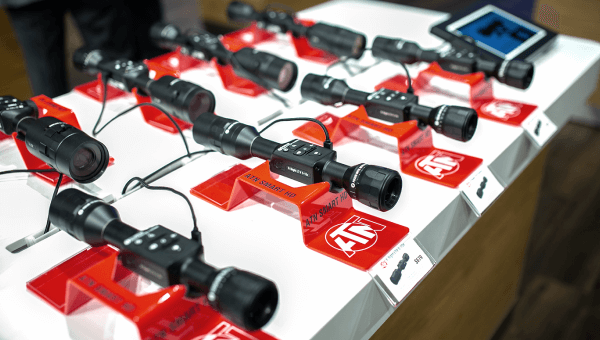
Cheap Thermal Clip-Ons for Coyote Hunting 2026
 Cheap thermal clip-ons are not magic. They are also not automatically junk. The honest position is somewhere in between, and where a specific unit lands depends almost entirely on three things: whether it is compatible with your rifle and scope, whether you have set it up and tested it before hunting with it, and whether your expectations about what it can actually do are calibrated to reality rather than to marketing copy.
In 2026, the best cheap thermal clip on for coyote hunting category includes units built on genuine current-generation thermal technology that can deliver useful nighttime detection without requiring hunters to replace the daytime optics they already trust. That is a real development in the market, and it is worth taking seriously. It does not mean every cheap clip-on is worth buying, and it does not mean any of them are a shortcut that eliminates the need for proper setup, compatibility verification, and realistic performance expectations.
This guide is direct about all of that. The ATN Tico 6 is the featured product — a practical pick for hunters who want to add thermal capability to a trusted rifle optic without overspending. Here is what it can do, what it cannot, and what to check before your money leaves your wallet.
Quick Verdict
Yes, cheap thermal clip-ons are worth considering in 2026 — with conditions. The right one can add genuine nighttime thermal detection to a rifle setup you already own, preserve the daytime optic you already trust, and give you the field awareness that makes predator hunting after dark a fundamentally different and more productive activity. The wrong one — purchased without compatibility checks, installed without confirmation, or evaluated against premium-tier expectations — will disappoint regardless of how capable the underlying technology is.
What this category does well: reliable heat signature detection at practical coyote-hunting distances, fast installation and removal so the same rifle serves both day and night, and preservation of the familiar reticle and zero that hunters have spent time developing. What it typically does not do: match the identification clarity of higher-resolution premium systems at longer distances, deliver images that look like professional-grade thermal photography, or work correctly without compatibility verification and pre-hunt confirmation.
The ATN Tico 6 is the featured pick because it brings 6th Generation thermal technology, SharpIR AI-enhanced imaging, IP67 field-grade construction, and a 6,000-joule recoil rating to an accessible price point. Those are real, verified specifications — not marketing claims. For hunters who want a practical clip-on upgrade without building a new rifle setup, it is a sensible starting point.
Choose a clip-on over a dedicated thermal scope when you already own a quality day scope and want to add thermal capability to the same rifle. Choose a dedicated thermal scope when you don't already have a quality day scope worth preserving, or when you want the simplest possible all-in-one thermal aiming system with no compatibility variables to manage.
No-Nonsense Reality Check for Skeptical Buyers
The skepticism that budget hunters bring to this category is well-earned. Early thermal clip-ons at accessible price points produced images that were more confusing than helpful, mounted unreliably, and failed in field conditions that any serious hunting optic should handle without drama. That history is real.
What is also real is that the thermal sensor market has changed. The 12 µm VOx sensor platform, AI-enhanced image processing, and field-grade construction that appear in the Tico 6 are not compromised versions of professional technology. They are current-generation thermal platforms at accessible price points. That does not make them equivalent to $5,000 professional systems, but it makes the "cheap equals useless" argument significantly weaker than it was a few product cycles ago.
Here is what skeptical buyers actually need to understand before deciding. Detection and identification are not the same thing — you will see that something warm is in your field before you can tell it is a coyote, and the distance at which you can confidently identify the animal determines whether the image is actually useful for a shot decision. Compatibility is not automatic — your day scope's magnification must fall within the clip-on's recommended range, your rifle's rail must accommodate the mounting hardware, and all of this needs to be verified before purchasing, not after. A clip-on must be tested before hunting — installed, aligned, confirmed for image centering and point-of-impact consistency at realistic distances — before you rely on it during an active predator setup. The best budget decision is the unit that works with your actual rifle, your actual scope, your actual terrain, and your actual hunting style. The best unit for your buddy's setup may not be the best unit for yours.
Best Cheap Thermal Clip-On Buying Priorities for Coyote Hunting in 2026
1. Best Overall Cheap Clip-On Pick: ATN Tico 6
Why this matters: An overall pick for this category has to clear a higher bar than just being cheap. It needs to deliver actual thermal detection, mount reliably without shifting zero, survive field conditions, and operate intuitively enough that a hunter under pressure can use it without thinking about the device.
What skeptical buyers should check: Published thermal sensitivity (mK rating), stated recoil specification, IP waterproof rating, and whether AI image processing is included or absent. For the Tico 6, these are all verified: ≤20 mK (225 model), ≤18 mK (335 and 650 models), 6,000-joule recoil rating, IP67, and SharpIR AI-enhanced imaging across all three configurations.
Realistic compromises: The base 256×192 configuration (TICO 6 225) delivers solid detection at 1,500 m and practical imaging for typical coyote-hunting distances, but identification detail at extended range is shorter than the higher-resolution configurations. If you regularly make shot decisions beyond moderate distances, the 384×288 (TICO 6 335, detection range 2,710 m) or 640×512 (TICO 6 650, detection range 3,500 m) configurations are more appropriate.
Blunt buyer takeaway: The Tico 6 225 is the right entry point for most recreational coyote hunters hunting at typical field distances. If you hunt long fields and regularly shoot beyond 300 yards, start your evaluation at the 335 configuration instead.
2. Best for Hunters Keeping Their Existing Scope
Why this matters: The entire reason to buy a clip-on instead of a dedicated thermal scope is to keep the existing optic. If the clip-on does not actually preserve the zero, reticle, and familiar setup, there is no reason not to just replace the scope.
What to check: Does your day scope's magnification fall within the clip-on's recommended range? For the Tico 6, those ranges are 1–8x (225), 1–12x (335), and 1–15x (650). Is there adequate rail space ahead of your objective lens? If not, is an alternative mounting path available? The Tico 6's optional Scope Mounting System enables direct scope attachment without extended rail requirements — a genuine solution for setups where rail space is limited.
Blunt buyer takeaway: Check your day scope's magnification before anything else. If it falls outside the recommended range for the configuration you're considering, you will get degraded image quality. This check costs nothing and prevents the most common source of clip-on disappointment.
3. Best for Low-Cost Night Hunting Capability
Why this matters: Coyote hunting after dark without thermal is a fundamentally different — and significantly less effective — activity than hunting with it. Even a capable entry-level clip-on changes what you can see, what you know is in the field, and how much time you have to make decisions before an animal disappears.
What to check: Refresh rate. A 50 Hz refresh rate keeps moving animals clear on screen during active calling sessions. Lower refresh rates — common on the cheapest possible thermal units — produce motion blur that makes tracking moving animals harder and accelerates eye fatigue. The Tico 6 runs at 50 Hz across all three configurations, which is the practical standard for hunting use.
Blunt buyer takeaway: If a unit's specification sheet does not state its refresh rate, treat that as a red flag. A 50 Hz rating is a basic standard for hunting thermal; sellers of capable units publish it. Sellers of units below that standard frequently omit it.
4. Best for Predator Setups on a Budget
Why this matters: A predator calling setup involves a rifle, a scope, a caller, ammunition, and potentially lights — all competing for the same budget. A clip-on that adds thermal detection and, with an optional eyepiece adapter, converts to a handheld scanning monocular reduces the total device count and cost of a complete nighttime setup.
What to check: What is included in the box versus what is sold separately? The Tico 6 ships with a Light Shield and Quick-Detach Picatinny Mount, one 18650 battery and charger, USB-C cable, lens cloth, Quick Start Guide, User Manual, and portable bag. The monocular eyepiece adapter is sold separately. Hot Point Tracking, RAV recording, six color palettes, and Wi-Fi are all included.
Blunt buyer takeaway: Calculate the total cost of what you need — clip-on, any required accessories, any optional features — before comparing sticker prices between units. A cheaper unit that requires several separately purchased accessories can easily cost more than a more complete package at a slightly higher price.
5. Best for First-Time Clip-On Buyers
Why this matters: First-time clip-on users make the same mistakes repeatedly. They assume the device works perfectly on first installation without confirmation. They try to figure out the menu system during an active calling setup in the dark. They forget to check battery charge before driving to a distant hunting spot. These are not equipment failures — they are user preparation failures that a good unit cannot compensate for.
What to check: Startup time, remote control availability, and app support. The Tico 6 starts in under 7 seconds from cold and is instant from standby. The included Tactical Remote Control handles settings adjustments without breaking shooting position. The ATN Connect 6 app (iOS and Android) makes setup, gallery review, and system familiarization accessible outside the device menus.
Blunt buyer takeaway: Budget a dedicated familiarization session before your first hunt. Mount the unit, verify alignment, run through color palette switching and Hot Point Tracking, practice startup from cold, and operate the Tactical Remote Control in low light. Every clip-on system has a learning curve. The Tico 6's is manageable, but only if you address it before the first stand, not during it.
6. Best for Fast Thermal Upgrade Potential
Why this matters: Coyote activity peaks at dawn and dusk — exactly the windows when light transitions fastest and hunters need to adapt their setup quickly. The ability to clip on thermal capability as light fades and remove it for daylight scouting without disturbing zero is the practical advantage of a clip-on over a dedicated thermal scope.
What to check: Quick-Detach hardware quality. The mounting system must return to the same index position on every installation to maintain zero consistency. A mount that allows any play between installations degrades point-of-impact reliability over time. The Tico 6's Quick-Detach Picatinny mount is designed for this repeatability.
Blunt buyer takeaway: Fast installation is only useful if the mount returns to index reliably. Practice the full installation and removal sequence multiple times at home before hunting. Know how long it takes, know that it goes on correctly, and know what a correctly mounted unit feels like versus one that has not seated properly.
7. Best for Practical Field Awareness
Why this matters: Beyond shot-ready detection, a thermal clip-on improves overall situational awareness during an active predator stand — knowing what is approaching from different directions, monitoring brush edges and draws for movement, and confirming that the field is clear before moving between stands.
What to check: Field of view at the recommended day scope magnification. The Tico 6's thermal FOV ranges from 7.0° × 5.3° (225) to 8.8° × 7.0° (650). Running your day scope at lower magnification settings provides broader situational awareness — you see more of the field in each frame and catch movement at the edges more easily before zooming in to confirm.
Blunt buyer takeaway: Scan at the lowest practical magnification to maximize situational awareness, then zoom in when you have identified a heat signature worth examining more closely. Using maximum magnification for scanning is a common beginner mistake that results in narrow field coverage and missed movement at the frame edges.
ATN Tico 6: A Straight-Forward Gear Review
The ATN Tico 6 is a thermal imaging clip-on built on ATN's 6th Generation thermal platform. It is an inexpensive thermal clip-on relative to dedicated professional thermal systems, positioned for hunters who want to add current-generation thermal capability to an existing rifle and day scope without replacing either.
The thermal core is a 12 µm VOx uncooled focal plane array in three configurations. The TICO 6 225 uses a 256×192 sensor with ≤20 mK thermal sensitivity, a 25 mm F/1.0 germanium lens, 7.0° × 5.3° FOV, 1,500 m detection range, and a 0.32-inch OLED display at 800×600 resolution. Optimal day scope magnification is 1–8x. The TICO 6 335 uses 384×288 at ≤18 mK, 35 mm F/1.0 lens, 7.5° × 5.7° FOV, 2,710 m detection range, and a 0.49-inch OLED at 1920×1080. Optimal magnification 1–12x. The TICO 6 650 uses 640×512 at ≤18 mK, 50 mm F/1.0 lens, 8.8° × 7.0° FOV, 3,500 m detection range, and a 0.49-inch OLED at 1920×1080. Optimal magnification 1–15x. All three run at 50 Hz.
SharpIR AI-enhanced imaging processes every frame in real time across all configurations — sharpening edges and improving contrast to produce more identifiable target images than raw sensor output would yield. For coyote hunting, this processing distinction is what separates seeing a warm blob from being able to say with enough confidence that it is a coyote before committing to a shot. The Wide Dynamic Range processing balances hot and cool areas of the image so animals partially obscured by brush remain visible rather than being washed out by brighter thermal elements in the same frame.
Mounting hardware includes a Light Shield and Quick-Detach Picatinny Mount in the box. An optional Scope Mounting System is available for direct scope attachment without extended rail space. The unit attaches in front of the day scope and is designed not to affect zero, reticle, or magnification. Physical construction is magnesium alloy with IP67 waterproof and dustproof ratings, impact resistance, and a 6,000-joule recoil rating that covers all centerfire hunting calibers. Operating temperature is -22°F to 131°F. Weight is 1.12 lbs (225), 1.15 lbs (335), and 1.24 lbs (650).
Battery life is approximately 8 hours (225 and 335) and approximately 7 hours (650) from a single replaceable 18650 cell, with USB-C external power support. Storage is 64 GB supporting video and audio recording including Recoil Activated Video (RAV). Built-in Wi-Fi connects to the ATN Connect 6 app for live streaming and file transfer. Hot Point Tracking automatically flags the warmest object in frame. Six color palettes support terrain adaptation. The included Tactical Remote Control allows settings adjustment without breaking shooting position. Startup is under 7 seconds from cold, instant from standby.
The Tico 6 is well suited for budget-conscious coyote hunters who want to add thermal capability to fields, tree lines, draws, trails, and brush edges without replacing the optic their rifle is already zeroed for. It is a sensible choice for hunters who prioritize verified field-grade performance over the absolute lowest possible purchase price.

What a Low Cost Clip-On Thermal Optic Can Actually Do
A low cost clip-on thermal optic in 2026, chosen correctly and set up properly, delivers the following capabilities that change what a coyote hunter can do after dark:
- Adding thermal visibility to a rifle setup the hunter already owns, without replacing the scope, re-zeroing, or building a separate dedicated thermal rifle
- Detecting heat signatures in total darkness — coyotes produce strong thermal contrast against cold nighttime terrain and are detectable at practical hunting distances with even base-tier sensor configurations
- Watching field edges, tree lines, trails, draws, and brush where coyotes approach from when working a call — seeing what conventional optics cannot see in the dark
- Keeping the familiar daytime reticle and zero — the existing optic's holdover, shot execution, and magnification range all remain intact through the clip-on overlay
- Avoiding the cost and complexity of building a second dedicated thermal rifle setup — one device extends the existing rifle's capability into thermal detection
- Improving nighttime awareness before making closer confirmation decisions — using the clip-on to detect and track an incoming animal before it reaches the distance where the shot is taken
What Cheap Thermal Clip-Ons Usually Cannot Do
Being direct about limitations is more useful than optimism. Even a well-specified and properly set-up unit like the Tico 6 has real constraints that users need to understand before their first night in the field.
A cheap thermal front attachment — even one built on quality sensor technology — will not match the image clarity of a premium professional thermal system at equivalent distances. The base 256×192 configuration sees heat signatures reliably but does not produce the crisp identification detail that a 640×512 high-resolution system delivers at moderate range. The practical implication is that your identification-confident distance is shorter than a premium system's. Know what that distance is for your configuration before you hunt with it.
Long-range identification confidence is the most common practical limitation of entry-level clip-on thermal configurations. Detecting a heat signature at 600 meters is different from confidently identifying it as a coyote at that distance. For recreational coyote hunters who typically make shot decisions within 200–300 meters, the base configuration is often sufficient. For hunters who routinely work longer distances, higher-resolution configurations are warranted.
Mounting and alignment are critical and require active effort from the hunter. A clip-on that is incorrectly installed, improperly torqued, or has never been confirmed for image alignment and point-of-impact consistency is not a reliable hunting tool regardless of its thermal specifications. This is not an equipment limitation — it is a user preparation requirement.
Front-end weight changes rifle handling, and this needs to be tested before hunting. Even 1.12 lbs added ahead of the objective lens shifts the balance point forward. Depending on the rifle's stock weight, barrel length, and overall balance, this can meaningfully affect natural point of aim and unsupported hold stability.
Advanced features require learning time. RAV recording, color palette switching, and the ATN Connect 6 app all have real utility — but only for hunters who have practiced with them before the night they need them.
Entry Thermal Clip-On Review: What to Evaluate Before Buying
The following entry thermal clip-on review framework covers what actually determines whether a cheap clip-on will perform in the field conditions coyote hunters encounter.
Rifle and Scope Compatibility
This is the first check, not the last. Verify that your day scope's magnification falls within the clip-on's recommended range. For the Tico 6: 1–8x (225), 1–12x (335), 1–15x (650). Measure available rail space ahead of the objective lens to confirm the mounting hardware fits. Check whether your scope's objective diameter is compatible with the clip-on's design. If rail space is limited, verify whether the optional Scope Mounting System is compatible with your specific day scope.
Mounting System
A mounting system that allows play, shifts under recoil, or fails to return to the same index position between installations is the fastest way to lose confidence in a clip-on's practical value. The Tico 6's Quick-Detach Picatinny Mount is designed for repeatable return-to-index positioning. Torque all hardware to manufacturer specification and verify the unit is secure before every hunt.
Detection vs. Identification
The detection range in a product specification is the distance at which the sensor registers a heat signature. The identification range — how far out you can confidently tell what the heat signature is — is always shorter. The gap between these two numbers depends on sensor resolution and image processing quality. Know the identification capability of your specific configuration at your typical hunting distances before you rely on it for shot decisions.
Image Quality
Thermal sensitivity (millikelvin rating) and AI image processing are the two most important image quality factors. Lower mK means the sensor detects subtler temperature differences — which translates to better contrast against complex backgrounds. SharpIR AI processing converts that sensor data into images with recognizable shapes and defined edges rather than undifferentiated heat masses. For a clip-on at an accessible price point, the presence or absence of AI processing is a meaningful differentiator that directly affects whether the image is useful for identification.
Alignment and Point-of-Impact Confidence
After installation, confirm that the thermal image is centered through the day scope's eyepiece. Test point-of-impact at realistic hunting distances — not just at 25 yards. After any remounting, repeat the confirmation. Never hunt with a newly installed clip-on that has not been confirmed for both image alignment and point-of-impact consistency. This is not optional.
Field of View
The Tico 6's thermal FOV ranges from 7.0° × 5.3° (225 model) to 8.8° × 7.0° (650 model). Thermal FOV narrows as day scope magnification increases. Scan at lower magnification settings for the broadest situational awareness, then increase magnification to confirm identification of a detected heat signature.
Battery Life
Approximately 8 hours (225 and 335) and approximately 7 hours (650) from a single 18650 cell. Cold temperatures reduce this below the rated figure. Know the state of charge on your battery before every hunt. Carry a spare 18650 cell. USB-C external power support extends runtime for long sessions or multi-day trips.
Weight and Rifle Balance
Test how the rifle handles with the clip-on mounted before hunting. Particularly for setups where the hunter uses offhand or unsupported positions, the forward weight shift is worth evaluating before it matters in the field.
Durability and Weather Resistance
IP67 waterproof and dustproof, impact-resistant magnesium alloy, 6,000-joule recoil rating, operating range -22°F to 131°F. These are published specifications that can be verified. Avoid units that describe themselves as "weather resistant" without published IP ratings or recoil specifications — those are marketing terms, not engineering standards.
Controls and Usability in the Dark
Sub-7-second startup from cold, instant from standby. Tactical Remote Control for position-stable adjustments. Six color palettes accessible without complex menu navigation. Auto NUC mode maintains image quality through temperature transitions. These are practical features, not selling points — they determine whether the device is actually usable during an active predator setup in the dark with cold hands.
Budget Night-Hunting Optics Comparison
| Option Type | Best For | Main Advantage | Main Limitation | Honest Value Verdict for Coyote Hunting |
|---|---|---|---|---|
| Handheld thermal monocular | Scouting and scanning without raising a rifle | Portable; flexible; no rifle mounting required | Not a shooting solution; requires separate rifle optic | Useful for detection; needs to be paired with a separate aiming system for shots |
| Cheap thermal clip-on | Budget hunters preserving a quality day scope | Adds some thermal capability to existing setup at lower cost | Variable quality; verify IP rating, recoil spec, and image processing before buying | Acceptable if specifications are verified; many units at this tier omit critical field-readiness specs |
| ATN Tico 6 | Budget coyote hunters who want verified field-grade clip-on performance | 6th Gen thermal, SharpIR AI, IP67, 6,000J recoil, RAV, three sensor configurations | Front-end weight; magnification limits per configuration; monocular adapter sold separately | Strong pick for hunters who want current-generation thermal without professional pricing |
| Dedicated thermal scope | Hunters who want a purpose-built thermal-only aiming system | All-in-one thermal solution; no day scope compatibility to manage | Replaces day scope; separate rifle or optic needed for daytime use | Best for hunters without a quality day scope or who want the simplest thermal setup |
| Premium thermal clip-on | Professional use, maximum range, heavy daily use | Maximum resolution, most refined processing, longest identification range | High cost; performance typically exceeds recreational hunting requirements | Justified for professional predator control; often overbuilt for recreational coyote hunting |
Setup Tips for Getting Better Results from a Cheap Clip-On
Confirm scope and rifle compatibility before buying. Check day scope magnification range, available rail space, and mounting hardware compatibility before ordering. If anything does not fit, find out before the purchase, not after.
Follow manufacturer mounting instructions. Read the Tico 6's Quick Start Guide and User Manual. Torque specifications and mounting procedures are documented for a reason. Following them takes ten minutes and prevents the most common setup failures.
Test alignment before hunting. After installation, verify that the thermal image is centered through the day scope's eyepiece. A misaligned image is not something to discover during a hunt.
Confirm performance at realistic coyote hunting distances. Test the clip-on's detection and identification capability at 100, 200, and 300 yards — the distances that actually govern your shot decisions. Know what the image looks like at those distances before you need it to look good during an active stand.
Practice controls in darkness. Run through color palette switching, Hot Point Tracking activation, and Tactical Remote Control operation in low light at home. Cold hands and a coyote working your call are not the right time to be searching for the right button.
Build a battery plan before every hunt. Check the charge state on your 18650 cell before leaving. Carry a spare cell. Know how to swap it in the dark with cold hands. USB-C external power bank adds a further layer of security for long sessions.
Protect the lenses during transport. Store the unit in its portable bag. Use the included lens cloth for cleaning — thermal germanium lenses require appropriate materials, not standard lens tissues.
Recheck mount security after travel. Vehicle transport vibration loosens mounting hardware over time. Verify everything is properly torqued and the unit is seated correctly before each hunt after a drive to the field.
Do not wait until the first stand to learn the device. Every hour of familiarity time at home translates into better performance in the field. The hunters who have the worst first experiences with thermal clip-ons are almost always the ones who opened the box the night before a hunt and used it for the first time in the dark on a calling setup.
Common Mistakes Budget Hunters Should Avoid
Buying only because it is cheap. Price is not a reliable indicator of field performance. A unit that lacks a published IP rating, recoil specification, or stated refresh rate is not necessarily cheaper because of manufacturing efficiency. It may be cheaper because those specifications would reveal limitations. Verify what you are actually getting.
Assuming every clip-on fits every scope. Day scope magnification range compatibility is the single most important pre-purchase check. Skipping it is the single most common source of clip-on buyer regret.
Ignoring rail space and mounting height. Some handguard and rail configurations leave limited space ahead of the scope objective. Measure before ordering.
Expecting premium thermal image quality at a low price. A base 256×192 configuration produces useful hunting images. It does not produce images that look like a $4,000 system at equivalent distances. Set appropriate expectations and the unit will meet them. Set unrealistic ones and it will disappoint at those same distances.
Confusing detection with identification. Seeing something warm in the field is detection. Knowing it is a coyote before pulling the trigger is identification. The first is easier than the second, and the relevant metric for ethical hunting is the second.
Skipping pre-hunt testing. A clip-on installed the night before a hunt and deployed without any confirmation is a liability, not an asset. Test before hunting — always.
Forgetting added front weight. Mount the clip-on and handle the rifle before assuming the balance is acceptable. For some setups, it is fine. For others, it is a notable change that affects how the rifle shoots.
Ignoring warranty, support, and return policies. A thermal clip-on mounted to a centerfire rifle takes repeated mechanical shock. Things fail. Know what the warranty covers, how long it lasts, and whether there is accessible customer service before you're standing in it after a failure.
Pros and Cons: Cheap Thermal Clip-Ons for Coyote Hunting
| Pros | Cons |
|---|---|
| Adds thermal capability to an existing rifle setup without replacing the scope | Compatibility verification required — not a universal fit for all scopes and rifles |
| 6th Generation 12 µm VOx sensor with SharpIR AI delivers real detection and processing quality | Base 256×192 configuration has shorter identification distance than higher-resolution models |
| Zero, reticle, and magnification are preserved — existing setup carries forward into thermal use | Adds 1.12–1.24 lbs to the front of the rifle, changing balance and handling |
| IP67 waterproof, dustproof, impact-resistant magnesium alloy — published field-grade specs | Monocular eyepiece adapter for dual-role use sold separately |
| 6,000-joule recoil rating covers all centerfire hunting calibers | Cold temperatures reduce practical battery runtime below rated maximums |
| 64 GB storage, RAV recording, Hot Point Tracking, six color palettes, and Wi-Fi all included | Feature set requires familiarization before confident field use |
| Quick-Detach mounting enables fast day-to-night transitions without disrupting zero | Setup and confirmation required before hunting — not an install-and-go device |
| Sub-7-second startup; Tactical Remote Control and auto NUC mode included | Higher-resolution configurations cost more, reducing the budget positioning of the base tier |
Who Should Buy the ATN Tico 6
- Coyote hunters on a tight budget: The Tico 6 225 is the entry point into a verified field-grade thermal clip-on platform. It brings real 6th Generation thermal capability at the accessible end of the price range.
- Hunters skeptical of cheap clip-ons but open to practical value: The published specifications — IP67, 6,000-joule recoil rating, ≤20 mK sensitivity, 50 Hz refresh, SharpIR AI — address the legitimate concerns that skeptical buyers raise. These are not claims; they are published engineering standards.
- Predator hunters who want thermal capability without replacing their current scope: The clip-on design is specifically built to preserve the existing optic setup. If your scope is zeroed and you trust it, that investment carries forward into thermal use.
- Buyers who want a direct, field-focused add-on solution: Quick-Detach mounting, sub-7-second startup, included Tactical Remote Control, and confirmed recoil performance are all field-use design decisions, not showroom features.
- Hunters new to thermal clip-on systems: Fast startup, accessible ATN Connect 6 app, and auto NUC mode reduce the learning curve without eliminating the need for proper familiarization before hunting.
- Gear-focused hunters building a flexible night-hunting setup: Three sensor configurations, optional monocular conversion, and compatibility with multiple rifle setups via Quick-Detach or optional Scope Mounting System support a modular approach to thermal upgrades.
- Buyers searching for the best cheap thermal clip on for coyote hunting in 2026: The best cheap thermal clip on for coyote hunting is the Tico 6 for hunters who want field-verified performance, not just the lowest sticker price on a unit that may lack the durability and sensor quality to deliver useful results across a real hunting season.
Who Should Spend More
The Tico 6 is the practical choice for most recreational coyote hunters evaluating cheap clip-on options. Spending more makes genuine sense for specific situations.
If you hunt professionally or very frequently — multiple nights per week across a full predator control season — the economics of professional use support a higher investment per unit, and the maximum resolution and processing of premium systems deliver real performance advantages at that level of intensity.
If you routinely make shot decisions at extended distances where maximum identification confidence is required consistently, the 640×512 Tico 6 configuration or dedicated premium thermal clip-on systems are more appropriate than the base 256×192 entry point.
If you want the simplest possible thermal aiming system with no compatibility variables to manage, a dedicated thermal scope eliminates the day scope compatibility consideration entirely and mounts like any conventional optic.
If you need advanced onboard features — ballistic solvers, electronic ranging reticles, integrated aiming solutions — those capabilities exist in dedicated thermal scope systems and are not available in clip-on devices.
Frequently Asked Questions
What is the best cheap thermal clip on for coyote hunting in 2026?
The best cheap thermal clip on for coyote hunting in 2026 is a unit with verified sensor sensitivity (≤20 mK or better), 50 Hz refresh rate, AI-enhanced image processing, published IP waterproof rating, a stated recoil specification appropriate for centerfire hunting, and Quick-Detach mounting hardware included in the box. The ATN Tico 6 225 meets all of those criteria and is a strong overall pick for recreational coyote hunters at accessible pricing.
Are cheap thermal clip-ons actually useful for coyote hunting?
Yes, for hunters who verify compatibility, set up the unit correctly, and maintain realistic expectations about identification range at base resolution. Coyotes are thermally strong targets against cold nighttime terrain, and a quality base-tier clip-on can reliably detect them at practical hunting distances. The limitation is identification clarity at extended distances, not basic detection capability.
What should I expect from an inexpensive thermal clip-on?
An inexpensive thermal clip-on built on current-generation technology will reliably detect heat signatures, preserve your existing daytime optic setup, and provide meaningful nighttime field awareness. It will not produce the image clarity of a professional-grade high-resolution system at equivalent distances. Detection is strong; identification confidence at extended range is shorter than premium configurations deliver.
Can a low cost clip-on thermal optic work with my current scope?
It can, but compatibility must be verified before purchasing. Check that your day scope's magnification falls within the clip-on's recommended range for the chosen configuration. Verify that rail space ahead of the objective lens accommodates the mounting hardware. If rail space is limited, verify whether the optional Scope Mounting System is compatible with your specific day scope model.
Is a cheap thermal front attachment better than a dedicated thermal scope?
A cheap thermal front attachment is the better choice when you already own a quality day scope you want to preserve and want the flexibility of adding and removing thermal capability from the same rifle. A dedicated thermal scope is the better choice when you want the simplest all-in-one thermal aiming system with no compatibility variables to manage, or when you don't already own a compatible quality day scope.
Is ATN Tico 6 a good option for coyote hunting?
Yes, for hunters whose day scope magnification falls within the relevant configuration's recommended range, who are willing to verify setup before hunting, and who want a clip-on with verified field-grade specifications rather than the lowest possible purchase price on a unit with uncertain durability and sensor quality.
What does an entry thermal clip-on review usually focus on?
An entry thermal clip-on review should focus on: whether the unit is compatible with the hunter's existing rifle and scope, whether the thermal sensitivity and image processing are adequate for practical coyote hunting distances, whether the mounting hardware is reliable under recoil, whether the IP rating and operating temperature range cover real hunting conditions, and whether the battery system supports the hunter's typical session length.
What is the biggest mistake when buying cheap thermal clip-ons?
Skipping the compatibility verification. Assuming that the day scope magnification range, rail space, and mounting hardware will all work out without checking is the single most common source of clip-on buyer regret. It costs nothing to verify before purchasing and potentially costs the entire purchase price to discover afterward.
Conclusion: What a Cheap Clip-On Can and Cannot Be
Cheap thermal clip-ons are not premium devices. They cannot be, and pretending otherwise does hunters a disservice. What they can be — when properly selected, correctly installed, and used with realistic expectations — is a genuinely useful nighttime upgrade that adds thermal detection capability to a rifle setup a hunter already owns and trusts.
The best cheap thermal clip on for coyote hunting in 2026 is not the unit with the lowest price tag. It is the unit that delivers verified thermal sensitivity, AI-enhanced image processing, field-grade construction with published IP and recoil ratings, and compatible mounting hardware for the hunter's specific rifle — at an accessible price that makes the upgrade financially defensible for recreational use.
The ATN Tico 6 is the featured pick in this guide because it meets that bar with published, verifiable specifications rather than vague claims. For coyote hunters who want a practical, low-cost upgrade path in 2026 — and who are willing to verify compatibility, spend time on proper setup, and maintain realistic performance expectations — it is a straightforward recommendation.