"Cheap" and "thermal" are two words that usually spell trouble together. Bargain-bin thermal binoculars often mean a muddy sensor, a laggy screen, and a picture that falls apart the second the air gets damp. The trick to buying the best cheap thermal binoculars is finding the lowest price tier that still uses real optics — not saving money by gutting the part that matters. The ATN Binox-6 Dual 384x288 5.5-44x is that pick. It sits below the flagship 640 in price, but it keeps the clean 15mK image, the laser rangefinder, and the 4-in-1 multispectral design — so you spend less without buying junk glass.
The best cheap thermal binoculars are the ATN Binox-6 Dual 384x288 5.5-44x. It sits in a lower price tier than the flagship 640 but keeps the parts that matter: a clean 15mK image, a 5.5-44x zoom range, 2750m detection, a laser rangefinder, and full 4-in-1 vision. Affordable, not cut-rate.
Quick answerBest cheap pick: ATN Binox-6 Dual 384x288 5.5-44x — lower price tier, high zoom, clean 15mK image, built-in rangefinder. Affordable without gutting the optics.
Step up if budget allows: ATN Binox-6 Dual 640x512 3-24x — sharper 640 sensor and longer detection range, at flagship pricing.
Bottom line: the 384 5.5-44x is the value winner. You keep the rangefinder, the 4-in-1 modes, and the humidity-beating image while spending less than the 640.
Why ATN's 6th-gen Binox-6 is cheap done right
Buying cheap thermal usually goes wrong in one spot: the sensor and the processing behind it. Skimp there and you get a blocky, noisy picture that can't tell a hog from a stump at any distance. The Binox-6 384 avoids that trap. Its NETD of 15mK or lower keeps the image clean even in humid, foggy, or rainy air — the exact conditions where cut-rate thermal turns to static. Its 384x288 sensor still packs enough dots into the picture to hold shape and detail; and it pairs that with a 4K day sensor, so in any light you can flip to day, night, or twilight mode and confirm what you are looking at. It even keeps the laser rangefinder. So the "cheap" here is about the price tier, not about hollowing out the optics. That is the difference between an affordable tool and a toy, and it is why the 384 anchors the value end of ATN's thermal binoculars range.
It helps to know where cheap thermal usually goes wrong, so you can spot the traps. The first is a noisy sensor that looks fine in a store demo and then washes out the moment the air gets humid or foggy — the exact night you most want thermal. The second is a slow refresh that smears a moving animal into a blur. The third is a plastic body with no real weather sealing that dies in the first hard rain. The Binox-6 384 sidesteps all three: a low-noise 15mK sensor, a smooth 50 Hz refresh, and an IP67 waterproof shell. So the money you save is money off the resolution only, and every part that decides whether the optic actually works in the field is kept intact.
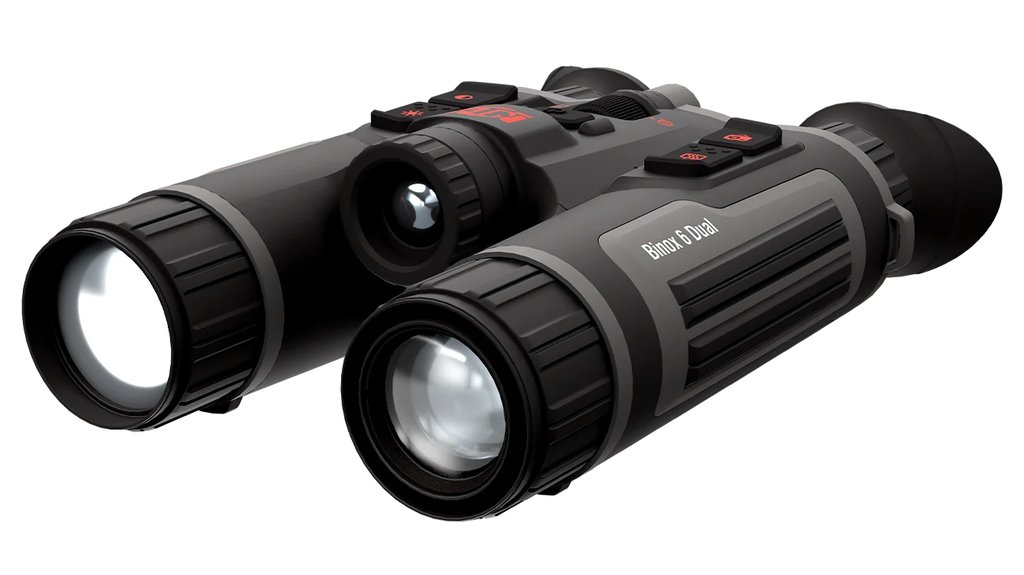
Best cheap pick: ATN Binox-6 Dual 384x288 5.5-44x
The ATN Binox-6 Dual 384x288 5.5-44x is the cheap thermal binocular that doesn't feel cheap in the field. Its 384x288 sensor holds a solid picture, and the 5.5-44x zoom range climbs high, so you can reach out and study a distant heat source instead of just noticing it. Detection range runs to 2750m — plenty to pick up an animal well before it knows you are there. And because it keeps the laser rangefinder and the 4-in-1 modes, you get flagship-style features at a value price. Think of the resolution difference like phone cameras with different megapixel counts: the 640 has more, but the 384 still takes a picture you can absolutely work with. In practice, on the kinds of nights most hunters and observers actually go out — spotting animals moving across a field, following a heat signature along a tree line, confirming what tripped a game camera — the 384 delivers all the clarity the job needs, and it does it while leaving real money in your pocket.
Clean image where cheap thermal fails
The 15mK NETD is the quiet hero of this pick. Damp, foggy nights are where budget thermal usually turns to mush; the Binox-6 384 holds a usable picture because the sensor is low-noise. That is money spent in the right place. Cheaper thermal often lists an impressive-sounding resolution while quietly running a noisy sensor, and the result looks fine in a bright store and falls apart in the field. The 384 does the opposite — it keeps the sensitivity high and simply uses a smaller sensor, which is the honest way to hit a low price.
High zoom for the price
The 5.5-44x band gives this value model more top-end reach than the pricier 640's 3-24x. If you glass distant edges and want a closer look without buying up, that extra zoom is a real bonus. It is a nice reminder that cheaper does not have to mean shorter-ranged — this model actually out-zooms its pricier sibling on the top end.
Same tough body, lower price
The value model is not a stripped-down shell. It is IP67 waterproof, runs on the same replaceable 18650 batteries for about eight hours, and keeps the 64 GB of storage and the Connect 6 app. So the ownership experience — durability, battery swaps, recording, sharing — matches the flagship; the money you save comes off the sensor, not off the build. Who it's for: buyers who want honest thermal binoculars at the lowest sensible price and like high magnification. Who it's not for: anyone who needs the absolute sharpest picture — that calls for the 640.
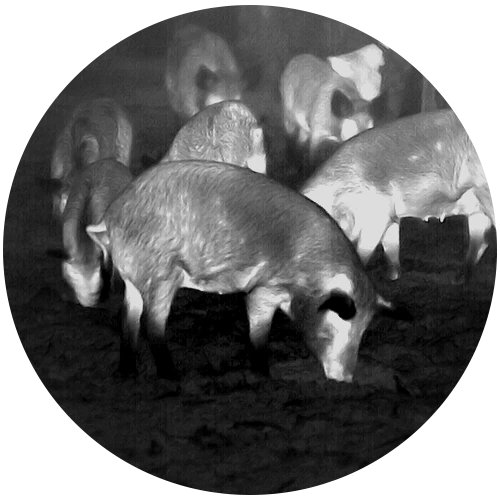
Step up if budget allows: ATN Binox-6 Dual 640x512 3-24x
If you can stretch past the value tier, the Binox-6 Dual 640x512 3-24x is the sharper sibling. Its 640 sensor packs more dots into the picture for finer detail and easier identification at distance, and its detection range climbs to 3100m. It runs the same 4-in-1 vision and the same laser rangefinder as the 384, so you are paying for a better sensor and a bit more reach, not a different feature set. It sits at flagship pricing, which is exactly why the 384 exists as the cheap-but-honest choice.
A useful way to decide: if your glassing is mostly about identifying animals at long range — telling a coyote from a dog, a doe from a buck, before you ever move — the extra resolution of the 640 pays off and the price jump is justified. If you mainly need to find heat, follow it, and confirm it at closer range, the 384 does that for less. Neither is a compromise on the things that make thermal binoculars trustworthy. Who it's for: those who want the clearest possible thermal and don't mind spending up. Who it's not for: the shopper who came here specifically to save money — the 384 keeps more cash in your pocket.
How to buy cheap thermal binoculars without regret
Cheap only works if you cut price in the right places. Here is what to protect and what you can let go:
- Never cheap out on NETD — a low-noise 15mK sensor is what keeps the picture usable in fog and humidity. This is the first thing bad thermal gets wrong.
- Resolution is a fair place to save — dropping from 640 to 384 lowers the price and still gives a workable picture; you just can't zoom quite as far before it softens.
- Keep the rangefinder — a built-in laser rangefinder saves you buying a second device, so it adds value rather than cost.
- Value the 4-in-1 modes — day, night, and twilight modes let you confirm the target, which matters far more than shaving a few features.
- Match zoom to your ground — the 384's 5.5-44x reaches far, so open-country glassers get a lot of value from the cheaper model.
- Buy weatherproof — an IP67 rating means the optic survives the weather; a bargain unit that dies in the rain is no bargain.
- Check the battery setup — replaceable cells let you carry spares and stay out; a sealed battery that dies mid-hunt is a hidden cost.
- Value the day/night modes — being able to confirm the target in low light is what turns a cheap heat-blob viewer into a real hunting tool.
The bottom line on going cheap: the right way to save is to buy a lower-resolution version of a good platform, not a low-quality platform at any resolution. The Binox-6 384 is the first kind. It is a genuine multispectral binocular with a clean sensor, a rangefinder, and a tough waterproof body, offered at a friendlier price because it uses the smaller chip. That is the difference between spending less and wasting money.
How we picked these ATN thermal binoculars
A quick word on method, because "best" should mean something. The shortlist is drawn only from ATN's latest 6th-generation range, and each model was judged on the same measuring stick: resolution and NETD for image clarity, detection range and refresh rate for spotting and tracking, plus weight and battery for a full night out — all viewed through the lens of cheap without junk optics. When one pick trades sharpness for reach or price, that is stated openly. This is a manufacturer comparing its own current line, so the honest trade-offs and the "who it's not for" notes matter more than any single label.
Frequently Asked Questions
Can cheap thermal binoculars actually be any good?
Yes, if the price is cut in the right places. The ATN Binox-6 384 sits in a lower price tier but keeps a clean 15mK sensor, a laser rangefinder, and full 4-in-1 vision. It saves money on resolution, not on the parts that make thermal usable.
What is the cheapest Binox-6 that isn't junk?
The Binox-6 Dual 384x288 5.5-44x. It is the value model of the line but still delivers a clean image, high zoom, 2750m detection, and a built-in rangefinder. It is affordable without gutting the optics.
Why does NETD matter more than price?
NETD is how sensitive the sensor is to small heat differences. A low number like 15mK keeps the picture clean in humid, foggy, or rainy air, which is exactly where bargain thermal falls apart. Protecting NETD is the smartest place to spend.
What do I give up going from the 640 to the 384?
Mainly resolution and a little detection range. The 384 sensor packs fewer dots into the picture, so it softens sooner as you zoom, and it detects to 2750m versus 3100m. You keep the rangefinder, the 4-in-1 modes, and the clean image.
Does the cheap model still have a rangefinder?
Yes. The Binox-6 384 includes the same built-in laser rangefinder as the flagship, reading out to 1000 yards. That means you range the target without buying a separate device, which adds real value at a low price.
Are these binoculars weatherproof?
Yes. The Binox-6 384 carries an IP67 waterproof rating, so rain, dust, and rough handling won't sideline it. That durability is part of why it counts as a genuine value rather than a throwaway.
Cheap thermal binoculars don't have to mean bad ones. The ATN Binox-6 Dual 384x288 5.5-44x keeps the clean 15mK image, the high zoom, and the laser rangefinder while sitting in a friendlier price tier — you save on resolution, not on the parts that matter. If you can stretch, the 640 sharpens the picture further. Compare both across ATN's full range of thermal binoculars and buy the value model that still holds up in the field.
Created: July 7, 2026 · 08:31:01 UTC