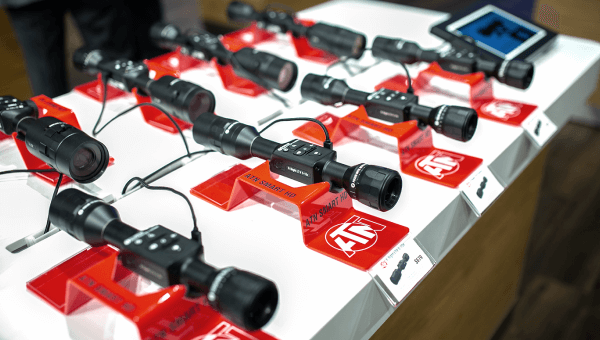
ATN ThOR LT 160 vs. Generic Chinese Cheap Thermal Scopes...

If you've been shopping for a cheapest thermal scope that actually performs, you've probably seen the ATN ThOR LT 160 sitting next to a pile of generic Chinese alternatives at drastically different price points. The question everyone asks is simple: is the ATN worth the premium, or can you get away with one of those no-name budget thermals flooding the market in 2026?
This article breaks it down head-to-head. No marketing fluff. Just real specs, real-world considerations, and a straight answer about which direction your money should go.
What Is the ATN ThOR LT 160?
The ATN ThOR LT 160 is ATN's entry point into the thermal riflescope market. It's positioned as an affordable option from a brand with over two decades of optics development behind it. The "LT" stands for lightweight, and the 160 refers to its 160x120 sensor resolution — the base tier of thermal detection.
For hunters just stepping into thermal, it offers name-brand reliability, a familiar mounting system, and ATN's software ecosystem — all at a price that, while not rock-bottom, sits well below their flagship ThOR 6 series. In the context of the thermal scope comparison 2026 landscape, it occupies a specific niche: legitimate entry-level thermal with real manufacturer support.
Who Is Buying Generic Chinese Cheap Thermal Scopes?
Generic thermal scopes from Chinese manufacturers have been flooding platforms like Amazon and eBay for years. In 2026, they're more accessible than ever, often advertised with impressive-sounding specs at $200 to $400 price points. They attract first-time buyers, budget-conscious hunters, and anyone who wants to try thermal imaging without committing serious money.
On paper, many of these scopes look competitive. They advertise 256x192 or even higher resolutions, claim long detection ranges, and list features like multiple color palettes and digital zoom. But the real-world story is often very different from the spec sheet.
ATN ThOR LT 160 Review 2026: Core Specs and What They Mean
When doing a proper ATN ThOR LT 160 review 2026, you have to look beyond the sensor resolution number and understand what the full package delivers.
Sensor and Image Quality
The ThOR LT 160 runs a 160x120 resolution sensor. That is lower than some of the generic competitors on paper, but the key differentiator is sensor quality, thermal sensitivity, and image processing. ATN uses a calibrated, quality-controlled detector with consistent NETD performance. Generic units may claim low NETD numbers but rarely validate those specs against any traceable standard.
What you see through the ATN is a clean, usable thermal image. What you often see through a no-name cheap scope is a washed-out, noisy, low-contrast image that makes target identification difficult — especially in cluttered or low-contrast environments like dense brush or foggy mornings.
ATN ThOR LT 160 Specs: Key Numbers
The ATN ThOR LT 160 specs are straightforward and honest. Here is what the scope delivers:
- Sensor resolution: 160x120
- Refresh rate: 60 Hz for smooth motion tracking
- Digital zoom with step and smooth zoom capability
- Multiple color palettes including White Hot and Black Hot
- Recoil-activated video recording
- Built-in Wi-Fi and ATN app compatibility
- Internal video and photo storage
- Zeroing Freeze for precise zero confirmation
- Lightweight and compact housing
- One-Shot Zero technology
The 60 Hz refresh rate is a standout at this price point. Most generic thermals run at 25 Hz, which creates visible lag when tracking moving animals. At 60 Hz, hog hunting at night or tracking coyotes across a field becomes significantly more manageable. That single spec difference alone can mean the difference between a clean shot and a miss.
The Generic Chinese Thermal Scope Reality in 2026
Let's be direct about what you are actually buying when you pick up one of these budget units in 2026.
Spec Sheet Inflation
Many generic thermal scopes are sold with exaggerated or outright false specifications. A scope listed at 384x288 resolution may actually be upscaling from a 256x192 or even a 160x120 sensor using software interpolation. The resulting image looks higher resolution on a spec sheet but delivers no actual additional thermal detail. You cannot see heat signatures that the sensor is not detecting — no amount of software processing changes that fundamental truth.
Build Quality and Durability
Generic scopes are typically built with plastic-heavy housings, minimal waterproofing, and weak mounting interfaces. In the field, this means fogged lenses after rain, housing flex under recoil, and potential zero shift after a single shot on anything heavier than a .223. For coyote and hog hunters shooting .308, .300 Win Mag, or similar cartridges, a cheap thermal can become unreliable within a single season.
The ATN ThOR LT 160 is built to handle real rifle recoil. It is IPX7 rated for water resistance and designed to maintain zero under sustained shooting.
Software, Firmware, and Support
This is where generic thermals fall completely flat. When you buy a no-name scope, you get no firmware updates, no customer support, and no software ecosystem. If something breaks or the firmware has a bug, you are on your own.
ATN actively supports its products with firmware updates delivered through the ATN Connect app. Features get improved over time. Bugs get fixed. New capabilities get added. When you buy into ATN's ecosystem, you are buying a product that will actually get better over time, not one that gets abandoned the moment it ships.
ATN ThOR LT 160 vs Generic Thermals: Direct Comparison
Here is how these two options stack up across the categories that matter most to hunters and shooters in the context of a thermal scope comparison 2026:
Image Quality Under Real Conditions
ATN ThOR LT 160 produces a clear, consistently calibrated thermal image. The sensor performs reliably in humid, foggy, and cold conditions. Generic scopes often show increased noise and degraded image quality in the same conditions, making target identification unreliable precisely when you need it most — pre-dawn or late evening in variable weather.
Refresh Rate and Motion Tracking
The 60 Hz refresh on the ATN ThOR LT 160 is a decisive advantage over the 25 Hz standard on most cheap alternatives. When a coyote or hog is moving through brush at night, 25 Hz creates a choppy, laggy image. At 60 Hz, motion is fluid and target tracking is accurate. For anyone doing any serious predator or nuisance hunting, this matters enormously.
Recording and Connectivity
The ATN ThOR LT 160 includes built-in video recording, Wi-Fi connectivity, and recoil-activated video. You can review your shots, share footage, and use your phone as a live viewfinder. Generic scopes in the same price bracket typically offer no recording capability, no app integration, and no connectivity. You are looking at a basic thermal image with no additional functionality.
Zeroing and Reliability
ATN's One-Shot Zero and Zeroing Freeze features make getting on target fast and keeping it there straightforward. Generic scopes rely on manual reticle adjustment systems that are often poorly machined, creating inconsistency between sessions and after any significant recoil. For a hunting scope, reliable zero retention is non-negotiable.
Long-Term Value
A $300 generic thermal that fails after one season is not cheap — it is expensive. The ATN ThOR LT 160 is built with long-term reliability in mind, backed by manufacturer warranty and support. When calculating the true cost of an entry level thermal scope, total ownership cost matters far more than sticker price.

How Does the ATN ThOR LT 160 Compare to ATN's Higher-End Lines?
Understanding where the ThOR LT 160 sits within ATN's own lineup helps calibrate expectations. ATN's ThOR 6 series, for example, represents a completely different tier of performance.
The ThOR 6 runs either a 384x288 or 640x512 sensor with an ultra-sensitive 15mK NETD rating, SharpIR AI-enhanced imaging, a full HD 1920x1080 OLED display, 64 GB internal storage, detection ranges up to 3,650 meters, built-in laser rangefinder on LRF models, ballistic calculator with multiple profiles, Hot Point Tracking, and a magnesium alloy housing rated to IP67 and 6,000 joules of recoil resistance. Battery life runs approximately 9 hours on two replaceable 18650 cells.
Similarly, the ThOR 6 Mini brings that same sixth-generation thermal engine into a compact sub-500 gram package, available in 256x192, 384x288, and 640x512 sensor configurations, with NETD ratings as low as 18mK and detection ranges stretching to 3,500 meters on the top 640x512 variant. It includes SharpIR AI imaging, Hot Point Tracking, Picture-in-Picture mode, 64 GB internal storage, RAV recording, and a full OLED display — all at a weight that barely registers on your rifle.
The ThOR LT 160 does not match these specs — nor is it priced to. But compared to a generic no-name thermal at a similar or only slightly lower price point, it is a completely different product in terms of reliability, software support, and real-world usability.
ATN vs Pulsar Thermal: A Brief Note
When shoppers compare ATN vs Pulsar thermal options at entry level, the conversation usually comes down to ecosystem versus raw imaging performance. Pulsar is a respected brand with strong sensor performance, particularly in their Axion and Thermion lines. However, Pulsar's entry-level options tend to be priced higher than the ATN ThOR LT 160, and they lack the software feature depth that ATN provides through its app ecosystem.
For buyers who want recording, Wi-Fi, app integration, and a robust software platform at entry-level pricing, ATN is the stronger value proposition. For buyers who prioritize raw thermal sensor quality above all else and have a larger budget, Pulsar is worth considering at their mid and upper tiers.
The generic Chinese options, however, do not belong in either of these conversations. They are not legitimate alternatives to either ATN or Pulsar — they are a completely different product class with fundamentally different reliability standards.
Who Should Buy the ATN ThOR LT 160 in 2026?
The ATN ThOR LT 160 makes sense for a specific buyer profile:
- First-time thermal buyers who want a real, reliable product without the risk of a no-name purchase
- Hunters on a budget who still need field-ready performance for hog, coyote, or varmint hunting at moderate ranges
- Shooters who value recording and app connectivity as part of their hunting setup
- Anyone who has already burned money on a generic thermal and wants to step up without going to a top-tier price point
It is an honest entry level thermal scope from a company that stands behind its products. The 160x120 sensor limits detection range and fine detail at distance compared to higher-resolution models, but for close to moderate range predator and nuisance hunting, it gets the job done reliably.
Who Should Look at the ATN ThOR 6 or ThOR 6 Mini Instead?
If your budget allows stepping up to ATN's sixth-generation platform, the performance difference is substantial and worth serious consideration.
The ThOR 6 Mini at its 384x288 or 640x512 tier delivers a completely different level of thermal performance — sharper imaging, longer detection ranges, AI-enhanced clarity through SharpIR, and a more refined software experience. At under 500 grams, it adds almost no weight to your rifle while delivering pro-level thermal capability. For hunters who are serious about predator and hog work or who hunt in demanding terrain, the investment in a ThOR 6 or ThOR 6 Mini pays for itself in hunt success and equipment longevity.
The full ThOR 6 series is the right answer for professionals, tactical operators, and serious hunters who need maximum detection range, the highest image clarity, and integrated tools like the laser rangefinder and ballistic calculator. The combination of a 640x512 sensor, 15mK NETD, SharpIR AI processing, and a 3,650-meter detection range puts it in a class that no generic or true budget thermal can approach.
The Cheapest Thermal Scope That Actually Works: Final Verdict
When people search for the cheapest thermal scope, what they actually want is the lowest price at which they can get a thermal scope that works reliably in the field. Generic Chinese options often fail that test. They are cheap to purchase but expensive in practice — through poor performance, early failure, and the frustration of missing shots or misidentifying targets in the dark.
The ATN ThOR LT 160 is the answer to that real question. It is not the absolute lowest sticker price on the market, but it is the lowest price point at which you get a genuinely functional, supported, field-ready thermal riflescope in 2026. You get a real company behind it, real firmware support, real build quality, and a feature set that no generic alternative at a comparable price point can match.
If you want to take the next step and invest in a scope that will deliver high-resolution thermal imaging, AI-enhanced clarity, and a platform built for serious hunting, the ATN ThOR 6 Mini and ThOR 6 series represent exactly where that investment pays off. They are not the cheapest thermal scope options, but they are among the best-value thermal scopes available when you measure performance per dollar honestly.
Stop wasting money on generic thermals that fail when conditions get real. Get an ATN, start with the ThOR LT 160 if budget is tight, and upgrade to the ThOR 6 platform when you are ready to hunt at a completely different level.